Egypt
Cairo
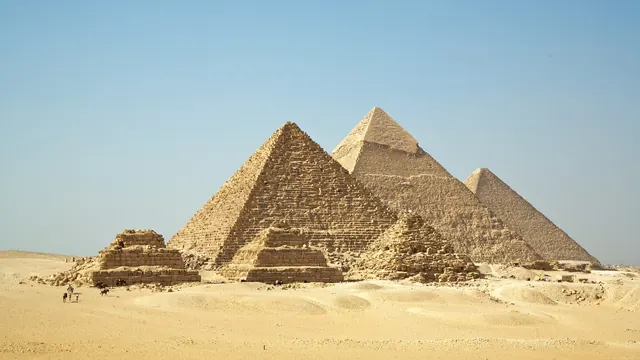
Photo: Ricardo Liberato, CC BY-SA 2.0, cropped
Match
50
- Beach & sun44
- Culture & arts58
- Food & nightlife53
- Family trip48
- Outdoors48
- Relax & unwind43
- Shopping & style53
- On a budget55
Cairo in twelve categories
Our verdict on each, scored 0 to 100 against the same fixed benchmark cities, so a score means the same thing on every page.
Beaches & swimming. Scores 10 out of 100.
10Food & drink. Scores 60 out of 100.
60Culture & sights. Scores 96 out of 100.
96Nightlife. Scores 48 out of 100.
48Nature & outdoors. Scores 30 out of 100.
30Day trips. Scores 66 out of 100.
66Good for families. Scores 32 out of 100.
32Getting around. Scores 35 out of 100.
35Shopping & style. Scores 58 out of 100.
58Affordability. Scores 95 out of 100.
95Live music & performing arts. Scores 50 out of 100.
50Wellness & relaxation. Scores 15 out of 100.
15Cairo category by category
Beaches & swimming10
Cairo is a desert city on the Nile, and the river is not for swimming. The nearest sea is the Red Sea at Ain Sokhna, roughly 130km east and about one and a half to two hours by road. The water there is warm and calm for much of the year, but the shore is lined with resort compounds, so it works as a weekend escape more than a day at the beach. The Mediterranean at Alexandria is further away again. In the city itself, swimming means a hotel pool or a club pool, so travellers who want the beach as part of the trip usually add a few days on the Red Sea coast.
Food & drink60
Eating in Cairo is cheap, filling and mostly about the street. Breakfast is ful medames and taameya, the green, herby Egyptian falafel, wrapped in baladi bread from a cart or a counter. Koshari, a mix of lentils, rice and pasta with tomato sauce and crisp onions, is the city's signature lunch, served in shops that do nothing else. Then there is feteer, the flaky folded pastry, plus grilled kofta and pigeon stuffed with freekeh, and molokhia at home-style restaurants. Sweets shops sell basbousa and konafa, and juice stands press sugar cane and mango.
The ahwa, the traditional coffeehouse with tea, Turkish coffee and shisha, sets the rhythm of the city day and night. Zamalek, Garden City and the Heliopolis area have a modest layer of modern and international restaurants, but fine dining is thin. Alcohol is around, though not part of everyday eating, and local beer and wine are limited in range.
Culture & sights96
Few cities hold heritage on this scale. The pyramids and the Sphinx at Giza stand on the city's western edge. Two great museums hold the antiquities: the Grand Egyptian Museum beside the plateau, with Tutankhamun's treasures, and the Egyptian Museum on Tahrir Square. The National Museum of Egyptian Civilization at Fustat adds the royal mummies.
Islamic Cairo, a UNESCO World Heritage Site, is just as remarkable. It is a medieval city of minarets, madrasas and caravanserais along Al-Muizz Street, with the Mosque of Ibn Tulun, the Sultan Hassan and Al-Azhar mosques and Saladin's Citadel overlooking it all. Coptic Cairo keeps the Hanging Church and Ben Ezra Synagogue, and the downtown streets show off a faded belle époque. You need many days and a lot of patience, and the reward is enormous.
Nightlife48
Cairo is a late city, but its nights are built around tea, not alcohol. The streets fill after dark, especially in the hot months. Families walk the Nile corniche and Qasr el-Nil bridge, and the ahwas around downtown and Islamic Cairo stay packed with shisha and backgammon long past midnight. Ramadan nights are the liveliest of the year.
If you want a drink, look to Zamalek, the island district with most of the city's bars and rooftop terraces, to the big hotels and to a few clubs and party boats moored on the river. That scene is real but small, priced well above the rest of the city, and not something people travel to Cairo for.
Nature & outdoors30
Al-Azhar Park was laid out on what used to be a rubbish mound. It's the city's best green space, with lawns and fountains looking over the minarets of the old city. Elsewhere, parks are few and small, and the classic way to get some air is a felucca sail on the Nile at sunset. On the eastern edge, the Wadi Degla protected area has dry limestone canyons for hiking and mountain biking.
For real landscape, you go southwest to the Fayoum, about two hours away. There are the lakes and small waterfalls of Wadi El Rayan, dunes for sandboarding and birds on Lake Qarun. Further into the desert, a longer day takes you to Wadi Al-Hitan, a UNESCO valley of whale fossils. Desert trips are best from October to April. In summer the heat makes almost everything outdoors hard work.
Day trips66
The obvious first trip runs south along the Nile to the royal necropolis beyond Giza, under an hour by car. At Saqqara you will find Djoser's Step Pyramid and painted tombs, Dahshur has the Bent and Red Pyramids, often almost empty, and the ruins of ancient Memphis lie among the palm groves. Further south, the collapsed pyramid at Meidum makes a quieter add-on.
In the opposite direction, the desert road to Alexandria passes the Coptic monasteries of Wadi Natrun, some of the oldest in Christianity. Alexandria itself, with its Corniche, catacombs and library, is a long but doable day by train or car. The Fayoum oasis has village pottery and Graeco-Roman remains. Most of these trips need a hired driver or a tour rather than public transport.
Good for families32
Most children remember the pyramids for good, along with a camel ride at the edge of the desert and the mummies and Tutankhamun's gold in the museums. Egyptians are openly fond of children, and families get smiles and help everywhere. Beyond the big sights, though, there is little made for kids, and the city is hard going with them. Traffic is relentless, pavements are broken or missing, touts crowd the main sites and summer heat is punishing. Families do best with a hotel pool, a private driver, early starts, and a visit between November and March.
Getting around35
The metro gets you from Tahrir Square to Coptic Cairo, Heliopolis and the edge of downtown. It's cheap and dodges the traffic, and there are women-only carriages. It doesn't go out to the pyramids, though, and the closest stations to Islamic Cairo still leave you walking through crowded streets. For most trips visitors use ride-hailing apps or a hired driver. That takes the haggling out of taxis, but you still sit in some of the heaviest traffic anywhere, and crossing the city can take far longer than the distance suggests.
On foot, pavements are broken, blocked or missing. Crossing a big road means stepping out into moving traffic. Walking works best in short stretches: along Al-Muizz Street, under the trees of Zamalek or across downtown's grid. River taxis and feluccas are a calmer way to cross the Nile.
Shopping & style58
The Khan el-Khalili bazaar, trading since the fourteenth century, is the heart of shopping in Cairo. Its lanes and the streets around it in Islamic Cairo sell brass lamps, inlaid wooden boxes, silver, perfume bottles, spices and cotton. Much of it is tourist stock, but real crafts are close by. On the Street of the Tentmakers, near Bab Zuweila, artisans stitch appliqué panels by hand, and the coppersmiths still hammer in their alley.
Zamalek has small boutiques for contemporary Egyptian design, jewellery and cotton linens. For international brands, people go to the large air-conditioned malls in the newer suburbs. Haggling is expected in the bazaar, and so is patience with insistent sellers.
Affordability95
Cairo is one of the cheapest major cities you can visit. Street food and local restaurants cost very little, the metro and ride-hailing barely register, and comfortable mid-range hotels downtown or in Zamalek are a bargain. Expect to pay more for entry to the big sites, which charge foreigners much more than locals, and for alcohol, luxury Nile-view hotels and guided tours. Tipping for small services is part of daily life, and touts at the pyramids work hard to separate you from your money, but the overall cost of a stay stays low.
Live music & performing arts50
The Cairo Opera House, on Gezira Island, is the centre of formal performance, with the Cairo Symphony Orchestra, a ballet company, Arabic music ensembles and visiting productions through the season. The most memorable thing to see may be the tanoura, the whirling Sufi dance performed with live music in the medieval Wikala of al-Ghouri and nearby historic halls in Islamic Cairo.
The city also has small venues for traditional Egyptian and zar music, a modest jazz and contemporary scene, and a great tradition of Arabic song. Most theatre is in Arabic, so visitors get the most from music and dance.
Wellness & relaxation15
Cairo is not a place to unwind. The noise, traffic and dust rarely let up, and the city's old hammams have mostly fallen out of use rather than surviving as places visitors can go. Relaxation means a spa in one of the big international hotels along the Nile, an evening on a felucca, or a quiet hour in the garden courtyard of a historic house. If rest is part of the plan, a few days on the Red Sea or in a desert oasis afterwards is the usual answer.
When should you go?
Pick a month to see what it is like. The climate figures are measured averages, not a forecast.
| July | Cairo |
|---|---|
| Daytime high | 36 °C |
| Night-time low | 23 °C |
| Rainfall in the month | 0 mm |
| Sunshine | 12 hours a day |
| Daylight | 14 hours a day |
The whole year
Shaded against this city’s own year: the deepest cell is its best month for that figure and the palest its weakest.
Temperature and rainfall are climate normals, averaged over the years shown. Cairo: 1991-2020 normals, Helwan (21.9 km from centre).
Getting there
| Flying from | Cairo |
|---|---|
| JeddahJED | 2 h 5 m €158-202 CAI · 17 km |
| Kuwait CityKWI | 2 h 35 m €137-145 CAI · 17 km |
| MilanMXP, BGY, LIN | 3 h 45 m €147-173 CAI · 17 km |
| RiyadhRUH | 2 h 35 m €154-163 CAI · 17 km |
| IstanbulIST, SAW | 2 h 10 m €154-167 CAI · 17 km |
| DammamDMM | 2 h 50 m €195-226 CAI · 17 km |
| New YorkJFK, EWR, LGA | 11 h 15 m €624-1013 1 stop CAI · 17 km |
| BeijingPEK, PKX | 9 h 30 m €644-746 1 stop CAI · 17 km |
| AbhaAHB | 2 h 45 m €260-283 CAI · 17 km |
| ParisCDG, ORY, BVA | 4 h 25 m €249-480 CAI · 17 km |
The busiest departure cities for Cairo, with a place kept for each other part of the world. Busiest means arriving passengers where an official count exists, and where none does, the number of non-stop services flown: official route statistics are published by the European reporting countries and by nobody else, so a table ranked on them alone would offer a reader in New York or Tokyo ten European cities. Flying times are estimated from the distance between airports, and every row is a city flown non-stop. Where the typical offer connects anyway, the stops are shown. Under each figure is the airport the flight lands at and how far that is from the centre, because the nearest airport is not always the one a route is flown to. Typical return fares for 2026-10 to 2026-12, cached market data up to 7 days old. The figure is the middle half of the offers found, so a single price means they agreed and a range means they did not; for a typical route that middle half spans about a quarter of the median, and for the least settled routes rather more than the median itself.
Before you go
| Measure | Cairo |
|---|---|
| Official language | Arabic |
| Currency | Egyptian Pound (EGP) |
| Sockets | CF220 V, 50 Hz |
| Driving side | Right |
| Time zone | UTC+2, UTC+3 in summer |
| Emergency number | Police 122, ambulance 123, fire 180 |
| Elevation | 23 m |
| Main airport | Cairo International Airport (CAI)17 km from centre127 non-stop destinations |
| Public holidays this year | 15 days |
By the numbers
| Measure | Cairo |
|---|---|
| City population | 9,801,536 |
| People per km² | 18,564 |
| Museums within 10 km | 48 |
| UNESCO World Heritage sites within 50 km | 2 |
Compare Cairo with
Every comparison with a written verdict behind it.