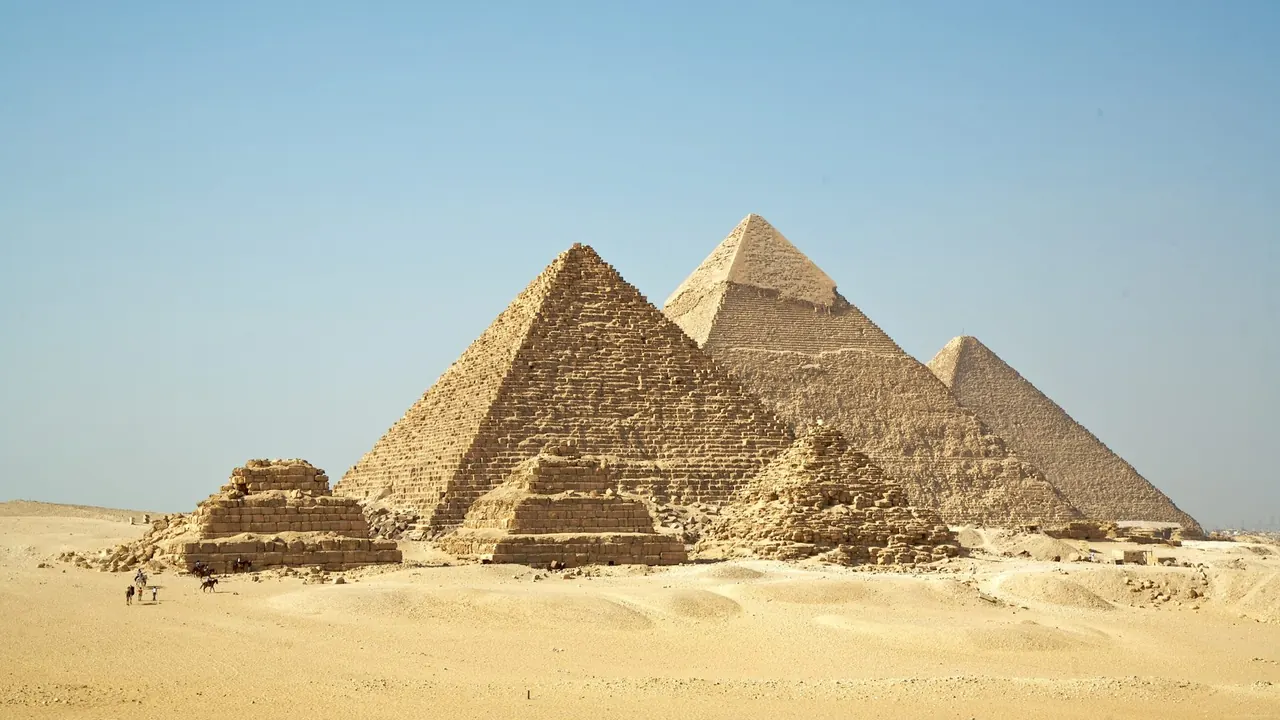
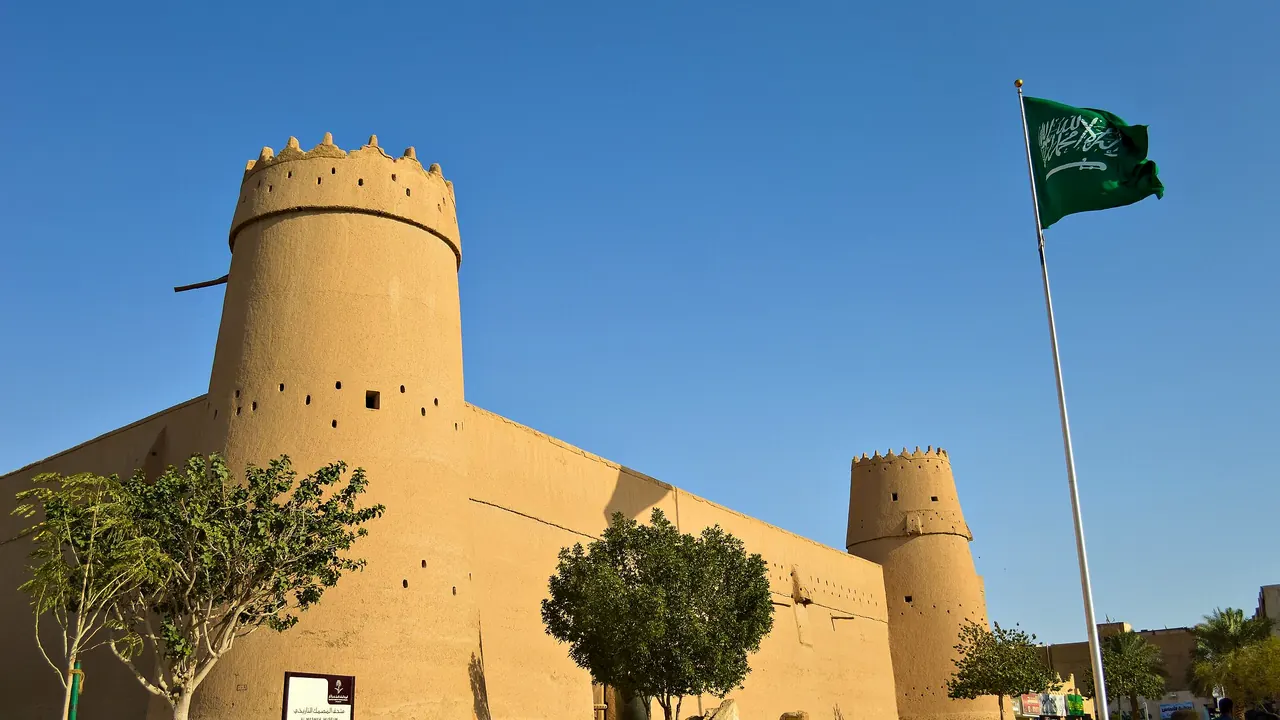
Photos: Cairo by Ricardo Liberato, CC BY-SA 2.0, cropped; Riyadh by Francisco Anzola, CC BY 2.0, cropped.
Cairo or Riyadh?
Our verdict in twelve categories, each scored against the same fixed benchmark cities, and the climate month by month, so you can choose for your trip.
Choose Cairo for
- prices
- culture and sights
- day trips
Cairo is the choice for anyone who wants history at full scale and a city that costs little to explore. The pyramids, the great antiquities museums and the medieval lanes of Islamic Cairo fill a week on their own, and Saqqara, Dahshur and Alexandria are all within a day's reach. In return it asks for patience with traffic, touts and broken pavements.
Choose Riyadh for
- families
- wellness
Riyadh suits a shorter, calmer visit, or a family winter trip, more than a sightseeing marathon. Diriyah, Masmak Fort and the National Museum give a clear picture of Najdi Arabia in two or three days. Evenings belong to coffee shops, malls and open-air entertainment zones full of families, and the desert, from the Edge of the World to the dune camps, is the real draw beyond the city.
Scoreboard
Twelve categories on one fixed scale from 0 to 100. The shaded stretch is the gap between the two.
Your match
Pick a travel style or drag the sliders, and both match scores follow your weighting.
Wins on prices and culture and sights with your weighting.
Wins on families and wellness with your weighting.
What matters to you?
Category by category
What the scores mean for a trip.
Beaches & swimming
Neither city is a beach destination, so the difference is how far you have to go for the sea. From Cairo, the Red Sea resorts at Ain Sokhna are a road trip of about two hours, which makes a weekend by warm, calm water easy to add.
Riyadh lies about 400km from the Gulf, so the coast means a separate stay reached by plane or a long drive. In the city itself, Riyadh's water parks and resort day passes give a little more variety than Cairo's hotel and club pools.
Food & drink
Cairo is the better place to eat on the go. Ful and taameya from a cart at breakfast, koshari at lunch, feteer, stuffed pigeon and konafa make the street itself the restaurant, and the ahwa gives every neighbourhood its tea-and-shisha rhythm. Alcohol is available if you want it, even if few people drink it with meals.
Riyadh eats differently: late, sitting down, and in groups, with Najdi kabsa, mandi and jareesh served on shared platters, often in family sections. Its strengths are Arabic coffee with dates, specialty coffee around Olaya, and the range of Lebanese, Yemeni and South Asian kitchens. Street snacking and any wine or beer are absent.
Culture & sights
This is the widest gap between the two. Cairo has the pyramids and Sphinx, three major antiquities museums including the royal mummies at Fustat, and a whole UNESCO-listed medieval city around Al-Muizz Street, the Citadel and Al-Azhar, plus Coptic churches and a belle époque downtown. You could spend a fortnight and still leave things unseen.
Riyadh's heritage is worth seeing but compact: the restored mud-brick citadel of At-Turaif in Diriyah, Masmak Fort, the Murabba Palace and a well-presented National Museum. After that the city is mostly towers and highways, and a long weekend covers it.
Nightlife
Cairo offers more to do after dark, and more choice in how to do it. Ahwas around downtown and Islamic Cairo stay full past midnight, families stroll the corniche, and Zamalek, the big hotels and the moored party boats give you bars, rooftops and some dancing, if at a price.
In Riyadh the late hours are real but alcohol-free. Evenings mean coffee shops, dessert cafés, malls and entertainment zones, with big festivals in the cooler months, so anyone after a drink or a regular club night will come away disappointed.
Nature & outdoors
Both are desert cities with little green space, so the landscapes on offer are quite alike. Cairo's outdoors leans on water: a felucca at sunset on the Nile, the lawns of Al-Azhar Park, and in the Fayoum the lakes of Wadi El Rayan and birdlife on Lake Qarun, with Wadi Al-Hitan's whale fossils further out.
Riyadh gives you the open desert more directly. The Edge of the World escarpment, red dunes for quad biking and overnight camps under the stars make it the better base for a night in the sand, and Wadi Hanifah offers a long palm-lined corridor for walking and cycling.
Day trips
Cairo has far more within a day's reach. Saqqara's Step Pyramid, the nearly empty pyramids of Dahshur and the ruins of Memphis are under an hour away, and the Wadi Natrun monasteries, the Fayoum and Alexandria's catacombs and Corniche are all possible in a day, usually with a driver.
From Riyadh the choice is short: the mud-brick village of Ushaiger and the old Najdi houses of Shaqra, about two hours out, then mostly desert. Other Saudi cities are a flight away.
Good for families
Riyadh is the more practical city with children. The big malls have indoor amusement parks, ice rinks and play areas, and there is a zoo. Outdoor entertainment districts fill with local families on winter evenings, and desert camps add camel rides and dune drives for older children.
Cairo gives children the bigger memories, the pyramids, a camel at the desert's edge and Tutankhamun's gold, and Egyptians fuss over them warmly. Day to day, though, the traffic, missing pavements and insistent touts make it harder going, so a hotel pool and a private driver are close to essential.
Getting around
Cairo's problem is congestion, Riyadh's is distance. In Cairo the metro reaches Coptic Cairo and Heliopolis but not the pyramids, so most journeys mean a ride-hailing car inching through some of the heaviest traffic anywhere. Walking works in short stretches, along Al-Muizz Street, under Zamalek's trees or across downtown's grid, and river taxis are a calmer way across the Nile.
Riyadh is laid out for the car. Its driverless metro runs along Olaya and King Abdullah Road and out to the airport, but the sights lie far apart and the wide roads are hard to cross on foot, so a taxi usually covers the last stretch. Walking is only realistic around Masmak Fort and in Diriyah, and only in the cooler months.
Shopping & style
The two are evenly matched, but they suit different shoppers. Cairo is for crafts and haggling: Khan el-Khalili and its surrounding lanes, the appliqué makers on the Street of the Tentmakers, the coppersmiths' alley and small Zamalek boutiques for Egyptian cotton and design.
Riyadh is for malls and luxury labels, with the Kingdom Centre, Al Faisaliah and the northern districts carrying international fashion alongside oud, Arabian perfume and abayas. Souq Al Zal is its traditional counterweight, busiest in the evening.
Affordability
Cairo is far cheaper. Meals, transport and good mid-range rooms in downtown or Zamalek cost very little. The main extra expenses are foreigner-priced entry to the big sites, guided tours and constant small tips.
Riyadh is built around business travel, so hotels around Olaya and in the towers, sit-down restaurants and the entertainment zones all add up. Free or modest museum entry, cheap metro fares and simple South Asian eateries soften the bill without making it a budget city.
Live music & performing arts
Cairo has a steady season of formal performance. The Opera House on Gezira Island is home to a symphony orchestra, a ballet company and Arabic music ensembles, and the tanoura whirling dance in the medieval Wikala of al-Ghouri is one of the most memorable evenings in the region. Small venues add zar music and jazz.
Riyadh works in bursts, with large concerts, outdoor festivals and touring arena shows in winter and the ardah sword dance at heritage events. It has no opera, orchestra or theatre district, so in summer there is little to see.
Wellness & relaxation
Neither city is built for rest, and they sit close together here, so the real difference is where each one finds its calm. In Cairo it comes from the river and the old city: an hour on a felucca as the light fades, or a pause in the shaded courtyard of a historic house in Islamic Cairo between sights. The bathhouse tradition has largely lapsed, so a proper treatment means one of the big Nile-side hotels, and travellers who want to properly unwind usually move on to the Red Sea or the Fayoum.
Riyadh's version is drier and more spacious. Its hotel spas offer Moroccan-style hammam rituals, generally with separate sections for men and women, and the escape from the sprawl is the open desert, with a night at a dune camp or a cool winter evening in Diriyah's palm groves rather than a trip to the coast.
When should you go?
Pick your month. The climate figures are measured averages, not a forecast.
Cairo in July
Riyadh in July
Daytime high, °C
Rainfall in the month, mm
Temperature and rainfall are climate normals, averaged over the years shown. Cairo: 1991-2020 normals, Helwan (21.9 km from centre). Riyadh: 1991-2020 normals, Riyadh (8.9 km from centre).
Both cities are at their best from November to March, and both are almost rainless. Cairo has the gentler climate. Winter days are mild, around 21°C in December, and spring and autumn stay comfortable for walking the old city. From June to August highs reach about 36°C under nearly unbroken sunshine, which makes long days at Giza or in the bazaar tiring, though not impossible with early starts.
Riyadh is hotter at both ends of the year. Its winter is just as pleasant, with cool desert nights that suit camping, but by May the heat climbs fast and from June to September highs sit near 43°C, when nobody stays outdoors for long. March and April also bring Riyadh's few showers, up to about 24mm a month, while Cairo stays almost dry. In practice Cairo has the longer comfortable season, with October and April still usable, while Riyadh narrows to the winter months.
Which traveller are you?
For a culture and arts trip, Cairo wins easily. Giza, the Grand Egyptian Museum, Islamic Cairo's mosques and madrasas and the Coptic quarter need many days, and the Opera House and the tanoura in Islamic Cairo add evenings that Riyadh cannot match.
On a trip on a tight budget, Cairo stretches money much further. Street food, the metro, ride-hailing and comfortable mid-range hotels all cost little, while Riyadh's hotels are priced for business travellers and only its free museums and simple eateries come cheap.
On a family trip with children, Riyadh is the easier city. Malls with indoor amusement parks and ice rinks, a zoo, parks along Wadi Hanifah and desert camel rides keep children busy, without Cairo's relentless traffic and crowds of touts at the big sights.
Before you go
| Measure | Cairo | Riyadh |
|---|---|---|
| Official language | Arabic | Arabic |
| Currency | Egyptian Pound (EGP) | Saudi Riyal (SAR) |
| Sockets | CF220 V, 50 Hz | G60 Hz |
| Driving side | Right | Right |
| Time zone | UTC+2, UTC+3 in summer | UTC+3 |
| Emergency number | Police 122, ambulance 123, fire 180 | 112 or 911 |
| Elevation | 23 m | 612 m |
| Main airport | Cairo International Airport (CAI)17 km from centre127 non-stop destinations | King Khalid International Airport (RUH)36 km from centre117 non-stop destinations |
| Public holidays this year | 15 days | - |
By the numbers
| Measure | Cairo | Riyadh |
|---|---|---|
| City population | 9,801,536 | 7,009,100 |
| People per km² | 18,564 | 3,898 |
| Museums within 10 km | 48 | 5 |
| UNESCO World Heritage sites within 50 km | 2 | 1 |
Where else could you go?
Every comparison below shares a destination with this one, so you can follow Cairo or Riyadh somewhere new.