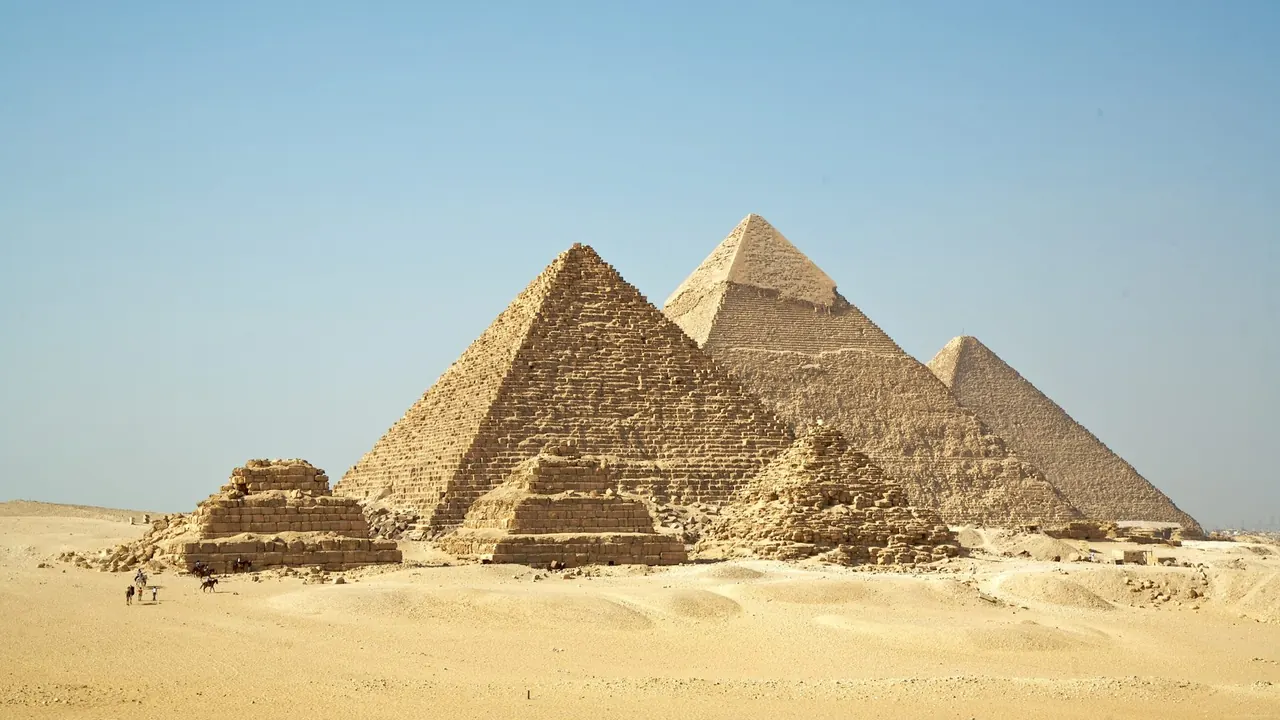

Photos: Cairo by Ricardo Liberato, CC BY-SA 2.0, cropped; Nairobi by Lmwangi, CC BY-SA 3.0, cropped.
Cairo or Nairobi?
Our verdict in twelve categories, each scored against the same fixed benchmark cities, and the climate month by month, so you can choose for your trip.
Choose Cairo for
- culture and sights
- day trips
- prices
Cairo is for travellers who want history on a vast scale and a budget that goes a long way. The Giza pyramids, the antiquities museums and the medieval lanes of Islamic Cairo hold more than one trip can cover, and day trips south to Saqqara and Dahshur add more. In return you need patience with traffic, touts and summer heat.
Choose Nairobi for
- nature and the outdoors
- families
- nightlife
Pick Nairobi if wildlife and open country matter more to you than monuments. Lions and giraffes roam a national park on the edge of the city, the Rift Valley is a short drive away, and children get to feed giraffes and watch baby elephants. The highland weather stays mild and Westlands stays out late at weekends. The trade-offs are a bigger bill and a car for almost every journey.
Scoreboard
Twelve categories on one fixed scale from 0 to 100. The shaded stretch is the gap between the two.
Your match
Pick a travel style or drag the sliders, and both match scores follow your weighting.
Wins on culture and sights and day trips with your weighting.
Wins on nature and the outdoors and families with your weighting.
What matters to you?
Category by category
What the scores mean for a trip.
Beaches & swimming
Neither city is a beach destination, and in both the only swimming in town is a hotel or club pool. Cairo has a slight edge because the Red Sea at Ain Sokhna is close enough for a weekend by road, though that shore is lined with resort compounds. The Kenyan coast is a flight or a long train ride from Nairobi, so a beach stay there is a separate part of the trip.
Food & drink
Cairo is the better city to eat in. Breakfast is ful and taameya, lunch is koshari from shops that make nothing else, and there is feteer and stuffed pigeon too, all of it cheap. The ahwa coffeehouses are part of every day, though alcohol and fine dining are limited.
Nairobi eats around the charcoal grill, with nyama choma and cold beer on long weekend afternoons, and its Indian and Ethiopian restaurants are a real strength. Fresh Kenyan coffee in the cafés of Westlands and Karen is a pleasure, but everyday local cooking is plainer than Cairo's.
Culture & sights
This is where the two cities differ most. Cairo has the Giza pyramids, the Grand Egyptian Museum with Tutankhamun's treasures, and the mosques and madrasas of Islamic Cairo up to the Citadel. Coptic Cairo adds more, and all of it needs many days.
Nairobi began as a railway depot in 1899 and has no old quarter. The Nairobi National Museum, with its early human fossils, and the Karen Blixen farmhouse fill a day or two, and after that most visitors turn to the wildlife.
Nightlife
Nairobi has the livelier night if you want music and a drink. From Thursday to Saturday the rooftop bars and clubs of Westlands play Afrobeats and amapiano until dawn, and the crowd is mostly local. You get between areas by ride-hailing car.
Cairo's late nights are mostly sober. Families crowd the corniche and Qasr el-Nil bridge, and the ahwas fill with shisha and backgammon well after midnight. For a drink you have to go to Zamalek, the big hotels or a few river boats, where prices are well above the rest of the city.
Nature & outdoors
Nairobi wins easily. Nairobi National Park puts lions, rhinos and giraffes on open savanna at the city's edge, and Karura Forest and the Ngong Hills have good walking. Within about two hours you can cycle through Hell's Gate or hike the crater rim of Mount Longonot.
In Cairo, the green space is mostly Al-Azhar Park, a felucca on the Nile and the dry canyons of Wadi Degla. Its real landscapes are desert ones in the Fayoum and at Wadi Al-Hitan. They are worth the trip in the cooler months but hard work in summer.
Day trips
Cairo has far more within reach. Saqqara's Step Pyramid, the Bent and Red Pyramids at Dahshur and the ruins of Memphis are all under an hour south. Alexandria and the monasteries of Wadi Natrun make longer days out, usually with a hired driver.
Nairobi's nearby outings are quieter: the Limuru tea estates and the stone hand axes at Olorgesailie. Its best excursions are wildlife trips into the Rift Valley. Kenya's historic towns are on the coast, too far for a day trip.
Good for families
Nairobi is the easier city with children. Feeding giraffes at the Giraffe Centre, watching orphaned baby elephants at the Sheldrick Trust and a morning game drive are all close together around Karen and Langata, which makes a sensible base.
Cairo gives children the pyramids, a camel ride and the mummies, but little else is made for them, and the traffic, touts and heat wear everyone down. People in both cities are warm towards children, and both are tiring on foot because pavements are poor.
Getting around
Neither city is easy, but Cairo at least has a metro, which links Tahrir Square, Coptic Cairo and Heliopolis. River taxis cross the Nile, and Al-Muizz Street and Zamalek are pleasant to walk in short stretches. You still need a car for the pyramids, and the traffic is heavy.
Nairobi has no transit that a visitor can easily use, and the matatu minibus routes are hard to work out. Its sights are spread between Karen, Langata and Westlands on congested roads, and walking after dark isn't advised, so nearly every journey is by ride-hailing car or hired driver.
Shopping & style
Cairo has the better shopping. Khan el-Khalili has been trading since the fourteenth century, and nearby you can watch appliqué stitched on the Street of the Tentmakers and copper hammered in the coppersmiths' alley. Zamalek's boutiques add contemporary Egyptian design and cotton linens.
In Nairobi, craft shopping means the Maasai Market, which moves around the city, with beadwork, soapstone and kiondo baskets, plus the glass and ceramic workshops in Karen. Beyond that there are malls but no boutique streets.
Affordability
Cairo stays cheap even when you aren't trying, and the extra costs come in small amounts. You tip for every small service, the touts at the pyramids work hard for your money, guided tours add up, and foreigners pay far more than Egyptians to enter the great sites. A drink or a luxury Nile-view room costs much more than anything else, but the total for a stay still stays low.
Nairobi has two price levels. Coffee, beer and a plate from the roadside grill cost what Kenyans pay. The hotels in Westlands, Upper Hill and Karen and the restaurants in the affluent suburbs are priced for visitors, well above the local cost of living. Most attractions also charge non-residents much more, so keeping a Nairobi trip moderate takes planning.
Live music & performing arts
Cairo has more to see on stage. The Cairo Opera House on Gezira Island has a symphony orchestra, ballet and Arabic music ensembles. The tanoura whirling dance in the Wikala of al-Ghouri is a memorable evening, and you don't need Arabic to enjoy it.
Nairobi's strength is its own music: benga, rumba and jazz in clubs and garden venues, plus traditional dances at Bomas of Kenya. There is theatre in English, but opera and classical music barely exist.
Wellness & relaxation
Neither city is somewhere to rest, and in Cairo the noise of the streets follows you almost everywhere. With no working bathhouse tradition left to fall back on, quiet has to be sought out in brief breaks, such as a hotel spa by the river, a sail on the Nile as the light fades or a shaded courtyard in the old city. Travellers who want real rest usually end the trip on the Red Sea or in an oasis.
Nairobi comes out ahead because you can stay in its calm rather than escape to it for an hour. In the leafy southern suburbs, the mornings are cool and green and the day starts slowly, with gardens around you instead of traffic. For a massage or treatment there are day spas in Westlands, though many visitors still save their proper unwinding for a safari lodge or the coast.
When should you go?
Pick your month. The climate figures are measured averages, not a forecast.
Cairo in July
Nairobi in July
Daytime high, °C
Rainfall in the month, mm
Temperature and rainfall are climate normals, averaged over the years shown. Cairo: 1991-2020 normals, Helwan (21.9 km from centre). Nairobi: 1991-2020 normals, Nairobi ACC/FIC/RCC/MET/COM/ (13.3 km from centre).
Cairo is at its best from October to April, when it is warm but still comfortable for walking and the sun shines almost every day. Rain hardly matters at any time of year. From May to September highs climb to around 36°C, which makes long mornings at the pyramids or afternoons in Islamic Cairo draining. The winter months are the most comfortable time to sightsee.
Nairobi's highland climate is mild all year, with highs between 24°C and 28°C, so the heat never gets in the way. Rain does. The long rains peak in April at around 126mm, the short rains return in November, and July has the least sunshine. January and February, and June to October, are the drier and easier months for game drives and walks.
Which traveller are you?
On a culture and arts trip, Cairo is the clear choice. The pyramids, the great antiquities museums and the mosques of Islamic Cairo fill many days, and in the evening there is the Opera House or the tanoura dance. Nairobi can offer a museum or two.
For an outdoors trip, Nairobi is far better. You get game drives in the national park on its edge, forest trails in Karura, and Rift Valley hiking and cycling within two hours, all in a mild climate. Cairo's open country is desert, and in summer the heat makes it punishing.
On a trip on a tight budget, Cairo makes your money go much further. Street food, the metro and mid-range hotels cost very little. In Nairobi, the secure hotels, park fees and a vehicle and driver for game drives add up quickly, even for careful travellers.
Before you go
| Measure | Cairo | Nairobi |
|---|---|---|
| Official language | Arabic | English, Swahili |
| Currency | Egyptian Pound (EGP) | Kenyan Shilling (KES) |
| Sockets | CF220 V, 50 Hz | G240 V, 50 Hz |
| Driving side | Right | Left |
| Time zone | UTC+2, UTC+3 in summer | UTC+3 |
| Emergency number | Police 122, ambulance 123, fire 180 | Police 112/999, ambulance 112/999, fire 112/999 |
| Elevation | 23 m | 1,661 m |
| Main airport | Cairo International Airport (CAI)17 km from centre127 non-stop destinations | Jomo Kenyatta International Airport (NBO)13 km from centre60 non-stop destinations |
| Public holidays this year | 15 days | 10 days |
By the numbers
| Measure | Cairo | Nairobi |
|---|---|---|
| City population | 9,801,536 | 5,545,000 |
| People per km² | 18,564 | 7,967 |
| Museums within 10 km | 48 | 4 |
| UNESCO World Heritage sites within 50 km | 2 | 0 |
Where else could you go?
Every comparison below shares a destination with this one, so you can follow Cairo or Nairobi somewhere new.