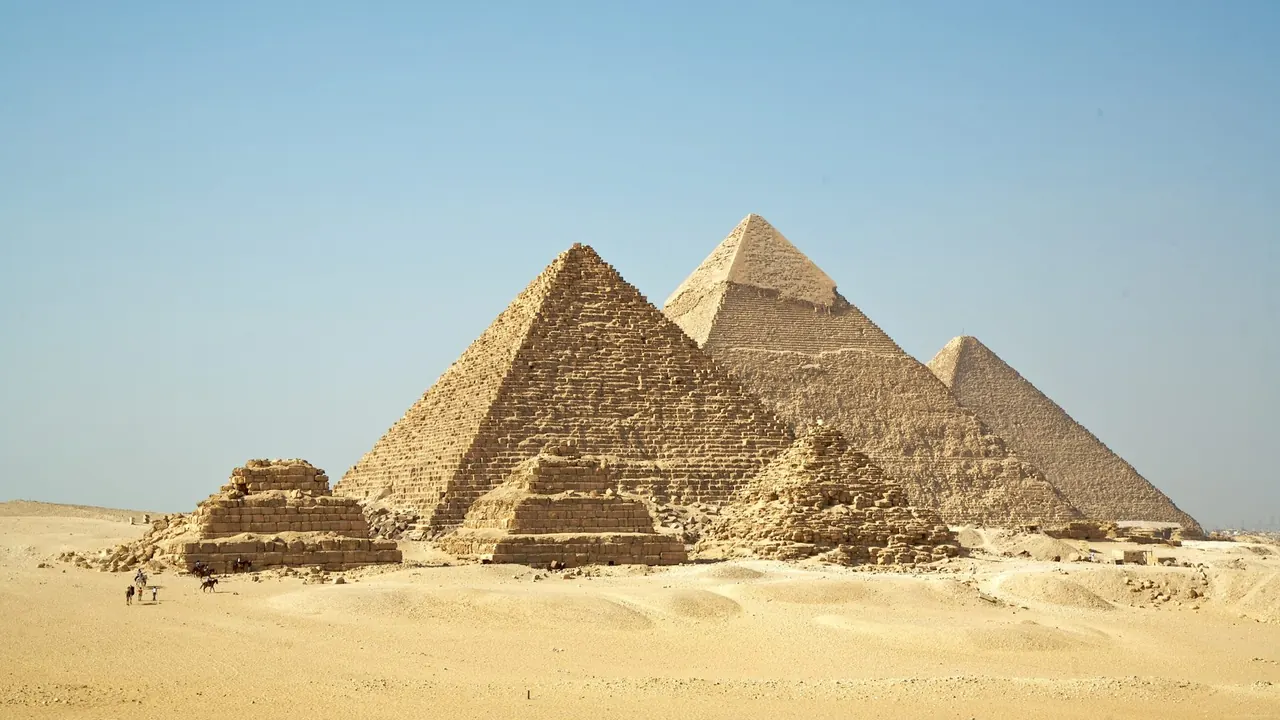
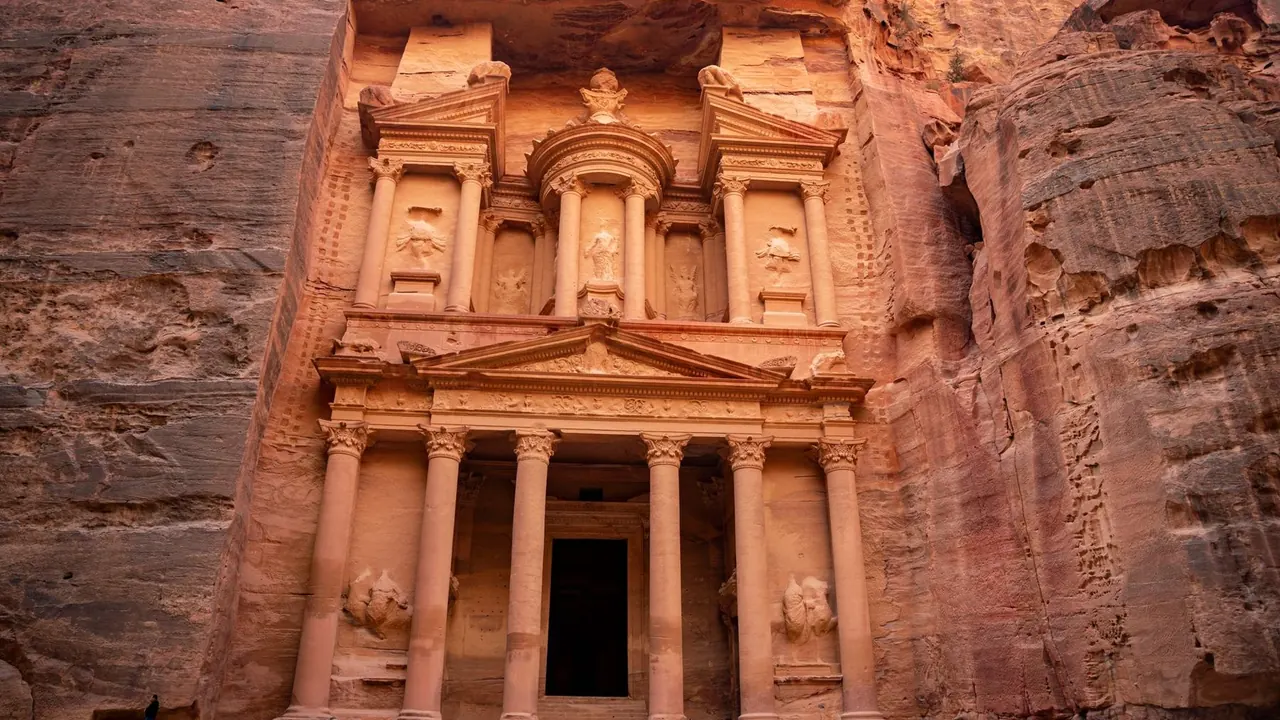
Photos: Cairo by Ricardo Liberato, CC BY-SA 2.0, cropped; Petra by Yasir Gürbüz, Pexels License.
Cairo or Petra?
Our verdict in twelve categories, each scored against the same fixed benchmark cities, and the climate month by month, so you can choose for your trip.
Choose Cairo for
- prices
- nightlife
- shopping
Cairo is the stronger choice for a trip that wants to fill both its days and its evenings. The days go to the pyramids, Islamic Cairo and the great museums. Later come koshari counters, coffeehouses and walks on the Nile corniche long after dark. It costs very little and has a bazaar worth hours of browsing. Saqqara, Dahshur and even Alexandria are within a day's reach. The trade-off is noise, heavy traffic and a city that rarely lets you rest.
Choose Petra for
- nature and the outdoors
- wellness
Petra rewards travellers who come for one extraordinary site and the mountains around it. The rock-cut city takes two or three days on foot. The trails to the Monastery, Jebel Haroun and Little Petra turn sightseeing into proper hiking, with Wadi Rum and Dana close by. Evenings are early and quiet, food is simple and the town has little else, so it suits walkers who are happy to spend their energy outdoors.
Scoreboard
Twelve categories on one fixed scale from 0 to 100. The shaded stretch is the gap between the two.
Your match
Pick a travel style or drag the sliders, and both match scores follow your weighting.
Wins on prices and nightlife with your weighting.
Wins on nature and the outdoors and wellness with your weighting.
What matters to you?
Category by category
What the scores mean for a trip.
Beaches & swimming
Neither city is a place to swim, and both send you to the Red Sea, though to different kinds of shore. From Cairo, Ain Sokhna is about two hours east and lined with resort compounds, so it works better as a weekend away. From Petra, Aqaba is a similar drive south, with clear water and coral reefs close to shore, and it fits naturally as its own stop on a tour of Jordan. In town, both come down to a hotel pool, and in Wadi Musa not every hotel has one.
Food & drink
Cairo eats far better. Its street food runs from ful and taameya at breakfast to shops that serve only koshari, with feteer, stuffed pigeon and molokhia, plus juice stands and sweet shops in between. The coffeehouse sets the rhythm of the day.
Wadi Musa serves the Jordanian standards well enough, including mansaf, maqluba and the pit-cooked zarb, but many visitors end up at hotel buffets. The best moments are sage tea on the trail or a Bedouin meal in the hills, and a cooking class is a good way to spend an evening.
Culture & sights
Both cities hold some of the great ancient sites of the world, but Cairo has far more to see. Giza and the museums are only the start. Islamic Cairo's mosques and madrasas, Saladin's Citadel and Coptic Cairo add whole other eras, enough for many days.
Petra is one overwhelming site: the Siq opening onto the Treasury, the Royal Tombs along the cliff and the long climb to the Monastery. It deserves two or three days, but outside the park Wadi Musa has nothing to see, so the range is much narrower.
Nightlife
Cairo has a late night life of its own. Families stroll the Nile corniche and Qasr el-Nil bridge, and coffeehouses stay busy with backgammon after midnight. There is also a small, pricey drinking scene of rooftop bars and party boats around Zamalek. Petra has almost nothing after dark: dinner, a shisha on a terrace and bed, because the next day on the trails starts early.
Nature & outdoors
Here Petra is far ahead. The sandstone mountains around it are walking country, from Wadi Muthlim and Wadi al-Farasa to the back trail between Little Petra and the Monastery, and the Jordan Trail passes through. Wadi Rum's climbing and desert camps and the ibex slopes of Dana are all within reach.
Cairo's outdoors comes down to a felucca at sunset, Al-Azhar Park and the dry canyons of Wadi Degla, with the lakes and dunes of the Fayoum two hours away. In both places, summer heat makes being outdoors hard work.
Day trips
Cairo has the richer choice. Saqqara, Dahshur and the ruins of Memphis are under an hour south. The Wadi Natrun monasteries, the Fayoum and even Alexandria make full days out, though most of these trips need a hired driver.
From Petra, the outings are Shobak castle with Dana village, Wadi Rum and Aqaba. Kerak is better seen on the drive to or from Amman, and Jordan's northern sights are too far for a return trip.
Good for families
Neither is easy with small children, though Cairo is a little more manageable. The pyramids, a camel ride and the mummies hold children's attention, and a hotel pool and a private driver soften the traffic and broken pavements.
Petra suits older, sturdy children who enjoy long walks and scrambling into tombs. There is little shade, strollers are little use beyond the main path, and Wadi Musa has no parks or play areas.
Getting around
Cairo at least has a metro, which is cheap and avoids the traffic, and ride-hailing apps cover the rest. Crossing the city by road can still take a long time in the jams. Walking works in short stretches, such as Al-Muizz Street or the tree-lined streets of Zamalek.
Petra is all on foot. You walk the park from end to end, with long climbs, and Wadi Musa is so steep that the higher hotels are a taxi ride from the gate. Beyond town there is no transport worth relying on, so a driver or a rental car is close to essential.
Shopping & style
Cairo is a real shopping city. Khan el-Khalili has traded since the fourteenth century, and craftspeople still work by hand on the Street of the Tentmakers and in the coppersmiths' alley. Zamalek's boutiques add contemporary Egyptian design.
Petra's shopping is souvenirs, from stalls along the trails and the shops of Wadi Musa. The one buy worth seeking out is embroidery from the women's cooperative shops.
Affordability
Cairo is one of the cheapest major cities to visit, from street food to comfortable hotels in Zamalek. Only site fees, alcohol and guided tours cost more.
Petra is moderately priced rather than cheap. The site charges foreigners one of the steepest heritage fees anywhere, though a multi-day ticket or a pass bought before arriving in Jordan softens it, and the drivers needed to go further add up. Falafel, shawarma and simple guesthouses stay inexpensive.
Live music & performing arts
Cairo has a proper stage. The Opera House on Gezira Island is home to a symphony orchestra and a ballet company, the tanoura whirling dance is performed in the Wikala of al-Ghouri, and small venues keep zar and traditional music alive.
Petra has one show, Petra by Night, with candles in the Siq and Bedouin rababa music in front of the Treasury. It is memorable if the crowd stays quiet, and beyond it there are only hotel dinner shows and songs around a campfire.
Wellness & relaxation
Petra is the easier place to rest, though neither is a retreat. Wadi Musa is quiet, and its tourist bathhouses offer steam, a scrub and a massage that tired legs will welcome after the trails.
In Cairo the noise, traffic and dust rarely let up, and the old hammams have largely fallen out of use. Rest means a hotel spa on the Nile or an evening on a felucca, and many visitors add a few days on the Red Sea or in an oasis afterwards.
When should you go?
Pick your month. The climate figures are measured averages, not a forecast.
Cairo in July
Petra in July
Daytime high, °C
Rainfall in the month, mm
Where the figures come from
Petra's temperatures are measured 34 km from the centre, at Ma'An.
Petra's station stands 219 m above the city centre, so the centre is likely a little warmer than the figures say.
Petra has no rain gauge within 25 km of the centre, so its rainfall comes from a gridded climate dataset read at the city rather than from a gauge further away.
Temperature and rainfall are climate normals, averaged over the years shown. Cairo: 1991-2020 normals, Helwan (21.9 km from centre). Petra: 1991-2020 normals, Ma'An (33.9 km from centre).
Cairo is almost rainless all year, so heat decides the season. From November to March, days run from about 19°C to 26°C, which is ideal for walking Islamic Cairo and standing on the Giza plateau. From May to September highs reach 36°C, and sightseeing shrinks to early mornings and evenings. There is strong sunshine in every month.
Petra is higher and cooler, and it has a real winter. January highs are about 14°C, nights can be frosty, and most of its rain falls between December and February, around 45mm in the wettest month. Spring and autumn, roughly March to May and October to November, are the times for long hikes in the site, before summer heat matches Cairo's. So Cairo is at its best through the winter, while Petra is better on either side of it.
Which traveller are you?
For an outdoors trip, Petra is the clear pick. The site itself is hiking ground, with trails to the High Place of Sacrifice and Jebel Haroun, and Wadi Rum and the Dana reserve lie close by. Cairo offers little beyond Al-Azhar Park and desert outings.
On a food and nightlife trip, Cairo wins easily. Ful, taameya, koshari and feteer cost little on the street, the coffeehouses stay full past midnight, and Zamalek has bars on top of that. In Petra, evenings end with dinner and an early night.
On a tight budget, Cairo makes money go much further. Street food, the metro and mid-range hotels are all cheap, and only site fees and tours add up. At Petra, the steep entry fee for foreigners and the drivers needed beyond town push costs up.
Before you go
| Measure | Cairo | Petra |
|---|---|---|
| Official language | Arabic | Arabic |
| Currency | Egyptian Pound (EGP) | Jordanian Dinar (JOD) |
| Sockets | CF220 V, 50 Hz | BCFGJ230 V, 50 Hz |
| Driving side | Right | Right |
| Time zone | UTC+2, UTC+3 in summer | UTC+3 |
| Emergency number | Police 122, ambulance 123, fire 180 | 911 |
| Elevation | 23 m | 850 m |
| Main airport | Cairo International Airport (CAI)17 km from centre127 non-stop destinations | King Hussein International Airport (AQJ)90 km from centre5 non-stop destinations |
| Public holidays this year | 15 days | - |
By the numbers
| Measure | Cairo | Petra |
|---|---|---|
| City population | 9,801,536 | - |
| People per km² | 18,564 | - |
| Museums within 10 km | 48 | 2 |
| UNESCO World Heritage sites within 50 km | 2 | 1 |
Where else could you go?
Every comparison below shares a destination with this one, so you can follow Cairo or Petra somewhere new.