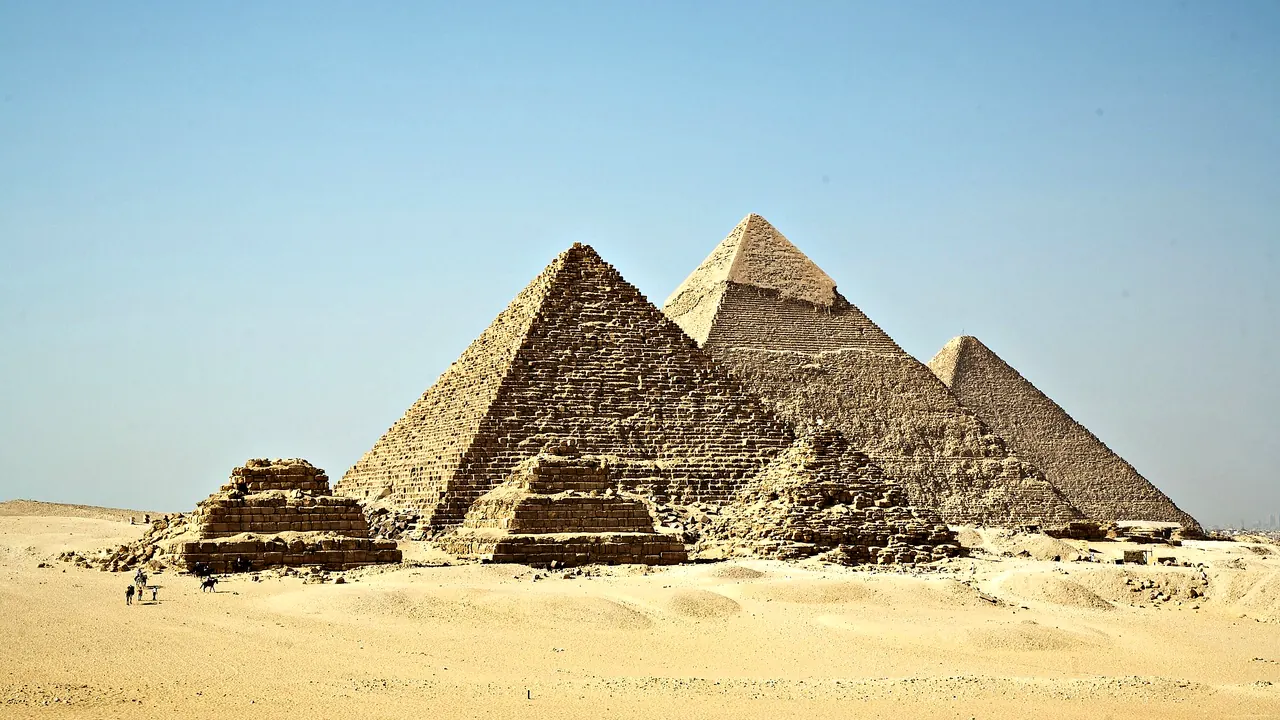
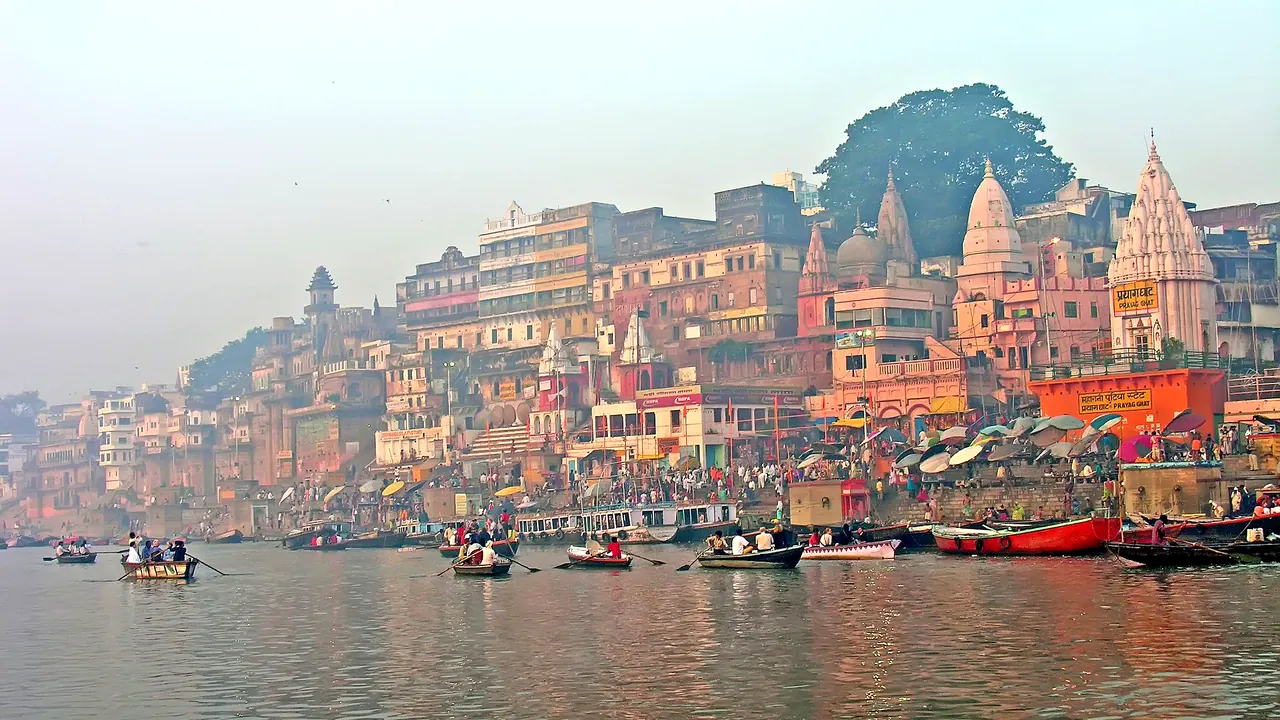
Photos: Cairo by Ricardo Liberato, CC BY-SA 2.0, cropped; Varanasi by Dennis G. Jarvis, CC BY-SA 2.0, cropped.
Cairo or Varanasi?
Our verdict in twelve categories, each scored against the same fixed benchmark cities, and the climate month by month, so you can choose for your trip.
Choose Cairo for
- nightlife
- families
- day trips
Cairo suits the traveller who wants ancient history at full scale. The pyramids and Sphinx at Giza, the great antiquities museums and the medieval streets of Islamic Cairo are all in the city, and Saqqara and Dahshur are a short drive away. It also works for more kinds of trip, with coffeehouses busy until late, a small bar scene in Zamalek and enough for children to make a family visit realistic.
Choose Varanasi for
- wellness
- live music and the arts
Choose Varanasi for something rarer: a sacred city where ritual on the ghats sets the hours of the day, from bathing at dawn to the evening aarti. It rewards adults who come for Hindustani classical music, yoga and slow hours on the river. They need to accept early nights, almost no alcohol and a place that is very hard work with children.
Scoreboard
Twelve categories on one fixed scale from 0 to 100. The shaded stretch is the gap between the two.
Your match
Pick a travel style or drag the sliders, and both match scores follow your weighting.
Wins on nightlife and families with your weighting.
Wins on wellness and live music and the arts with your weighting.
What matters to you?
Category by category
What the scores mean for a trip.
Beaches & swimming
Neither city is a place to swim, but Cairo at least has a sea within reach. The Red Sea at Ain Sokhna is about 130km east, warm and calm but lined with resort compounds, so it suits a few extra days more than a day out.
Varanasi is hundreds of kilometres from any coast, and the Ganges, sacred as it is, is polluted and fast-flowing. In both cities a swim means a hotel pool, and in Varanasi only a few larger hotels away from the old city have one.
Food & drink
Both cities eat best on the street and cheaply, but the cooking is very different. Cairo has a broader table: ful and taameya for breakfast, koshari for lunch, grilled kofta, stuffed pigeon and molokhia. The coffeehouse is the backbone of the day, and Zamalek and Heliopolis add a modest layer of international restaurants.
Varanasi is almost entirely vegetarian near the ghats and built around snacks and sweets: kachori at dawn, chaat, lassi in clay cups, malaiyo in winter and paan rolled to order. There are fewer dishes and less alcohol, but a handful of its specialities are as memorable as anything in Cairo.
Culture & sights
Both are among the oldest cities a traveller can visit, but Cairo has more to see. Giza's pyramids and Sphinx, the Grand Egyptian Museum and the royal mummies at Fustat sit alongside the mosques, madrasas and Citadel of Islamic Cairo and the churches of Coptic Cairo. That is enough for many full days.
Varanasi's great sight is the riverfront itself: more than eighty ghats where bathing, prayer and cremation go on in plain view, with the Kashi Vishwanath temple in the lanes behind. Museums are thin and some sanctums are closed to non-Hindus, so there is less to tour, but the daily ritual is on a scale Cairo has nothing like.
Nightlife
Cairo has a real evening life, even if it runs on tea. The ahwas of downtown and Islamic Cairo stay full past midnight, families stroll the corniche, and Zamalek, the big hotels and a few party boats supply bars and rooftops.
Varanasi largely closes after the evening aarti. Alcohol is scarce and frowned on near the ghats, the Assi Ghat cafés wind down early, and the city goes to bed ready for dawn.
Nature & outdoors
Neither is a city for landscape, but Cairo gives you more to work with. Inside the city there are Al-Azhar Park and the canyons of Wadi Degla. Two hours away, the Fayoum lakes and dunes and the whale fossils of Wadi Al-Hitan make proper desert outings between October and April.
Varanasi's outdoors is mostly the river: a sunrise row past the ghats and walks on the sandbank opposite. The Vindhya hills and Chandraprabha's waterfalls are about two hours south and are best after the monsoon.
Day trips
Cairo's surroundings are much richer. Saqqara, Dahshur and Memphis lie within an hour, and the monasteries of Wadi Natrun and the Fayoum oasis are also within reach. Alexandria makes a long but workable day, though most of these trips need a driver.
Varanasi has one outstanding outing: Sarnath, half an hour away, where the Buddha first preached. Chunar Fort and the mosques of Jaunpur fill another day or two. Prayagraj is a long day, and the big names such as Bodh Gaya are too far to return from the same day.
Good for families
Cairo is not easy with children, but Varanasi is far harder. In Cairo the pyramids, camel rides and Tutankhamun's gold give children real highlights. A hotel pool, a private driver and a winter visit make the traffic and the touts manageable.
Varanasi has almost nothing made for children, and its narrow lanes, open drains and cremations in plain view are a lot for young eyes. Families who go usually keep the stay short: a dawn boat, Sarnath and a comfortable hotel away from the ghats.
Getting around
Both cities are tiring to move around, but Cairo is a little easier. Its metro links Tahrir, Coptic Cairo and Heliopolis, and ride-hailing apps take the haggling out of the heavy traffic. Walking only works in short stretches, such as Al-Muizz Street or Zamalek.
Varanasi has no metro, but its best route is on foot. The ghats link up for several kilometres from Assi to Raj Ghat, with boats running alongside. Away from the river you rely on rickshaws, autos and a maze of lanes shared with cattle.
Shopping & style
Cairo spreads its shopping across many crafts, while Varanasi puts nearly everything into one. Khan el-Khalili and the lanes around it sell brass lamps, inlaid boxes, spices and perfume bottles, appliqué is stitched by hand on the Street of the Tentmakers, Zamalek has small design boutiques, and the suburban malls carry the international brands.
Varanasi's prize is Banarasi silk brocade, bought straight from the weavers' workshops or from the silk houses around Godowlia, with brass ritual ware, painted wooden toys and musical instruments around it. Haggling is expected in both, and in Varanasi touts working on commission will try to steer you to particular silk shops.
Affordability
Neither city costs much to stay in, so the difference lies in where the money goes. In Cairo the extra spending comes at the big sites, where foreigners pay far more than locals, and on alcohol, guided tours and Nile-view hotels.
In Varanasi the ghats and the evening aarti cost nothing at all. The main temptations are a length of silk or a night in one of the restored palace hotels on the river.
Live music & performing arts
Cairo's formal stage is the Opera House on Gezira Island, with a symphony orchestra, ballet and Arabic ensembles. Its most memorable show is the tanoura whirling dance in the Wikala of al-Ghouri. Between them they make a fine evening or two, where in Varanasi music runs through the whole stay.
Varanasi goes deeper. It is one of the great homes of Hindustani classical music, with recitals in music schools and the all-night Sankat Mochan festival in a temple courtyard. It also has the Ramlila at Ramnagar and the fire and chant of the Ganga aarti every evening, watched from the steps or from boats.
Wellness & relaxation
Cairo is the harder place to slow down. Its old hammams have largely fallen out of use, so rest means a hotel spa, a felucca at dusk or a quiet courtyard in a historic house.
Varanasi offers more to the traveller looking inward, with yoga, meditation and Ayurvedic massage around Assi Ghat and calm hours on the river at dawn. Beyond Assi and the river it is still loud and emotionally intense, so rest has to be planned into the day rather than expected from the city.
When should you go?
Pick your month. The climate figures are measured averages, not a forecast.
Cairo in July
Varanasi in July
Daytime high, °C
Rainfall in the month, mm
Where the figures come from
Varanasi has no weather station within reach, so its figures come from a gridded climate model rather than a measured record, and read a broad area rather than one spot.
Temperature and rainfall are climate normals, averaged over the years shown. Cairo: 1991-2020 normals, Helwan (21.9 km from centre). Varanasi: 2001-2020 normals, NASA POWER reanalysis grid, no weather station within 90 km.
Cairo is dry all year, so the deciding factor is heat. From October to April the days run from about 19°C in January into the high 20s, with long hours of sunshine. This is the season for the pyramids and for walking through Islamic Cairo. From May to September highs climb to 36°C, and sightseeing shrinks to early mornings and evenings.
Varanasi has a sharper calendar. November to February is the comfortable window, with highs in the mid 20s and very little rain, though mornings on the river are often hazy. The heat builds fast from March to a peak of 43°C in May. The monsoon follows, and July brings around 249mm. Neither city is a beach destination in any month.
Which traveller are you?
On a family trip with children, Cairo is the only realistic choice of the two. The pyramids, a camel ride and the mummies give children something to remember. Varanasi's crowded lanes, open cremations and lack of anything made for kids make it very hard going.
For a food and nightlife trip, Cairo comes out ahead again. Its street food runs from koshari to feteer, its ahwas stay full past midnight and Zamalek has bars and rooftops. Varanasi is vegetarian near the ghats, with little alcohol and early nights.
On a relaxing and wellness trip, Varanasi is the better of two demanding cities. Yoga, meditation teachers and Ayurvedic massage are found around Assi Ghat, and a dawn boat on the river can be calming. Cairo offers little beyond hotel spas and a felucca at sunset.
Before you go
| Measure | Cairo | Varanasi |
|---|---|---|
| Official language | Arabic | Hindi, English |
| Currency | Egyptian Pound (EGP) | Indian Rupee (INR) |
| Sockets | CF220 V, 50 Hz | CM230 V, 50 Hz |
| Driving side | Right | Left |
| Time zone | UTC+2, UTC+3 in summer | UTC+5:30 |
| Emergency number | Police 122, ambulance 123, fire 180 | 108 or 112 |
| Elevation | 23 m | 76 m |
| Main airport | Cairo International Airport (CAI)17 km from centre128 non-stop destinations | Lal Bahadur Shastri International Airport (VNS)21 km from centre16 non-stop destinations |
| Public holidays this year | 15 days | - |
By the numbers
| Measure | Cairo | Varanasi |
|---|---|---|
| Population | 9,801,536 | 1,198,491 |
| People per km² | 18,564 | 14,598 |
| Museums within 10 km | 48 | 2 |
| UNESCO World Heritage sites within 50 km | 2 | 1 |
Where else could you go?
Every comparison below shares a destination with this one, so you can follow Cairo or Varanasi somewhere new.
- Alexandriavs Cairo
- Pokharavs Varanasi
- Kathmanduvs Varanasi
- Dahabvs Cairo
- Sharm el-Sheikhvs Cairo
- Hurghadavs Cairo