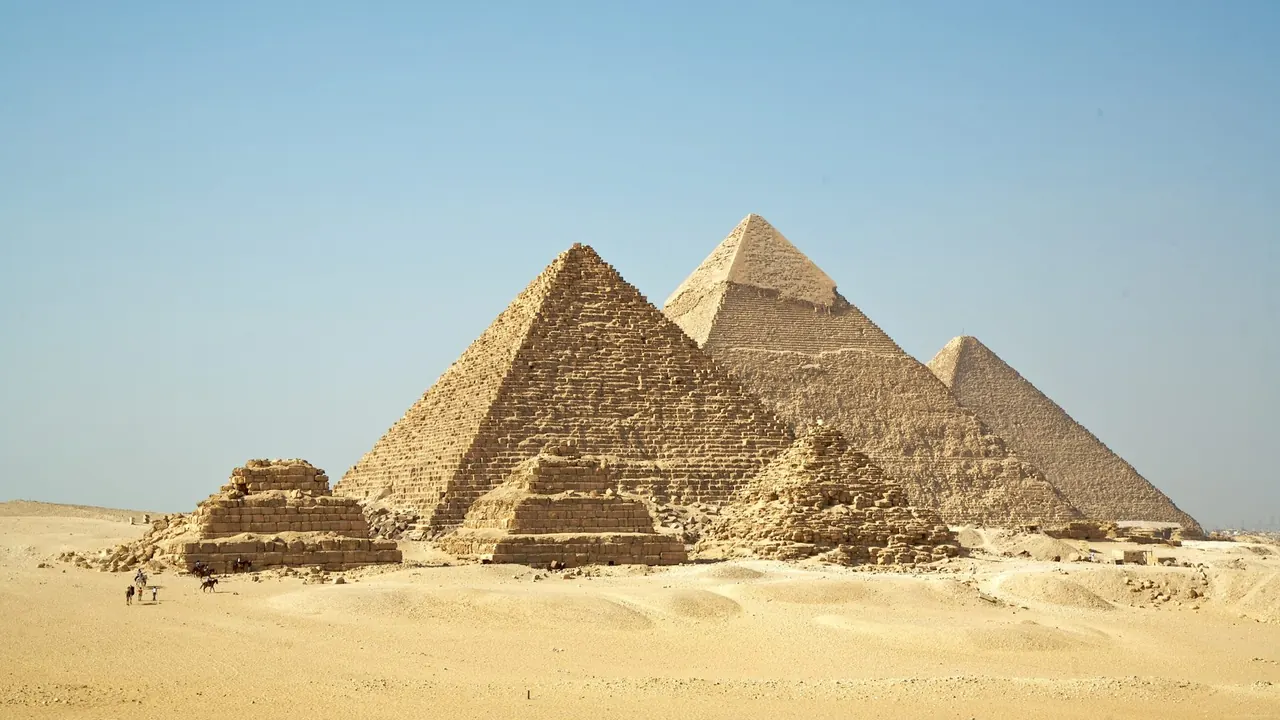
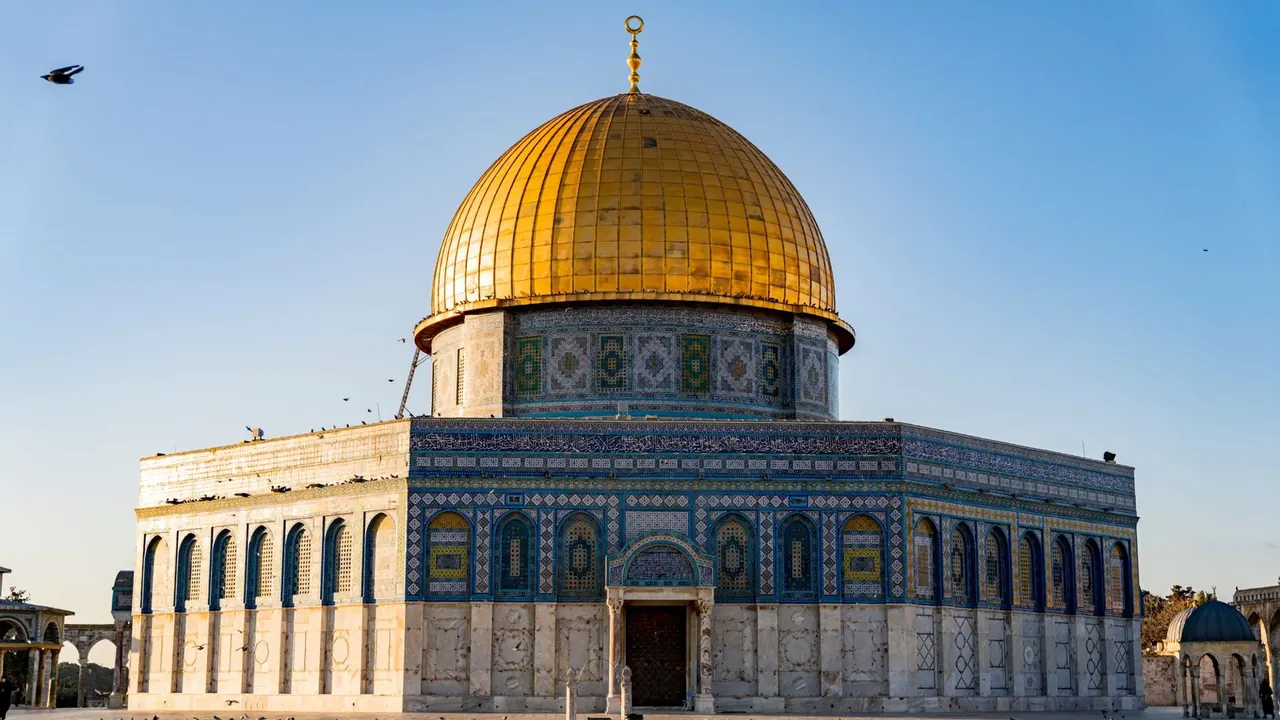
Photos: Cairo by Ricardo Liberato, CC BY-SA 2.0, cropped; Jerusalem by Yasir Gürbüz, Pexels License.
Cairo or Jerusalem?
Our verdict in twelve categories, each scored against the same fixed benchmark cities, and the climate month by month, so you can choose for your trip.
Choose Cairo for
- prices
- nightlife
- shopping
Cairo is for the traveller who wants ancient Egypt at full scale and doesn't mind a hard city to get it. The pyramids, the great antiquities museums and the medieval lanes of Islamic Cairo are all within the one sprawling city. Your money goes a very long way, and evenings run late in the coffeehouses and along the Nile. In return you put up with heavy traffic, broken pavements and insistent touts, so it rewards patient adults more than families or anyone after rest.
Choose Jerusalem for
- beaches
- nature and the outdoors
- wellness
Jerusalem suits a traveller who wants deep history in a compact place that is easier to manage. The Old City can be walked, and a light rail and fast train connect it to the rest. Desert, hills, the Dead Sea and the Mediterranean are all within a day, which gives it the wider choice of excursions, walks and ways to unwind. Families also find it easier going. It costs far more, though, and Shabbat closes much of the western city for a day each week.
Scoreboard
Twelve categories on one fixed scale from 0 to 100. The shaded stretch is the gap between the two.
Your match
Pick a travel style or drag the sliders, and both match scores follow your weighting.
Wins on prices and nightlife with your weighting.
Wins on beaches and nature and the outdoors with your weighting.
What matters to you?
Category by category
What the scores mean for a trip.
Beaches & swimming
Neither city has a beach of its own, but Jerusalem makes a swim much easier. A fast train and a short ride get you to the long sandy beaches of Tel Aviv in about an hour, and the Dead Sea offers a once-in-a-lifetime float in the other direction.
From Cairo, the nearest sea is the Red Sea at Ain Sokhna, about 130km away along a coast of resort compounds. Most people treat it as a separate stay rather than a day out, and in the city itself, swimming means a hotel pool.
Food & drink
Cairo eats from one deep street tradition, and it does so cheaply and well. A day can run from ful and taameya at a cart to koshari in a shop that makes nothing else, with tea in the ahwa in between. A long evening meal is harder to find. Zamalek and Heliopolis have a few modern and international restaurants, fine dining is scarce, and alcohol rarely comes with the meal.
Jerusalem offers more variety, because Arab, Jewish and Armenian cooking sit within a short walk of each other. You can have hummus at an Old City counter in the morning and Iraqi sabich at lunch, then spend the evening among the grills of Mahane Yehuda with a glass of Judean Hills wine. Eating out has its own rules, though. Kosher kitchens keep meat and dairy apart, on Shabbat only the Arab neighbourhoods keep serving, and as in Cairo, the top-end restaurants are few.
Culture & sights
Both cities hold some of the world's greatest heritage, and the difference lies in its scale and how it is laid out. Cairo works on a monumental scale: the Giza pyramids, two major antiquities museums and the royal mummies, plus a whole medieval Islamic city and Coptic quarter, spread across a vast metropolis that takes many days to cover.
Jerusalem packs its layers into about a square kilometre of walled Old City. There, the Western Wall, the Holy Sepulchre and the Dome of the Rock are still places of daily worship, and excavations beneath them reach back to the Bronze Age. The Israel Museum, with the Dead Sea Scrolls, and Yad Vashem complete a visit that is as emotionally intense as it is historical.
Nightlife
Cairo has the longer and livelier night, though it runs on tea rather than drink. Families stroll the corniche and the Qasr el-Nil bridge, and the downtown coffeehouses stay full past midnight. For alcohol there are Zamalek's bars and rooftops and the boats moored on the river.
Jerusalem's evenings are quieter. They gather in the Mahane Yehuda stalls after closing, the pubs off Jaffa Road and the German Colony. The Old City goes dark early, Friday nights are subdued, and anyone after a proper night out takes the train to Tel Aviv.
Nature & outdoors
Jerusalem has far more countryside close by. Its ridge drops west into the pine forests and spring-fed trails of the Judean Hills and east into the Judean Desert, where Wadi Qelt, the waterfalls and ibex of Ein Gedi, and the dawn climb up Masada are all within a day.
Cairo's green space is mostly Al-Azhar Park, a felucca on the Nile and the dry canyons of Wadi Degla. Its best landscapes, the lakes and dunes of the Fayoum and the whale fossils of Wadi Al-Hitan, mean a long desert drive and are worth doing only between October and April.
Day trips
Cairo's day trips go deep on one subject. Saqqara, Dahshur, Memphis and Meidum add more pyramids and tombs, often with few other visitors, and Wadi Natrun's monasteries and a long day to Alexandria provide the contrast. Almost all of them need a driver or a tour.
Jerusalem offers more variety and easier transport. Bethlehem is next door, and Jaffa is half an hour away by train. Masada and Qumran pair with the Dead Sea, and Caesarea, Acre and the Haifa gardens bring Roman, Crusader and coastal sites within about two hours. Some West Bank sites involve a checkpoint, so many visitors go with a guide.
Good for families
Children rarely forget Cairo's pyramids, the camel rides and Tutankhamun's gold, and Egyptians fuss over young visitors. Beyond those big moments, though, the traffic, touts, missing pavements and summer heat make every outing hard work.
Jerusalem gives children more to do between the holy sites, with the Biblical Zoo, the aquarium beside it and the Bloomfield Science Museum. Older children love the ramparts walk and wading through Hezekiah's Tunnel. Its limits are a stroller-proof maze of Old City steps and the Shabbat shutdown.
Getting around
Jerusalem is far easier to move around. The Old City, Jaffa Road and Mahane Yehuda are within walking distance of each other, though hilly. The light rail reaches Yad Vashem, and a fast train goes to Tel Aviv and the airport. The one gap is Shabbat, when buses and trains stop.
In Cairo, the metro covers some useful routes but misses the pyramids. Most journeys end up in ride-hailing cars stuck in traffic, and walking means crossing busy roads with no pavement, so it works only in short stretches such as Al-Muizz Street or Zamalek.
Shopping & style
Cairo has the better bazaar. Khan el-Khalili has been trading for seven centuries, and nearby the tentmakers still stitch appliqué by hand and the coppersmiths still hammer in their alley, so you can watch crafts being made. Zamalek adds contemporary Egyptian design and cotton linens.
Jerusalem's shopping is narrower and leans towards the devotional: olive-wood carvings in the souq, painted Armenian ceramics and silver Judaica. Mamilla handles the international brands. In both cities you are expected to bargain in the old markets.
Affordability
This is the widest gap between the two. Cairo is one of the cheapest major cities to visit, and the only real costs are foreigners' entry fees at the big sites, alcohol, luxury hotels and guides.
Jerusalem is expensive, with hotel prices that climb further during the Jewish festivals and pilgrimage seasons. Free holy sites, reasonable public transport and cheap hummus lunches help, but a comfortable week costs many times more than in Cairo.
Live music & performing arts
Cairo has more to offer here, and something you won't find anywhere else. The Opera House on Gezira hosts the symphony orchestra, the ballet and Arabic music ensembles, and the whirling tanoura dance is performed in the medieval Wikala of al-Ghouri.
Jerusalem's season rests on its symphony orchestra, the Jerusalem Theatre, the Israel Festival and summer concerts at Sultan's Pool below the walls, with Tel Aviv taking most of the opera and dance. In both cities most plays are in the local language, so music is the safer bet for visitors.
Wellness & relaxation
Neither city is restful, but Jerusalem has the Dead Sea about an hour away. Its spa resorts offer mineral mud, sulphur pools and a float in dense, warm water. Within the city, Shabbat brings a weekly hush to the western streets, and the gardens on the Mount of Olives offer a quiet hour.
In Cairo, the noise and dust barely stop, and the old hammams are no longer open to visitors. Rest means a Nile hotel spa, a felucca at dusk, or travelling on afterwards to the Red Sea or an oasis.
When should you go?
Pick your month. The climate figures are measured averages, not a forecast.
Cairo in July
Jerusalem in July
Daytime high, °C
Rainfall in the month, mm
Where the figures come from
Jerusalem has no rain gauge within 25 km of the centre, so its rainfall comes from a gridded climate dataset read at the city rather than from a gauge further away.
Temperature and rainfall are climate normals, averaged over the years shown. Cairo: 1991-2020 normals, Helwan (21.9 km from centre). Jerusalem: 1991-2020 normals, Jerusalem (1.8 km from centre).
Cairo is dry almost all year and very sunny, so rain hardly matters. Heat does. From May to September, afternoons reach 36°C and walking the streets or exploring the desert becomes hard work. October to April is the time to go. Winter days around 19°C are ideal for long days at the pyramids and in the old city.
Jerusalem sits higher and stays cooler. Summer highs are milder than Cairo's and the city is dry from June to September, but winter is cold and wet, with about 109mm of rain in January. Spring and autumn are the best months for walking the Old City and the hills. For a beach day in Tel Aviv, the sea is warm from June to October and reaches 28°C in late summer. Spring and autumn suit both cities, but if you can only go in winter, Cairo is the better choice.
Which traveller are you?
On a trip on a tight budget, Cairo wins easily. Street food, the metro, ride-hailing and comfortable mid-range hotels all cost very little. In Jerusalem, hotels, sit-down meals and drinks add up quickly, even if you live on hummus and market lunches.
On a family trip with children, Jerusalem is the easier choice. A zoo, an aquarium and a hands-on science museum fill the gaps between sights, and it is easier to get around. Cairo's pyramids thrill children, but the traffic, missing pavements and summer heat wear families down.
On an outdoors trip, choose Jerusalem. Wooded trails in the Judean Hills, the Wadi Qelt canyon and the Ein Gedi oasis are all within easy reach. From Cairo, open landscape mostly means a two-hour drive to the Fayoum, and only in the cooler months.
Before you go
| Measure | Cairo | Jerusalem |
|---|---|---|
| Official language | Arabic | Hebrew |
| Currency | Egyptian Pound (EGP) | New Israeli Sheqel (ILS) |
| Sockets | CF220 V, 50 Hz | CHM230 V, 50 Hz |
| Driving side | Right | Right |
| Time zone | UTC+2, UTC+3 in summer | UTC+2, UTC+3 in summer |
| Emergency number | Police 122, ambulance 123, fire 180 | Police 100, fire 102 |
| Elevation | 23 m | 754 m |
| Main airport | Cairo International Airport (CAI)17 km from centre127 non-stop destinations | Ben Gurion International Airport (TLV)42 km from centre111 non-stop destinations |
| Public holidays this year | 15 days | - |
By the numbers
| Measure | Cairo | Jerusalem |
|---|---|---|
| City population | 9,801,536 | 1,050,151 |
| People per km² | 18,564 | 8,374 |
| Museums within 10 km | 48 | 69 |
| UNESCO World Heritage sites within 50 km | 2 | 7 |
| Swim season, months above 21 °C | - | 7 months |
Where else could you go?
Every comparison below shares a destination with this one, so you can follow Cairo or Jerusalem somewhere new.