Egypt
Dahab
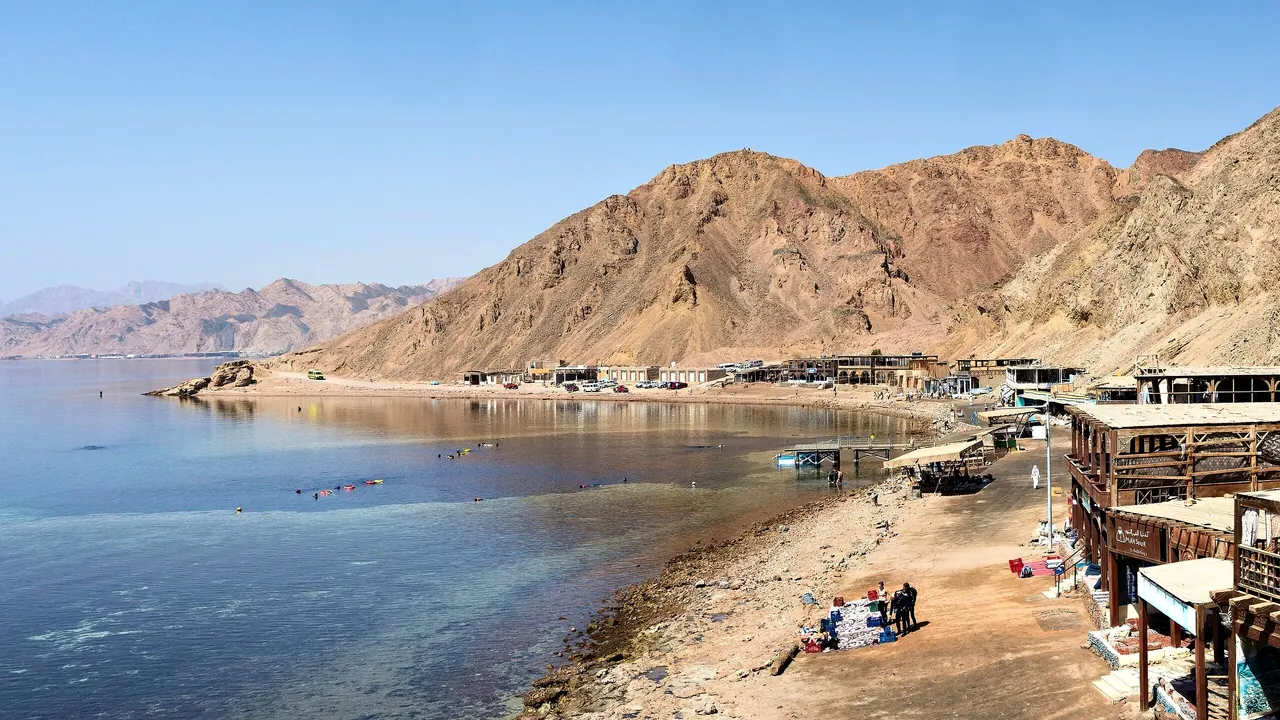
The Blue Hole between the desert mountains and the sea
- Nature & outdoors88
- Affordable cities88
- Beaches74
Photo: Petar Milošević, CC BY-SA 4.0, cropped
Match
40
Every category weighted equally
- Beach & sun50
- Culture & arts29
- Food & nightlife31
- Family trip48
- Outdoors50
- Relax & unwind48
- Shopping & style31
- On a budget45
Dahab in twelve categories
Our verdict on each, scored 0 to 100 against the same fixed benchmark cities, so a score means the same thing on every page.
Beaches & swimming. Scores 74 out of 100.
Food & drink. Scores 32 out of 100.
Culture & sights. Scores 7 out of 100.
Nightlife. Scores 18 out of 100.
Nature & outdoors. Scores 88 out of 100.
Day trips. Scores 28 out of 100.
Good for families. Scores 40 out of 100.
Getting around. Scores 25 out of 100.
Shopping & style. Scores 14 out of 100.
Affordability. Scores 88 out of 100.
Live music & performing arts. Scores 6 out of 100.
Wellness & relaxation. Scores 56 out of 100.
Dahab category by category
Beaches & swimming
74Dahab's sea is the reason most people come, and it is warm enough to swim in all year, from about 21°C in winter to 28°C in late summer. The coast is not a classic sandy strand, though. Along the town promenade and at the Lighthouse, Eel Garden and the Blue Hole north of town, you step off a jetty or rocks almost straight onto a coral reef, so swimming here really means snorkelling over drop-offs in very clear water.
For sand and shallow, calm water, head to the Lagoon on the southern edge of town. Elsewhere, reef shoes help, and cushioned beach cafés with ladders into the sea take the place of sunbeds. A day spent lying on a wide beach suits other Red Sea resorts better. A day of swimming, snorkelling and drying off in the shade suits Dahab.
Food & drink
32Eating in Dahab mostly means waterfront restaurants along the bay, where you choose your fish from the ice and eat it grilled at a low table on cushions with the sea at your feet. Out-of-season evenings are slow and pleasant, and the cooking is straightforward rather than memorable.
The more rewarding meals are in Assala, the old Bedouin and local quarter, where small Egyptian places serve foul, falafel, koshary and fresh bread at local prices. Beyond those, the menus lean to pizza, smoothie bowls and backpacker comfort food. Sweet mint tea and Bedouin tea are everywhere. Alcohol is available but limited to tourist bars, and serious food lovers will find a modest offer.
Culture & sights
7Dahab has essentially no sights in the conventional sense: no museums, monuments or historic buildings. The interest is in its Bedouin roots, still visible in Assala and the camel herders and tea stops around town, but this is a character rather than something to visit. The region's real heritage, the monastery at the foot of Mount Sinai, needs a full day out.
Nightlife
18Evenings in Dahab are low-key: a beer or a shisha on cushions by the water, a few bars along the promenade with music and a mixed crowd of divers, travellers and instructors, and the odd party night that runs late. There are no clubs to speak of, and since much of the town is up early to dive or freedive, it is quiet well before midnight on most nights. It suits people who want a drink with a view, not a night out.
Nature & outdoors
88Dahab's great strength is what lies under the water and behind the town. The Gulf of Aqaba drops into deep blue a few metres from shore, giving reef diving straight off the beach at sites such as the Canyon and the Blue Hole, and the town is one of the world's main centres for freediving and training. The Lagoon's steady wind draws windsurfers and kitesurfers much of the year.
Inland, the granite mountains of South Sinai rise right behind town. Camel and jeep trips run into wadis and the Coloured Canyon, the protected coast of Ras Abu Galum is reached on foot or by camel, and Mount Sinai is a classic night climb to watch sunrise. Summer heat makes hiking hard from June to September; spring and autumn are best.
Day trips
28There is one outstanding outing: St Catherine's Monastery, the ancient Orthodox monastery at the foot of Mount Sinai, about two hours inland by road and often combined with the overnight climb. Beyond that, the choices are thin. Sharm el-Sheikh, about an hour south, is a large resort town of hotels and malls, and the small port of Nuweiba to the north has little to see. Most excursions from Dahab are into the desert and sea rather than to other places.
Good for families
40Dahab can be a gentle vacation with children who like the water. The Lagoon has shallow, sheltered water and sand, older children can snorkel on reefs straight from shore, and a camel ride or a desert dinner is a hit. Bedouin and Egyptian culture is warm towards children, and the pace is unhurried.
But there is nothing made for them: no aquarium, playground culture or attractions beyond the sea and desert. Coral and sea urchins call for reef shoes, summer heat is very hard on small children, and serious medical care means Sharm el-Sheikh. It suits families with confident swimmers far better than those with toddlers.
Getting around
25Getting around Dahab is easy only along the water. Most of a stay happens on the flat seafront promenade, about 2km from the Lighthouse at the north end of the bay through Masbat to Mashraba, and much of it is free of cars. Restaurants, dive centres and guesthouses line it, so many visitors walk everywhere they need for days at a time.
Anything beyond it needs a ride. Dahab has no public transport, so the Lagoon to the south, Assala's back streets, the Blue Hole and the northern dive sites mean a taxi, a pickup, a dive-centre transfer or a bicycle on sandy roads in strong sun. In summer, walking any distance away from the shade of the promenade is hard work. Excursions into the mountains and to Mount Sinai are always arranged trips, and reaching the town usually means a road transfer of about an hour from Sharm el-Sheikh airport.
Shopping & style
14Shopping is limited to the stalls and small shops along the promenade, selling scarves, Bedouin embroidery and jewellery, spices, beachwear and the usual souvenirs, with some haggling expected. Dive and freediving equipment is the one thing worth buying here. Anything beyond that means a trip to Sharm el-Sheikh's malls.
Affordability
88Dahab is one of the cheapest places to spend a beach and diving vacation. Simple guesthouses and camps cost very little, local Egyptian meals in Assala cost even less, and taxis around town are cheap. Diving and freediving courses are inexpensive by international standards, which is part of why so many people stay for weeks or months. The waterfront restaurants and the few upmarket hotels charge more, and alcohol is relatively expensive, but a comfortable stay remains easy on a modest budget.
Live music & performing arts
6There is no performing-arts life in Dahab. Occasional live bands or DJs play in promenade bars, and desert-camp evenings may include Bedouin music around a fire, but there is no theatre, concert hall or regular venue to plan a night around.
Wellness & relaxation
56Dahab's appeal for rest lies in its pace rather than in spas. Days slow down to cushioned seafront cafés, sunset over the Sinai mountains, and a community of long-stay travellers built around yoga, breathwork and freediving, where calm and breath control are part of the training. Yoga classes and massage are easy to find and cheap.
What it lacks is a bathing culture: there are no thermal baths or hammam tradition, and spas are limited to the larger hotels. Visitors after pampering treatments will find little, while those who want a quiet, unhurried place to switch off will find it suits them well.
When should you go?
Pick a month to see what it is like. The climate figures are measured averages, not a forecast.
Dahab in July
Daytime high, °C
Rainfall in the month, mm
The whole year
Shaded against this city’s own year: the deepest cell is its best month for that figure and the palest its weakest.
Where the figures come from
Dahab has no weather station within reach, so its figures come from a gridded climate model rather than a measured record, and read a broad area rather than the city itself.
Temperature and rainfall are climate normals, averaged over the years shown. Dahab: 1991-2020 normals, TerraClimate 4 km grid at the town, no weather station within 90 km.
Before you go
| Measure | Dahab |
|---|---|
| Official language | Arabic |
| Currency | Egyptian Pound (EGP) |
| Sockets | CF220 V, 50 Hz |
| Driving side | Right |
| Time zone | UTC+2, UTC+3 in summer |
| Emergency number | Police 122, ambulance 123, fire 180 |
| Elevation | 21 m |
| Main airport | Sharm El Sheikh International Airport (SSH)58 km from centre116 non-stop destinations |
| Public holidays this year | 15 days |
By the numbers
| Measure | Dahab |
|---|---|
| City population | 4,479 |
| Museums within 10 km | 0 |
| UNESCO World Heritage sites within 50 km | 0 |
| Swim season, months above 21 °C | 12 months |
Compare Dahab with
Every comparison with a written verdict behind it.