Photos: Dahab by Petar Milošević, CC BY-SA 4.0, cropped; Tel Aviv by israeltourism, CC BY-SA 2.0, cropped.
Dahab or Tel Aviv?
Our verdict in twelve categories, each scored against the same fixed benchmark cities, and the climate month by month, so you can choose for your trip.
Choose Dahab for
- prices
- nature and the outdoors
- wellness
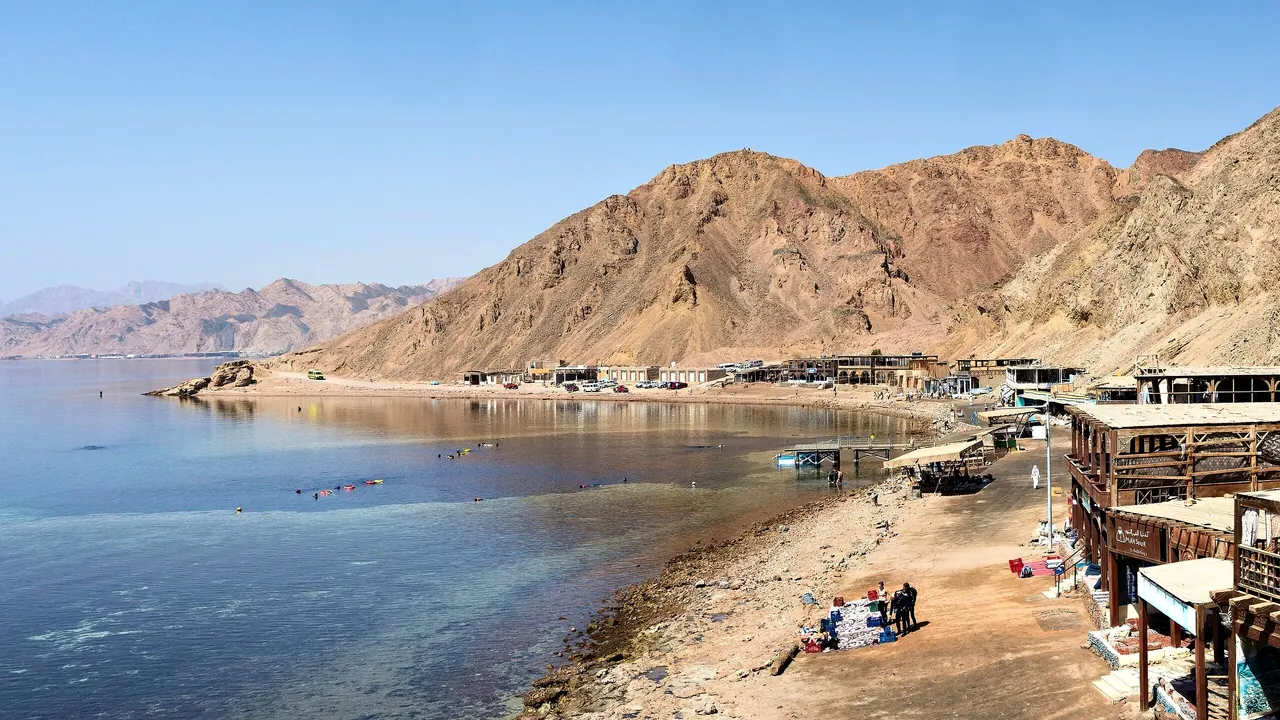
Dahab suits travellers who come for the water and the desert rather than for a town. Its reefs start a few steps from the promenade, it is one of the world's main freediving centres, the Sinai mountains rise behind the bay, and a long stay costs little. Expect cushions by the sea, early nights and very little to see in the conventional sense.
Choose Tel Aviv for
- nightlife
- live music and the arts
- day trips
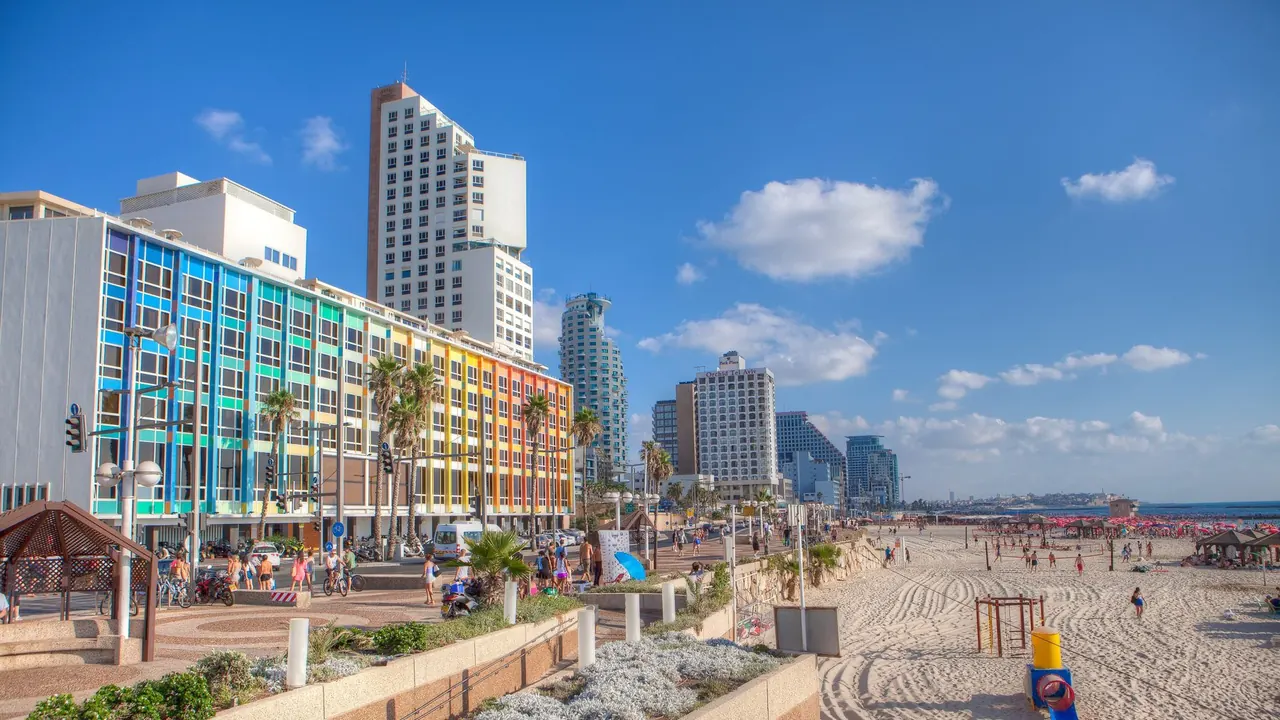
Pick Tel Aviv if you want a full city wrapped around a sandy beach. You get serious eating from market stalls to chef-led dining rooms, nights that run until dawn, Bauhaus streets, dance and orchestra seasons, and Jerusalem within easy reach by train. In return it costs far more and has far less wild landscape on the doorstep.
Scoreboard
Twelve categories on one fixed scale from 0 to 100. The shaded stretch is the gap between the two.
Your match
Pick a travel style or drag the sliders, and both match scores follow your weighting.
Wins on prices and nature and the outdoors with your weighting.
Wins on nightlife and live music and the arts with your weighting.
What matters to you?
Category by category
What the scores mean for a trip.
Beaches & swimming
Tel Aviv has the better beach in the usual sense: an unbroken strip of fine sand along the whole city, calmed by breakwaters, watched by lifeguards and a short walk from most hotels. Dahab's shore is mostly jetties and rocks that drop onto coral. Only the Lagoon has soft sand and shallow water.
Dahab makes up for it underwater. You can snorkel straight from the promenade over clear drop-offs, and the sea is warm enough to swim in every month. Tel Aviv's swimming season runs only from May into November.
Food & drink
Tel Aviv is one of the strongest eating cities in the region. It has Yemenite soups, Iraqi kubbeh and Bukharan pastries, hummus that sells out by lunchtime, markets to graze through and loud, confident chef-led restaurants. Breakfast is treated as a proper meal.
Dahab offers grilled fish chosen from the ice and eaten on cushions by the bay, which is pleasant but plain. The best meals are the cheap Egyptian staples in Assala, and beyond those the menus fall back on pizza and smoothie bowls.
Culture & sights
There is almost nothing to visit in Dahab itself. Its Bedouin roots show in Assala and in the tea stops around town, and St Catherine's Monastery is a full day away.
Tel Aviv has a modest but real list of sights. You can walk the UNESCO-listed White City along Rothschild Boulevard and Bialik Street, explore the stone lanes of old Jaffa and the low houses of Neve Tzedek, and visit ANU and the Museum of Art. It is not a city of great monuments, but it has plenty to fill several days.
Nightlife
The two places are opposites after dark. In Dahab most people are up early to dive, so a beer by the water and the odd party night are about all there is, and the town is quiet before midnight.
Tel Aviv treats going out as a way of life. Bars spill onto the pavements around Allenby and Lilienblum, and house and techno basements in the south stay open until dawn. Thursday is the big night, and the gay scene is among the most open in the region.
Nature & outdoors
This is Dahab's great advantage. The Gulf of Aqaba drops into deep water just offshore, freediving is world class, the Lagoon has steady wind, and the granite mountains begin at the edge of town. They offer camel treks to Ras Abu Galum, the Coloured Canyon and the sunrise climb up Mount Sinai.
Tel Aviv's outdoor life is the coastal path, surfing and paddleboarding off the city beaches, and rowing in Yarkon Park. For real landscape such as the Carmel trails or Ein Gedi, you have to drive for one to two hours.
Day trips
Tel Aviv is an excellent base for day trips. Jerusalem's Old City is about half an hour away by fast train, Caesarea and Haifa's Baha'i Gardens are easy to reach to the north, and Acre, Masada and the Dead Sea all make good days out. Remember that the trains stop for Shabbat.
From Dahab there is really only one day trip worth making, to St Catherine's Monastery, often combined with the night climb. Sharm el-Sheikh and Nuweiba offer little, so most outings go into the desert or out to sea.
Good for families
Tel Aviv is the easier choice with children. It has lifeguarded sandy beaches, the lawns and Luna Park in Yarkon Park, the drive-through Ramat Gan Safari and the children's museum in Holon. Children are also welcome in restaurants late into the evening.
Dahab works for children who swim confidently. They can splash in the Lagoon, snorkel off the shore and ride camels, but there is nothing built for families. Summer heat is harsh for small children, and serious medical care is in Sharm el-Sheikh.
Getting around
In Dahab you will walk along the 2km seafront promenade between the Lighthouse and Mashraba. Anything beyond it, including the Blue Hole, the Lagoon and the mountains, means a taxi, a pickup or an arranged transfer, because there is no public transport at all.
Tel Aviv's flat centre is also walkable, and it adds bike-share, a light-rail line, buses and fast trains to Jerusalem and Haifa. The catch is Shabbat, when most public transport stops until Saturday night.
Shopping & style
Dahab's promenade stalls sell embroidery, scarves, spices and souvenirs, with some haggling. Diving and freediving equipment is the only thing really worth buying there.
Tel Aviv has far more choice, built around local designers rather than luxury brands. Look in the boutiques on Sheinkin and Dizengoff, at the Nahalat Binyamin crafts market and in Jaffa's flea market and vintage shops. Judaica, tahini and Dead Sea cosmetics make good things to take home.
Affordability
The two sit at opposite ends on cost. Dahab is cheap enough that many people stay for weeks, with low-cost guesthouses, very cheap local meals and dive courses well below international rates. Only alcohol and the few upmarket hotels push the bill up.
Tel Aviv is among the most expensive cities in the Mediterranean region, for rooms, restaurants, cocktails and even groceries. Falafel, sabich, the free beach and walks through the White City help, but a tight budget needs careful planning there.
Live music & performing arts
Dahab has no stage to speak of. You might hear a band in a promenade bar or Bedouin music around a desert campfire.
Tel Aviv has real institutions: the Israel Philharmonic, the Israeli Opera, the Habima national theatre and, best of all, Batsheva and the dance programme at the Suzanne Dellal Centre. Most drama is in Hebrew, but dance and music need no translation.
Wellness & relaxation
Neither city has a bathing tradition, so the difference is pace. Dahab is easier to switch off in. It has slow days on seafront cushions, sunsets over the mountains and cheap yoga and massage, all within a long-stay community built around breathwork.
Tel Aviv is loud and fast for most of the week. Calm comes from quiet Shabbat streets and early walks on the promenade, and for proper restorative bathing people head to the Dead Sea mud spas.
When should you go?
Pick your month. The climate figures are measured averages, not a forecast.
Dahab in July
Tel Aviv in July
Daytime high, °C
Rainfall in the month, mm
Where the figures come from
Dahab has no weather station within reach, so its figures come from a gridded climate model rather than a measured record, and read a broad area rather than the city itself.
Temperature and rainfall are climate normals, averaged over the years shown. Dahab: 1991-2020 normals, TerraClimate 4 km grid at the town, no weather station within 90 km. Tel Aviv: 1991-2020 (sunshine 1961-1990) normals, Bet Dagan (9.5 km from centre).
Dahab is almost completely dry all year, so heat is what decides when to go. From June to September daytime highs reach about 37°C, which makes walking and hiking a real effort, though the sea stays warm. October to April is the comfortable stretch for the mountains and for exploring the town. Even in the cooler winter months the sea stays near 22°C, so snorkelling and diving never stop.
Tel Aviv has a real wet season. Rain falls from November to March and peaks in January at about 140mm, so winter there means cooler, sometimes grey city days, even though the sun still comes out often. Beach weather runs from May into November, with the sea at about 28°C in late summer. Midsummer is hot and humid and the sun is out almost all day, which makes spring and autumn the best time to walk the city.
Which traveller are you?
For a food and nightlife trip, Tel Aviv wins easily. Hummus counters, Carmel Market grazing, Jaffa's fish restaurants and late bars around Rothschild and Lilienblum lead into techno clubs. In Dahab the evening ends with a shisha by the water.
On a trip on a tight budget, Dahab goes much further. Guesthouses and camps cost little, koshary and falafel in Assala cost less still, and dive courses are cheap. In Tel Aviv, street food is the only real saving, because hotels and sit-down meals are expensive.
For an outdoors trip, Dahab is the place, especially if you dive. You can reach reef walls like the Canyon and the Blue Hole from the shore, and the Lagoon has wind for kitesurfing. Wadis and the Mount Sinai climb lie just inland, while Tel Aviv's landscapes need a drive.
Before you go
| Measure | Dahab | Tel Aviv |
|---|---|---|
| Official language | Arabic | Hebrew |
| Currency | Egyptian Pound (EGP) | New Israeli Sheqel (ILS) |
| Sockets | CF220 V, 50 Hz | CHM230 V, 50 Hz |
| Driving side | Right | Right |
| Time zone | UTC+2, UTC+3 in summer | UTC+2, UTC+3 in summer |
| Emergency number | Police 122, ambulance 123, fire 180 | Police 100, fire 102 |
| Elevation | 21 m | 5 m |
| Main airport | Sharm El Sheikh International Airport (SSH)58 km from centre116 non-stop destinations | Ben Gurion International Airport (TLV)13 km from centre111 non-stop destinations |
| Public holidays this year | 15 days | - |
By the numbers
| Measure | Dahab | Tel Aviv |
|---|---|---|
| City population | 4,479 | 467,875 |
| People per km² | - | 8,998 |
| Museums within 10 km | 0 | 99 |
| UNESCO World Heritage sites within 50 km | 0 | 2 |
| Swim season, months above 21 °C | 12 months | 7 months |
Where else could you go?
Every comparison below shares a destination with this one, so you can follow Dahab or Tel Aviv somewhere new.
- Jerusalemvs Tel Aviv
- Sharm el-Sheikhvs Dahab
- Ammanvs Tel Aviv
- Aqabavs Dahab
- Eilatvs Dahab
- Hurghadavs Dahab