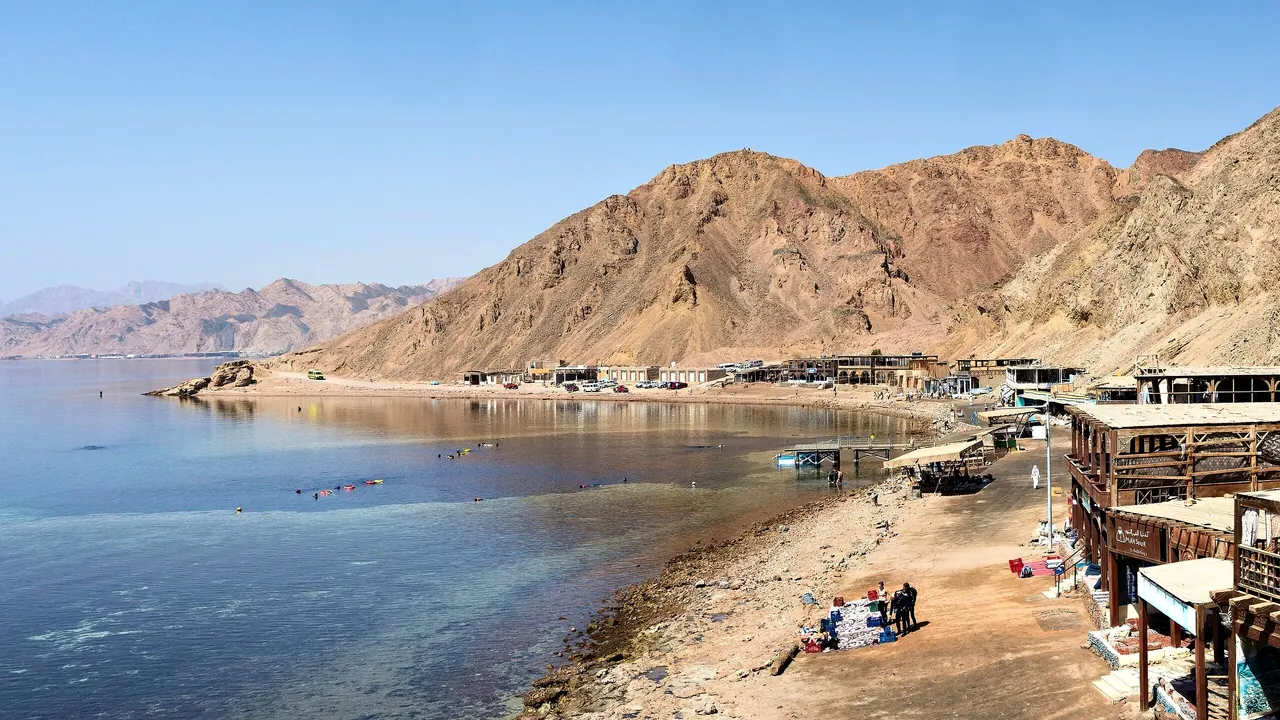
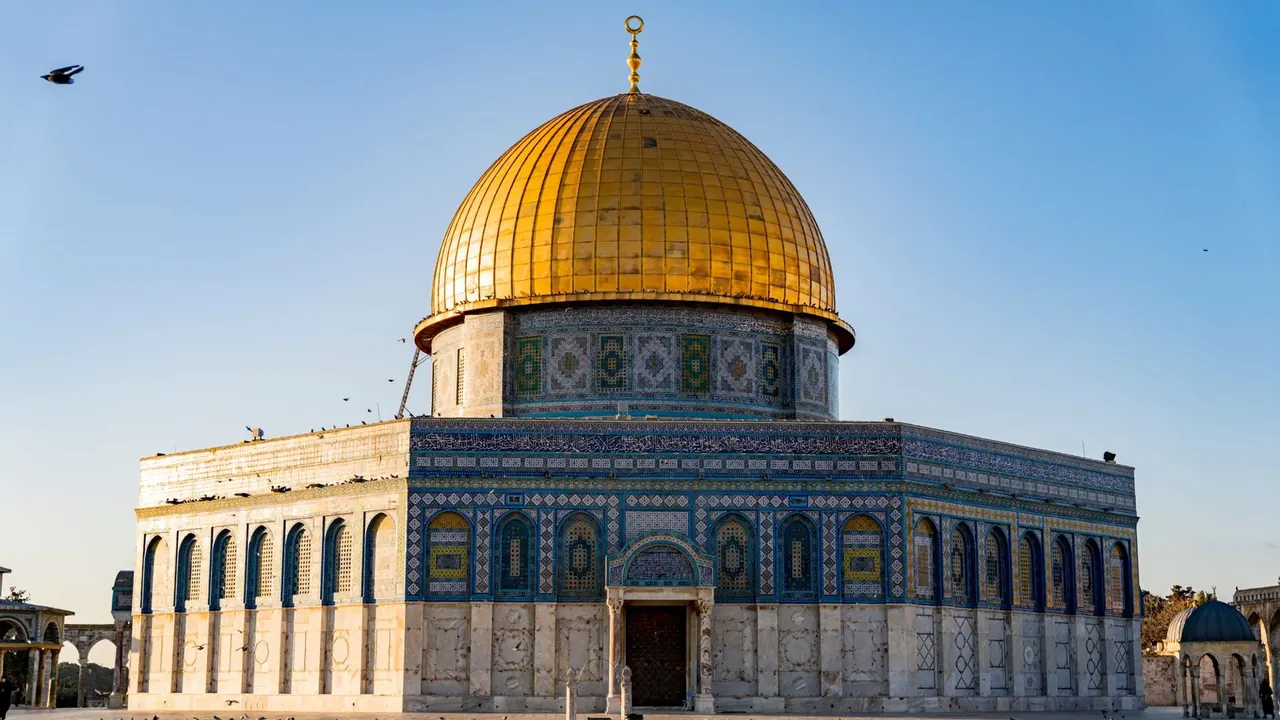
Photos: Dahab by Petar Milošević, CC BY-SA 4.0, cropped; Jerusalem by Yasir Gürbüz, Pexels License.
Dahab or Jerusalem?
Our verdict in twelve categories, each scored against the same fixed benchmark cities, and the climate month by month, so you can choose for your trip.
Choose Dahab for
- prices
- beaches
- nature and the outdoors
Dahab is for travellers who want the sea and the desert, and little else. You spend the days snorkelling or diving off the reef straight from shore, learning to freedive or windsurf on the Lagoon, then heading into the Sinai mountains or up Mount Sinai for sunrise. It costs very little and runs at a slow pace. The trade-off is that there are no sights, almost no nightlife and only simple food.
Choose Jerusalem for
- culture and sights
- day trips
- food and drink
Jerusalem is the trip for history, faith and archaeology. The Old City, the Israel Museum and Yad Vashem could fill several days, and Bethlehem, Masada, the Dead Sea and Tel Aviv are all within reach. The food is far more rewarding too. It costs much more, it is a tiring city rather than a restful one, and the beach is a day trip away.
Scoreboard
Twelve categories on one fixed scale from 0 to 100. The shaded stretch is the gap between the two.
Your match
Pick a travel style or drag the sliders, and both match scores follow your weighting.
Wins on prices and beaches with your weighting.
Wins on culture and sights and day trips with your weighting.
What matters to you?
Category by category
What the scores mean for a trip.
Beaches & swimming
Dahab has the better water, and it is right in town. You step off a jetty or rocks onto coral in clear, warm sea, and the Lagoon has sand and calm, shallow water. Wide sandy beaches are rare, though, so think snorkelling and lazing in a café with cushions rather than lying on a sunbed.
Jerusalem has no swimming at all. Tel Aviv's long sandy Mediterranean beaches are about an hour away, and the Dead Sea gives you an odd, rocky float. Both make a good day out, but neither is a reason to choose the city.
Food & drink
Jerusalem is much the better place to eat. Mahane Yehuda market, the hummus counters and ka'ak carts of the Old City, and Kurdish, Iraqi and Yemenite Jewish cooking give it real depth. You do need to plan around kosher rules and the Shabbat closures in the west of the city.
In Dahab, the waterfront mostly serves simple grilled fish, eaten on cushions by the sea. The cheap Egyptian places in Assala, with their foul, falafel and koshary, are the best meals in town, and beyond them the menus lean towards backpacker favourites.
Culture & sights
This is the widest gap of all. Jerusalem's walled Old City holds the Western Wall, the Holy Sepulchre and the Dome of the Rock, with Bronze Age layers underneath, and the city's museums would justify a trip on their own.
Dahab has no museums or monuments. Its Bedouin roots show in Assala and in the tea stops around town, and the real heritage of the region is St Catherine's Monastery, two hours inland.
Nightlife
Neither is a party town, but Jerusalem has more going on. Mahane Yehuda turns into small bars and grills after dark, and there are pubs around Nahalat Shiva and the German Colony, though Friday night is quiet and clubbers take the train to Tel Aviv. A night in Dahab means a beer or a shisha by the water, and most of the town is asleep before midnight because it is diving early.
Nature & outdoors
Dahab has the more dramatic outdoors. There is world-class reef diving and freediving just offshore, steady wind for kitesurfing on the Lagoon, and the granite mountains of South Sinai right behind the town, with the Coloured Canyon, Ras Abu Galum and the night climb up Mount Sinai.
Jerusalem's landscapes are gentler and take more travel to reach. You can walk the forest trails around Sataf and Ein Karem, hike Wadi Qelt in the desert, see the oasis at Ein Gedi or climb the Snake Path to Masada at dawn. There is no water sport to speak of.
Day trips
Jerusalem is a superb base for day trips. Bethlehem is next door, and Masada, Qumran and the Dead Sea, Tel Aviv and Jaffa, Caesarea and even Acre and Haifa can all be done in a day.
Dahab has one outstanding outing, St Catherine's Monastery with Mount Sinai. Beyond that there is only the resort sprawl of Sharm el-Sheikh and quiet Nuweiba, so most excursions head into the desert or out to sea rather than to other towns.
Good for families
Jerusalem has more that is made for children: the Biblical Zoo, the aquarium beside it, the Bloomfield Science Museum, and Hezekiah's Tunnel to wade through. The stepped lanes of the Old City are no place for a stroller, though, and the holy sites have a serious mood.
Dahab works best for children who are confident swimmers. The Lagoon is shallow and sheltered, and camel rides go down well. But the coral calls for reef shoes, the summer heat is hard on small children, and serious medical care is in Sharm el-Sheikh.
Getting around
Jerusalem is easier to get around. The centre is walkable, if hilly, the light rail and buses cover the rest, and a fast train runs to Tel Aviv and the airport. Everything stops for Shabbat, though.
In Dahab you can walk the 2km promenade from the Lighthouse to Mashraba, but there is no public transport at all. The Lagoon, the Blue Hole and the mountains all mean a taxi or an organised trip, and getting there means an hour's drive from Sharm el-Sheikh.
Shopping & style
Jerusalem has far more worth bringing home. Choose from olive-wood carvings and spices in the Old City souq, hand-painted Armenian ceramics, Judaica in silver and glass, and the international brands of Mamilla. Dahab has a row of promenade stalls selling scarves, Bedouin embroidery and souvenirs. Its one real buy is diving or freediving gear.
Affordability
Dahab is far cheaper. Simple guesthouses, local meals and taxis cost very little, and dive courses are cheap by international standards, so long stays are common. Alcohol and the few upmarket hotels are the exceptions.
Jerusalem is expensive, especially for hotels during festivals and the pilgrimage seasons, and for sit-down meals. Free holy sites, reasonable public transport and hummus or falafel lunches help, but a comfortable stay still adds up quickly.
Live music & performing arts
Jerusalem has a modest but real calendar. There is the Jerusalem Symphony Orchestra, the Jerusalem Theatre, the Israel Festival and summer concerts in the Sultan's Pool, though most plays are in Hebrew. Dahab has none of this. The most you will find is a band or DJ in a promenade bar, or Bedouin music around a campfire in the desert.
Wellness & relaxation
Dahab is the more restful of the two. You do not get spas, but you get a slow seafront pace, sunsets over the Sinai, and cheap yoga, massage and breathwork among a community of long-stay travellers.
Jerusalem is crowded and intense. For real pampering you head an hour down to the Dead Sea resorts for mud and mineral pools, and the city's own calm comes from quiet gardens and the hush of Shabbat.
When should you go?
Pick your month. The climate figures are measured averages, not a forecast.
Dahab in July
Jerusalem in July
Daytime high, °C
Rainfall in the month, mm
Where the figures come from
Dahab has no weather station within reach, so its figures come from a gridded climate model rather than a measured record, and read a broad area rather than the city itself.
Jerusalem has no rain gauge within 25 km of the centre, so its rainfall comes from a gridded climate dataset read at the city rather than from a gauge further away.
Temperature and rainfall are climate normals, averaged over the years shown. Dahab: 1991-2020 normals, TerraClimate 4 km grid at the town, no weather station within 90 km. Jerusalem: 1991-2020 (sunshine 1981-2010) normals, Jerusalem (1.8 km from centre).
Dahab is almost completely dry all year, so the question there is heat. From June to September highs reach 37°C, which is fine for the water but makes hiking and walking away from the promenade hard work. March to May and October to November are the best months, warm on land and good for the mountains. The sea stays swimmable even in winter, never dropping much below 22°C, but January evenings feel cool.
Jerusalem has a real winter. January highs are around 12°C, and November to March bring most of the rain, with about 109mm in January alone. April, May, September and October are ideal for walking the Old City. Summer is dry and very sunny, hot but easier to bear in the hills than on the Sinai coast. For a mid-winter vacation in sunshine, Dahab is the clear choice.
Which traveller are you?
On a culture and arts trip, Jerusalem wins easily. The Old City's holy sites, the excavations under it, the Israel Museum and Yad Vashem make for days of serious sightseeing. Dahab has nothing comparable, and its one great monument, St Catherine's, needs a full day out.
On a tight budget, Dahab goes much further. Guesthouses, Egyptian meals in Assala, taxis and even dive courses all cost little, so people stay for weeks. Jerusalem's hotels and restaurants are expensive, and only the free holy sites and market food keep costs down.
For divers and freedivers, Dahab is one of the world's great bases. Reefs like the Canyon and the Blue Hole drop into deep water just off the shore. Jerusalem has no diving at all, and its sea is the Mediterranean, about an hour away in Tel Aviv.
Before you go
| Measure | Dahab | Jerusalem |
|---|---|---|
| Official language | Arabic | Hebrew |
| Currency | Egyptian Pound (EGP) | New Israeli Sheqel (ILS) |
| Sockets | CF220 V, 50 Hz | CHM230 V, 50 Hz |
| Driving side | Right | Right |
| Time zone | UTC+2, UTC+3 in summer | UTC+2, UTC+3 in summer |
| Emergency number | Police 122, ambulance 123, fire 180 | Police 100, fire 102 |
| Elevation | 21 m | 754 m |
| Main airport | Sharm El Sheikh International Airport (SSH)58 km from centre116 non-stop destinations | Ben Gurion International Airport (TLV)42 km from centre111 non-stop destinations |
| Public holidays this year | 15 days | - |
By the numbers
| Measure | Dahab | Jerusalem |
|---|---|---|
| City population | 4,479 | 1,050,151 |
| People per km² | - | 8,374 |
| Museums within 10 km | 0 | 69 |
| UNESCO World Heritage sites within 50 km | 0 | 7 |
| Swim season, months above 21 °C | 12 months | 7 months |
Where else could you go?
Every comparison below shares a destination with this one, so you can follow Dahab or Jerusalem somewhere new.
- Tel Avivvs Jerusalem
- Ammanvs Jerusalem
- Sharm el-Sheikhvs Dahab
- Aqabavs Dahab
- Eilatvs Dahab
- Hurghadavs Dahab