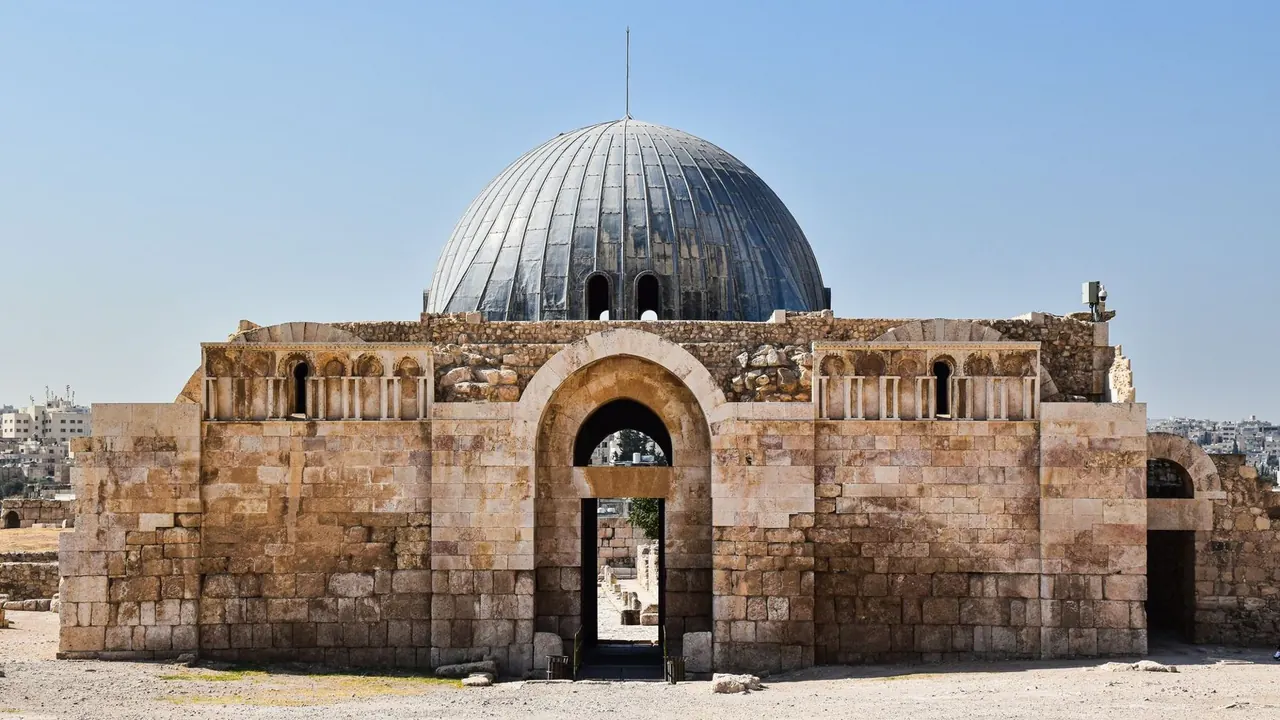
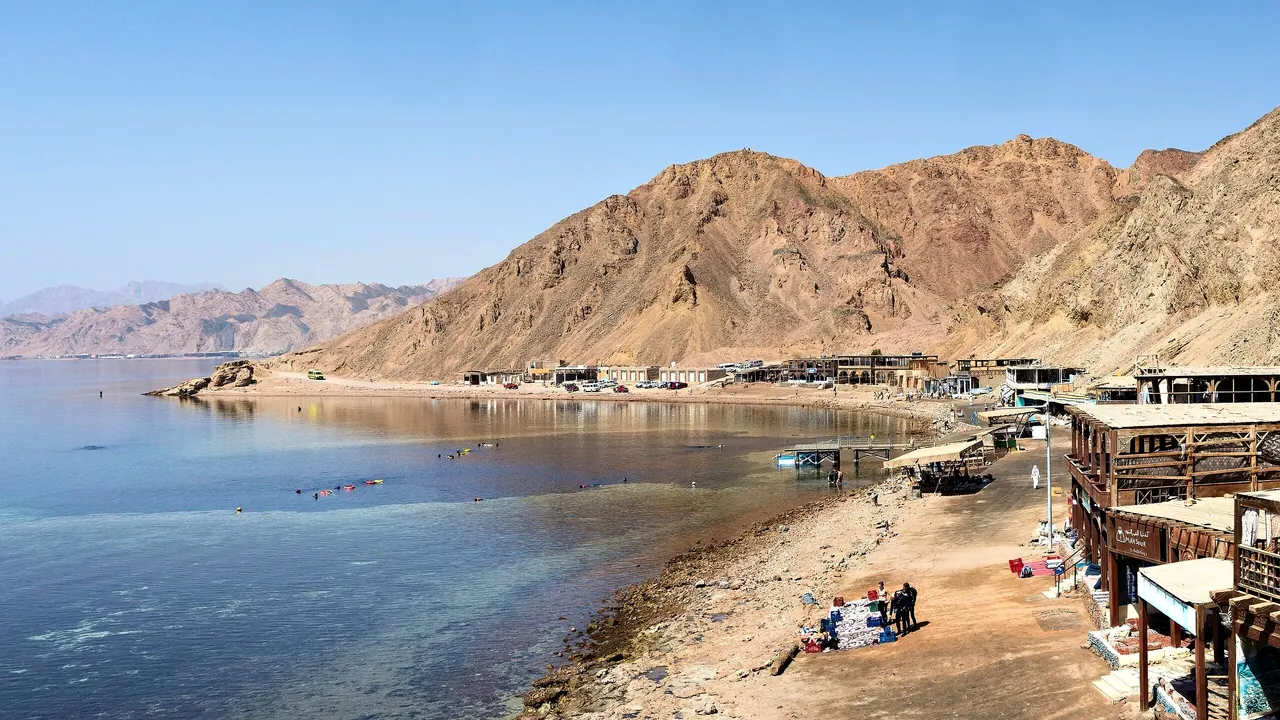
Photos: Amman by AXP Photography, Pexels License; Dahab by Petar Milošević, CC BY-SA 4.0, cropped.
Amman or Dahab?
Our verdict in twelve categories, each scored against the same fixed benchmark cities, and the climate month by month, so you can choose for your trip.
Choose Amman for
- day trips
- culture and sights
- food and drink
Amman suits travellers who want history and a proper city around them. It is the better base for Roman Jerash, Madaba's mosaics and the desert castles, and it eats far better. Its evenings of tea, shisha and rooftop terraces also give you somewhere to come back to after a day among ruins. Pick it for a heritage trip, ideally in spring or autumn.
Choose Dahab for
- beaches
- nature and the outdoors
- prices
If the sea is what draws you, Dahab is the clear choice. Reefs start a few steps off the promenade, the Blue Hole and the Canyon are on the doorstep, the Sinai mountains rise behind town, and a long stay costs very little. There is almost nothing to see in the museum sense and the evenings are quiet. For diving, snorkelling and doing very little in between, though, it beats Amman easily.
Scoreboard
Twelve categories on one fixed scale from 0 to 100. The shaded stretch is the gap between the two.
Your match
Pick a travel style or drag the sliders, and both match scores follow your weighting.
Wins on day trips and culture and sights with your weighting.
Wins on beaches and nature and the outdoors with your weighting.
What matters to you?
Category by category
What the scores mean for a trip.
Beaches & swimming
Amman has no coast of its own. Its swimming is at the Dead Sea, an hour's drive down, where you spend an afternoon floating in very salty water and covering yourself in mud. Real sea and coral mean a separate trip to Aqaba.
Dahab is built around the water, which stays warm enough to swim in all year. Expect jetties and rocks leading straight onto the reef rather than long stretches of sand, with the Lagoon as the place for shallow, calm water. It is a snorkelling coast more than a sunbathing one, but it is a proper sea.
Food & drink
Amman is the better place to eat by a distance. It has a real Levantine table: downtown breakfasts of falafel, hummus and fuul, hot knafeh from the sweet shops and mansaf at a family restaurant. Up in Jabal Amman and Weibdeh there are cafés and modern Arab cooking.
Dahab's meals are pleasant rather than interesting: grilled fish on cushions by the bay, then pizza and smoothie bowls. The best eating is the cheap Egyptian food in Assala, koshary and foul included, but the list is short.
Culture & sights
Here the two barely compare. Amman has the Temple of Hercules and the Umayyad Palace on Citadel hill, with the Roman Theatre cut into the slope below. The Jordan Museum holds Dead Sea Scrolls and the 'Ain Ghazal statues, and together these are enough for two or three days.
Dahab has no museums or monuments. Its Bedouin roots show in Assala and in the tea stops around town, but anything historic means leaving town for the day.
Nightlife
Neither city is for partying, but Amman gives you more of an evening. Rainbow Street and Jabal Amman stay busy late with families and friends over shisha. Weibdeh and Abdoun have rooftop bars and there are a few weekend DJ nights, though drinking largely stops during Ramadan.
In Dahab an evening means a beer on cushions by the water with divers and instructors. Many of them are up early to dive, so the promenade goes quiet before midnight on most nights.
Nature & outdoors
Dahab is far stronger outdoors. The Gulf of Aqaba drops to deep water a few metres off the shore, and the Lagoon's steady wind brings kitesurfers and windsurfers. The granite mountains of South Sinai start right behind town, with the Coloured Canyon, the walk or camel ride to Ras Abu Galum and the night climb up Mount Sinai.
Near Amman, the best outdoors is the drop to the Dead Sea, the wading hikes up the Wadi Mujib gorge in the warmer months and Ajloun's oak woods in spring. The city itself is bare and short of green, and Dana and Wadi Rum need overnight stays.
Day trips
Amman is one of the region's best bases for day trips. The colonnaded Roman streets of Jerash lie under an hour north, and Madaba's mosaic map, Mount Nebo and the Baptism Site are to the south. Ajloun, Umm Qais, Salt, Kerak and the frescoed desert bathhouse of Qasr Amra fill further days.
From Dahab there is really one outing: St Catherine's Monastery at the foot of Mount Sinai, two hours inland. Sharm el-Sheikh and Nuweiba add little, so trips from here go into the desert and the sea rather than to other towns.
Good for families
Both are warm towards children and short of things built for them, so the choice depends on your children. Amman suits families who like sights. Older children can enjoy the Citadel and Jerash, King Hussein Park has a children's museum and floating in the Dead Sea makes a memorable day, though the steep streets defeat pushchairs.
Dahab is a water vacation: shallow sand at the Lagoon, snorkelling from shore for confident swimmers, and camel rides. Reef shoes are needed and serious medical care is in Sharm el-Sheikh, so it suits older children better than toddlers.
Getting around
Neither is easy, but for different reasons. Amman is a big hill city with no metro. You can walk downtown and the stairways up to Weibdeh, but everything else means cheap taxis or ride-hailing, and day trips mean a hired driver.
Dahab is the opposite: a small, flat seafront you can walk for days, with about 2km of promenade from the Lighthouse to Mashraba. Leave it for the Lagoon, the Blue Hole or the mountains and there is no public transport, only taxis, pickups and arranged trips. Getting there usually means a road transfer of about an hour from Sharm el-Sheikh airport.
Shopping & style
Amman has far more to buy. The downtown souks and gold souk are worth a wander, and the shops around Rainbow Street sell embroidered Palestinian textiles, Hebron glass, Bedouin rugs and work from women's cooperatives. On summer Fridays there is also Souk Jara.
Dahab's promenade stalls sell scarves, jewellery and souvenirs, and the one thing really worth buying is dive and freediving gear.
Affordability
Dahab is much cheaper. Guesthouses, camps and Egyptian meals in Assala cost very little, and dive courses are good value by international standards, which is why people stay for weeks.
Amman is cheap at street level, with falafel breakfasts and taxi rides costing little. Mid-range hotels and restaurants, though, cost about what they would in Southern Europe, and private drivers and foreigners' entrance fees at the big sites add up. In both places, alcohol is the expensive part.
Live music & performing arts
Amman has a little to offer and Dahab has nothing. The Royal Cultural Centre, small stages in Weibdeh and downtown, and the summer Jerash Festival in the ancient theatres give you a chance of an oud recital or Arabic theatre, though programmes are irregular and mostly in Arabic. In Dahab, music means a band in a promenade bar or Bedouin songs at a desert camp.
Wellness & relaxation
The two are about level for rest, but the rest is of a different kind. In Amman it means a drive. An hour downhill, the Dead Sea resort spas sell day passes for floating, mineral mud wraps and pools, and the Ma'in hot springs pour through a desert canyon nearby. Back in town there are a few hammams for steam and a scrub, but with the traffic and the hills, the city's calm moments mostly come over a long glass of tea.
Dahab works the other way round. It has no thermal baths or hammam tradition, and you will only find spas in the larger hotels. What it offers is a slow pace you live in all day. Yoga, breathwork and massage are cheap and easy to find, afternoons pass on cushions in the seafront cafés, and evenings end with the sun going down over the Sinai mountains behind town.
When should you go?
Pick your month. The climate figures are measured averages, not a forecast.
Amman in July
Dahab in July
Daytime high, °C
Rainfall in the month, mm
Where the figures come from
Dahab has no weather station within reach, so its figures come from a gridded climate model rather than a measured record, and read a broad area rather than the city itself.
Temperature and rainfall are climate normals, averaged over the years shown. Amman: 1994-2020 (sunshine 1981-2010, rainfall 1981-2010) normals, Amman Airport (6 km from centre). Dahab: 1991-2020 normals, TerraClimate 4 km grid at the town, no weather station within 90 km.
Amman is a spring and autumn city. April, May, September and October bring warm, dry days that suit long walks around the Citadel and Jerash. High summer is hot, around 33°C, though dry and very sunny. Winter turns cool and grey, with highs in the low teens, and January and February are the wettest months, with up to 71mm of rain.
Dahab barely sees rain at all, so the question is heat. From June to September highs reach 37°C, too hot for hiking or for walking far from the shade. Winter is the reverse of Amman's off-season: days around 21°C and a sea that stays swimmable, warming to 28°C by late summer. March, April, October and November give the best balance of warm water and bearable days.
Which traveller are you?
On a culture and arts trip, Amman is the obvious pick. The Citadel, the Roman Theatre and the Jordan Museum fill the city days, and Jerash, Madaba and Mount Nebo lie within easy reach. Dahab has no museums or monuments at all.
For a trip on a tight budget, your money goes much further in Dahab. Guesthouses and camps cost little, meals in Assala cost even less, and dive courses are cheap. Amman's street food is cheap too, but drivers, hotels and the headline sites soon add up.
For divers and freedivers, Dahab is the reason to come to Sinai at all. Reef walls drop away straight off the shore at the Canyon and the Blue Hole, and training schools line the bay. From Amman, the nearest coral is a separate trip to Aqaba.
Before you go
| Measure | Amman | Dahab |
|---|---|---|
| Official language | Arabic | Arabic |
| Currency | Jordanian Dinar (JOD) | Egyptian Pound (EGP) |
| Sockets | BCFGJ230 V, 50 Hz | CF220 V, 50 Hz |
| Driving side | Right | Right |
| Time zone | UTC+3 | UTC+2, UTC+3 in summer |
| Emergency number | 911 | Police 122, ambulance 123, fire 180 |
| Elevation | 776 m | 21 m |
| Main airport | Queen Alia International Airport (AMM)26 km from centre98 non-stop destinations | Sharm El Sheikh International Airport (SSH)58 km from centre116 non-stop destinations |
| Public holidays this year | - | 15 days |
By the numbers
| Measure | Amman | Dahab |
|---|---|---|
| City population | 4,007,526 | 4,479 |
| People per km² | 2,385 | - |
| Museums within 10 km | 8 | 0 |
| UNESCO World Heritage sites within 50 km | 3 | 0 |
| Swim season, months above 21 °C | - | 12 months |
Where else could you go?
Every comparison below shares a destination with this one, so you can follow Amman or Dahab somewhere new.