Greece
Athens
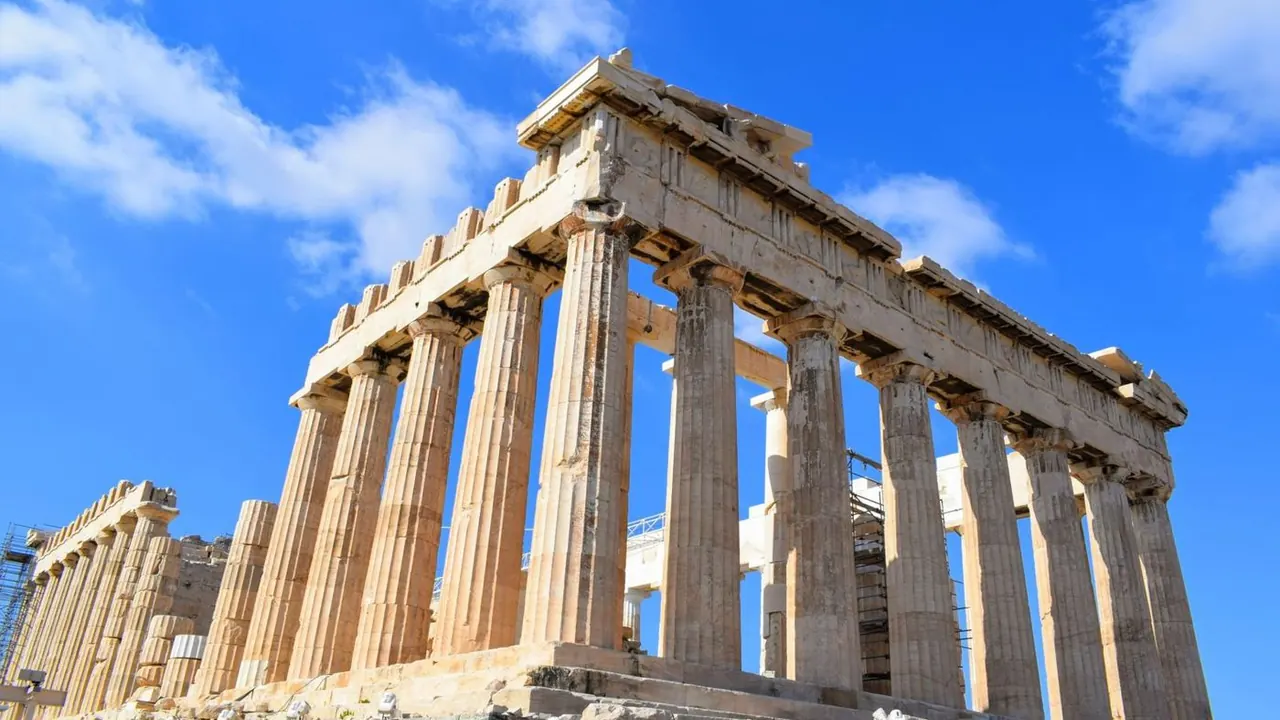
The Parthenon on the Acropolis
- Culture & sights88
- Day trips85
- Nightlife80
Photo: Ranjeet Kumar Singh, Pexels License
Match
67
Every category weighted equally
- Beach & sun66
- Culture & arts71
- Food & nightlife70
- Family trip66
- Outdoors68
- Relax & unwind64
- Shopping & style67
- On a budget66
Athens in twelve categories
Our verdict on each, scored 0 to 100 against the same fixed benchmark cities, so a score means the same thing on every page.
Beaches & swimming. Scores 70 out of 100.
Food & drink. Scores 78 out of 100.
Culture & sights. Scores 88 out of 100.
Nightlife. Scores 80 out of 100.
Nature & outdoors. Scores 64 out of 100.
Day trips. Scores 85 out of 100.
Good for families. Scores 58 out of 100.
Getting around. Scores 66 out of 100.
Shopping & style. Scores 55 out of 100.
Affordability. Scores 56 out of 100.
Live music & performing arts. Scores 64 out of 100.
Wellness & relaxation. Scores 42 out of 100.
Athens category by category
Beaches & swimming
70Athens faces the sea more than most visitors expect. The Athens Riviera runs south along the Saronic Gulf from Faliro through Alimos, Glyfada and Vouliagmeni to Varkiza. The tram and coastal buses link it to the centre, and the farther south you go the clearer the water and the better the coves. The sea reaches about 25°C in high summer and is pleasant from late May into October. Many beaches are organised lidos with loungers, and free stretches sit between them, often on rocks.
The islands of Aegina and Agistri are a short ferry ride from Piraeus for a calmer swim. Even so, beach time in Athens is something you add to a city stay. You would not build a vacation around the beaches near the centre, which are often crowded and plain.
Food & drink
78Athens eats in tavernas and mezedopoleia. Tables fill late with grilled octopus, fava, horta, keftedes and slow-cooked dishes, shared among friends with ouzo and tsipouro. Greek wine belongs on the same table: crisp assyrtiko from Santorini, savatiano from the Attica vineyards around the city, and supple reds from agiorgitiko and xinomavro. Souvlaki and gyros counters are the everyday street food. Bakeries sell spanakopita, koulouri and bougatsa from early morning, and iced coffee is drunk all day in long, unhurried café sessions.
The Varvakios central market on Athinas Street is the place to see meat, fish, olives and cheese being sold. Psyrri, Koukaki, Pangrati and Exarchia have better-value neighbourhood cooking than Plaka, whose tourist tavernas are mostly ordinary. At the top end there is a serious modern Greek fine-dining scene, but the city's strength is simple, generous food eaten with others.
Culture & sights
88The Acropolis is the foundation of Western architecture, and the Parthenon, Erechtheion and Propylaia stand above the city from almost every street. Below them lie the Ancient Agora with its well-preserved Temple of Hephaestus, the Roman Agora, Hadrian's Library, the Temple of Olympian Zeus, the Kerameikos cemetery and the Panathenaic Stadium, all within walking distance along the pedestrian archaeological promenade.
The museums match the ruins. The Acropolis Museum shows the Parthenon sculptures in sight of the temple itself, and the National Archaeological Museum holds one of the world's great collections of ancient art. The Byzantine and Christian Museum, the Benaki and the Museum of Cycladic Art add depth. Plaka and Anafiotika keep a few old streets and small Byzantine churches, but most of the modern city is plain postwar apartment blocks.
Nightlife
80Athenians go out late and stay out. Dinner starts after nine, bars fill around midnight and plenty of places run until dawn. Psyrri and the streets around Monastiraki are full of bars and rooftop terraces facing the lit Acropolis. Gazi and Kerameikos have the bigger clubs and a long-standing gay scene. Exarchia is the student and alternative quarter, and Kolonaki is where the smarter crowd drinks. Pangrati and Koukaki have quieter neighbourhood bars.
In summer much of the clubbing moves to open-air venues along the coast towards Glyfada and Vouliagmeni. The tradition of bouzouki nightclubs, where people pay for flowers to throw and dance until morning, is still alive. Cocktail bars in the centre are of a high standard, and drinking outside on warm nights is normal.
Nature & outdoors
64Athens sits in a basin ringed by bare limestone mountains. Lycabettus and Filopappou Hill give short walks and wide views over the city. Hymettus, on the eastern edge, has pine-covered trails and an old monastery. Mount Parnitha, a national park about an hour north, rises to 1,400m and has fir forest, deer and proper hiking. The coast road south to Cape Sounion is the classic scenic drive, ending at a headland above the sea.
The Saronic Gulf is good for sailing, paddleboarding and windsurfing, and chartering a boat for a day is common. Hiking really belongs to spring and autumn, when the hills turn green or golden. From June to August the heat makes anything strenuous a dawn or evening activity, and the landscape is dry and brown.
Day trips
85Some of the most famous sites of the ancient world are an easy day out from Athens. The Temple of Poseidon at Cape Sounion is about an hour along the coast and best at sunset. Across the Corinth Canal, a long day in the Argolid takes in Ancient Corinth, the Lion Gate at Mycenae, the theatre at Epidaurus and Nafplio, one of the prettiest towns in Greece, about two hours away. Delphi, on the slopes of Parnassos, is a little over two hours and worth the early start. Marathon and the sanctuary of Brauron are closer.
From Piraeus, ferries reach Aegina in under an hour, and Poros and car-free Hydra in about two. All of these work as island day trips with real harbour towns. A car or an organised tour makes the mainland sites much easier.
Good for families
58Greeks welcome children everywhere, and families eat out together late into warm evenings. Children can run around in squares and on pedestrian streets. The calm Riviera beaches are the best thing for younger children. The Attica Zoological Park out near the airport, the Eugenides Planetarium, the Hellenic Cosmos virtual-reality museum and the park and lake at the Stavros Niarchos Foundation Cultural Centre fill other days.
The ancient sites can grip older children who know the myths, but the climb up the Acropolis in midsummer heat and crowds is hard work. Broken pavements, parked cars and steep steps make pushchairs tiring. Spring and autumn are much easier than July and August.
Getting around
66Most of what a visitor wants is within a compact, walkable area around Syntagma, Plaka, Monastiraki and the Acropolis. The pedestrian promenade around the ancient sites is a pleasure on foot. The metro is clean, simple and runs from the airport and Piraeus into the centre, and its stations display antiquities found when they were dug. A tram runs down to the coast, and taxis are plentiful and reasonably priced.
The drawbacks are on the street. Pavements are narrow, broken or blocked by parked cars and scooters, there are a lot of hills, and summer heat makes long walks punishing. Traffic is heavy. You need a car or a tour only for sites outside the city.
Shopping & style
55Ermou Street, running down from Syntagma, is the main high street of chain fashion. Kolonaki and Voukourestiou Street have the designer labels and Greek designers' boutiques. Monastiraki's flea market is a real draw on weekends, with antiques, records, old furniture and junk spread through the streets around Avissynias Square.
What visitors really take home is local: handmade leather sandals, worry beads, olive oil, mountain herbs and honey from the market streets around Athinas, and good jewellery inspired by ancient designs. Plaka is mostly souvenir shops selling the same things. Big malls sit on the edge of the city, but there is little luxury depth.
Affordability
56Athens costs a little less than most Western European capitals. Souvlaki, bakery snacks and neighbourhood taverna meals are good value, the metro and tram are cheap, and taxis are reasonable for short hops. Hotels in the centre, especially those with Acropolis views, are a different matter in high summer and price like any popular European city. Entry fees to the main archaeological sites add up across a few days. Spring and autumn, and staying in Koukaki or Pangrati rather than Plaka, keep it affordable without making it a budget city.
Live music & performing arts
64The great performances in Athens happen outdoors in summer. During the Athens Epidaurus Festival, opera, ancient drama, dance and concerts are staged in the Roman Odeon of Herodes Atticus beneath the Acropolis. Ancient tragedy is also performed in the theatre at Epidaurus, a two-hour trip. Few settings anywhere match them. For the rest of the year the Greek National Opera, at the Stavros Niarchos Foundation Cultural Centre, and the Megaron concert hall give a solid classical programme.
The living tradition is rebetiko, the urban blues of Piraeus, played late in small tavernas with bouzouki and singing. It is the most distinctive music a visitor can hear. Athens has a very large theatre scene, but almost all of it is in Greek.
Wellness & relaxation
42Athens is not a place to slow down. The centre is loud, hot and crowded, and the Ottoman bathhouse in Plaka survives as a museum, not a working bath. The exception is Lake Vouliagmeni on the southern Riviera, a brackish lake fed by warm mineral springs under a limestone cliff. Its water stays mild all year, and people have long bathed there for their health.
Beyond that, relaxing means a hammam-style bathhouse in the old centre, a hotel spa or a long, slow coffee in a shaded square. The real Greek pace of rest is easier to find on the islands than in the capital.
When should you go?
Pick a month to see what it is like. The climate figures are measured averages, not a forecast.
Athens in July
Daytime high, °C
Rainfall in the month, mm
The whole year
Shaded against this city’s own year: the deepest cell is its best month for that figure and the palest its weakest.
Temperature and rainfall are climate normals, averaged over the years shown. Athens: 1991-2020 normals, Athens / Athenai / Pláka (2.2 km from centre).
Before you go
| Measure | Athens |
|---|---|
| Official language | Greek |
| Currency | Euro (EUR) |
| Sockets | CF230 V, 50 Hz |
| Driving side | Right |
| Time zone | UTC+2, UTC+3 in summer |
| Emergency number | 112 |
| Elevation | 74 m |
| Main airport | Athens Eleftherios Venizelos International Airport (ATH)20 km from centre173 non-stop destinations |
| Public holidays this year | 15 days |
By the numbers
| Measure | Athens |
|---|---|
| City population | 643,452 |
| People per km² | 16,499 |
| Museums within 10 km | 88 |
| UNESCO World Heritage sites within 50 km | 2 |
| Swim season, months above 21 °C | 5 months |
Compare Athens with
Every comparison with a written verdict behind it.