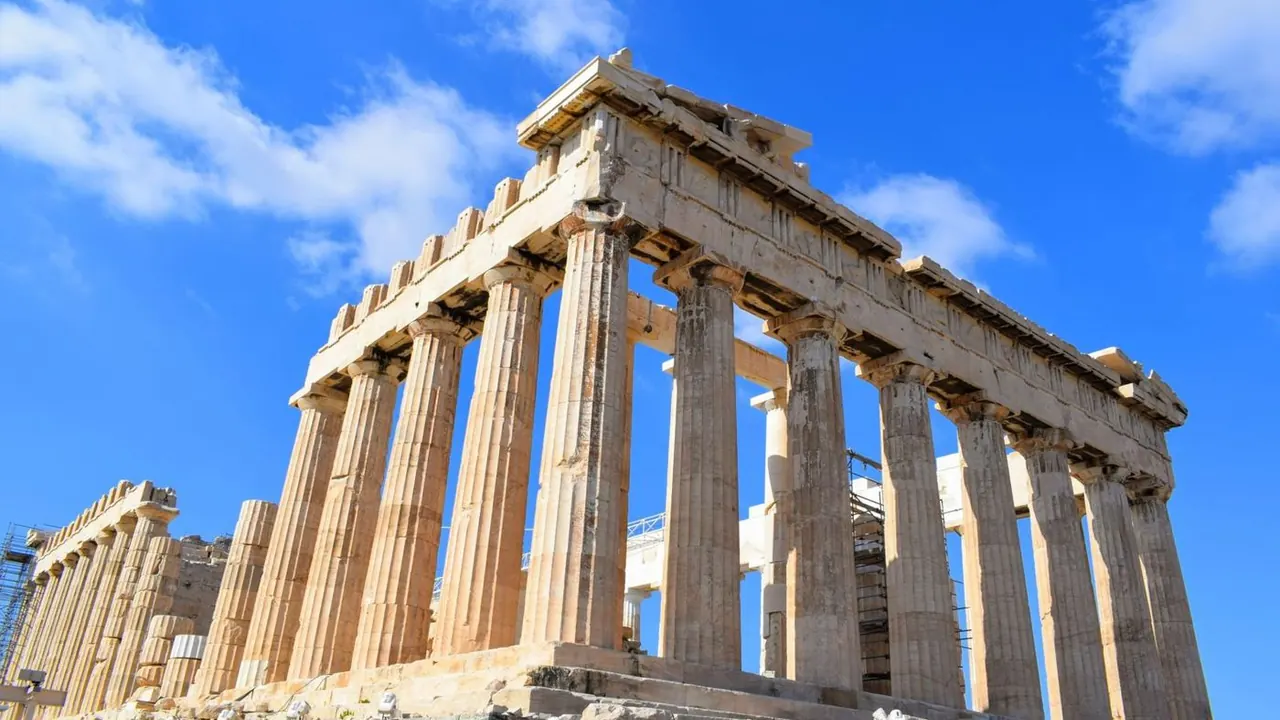
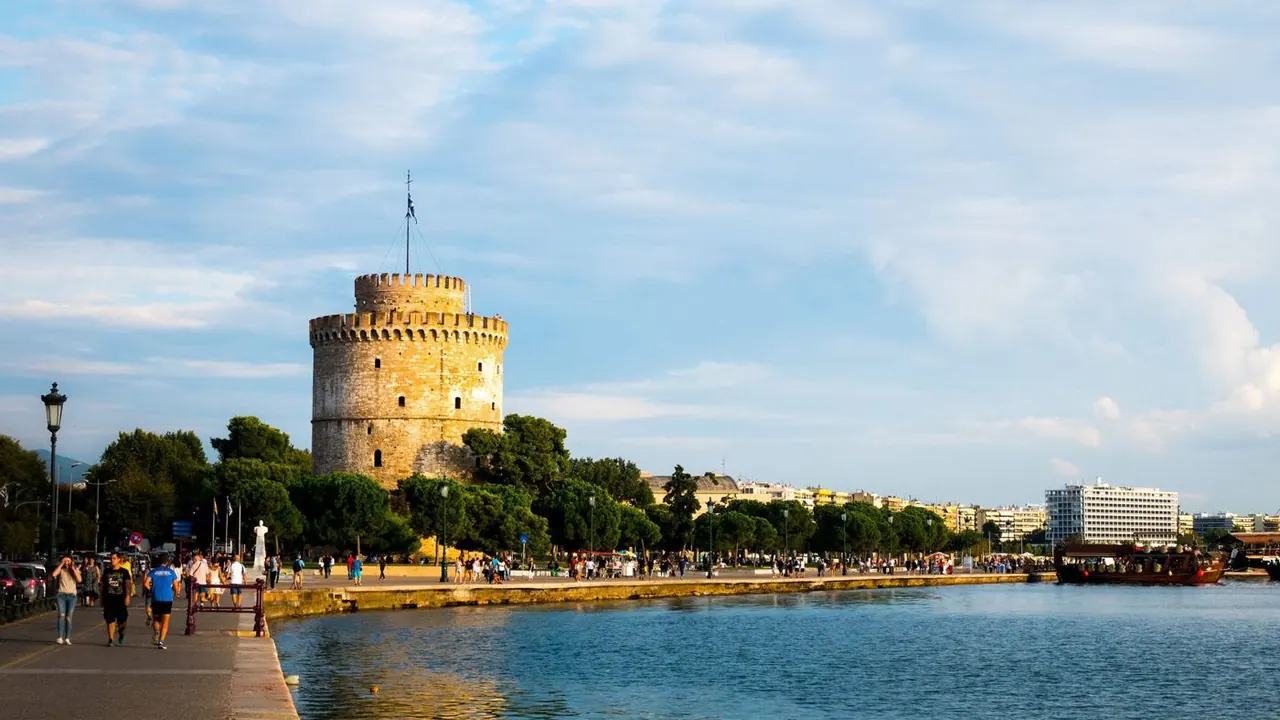
Photos: Athens by Ranjeet Kumar Singh, Pexels License; Thessaloniki by Destinygreece, CC BY-SA 4.0, cropped.
Athens or Thessaloniki?
Our verdict in twelve categories, each scored against the same fixed benchmark cities, and the climate month by month, so you can choose for your trip.
Choose Athens for
- beaches
- culture and sights
- live music and the arts
Athens is the stronger choice for a first trip to Greece, or for anyone who wants the classical world at its source. The Acropolis, the Agora and two of the great archaeological museums are all in the centre. Delphi, Mycenae, Epidaurus and the Saronic islands are easy day trips, and in summer you can take the tram down to the Riviera for a swim, then watch ancient drama under the Parthenon in the evening. It asks more of your budget and your patience with heat and crowds.
Choose Thessaloniki for
- prices
- nature and the outdoors
Thessaloniki rewards a traveller who has already seen Athens, or who puts eating and evenings out first. The city is cheaper and more relaxed, with Byzantine churches, Ottoman lanes in Ano Poli and a food culture shaped by Sephardic and Anatolian cooks. It also makes a good base for a road trip to Vergina, Olympus and the coves of Halkidiki. The trade-off is that you will need a car to reach the best swimming and most of the region's sights.
Scoreboard
Twelve categories on one fixed scale from 0 to 100. The shaded stretch is the gap between the two.
Your match
Pick a travel style or drag the sliders, and both match scores follow your weighting.
Wins on beaches and culture and sights with your weighting.
Wins on prices and nature and the outdoors with your weighting.
What matters to you?
Category by category
What the scores mean for a trip.
Beaches & swimming
In Athens you can swim without leaving the city. The Riviera runs from Faliro down to Varkiza, with the clearer water farther south around Vouliagmeni, and the tram and coastal buses reach it. Aegina and Agistri add a calmer swim by ferry.
Thessaloniki's waterfront is for strolling, not swimming, and the nearby beaches at Perea are shallow and plain. Halkidiki's coves are actually finer than anything near Athens, but they are an hour or more away by car, so they suit a separate stay better than a quick swim.
Food & drink
Both cities eat superbly. The difference is in the flavours, not the quality. Thessaloniki's cooking leans east, with spiced soutzoukakia, peppers and aubergines, Sephardic and Anatolian dishes, and the best bougatsa in the country. Its Kapani and Modiano markets have tavernas tucked between the stalls.
Athens keeps closer to the classic taverna and meze table, with good Greek wine from Attica and the islands, and it has the deeper fine-dining scene of the two. For the best everyday cooking, go to Koukaki, Pangrati or Psyrri rather than Plaka.
Culture & sights
Athens holds the foundations of classical Greece: the Parthenon above every street, the Agora, Kerameikos and the Olympian Zeus temple along one walkable promenade, and museums of world rank. Few cities anywhere offer as much.
Thessaloniki's story is a later one. Its UNESCO-listed churches, the Rotunda's mosaics, the Arch of Galerius and the Museum of Byzantine Culture make it the better place to understand Byzantium. Its sights stand as islands in a rebuilt modern centre, though, and they are fewer and less famous than the Athenian ones.
Nightlife
Both cities go out late, so the difference is in the style. Athens is more polished and varied. It has rooftop bars facing the lit Acropolis in Psyrri, big clubs and a long-standing gay scene in Gazi, smart drinking in Kolonaki and the old bouzouki nightclubs.
Thessaloniki's nights are more casual and student-driven. Crowds fill Ladadika's warehouse bars, the small DJ bars around Valaoritou and the outdoor tables of the Bit Bazaar, and streets are busy even on weeknights.
Nature & outdoors
There is little between them overall, but the scenery differs. Athens offers hill walks on Lycabettus and Hymettus, the fir forests of Parnitha, and the Saronic Gulf for sailing and paddleboarding. The coast drive to Sounion is its classic scenic route.
Thessaloniki has the bigger mountains within reach. Olympus and the Enipeas gorge are about an hour and a half away, and there is winter skiing at Kaimaktsalan and Seli. Closer to town, the Seich Sou pine forest sits right above Ano Poli.
Day trips
Athens has the more famous circuit: Delphi, Mycenae, Epidaurus, pretty Nafplio and Sounion at sunset. Car-free Hydra and Aegina are a short ferry ride from Piraeus, so some of the best days out need no car at all.
Thessaloniki's day trips cover ancient Macedonia. The royal tombs at Vergina are a highlight to rival anything near Athens, with Pella, Dion, waterfall-filled Edessa and the Naoussa vineyards also within reach. These places are less well known, and seeing several in a day really needs a hired car.
Good for families
Athens is the easier of the two with children, mainly because calm Riviera beaches are a tram ride away. On other days there are the zoo, the planetarium, Hellenic Cosmos and the park at the Stavros Niarchos centre, and older children who know the myths will enjoy the ancient sites.
Thessaloniki has its seafront playgrounds and the Noesis science centre, but not much more. Many families stay in Halkidiki for the beaches and visit the city for a day. In both cities, broken pavements and July heat are hard work with a pushchair.
Getting around
Athens is the easier city to get around. Its metro runs straight from the airport and Piraeus into a compact centre around Syntagma, Plaka and Monastiraki, passing antiquities displayed in the stations, and the tram carries on down to the coast. The catch is on the street, where hills, broken or blocked pavements and summer heat make long walks tiring.
Thessaloniki's centre is a flat strip along the water. The White Tower, Aristotelous Square, the markets and Ladadika are all within half an hour of each other on foot, and the promenade makes the walk a pleasure. The metro covers far less of the city than the Athens network, so buses do most of the work and crawl in the traffic. Ano Poli is a steep climb or a cheap taxi ride.
Shopping & style
Neither city is a shopping destination, but Athens offers a little more to browse. It has designer boutiques in Kolonaki, the weekend flea market around Monastiraki, and handmade leather sandals and jewellery based on ancient designs.
The best things to take home from Thessaloniki are edible: spices, loukoumi, olives and tsipouro from the Kapani and Modiano markets. Tsimiski Street covers the chain stores.
Affordability
Thessaloniki is clearly kinder to a budget. It is priced for students and locals, so a long meze dinner or a night of drinks costs noticeably less, and hotels are sensibly priced outside the trade fair.
Athens is a little cheaper than most Western European capitals, but central hotels in high summer cost as much as anywhere popular, and entry fees to the ancient sites add up. Staying in Koukaki or Pangrati helps keep costs down.
Live music & performing arts
Athens has the performances people travel for. In summer, opera, dance and ancient tragedy are staged in the Odeon of Herodes Atticus below the Acropolis and in the theatre at Epidaurus. For the rest of the year the Greek National Opera and the Megaron keep up a solid programme. Rebetiko began in Piraeus, and it is still played late in small tavernas.
Thessaloniki offers what you would expect of a regional capital: the State Orchestra at the waterfront Concert Hall and open-air summer concerts at Dasos. Its taverna rebetiko and laika nights are the more rewarding side for a visitor. In both cities, almost all theatre is in Greek.
Wellness & relaxation
Neither city is built for rest, but Athens has one real asset in Lake Vouliagmeni. This spring-fed lake under a limestone cliff stays mild enough for bathing all year.
Thessaloniki's Ottoman hammams survive only as monuments, and the simple thermal baths at Lagadas are half an hour out of town. What it offers instead is a slower daily rhythm, with long seafront coffees and an evening walk along the water, which is calmer than central Athens.
When should you go?
Pick your month. The climate figures are measured averages, not a forecast.
Athens in July
Thessaloniki in July
Daytime high, °C
Rainfall in the month, mm
Temperature and rainfall are climate normals, averaged over the years shown. Athens: 1991-2020 normals, Athens / Athenai / Pláka (2.2 km from centre). Thessaloniki: 1991-2020 normals, Thessaloniki Airport (14 km from centre).
Athens is the hotter, drier and sunnier of the two. Summers there are almost rainless and reach about 35°C in August, which makes midday sightseeing hard work. The sea stays warm enough to swim from late May into October. Thessaloniki peaks a few degrees lower and gets a little rain in every month, so its summer is less baked. Its sea is just as warm in August, though the good swimming is out in Halkidiki rather than in town.
For walking the streets, both cities are at their best in April, May, late September and October. Winter is where they differ most. Athens has mild days but its heaviest rain, around 86mm in December. Thessaloniki stays drier but colder, with highs of about 10°C in January and noticeably shorter sunny days.
Which traveller are you?
For a culture and arts trip, choose Athens. The Acropolis and its museum, the National Archaeological Museum, summer performances at the Odeon of Herodes Atticus, and day trips to Delphi and Epidaurus add up to more than Thessaloniki's fine Byzantine heritage can match.
On a tight budget, Thessaloniki goes further. Its tavernas, bougatsa shops and bars are priced for students and locals, mid-range hotels are reasonably priced, and museum tickets are cheap. Athens is fair value, but central hotels and site entry fees add up.
On a beach and sun trip, Athens is easier. The tram and coastal buses take you to the Riviera coves at Vouliagmeni, and there are ferries to Aegina. Thessaloniki's own waterfront is not for swimming, and Halkidiki needs a car and a whole day.
Before you go
| Measure | Athens | Thessaloniki |
|---|---|---|
| Official language | Greek | Greek |
| Currency | Euro (EUR) | Euro (EUR) |
| Sockets | CF230 V, 50 Hz | CF230 V, 50 Hz |
| Driving side | Right | Right |
| Time zone | UTC+2, UTC+3 in summer | UTC+2, UTC+3 in summer |
| Emergency number | 112 | 112 |
| Elevation | 74 m | 6 m |
| Main airport | Athens Eleftherios Venizelos International Airport (ATH)20 km from centre173 non-stop destinations | Thessaloniki Macedonia International Airport (SKG)14 km from centre90 non-stop destinations |
| Public holidays this year | 15 days | 15 days |
By the numbers
| Measure | Athens | Thessaloniki |
|---|---|---|
| City population | 643,452 | 309,617 |
| People per km² | 16,499 | 16,042 |
| Museums within 10 km | 88 | 32 |
| UNESCO World Heritage sites within 50 km | 2 | 1 |
| Swim season, months above 21 °C | 5 months | 5 months |
Where else could you go?
Every comparison below shares a destination with this one, so you can follow Athens or Thessaloniki somewhere new.
- Ohridvs Thessaloniki
- Skopjevs Thessaloniki
- Plovdivvs Thessaloniki
- Sofiavs Thessaloniki
- Tiranavs Thessaloniki
- Izmirvs Athens