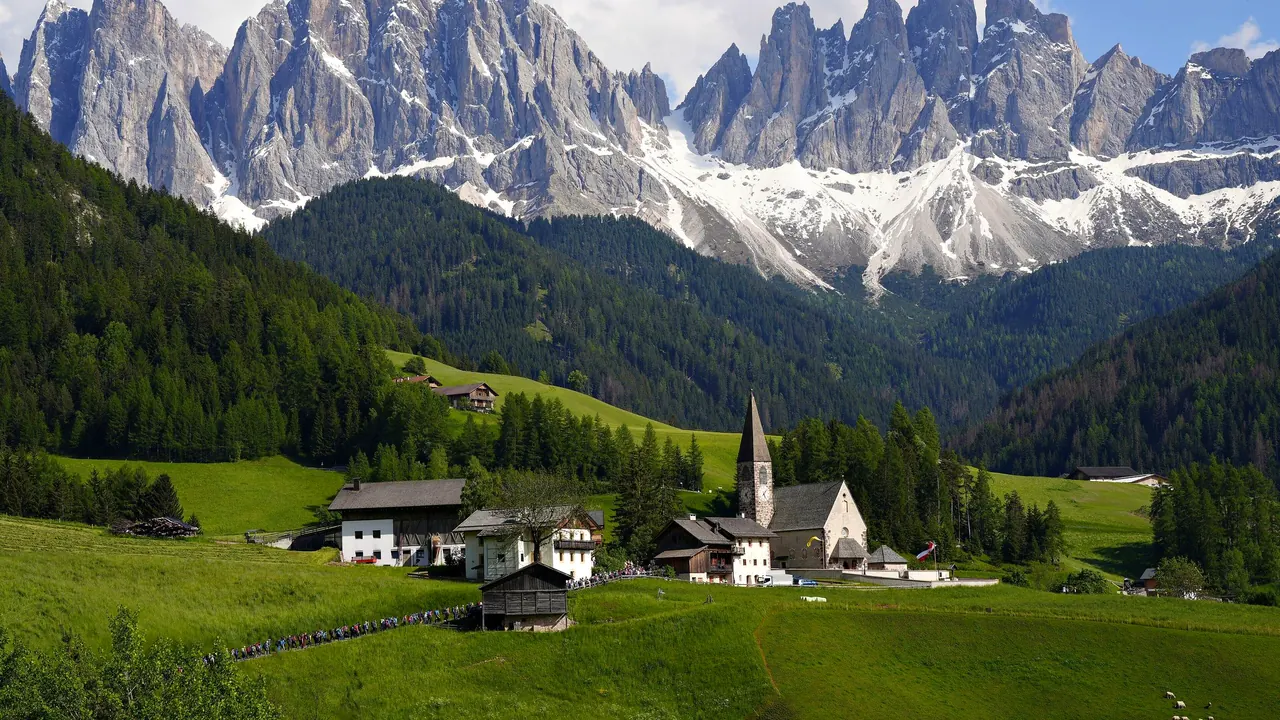
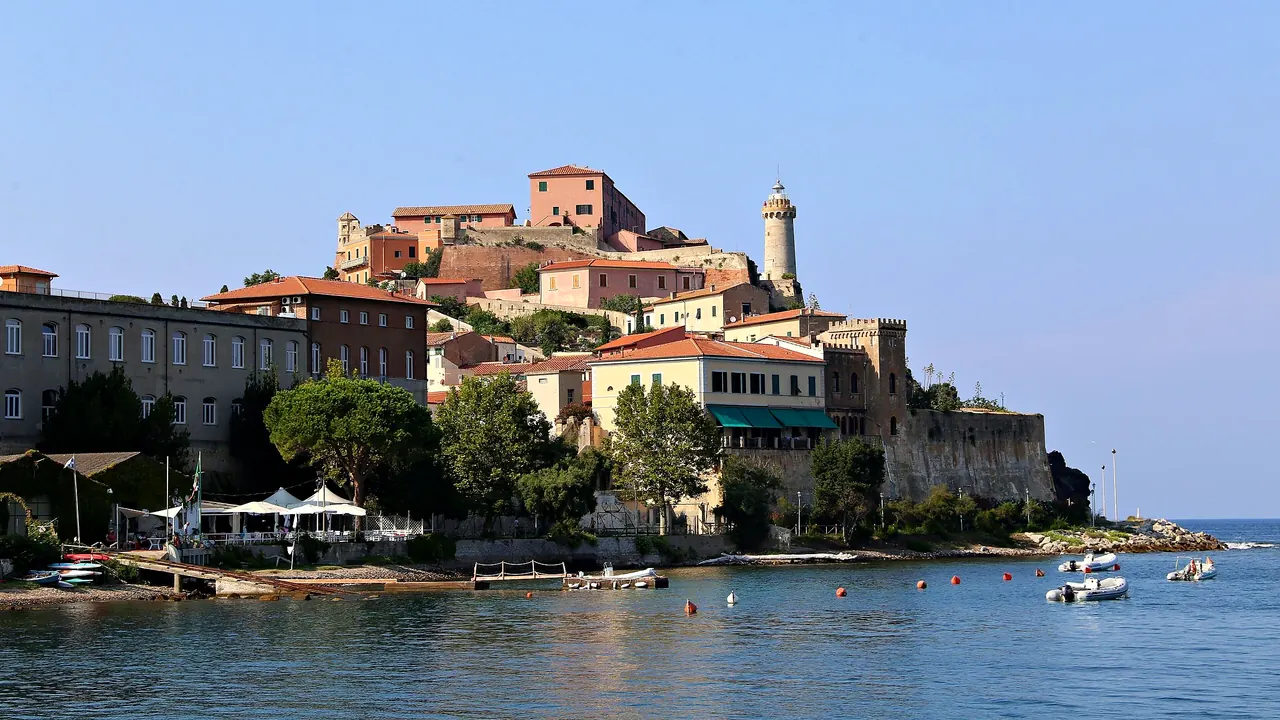
Photos: Dolomites by Chensiyuan, CC BY-SA 4.0, cropped; Elba by Sailko, CC BY 3.0, cropped.
Dolomites or Elba?
Our verdict in twelve categories, each scored against the same fixed benchmark cities, and the climate month by month, so you can choose for your trip.
Choose Dolomites for
- day trips
- nature and the outdoors
- shopping
The Dolomites suit travellers who measure a trip in walks, rides and views. In summer you can take a lift to high pasture, hike between huts under pale limestone towers and end the day in a hotel spa, and in winter you can ski across linked valleys. The cooking and wine are richer than Elba's, and the valley towns of Bolzano and Trento add castles, museums and easy outings by train. The trade-off is water: swimming means a valley lake or pool, not the sea.
Choose Elba for
- beaches
- prices
- nightlife
Elba is the choice for a Mediterranean summer built around the sea. Its granite bays in the south-west, its long sandy beaches at Marina di Campo and Lacona and the white pebble coves near Portoferraio give you a different swim every day, and the hills behind have enough trails for a few cooler mornings. Expect simpler food, fewer sights and little to do once the beach season ends, and accept that leaving the island starts with a ferry.
Scoreboard
Twelve categories on one fixed scale from 0 to 100. The shaded stretch is the gap between the two.
Your match
Pick a travel style or drag the sliders, and both match scores follow your weighting.
Wins on day trips and nature and the outdoors with your weighting.
Wins on beaches and prices with your weighting.
What matters to you?
Category by category
What the scores mean for a trip.
Beaches & swimming
Elba is the beach destination of the two by a wide margin. The south-west bays of Fetovaia and Cavoli have pale sand and turquoise shallows, Marina di Campo and Biodola shelve gently for long swims, and the north coast near Portoferraio adds white pebble coves under the cliffs.
The Dolomites cannot compete. The postcard lakes at Braies and Misurina are too cold for most people, so swimming means Lake Caldaro's grassy lidos, village pools or a drive to the top of Lake Garda. Stay low near Bolzano or Trento if you want water every day.
Food & drink
The Dolomites eat better and with more variety. South Tyrolean speck, canederli and strudel sit beside Italian espresso, the Ladin valleys add their own dishes, and the wines from south of Bolzano, Lagrein and Gewürztraminer among them, are a reason to come in themselves. Lunch on a hut terrace high in the mountains is part of every day, and Alta Badia has more serious kitchens than such small villages would suggest.
Elba's cooking is honest Tuscan island food: cacciucco, stuffed squid, fresh sea bream with a glass of Ansonica, and Aleatico-soaked schiaccia briaca to finish. It is best in the trattorias of Capoliveri and Marciana, but it is a short repertoire, and many beach places close outside summer.
Culture & sights
Neither is a sightseeing destination, but the Dolomites have more to see. Bolzano's arcaded old centre and Ötzi the Iceman, Trento's cathedral and the frescoed Buonconsiglio castle, and Bressanone with Novacella Abbey nearby add up to several solid days. The high passes also keep First World War trenches and tunnels.
Elba's sights centre on Napoleon's brief exile. Portoferraio, a fortified Medici port ringed by bastions, holds his town residence above the harbour, and his summer villa stands in the hills behind at San Martino. Porto Azzurro's star-shaped fortress, a Roman villa and the mining museums are worth a few half-days between swims.
Nightlife
Both go quiet early, and neither suits anyone looking for clubs. The difference is the season and the setting. In the Dolomites the evening action is winter après-ski in Selva, Canazei or Cortina, usually over by dinner, plus wine bars in Bolzano and Trento. Elba comes alive in July and August, with the piazza in Capoliveri and the harbourfronts of Porto Azzurro and Marina di Campo full past midnight, and a few open-air discos near Procchio on weekends.
Nature & outdoors
This is where the Dolomites stand out most. The Tre Cime, Sassolungo, Sella and Marmolada give a scale of scenery that Elba cannot match, and lifts from almost every village open up gentle walks on the Alpe di Siusi, week-long routes like the Alta Via 1 and wartime via ferrata cables. Winter adds the Dolomiti Superski network around the Sella Ronda.
Elba's outdoors are good for an island and mainly sea-based: snorkelling and diving over granite reefs, kayaking along the cliffs and the open lift up Monte Capanne, with views to Corsica. The Grande Traversata Elbana is a fine ridge walk, but it is best in spring or autumn, when the slopes are not baking.
Day trips
From the Dolomites you can reach far more. Bolzano has Merano, Bressanone, Trento and the wine route within an hour, Verona is an easy train ride and Innsbruck is a couple of hours over the Brenner. Outings from the high villages start with slow pass roads, so a valley base helps.
On Elba every trip off the island begins with an hour's ferry to Piombino. That still puts Etruscan Populonia, Campiglia Marittima and the Bolgheri vineyards within reach, and boats run to Pianosa and Capraia, but Pisa and Siena are too far for a comfortable day.
Good for families
The Dolomites suit families slightly better, especially in summer. Flat high-pasture paths on the Alpe di Siusi, lifts that do the climbing, huts with playgrounds and farm animals, summer toboggan runs and family-built hotels with children's clubs make long days easy. In winter the ski schools and nursery slopes are well run.
Elba is a simpler beach vacation for families: gently shelving sand at Lacona and Marina di Campo, campsites set up for children and restaurants that welcome them late. It has only a small aquarium and boat trips for variety, and the winding roads and August heat can wear small children out.
Getting around
The Dolomites are easier without a car, as long as you stay in one valley. Trains run along the Adige and Puster valleys, buses on one regional pass climb to most resorts, and lifts link whole ski areas. Crossing between valleys is the hard part, with slow, crowded hairpin passes and Cortina reachable only by bus.
Elba is small, but its buses are too sparse to rely on, so most visitors bring a car on the ferry or hire a scooter. Twisting roads make short distances slow, and in August Portoferraio has queues and beach car parks fill by mid-morning.
Shopping & style
The Dolomites offer more to buy, mostly crafts and produce. Ortisei's woodcarving workshops, the old loden and food shops under Bolzano's arcades, Cortina's short line of boutiques and the well-known Advent markets of Bolzano, Merano and Bressanone give real browsing. Elba's shopping is an evening stroll past linen and jewellery shops in Capoliveri and Porto Azzurro, and the best souvenirs are a bottle of Aleatico, honey or a piece of mineral from the old mines.
Affordability
Both are expensive in the seasons people visit, and Elba is a little easier to do cheaply. Widespread campsites, self-catering apartments and inland trattorias offset the cost of ferries, car hire and sunbeds, and June or September brings the same sea for less.
In the Dolomites, Cortina, Alta Badia and Val Gardena are among Italy's costliest resorts, and lift passes and guides add up quickly. Staying in Val di Fassa, Fiemme or the valley towns, and on half board, keeps costs down.
Live music & performing arts
Neither is a place to plan a trip around performances, but the Dolomites have some programme all year. Bolzano and Trento each have an orchestra and a theatre season, Bolzano hosts a long-standing piano competition, and summer brings concerts on alpine meadows and a jazz festival in castles and wineries, with Merano's autumn festival in its old spa halls. Elba has summer concerts in squares and in Portoferraio's fortresses and a late-summer chamber festival, and almost nothing outside those weeks.
Wellness & relaxation
The Dolomites have the stronger spa culture, centred on South Tyrol's mountain hotels with saunas facing rock walls, heated outdoor pools in the snow and the farmers' hay bath around Völs am Schlern. Merano adds a public thermal baths in its town centre, though elsewhere you should choose your hotel with this in mind.
Elba has one traditional spa, the mud and seawater baths at San Giovanni across from Portoferraio, plus resort-hotel spas around Biodola. Its calm comes from a farmhouse or hill-village stay in June or September, since August is too busy to be restful.
When should you go?
Pick your month. The climate figures are measured averages, not a forecast.
Dolomites in July
Elba in July
Daytime high, °C
Rainfall in the month, mm
Where the figures come from
Elba's temperatures are measured 62 km from the centre, at Grosseto.
Elba has no rain gauge within 25 km of the centre, so its rainfall comes from a gridded climate dataset read at the destination rather than from a gauge further away.
Temperature and rainfall are climate normals, averaged over the years shown. Dolomites: 1991-2020 normals, Dobbiaco (22.3 km from centre). Elba: 1991-2020 (sunshine 1961-1990) normals, Grosseto (61.7 km from centre).
The two are at their best at the same time of year, for opposite reasons. In the Dolomites, June to September is the walking season. Daytime highs reach about 22°C in July and August where most visitors stay, which is pleasant on the trails and cooler higher up. Summer is also the wettest stretch, with up to 130mm in July, so start early and expect some broken afternoons. From December to February highs sit close to freezing and the mountains are for skiing. March is milder, though still cool, and spring and late autumn are the quiet months between the two seasons.
Elba is at its best from June to September, when the sea is warm enough to swim and reaches about 25°C in August. July and August are almost dry and very sunny, but highs climb to around 32°C, which is hot for walking the open slopes or the lanes of the hill villages. May, June and September are gentler for walking. From October the rain builds to about 92mm in November, and by then the beaches are no longer the point.
Which traveller are you?
On a beach and sun trip, Elba wins easily. It has sandy and pebble bays all round its coast, a warm sea right through summer and reliable sunshine, while in the Dolomites bathing means a valley lake like Caldaro or a village pool.
For an outdoors trip, the Dolomites are among the great mountain areas anywhere. Lifts lead to hut-to-hut routes, via ferrate, high-pasture walks, road cycling over the passes and linked ski areas. Elba's ridge trails and mountain-bike tracks are good, but on a smaller scale.
On a relaxing and wellness trip, the Dolomites have more to offer. South Tyrol's mountain hotels are built around saunas, heated outdoor pools and hay baths, and Merano has public thermal baths. Elba has one mud-and-seawater spa and quiet hill villages outside August.
Before you go
| Measure | Dolomites | Elba |
|---|---|---|
| Official language | Italian | Italian |
| Currency | Euro (EUR) | Euro (EUR) |
| Sockets | CFL230 V, 50 Hz | CFL230 V, 50 Hz |
| Driving side | Right | Right |
| Time zone | UTC+1, UTC+2 in summer | UTC+1, UTC+2 in summer |
| Emergency number | 112 | 112 |
| Main airport | Venice Marco Polo Airport (VCE)103 non-stop destinations | Pisa International Airport (PSA)82 non-stop destinations |
| Public holidays this year | 13 days | 13 days |
By the numbers
| Measure | Dolomites | Elba |
|---|---|---|
| Population | - | 32,000 |
| People per km² | - | 143 |
| Swim season, months above 21 °C | - | 4 months |
Where else could you go?
Every comparison below shares a destination with this one, so you can follow Dolomites or Elba somewhere new.
- Austrian Alpsvs Dolomites
- Tuscanyvs Elba
- Cinque Terrevs Elba
- Corsicavs Elba
- Lake Gardavs Dolomites
- Umbriavs Elba