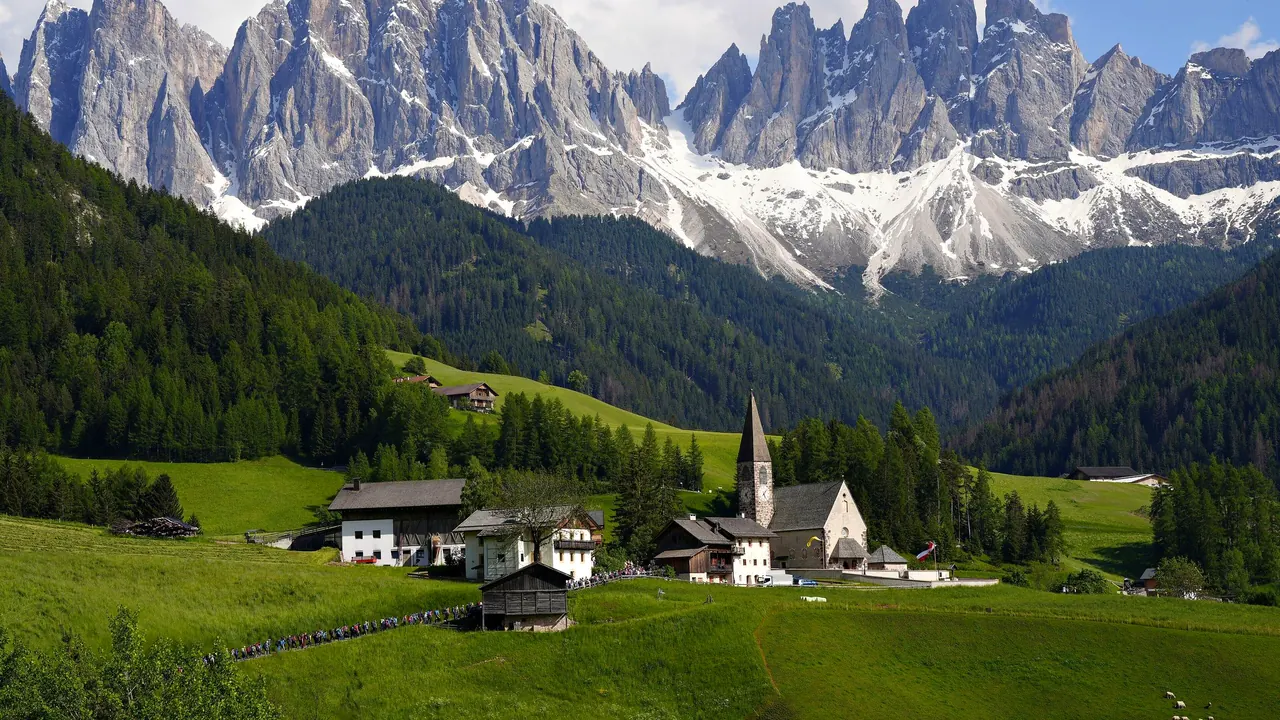
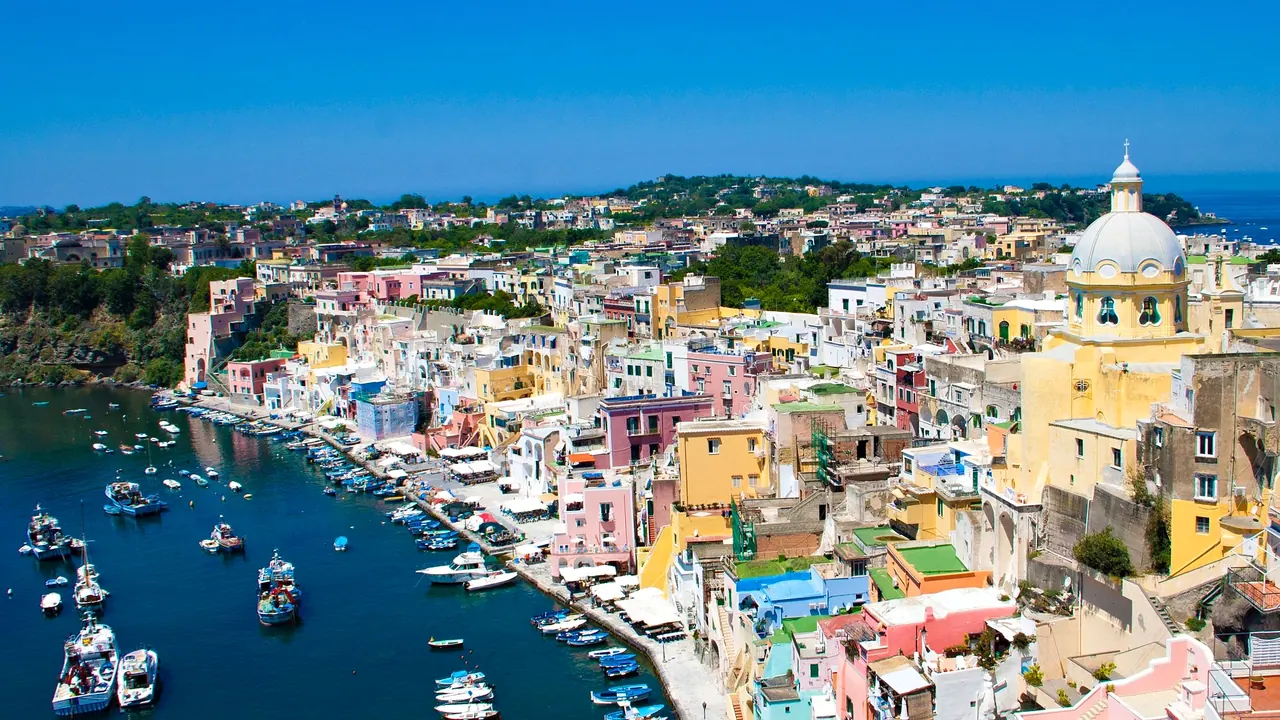
Photos: Dolomites by Chensiyuan, CC BY-SA 4.0, cropped; Procida by DIANA.GRYGAROVA, CC BY-SA 4.0, cropped.
Dolomites or Procida?
Our verdict in twelve categories, each scored against the same fixed benchmark cities, and the climate month by month, so you can choose for your trip.
Choose Dolomites for
- nature and the outdoors
- shopping
- families
Choose the Dolomites if the mountains themselves are the point of the trip. Lifts lift you from almost every village onto high pasture and pale limestone towers, and there are hut-to-hut routes, via ferrata and, in winter, one of the largest linked ski areas in the Alps. The food is richer and more varied, the spa hotels are better, and families get easy walking and well-run ski schools. You give up any real swimming and pay mountain-resort prices, and moving between valleys is slow.
Choose Procida for
- beaches
- prices
- day trips
Procida is a slow island in the Bay of Naples for warm sea, small volcanic beaches and long lunches above a painted harbour. It costs somewhat less than its neighbours in the gulf, and it works well as a base: Ischia, the Phlegraean Fields and Naples are all a short boat ride away. You will run out of new ground on the island in a few days, though, and evenings, shopping and culture are thin unless you take the ferry.
Scoreboard
Twelve categories on one fixed scale from 0 to 100. The shaded stretch is the gap between the two.
Your match
Pick a travel style or drag the sliders, and both match scores follow your weighting.
Wins on nature and the outdoors and shopping with your weighting.
Wins on beaches and prices with your weighting.
What matters to you?
Category by category
What the scores mean for a trip.
Beaches & swimming
Procida wins easily. Its beaches are small coves of dark volcanic sand, with gentle Chiaiolella facing Vivara, the long curve of Ciraccio and sheltered Pozzo Vecchio, and the sea stays warm well into autumn. They are not large, and in August they fill early.
In the Dolomites swimming is something you do on the side. Braies and Misurina are too cold for most people, so bathing means Lake Caldaro's grassy lidos, village pools, or a drive to Riva on Lake Garda.
Food & drink
The Dolomites give you far more to eat. Tyrolean speck, canederli and strudel sit beside Italian espresso and Trentino polenta, and hut lunches at altitude are part of the day. There are Lagrein and Gewürztraminer from the slopes below Bolzano, and an unusual number of serious kitchens in Alta Badia.
Procida's table is narrower but has its own character: the morning's fish at Corricella, the island's lemon salad with mint and chilli, and lingua pastry on the Marina Grande waterfront. Many places shut out of season.
Culture & sights
Neither is a destination you visit mainly for its sights, but the Dolomites have more of them. There is Ötzi in Bolzano's archaeology museum, the frescoed rooms of Trento's Castello del Buonconsiglio, Bressanone's cathedral and cloister, Runkelstein's secular frescoes and First World War tunnels on the high passes. They make good days out when it rains.
Procida's heritage fits into a day or two of slow walking: Terra Murata with its abbey and the former prison of Palazzo d'Avalos, then the stacked pastel houses of Corricella below.
Nightlife
Both are places for early nights, but the Dolomites offer a little more. In winter there is après-ski at the foot of the slopes in Selva, Canazei and Cortina, Cortina has a dressier wine-bar crowd, and Bolzano and Trento have student bars.
On Procida the evening is a harbour walk and a drink at Marina Grande or Chiaiolella until about midnight in summer. For anything more you need the ferry to Naples or Ischia, and a plan for getting back.
Nature & outdoors
The gap here is one of scale. The Dolomites are a whole mountain range, where pale limestone walls such as the Tre Cime di Lavaredo, the Sassolungo and the Sella massif stand above high meadows, and the Marmolada still carries a glacier. You could spend weeks walking, mountain biking or road cycling and keep finding new valleys, and the same ground becomes a different landscape under snow.
Procida is a few kilometres of low volcanic coast, its old craters flooded into bays, and its best outdoor hours are spent on or in the water: snorkelling along the rocks, diving off the south coast, a boat trip round the island. Add the headlands above Pozzo Vecchio and Solchiaro and a guided visit to Vivara when it opens, and you will have seen it all well before the week is up.
Day trips
Procida has the edge, because the boat does the work. Ischia is a quarter of an hour away. Pozzuoli's amphitheatre, the sunken villas at Baia and Greek Cuma are close by, and Naples, with Herculaneum beyond it, makes an easy day. The last ferry decides how late you stay out.
The Dolomites offer good outings too: Merano, Trento, the wine route and Verona by train from Bolzano, with Innsbruck over the Brenner. From a high village, though, every trip starts with a winding pass road.
Good for families
The Dolomites suit children much better. There are nearly flat paths across the Alpe di Siusi and Armentara meadows, huts with playgrounds and farm animals, summer toboggan runs, hotels with children's clubs, and gentle nursery slopes in winter. Rainy days are the weak point.
Procida works for a simple routine with small children: warm, shelving water at Chiaiolella and Ciraccio and short distances. Its narrow, pavement-free lanes and the many steps to Corricella make pushchairs hard work.
Getting around
Both are about equally easy, in very different ways. In the Dolomites, trains and buses cover the valleys on one regional pass and lifts link whole ski areas. Crossing between valleys means slow, crowded hairpin passes, so most people touring several areas hire a car.
Procida is a few kilometres across, with small buses, three-wheeled taxis and frequent ferries from Marina Grande, and you do not need a car. The catch is walking along walled lanes with steady traffic and no pavements.
Shopping & style
The Dolomites have more worth buying. There are carved figures and nativity scenes from the Ortisei workshops, loden and delicatessens under Bolzano's arcades, Cortina's luxury boutiques, and the well-known Advent markets of Bolzano, Merano and Bressanone.
Procida's shopping is the short stretch of Via Roma: ceramics, limoncello, linen and beachwear to browse on the way to the ferry. For anything more, go to Naples.
Affordability
Procida is the gentler on the wallet, though not cheap in July and August. It has small guesthouses and flats, cheap pastries, pizza and buses, and beaches that cost nothing if you skip the sunbeds.
The Dolomites are expensive in the ski season and in midsummer. Cortina and Alta Badia rank among Italy's costliest resorts, and lift passes and guided climbs add up. Fassa, Fiemme and the valley towns cost less, and so do June and September.
Live music & performing arts
The Dolomites have more on stage. Bolzano and Trento have orchestral and theatre seasons, and Bolzano hosts a long-established piano competition. In summer there are concerts on alpine meadows and in castles and wineries, and Merano holds an autumn festival in its old spa halls.
Procida has no venue at all. Its great spectacle is the Good Friday procession of the Misteri down from Terra Murata, and opera in Naples means a tricky ferry home.
Wellness & relaxation
The Dolomites offer more for a spa stay. South Tyrol's hotels are built around saunas facing rock walls and heated outdoor pools in the snow, hay baths are still offered below the Schlern, and Merano has its public thermal baths by the river.
Procida has no spas of its own. Its calm comes from long lunches and quiet lanes, and for proper soaking you take the short boat to Ischia's hot springs and thermal gardens.
When should you go?
Pick your month. The climate figures are measured averages, not a forecast.
Dolomites in July
Procida in July
Daytime high, °C
Rainfall in the month, mm
Where the figures come from
Procida's temperatures are measured 32 km from the centre, at Grazzanise.
Temperature and rainfall are climate normals, averaged over the years shown. Dolomites: 1991-2020 normals, Dobbiaco (22.3 km from centre). Procida: 1991-2020 (rainfall 1971-2000) normals, Grazzanise (32.2 km from centre).
The two are at their best in opposite seasons. In the Dolomites, summer days reach about 22°C, which makes June to September the time for walking, though summer is also the wettest season, with July the rainiest month at around 130mm. October cools quickly. From December to February the highs sit near freezing, which means skiing rather than hiking, and March is still cold, though it is starting to thaw.
On Procida the sea is warm enough to swim from June to October and reaches about 26°C in August. July and August are hot, near 31°C, with long, dry and very sunny days, so the lanes are best walked early or late. May and September are milder and better for exploring on foot. The rain returns in September, becomes heavy in October and peaks in November, and the winter months are grey and wet but never cold.
Which traveller are you?
For a beach and sun trip, Procida is the clear choice. It has warm, clear sea from June to October and coves such as Chiaiolella, Ciraccio and Pozzo Vecchio. The Dolomites offer cold high lakes and the odd valley lido.
On an outdoors trip, the Dolomites have few equals anywhere. There are lift-served walks on the Alpe di Siusi, the Alta Via hut routes, via ferrata, cycling over the great passes and skiing on the Sella Ronda. Procida's headland paths are done within a few days.
On a trip with a tight budget, Procida is the easier choice. Neither place is cheap in high summer, but Procida's guesthouses, pizzas and buses cost less than Cortina or Alta Badia, and a beach day costs little. The cheaper Dolomite valleys still add lift passes.
Before you go
| Measure | Dolomites | Procida |
|---|---|---|
| Official language | Italian | Italian |
| Currency | Euro (EUR) | Euro (EUR) |
| Sockets | CFL230 V, 50 Hz | CFL230 V, 50 Hz |
| Driving side | Right | Right |
| Time zone | UTC+1, UTC+2 in summer | UTC+1, UTC+2 in summer |
| Emergency number | 112 | 112 |
| Main airport | Venice Marco Polo Airport (VCE)103 non-stop destinations | Naples International Airport (NAP)131 non-stop destinations |
| Public holidays this year | 13 days | 13 days |
By the numbers
| Measure | Dolomites | Procida |
|---|---|---|
| Population | - | 10,092 |
| People per km² | - | 2,347 |
| Swim season, months above 21 °C | - | 5 months |
Where else could you go?
Every comparison below shares a destination with this one, so you can follow Dolomites or Procida somewhere new.
- Ischiavs Procida
- Caprivs Procida
- Amalfi Coastvs Procida
- Austrian Alpsvs Dolomites
- Lake Gardavs Dolomites
- Bavariavs Dolomites