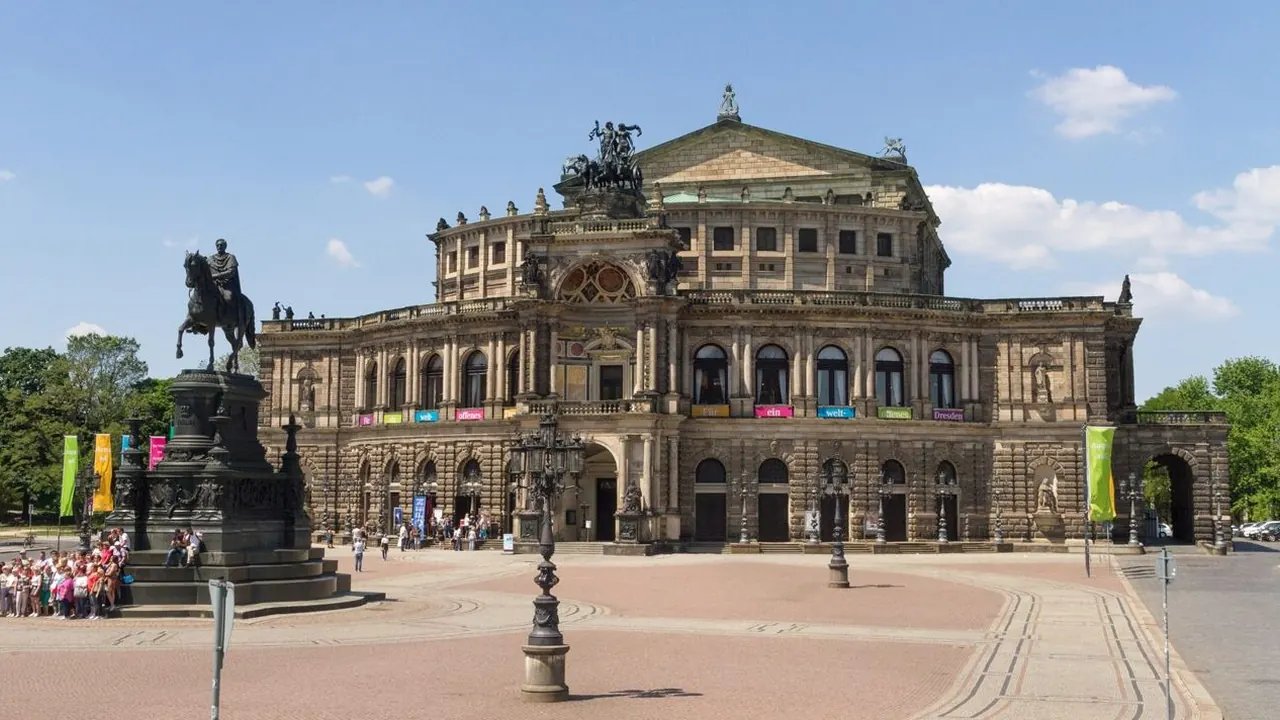
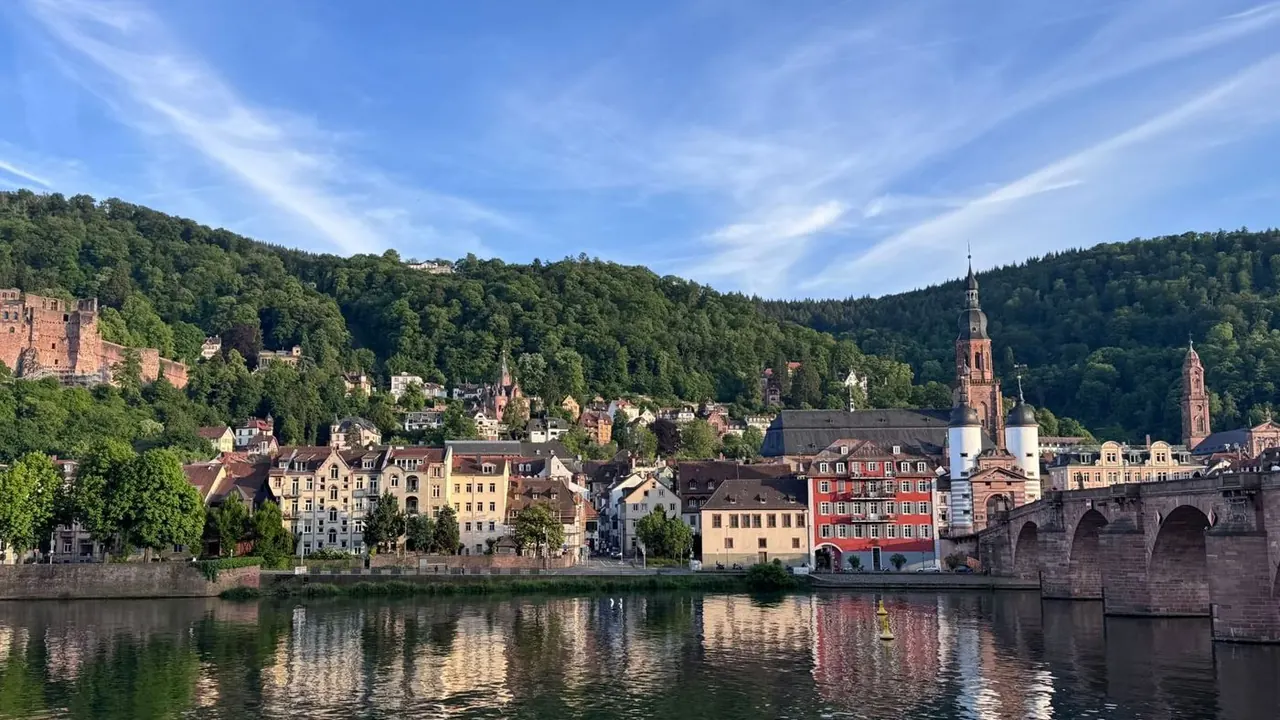
Photos: Dresden by Maksym Kozlenko, CC BY-SA 4.0, cropped; Heidelberg by Kuanling Chen, Pexels License.
Dresden or Heidelberg?
Our verdict in twelve categories, each scored against the same fixed benchmark cities, and the climate month by month, so you can choose for your trip.
Choose Dresden for
- live music and the arts
- culture and sights
- nature and the outdoors
Dresden is the stronger choice for a trip built around art and music. The baroque riverfront holds collections of real international weight, the Semperoper and its orchestra give the evenings a serious backbone, and the sandstone gorges of Saxon Switzerland are a short train ride upriver. It also costs a little less, and it rewards three or four days rather than one or two.
Choose Heidelberg for
- day trips
- families
- wellness
Heidelberg suits travellers who want a compact, picturesque town to stroll for a couple of days, with wine taverns and wooded hillsides close at hand. Its castle ruin, university lanes and Neckar views are seen quickly. Speyer, Worms, Schwetzingen and the Palatinate wine villages then make it a pleasant base for exploring the Upper Rhine.
Scoreboard
Twelve categories on one fixed scale from 0 to 100. The shaded stretch is the gap between the two.
Your match
Pick a travel style or drag the sliders, and both match scores follow your weighting.
Wins on live music and the arts and culture and sights with your weighting.
Wins on day trips and families with your weighting.
What matters to you?
Category by category
What the scores mean for a trip.
Beaches & swimming
Neither city is a beach destination, and both send swimmers to outdoor pools and flooded gravel pits. Dresden has the more appealing riverbank, with sandy stretches and deckchair spots on the Elbe, plus the ponds around Moritzburg just north of town. Heidelberg's Neckar offers lawns rather than sand, and its swimming lakes are out on the Rhine plain, about half an hour away.
Food & drink
Both serve hearty regional cooking, and both have wine country on the doorstep, so the difference is in emphasis. Dresden's strengths are sauerbraten, game and above all baking. Stollen and Eierschecke make the afternoon coffee ritual the most memorable part of eating there, and the Neustadt has the more varied, casual range of cuisines.
Heidelberg leans harder on wine. Riesling and Pinot from the Bergstrasse and the Palatinate are on every list, and the village wine taverns are often where the best meals are. Spring brings white asparagus, while Maultaschen and Flammkuchen reflect its south-western position.
Culture & sights
Dresden is in a different league here. The Old Masters in the Zwinger, the Green Vault in the Residenzschloss and the Albertinum's nineteenth-century painting are collections people travel specifically to see. Add the rebuilt Frauenkirche, the Semperoper and Pillnitz, and you have a programme of several days. Much of the old town is reconstruction, which gives it a patchier feel.
Heidelberg's appeal is the setting rather than the collections. The castle ruin above a genuinely old Altstadt, the Old Bridge and the university with its graffiti-covered Student Prison make a lovely picture, but one you can see in a day or two.
Nightlife
Dresden gives you more to do after dark. The Äußere Neustadt is a whole district of small bars, beer kiosks and courtyard pubs, with crowds drinking on the pavements in summer and a few clubs in old industrial buildings, and it stays busy late at weekends.
Heidelberg's scene squeezes into the Untere Strasse and its historic student taverns. It is lively in term time and quiet out of it, and for a proper club night locals take the train to Mannheim or Frankfurt.
Nature & outdoors
Dresden has the more dramatic landscape within reach. Saxon Switzerland's sandstone towers, gorges and table mountains begin upriver in well under an hour, and they offer real multi-day hiking and a historic climbing culture. The Elbe cycle route and the Ore Mountains add more.
Heidelberg's countryside starts right at the old town. Forest trails run from the Königstuhl and the Heiligenberg, the Bergstrasse has its almond blossom, and the Neckar valley is good for cycling. It is easy and green, but much gentler.
Day trips
Both are excellent bases, with different kinds of outing. From Dresden, the trips follow the Elbe and Saxony: porcelain in Meissen, the lake palace at Moritzburg, the Königstein fortress, Görlitz and Leipzig, with Prague as a long day out.
Heidelberg looks to the Upper Rhine's cathedrals and monasteries: Speyer, Worms, Lorsch and Maulbronn. It adds the Schwetzingen gardens, the castle villages up the Neckar and the Palatinate wine villages, with Strasbourg at the far edge.
Good for families
For families the difference is where the good days happen. In Dresden most of them are in town: the Großer Garten has a zoo at its edge and a miniature railway largely run by children, the Transport Museum is full of trams and trains, and the Hygiene Museum has a hands-on section about the senses. A paddle steamer up the Elbe or a day at Moritzburg adds time outdoors, but there is no theme park or large aquarium.
Heidelberg's best family outings are mostly a short trip away. Nearby, the funicular leads up to a small fairy-tale park on the Königstuhl, and the compact zoo sits by the Neckar. Further afield, the Technik Museum in Speyer lets children climb into aircraft and a submarine, and a large theme park is under an hour away. The sloping, cobbled Altstadt is hard going with a pushchair.
Getting around
Both are easy without a car. Dresden's old town and Neustadt are walkable from one to the other across the Augustus Bridge, a dense tram network covers the wider city, and suburban trains and paddle steamers run along the Elbe.
Heidelberg is a long, narrow strip that you walk along the Hauptstrasse. The station is a tram ride away, a funicular saves you the steep climb to the castle, and one regional fare system makes rail trips across the Rhine-Neckar area simple.
Shopping & style
Neither city is a shopping destination, and both leave everyday needs to familiar chains, so the real difference is what is worth taking home. Dresden sells its own craft heritage: Meissen porcelain in the old town showrooms, carved Ore Mountain toys and Christmas figures, and in Advent the Striezelmarkt, one of Germany's oldest Christmas markets, with craft stalls and Stollen across the Altmarkt. For browsing, the Neustadt's second-hand shops, small design studios and decorated Kunsthofpassage courtyards have more character than anything in Heidelberg.
Heidelberg offers one long high street rather than a craft tradition. The Hauptstrasse runs from department stores to cuckoo clocks, beer steins and Studentenkuss chocolates near the market square, which is mostly the stock of a tourist town, and a bottle of Bergstrasse Riesling makes a more genuinely local souvenir. Its independent bookshops and boutiques are tucked into the side lanes, and serious fashion and luxury are thin in both cities.
Affordability
Dresden is the cheaper of the two. Hotels are reasonable for most of the year, and the Neustadt's cafés and bars keep eating out good value. The main extra cost is separate entry for each major museum.
Heidelberg pays the price of its popularity. Rooms are scarce and expensive during congresses, graduations and summer weekends, so many visitors stay in Mannheim and come in by train, though student cafés and taverns keep meals affordable.
Live music & performing arts
Music is a real reason to visit Dresden. The Semperoper, with the centuries-old Staatskapelle and its Wagner and Strauss premieres, the Dresden Philharmonic in the Kulturpalast and the Kreuzchor in the Kreuzkirche make up a programme of international standing. The music festival and a long-running Dixieland festival add to the calendar.
Heidelberg has a full programme for a small town, with opera and concerts at the municipal theatre, the Heidelberger Frühling chamber festival and open-air performances in the castle courtyard. For a larger house, people go to Mannheim.
Wellness & relaxation
Neither has thermal springs, and in both, relaxation comes more from the pace than from spas. Dresden has public sauna culture in its municipal baths, a thermal pool at Bad Schandau and lazy afternoons of coffee and cake on the Elbe meadows.
Heidelberg is better placed for proper bathing, with the thermal complexes of the Kraichgau about half an hour away and Baden-Baden about an hour. At home it offers evenings on the Neuenheim riverbank and quiet forest paths above the Philosophers' Walk.
When should you go?
Pick your month. The climate figures are measured averages, not a forecast.
Dresden in July
Heidelberg in July
Daytime high, °C
Rainfall in the month, mm
Temperature and rainfall are climate normals, averaged over the years shown. Dresden: 1991-2020 normals, Dresden-Strehlen (3.8 km from centre). Heidelberg: 1991-2020 normals, Heidelberg (4.5 km from centre).
The two cities follow almost the same temperature curve. Both are warm enough to sit outside from May to September and peak at about 26°C in July and August. Winters in both are cold and grey, with January highs around 4°C, so sightseeing then means short daylight and a lot of time indoors. Neither has a sea, and their river beaches are for lounging, not swimming.
The difference is in the rain. Dresden gets its wettest weather in high summer, with about 83mm in August, but its late winter and early spring are notably dry, so March and April are good months for walking the old town and the sandstone trails. Heidelberg spreads its rain more evenly. It has a slightly drier, sunnier August than Dresden, but it is damper from autumn into winter, at around 62mm in November, and gets less December sunshine. Late May, June and September are the most comfortable months in both.
Which traveller are you?
On a culture and arts trip, Dresden is clearly the better pick. The Sistine Madonna in the Zwinger, the Green Vault treasures and the Albertinum's Romantic painting fill several days, and an evening at the Semperoper or a Kreuzchor service adds music that few cities match.
For an outdoors trip, Dresden also comes out ahead. Saxon Switzerland gives you sandstone towers, the Bastei viewpoint, the multi-day Malerweg and traditional rock climbing, all within an hour by suburban train. Heidelberg's Odenwald and Königstuhl trails are pleasant but gentler.
For a short city break, Heidelberg fits better. Its castle, Old Bridge, Student Prison and Philosophers' Walk sit in one narrow strip that you can cover comfortably in a day or two. Dresden's museums need more time than a weekend allows.
Before you go
| Measure | Dresden | Heidelberg |
|---|---|---|
| Official language | German | German |
| Currency | Euro (EUR) | Euro (EUR) |
| Sockets | CF230 V, 50 Hz | CF230 V, 50 Hz |
| Driving side | Right | Right |
| Time zone | UTC+1, UTC+2 in summer | UTC+1, UTC+2 in summer |
| Emergency number | 112 | 112 |
| Elevation | 126 m | 114 m |
| Main airport | Dresden Airport (DRS)10 km from centre13 non-stop destinations | Frankfurt Main Airport (FRA)69 km from centre281 non-stop destinations |
| Public holidays this year | 11 days | 12 days |
By the numbers
| Measure | Dresden | Heidelberg |
|---|---|---|
| City population | 562,764 | 156,092 |
| People per km² | 1,713 | 1,433 |
| Museums within 10 km | 70 | 17 |
| UNESCO World Heritage sites within 50 km | 1 | 4 |
Where else could you go?
Every comparison below shares a destination with this one, so you can follow Dresden or Heidelberg somewhere new.