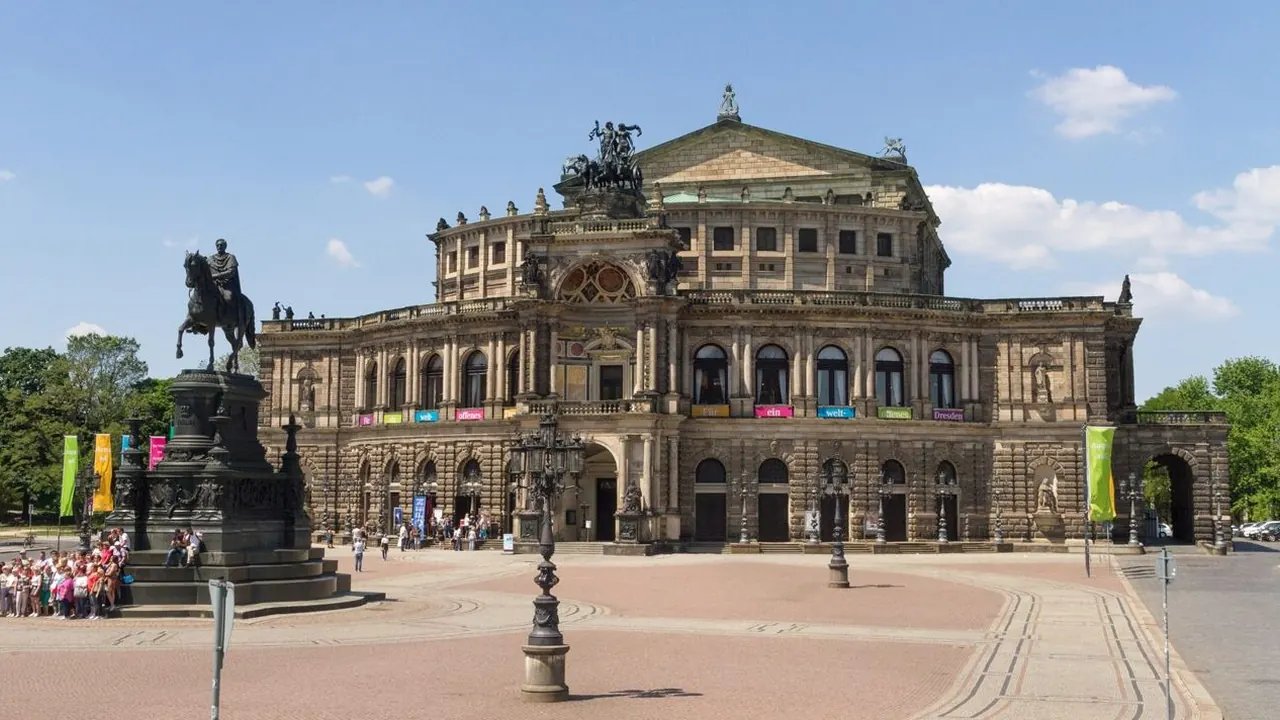
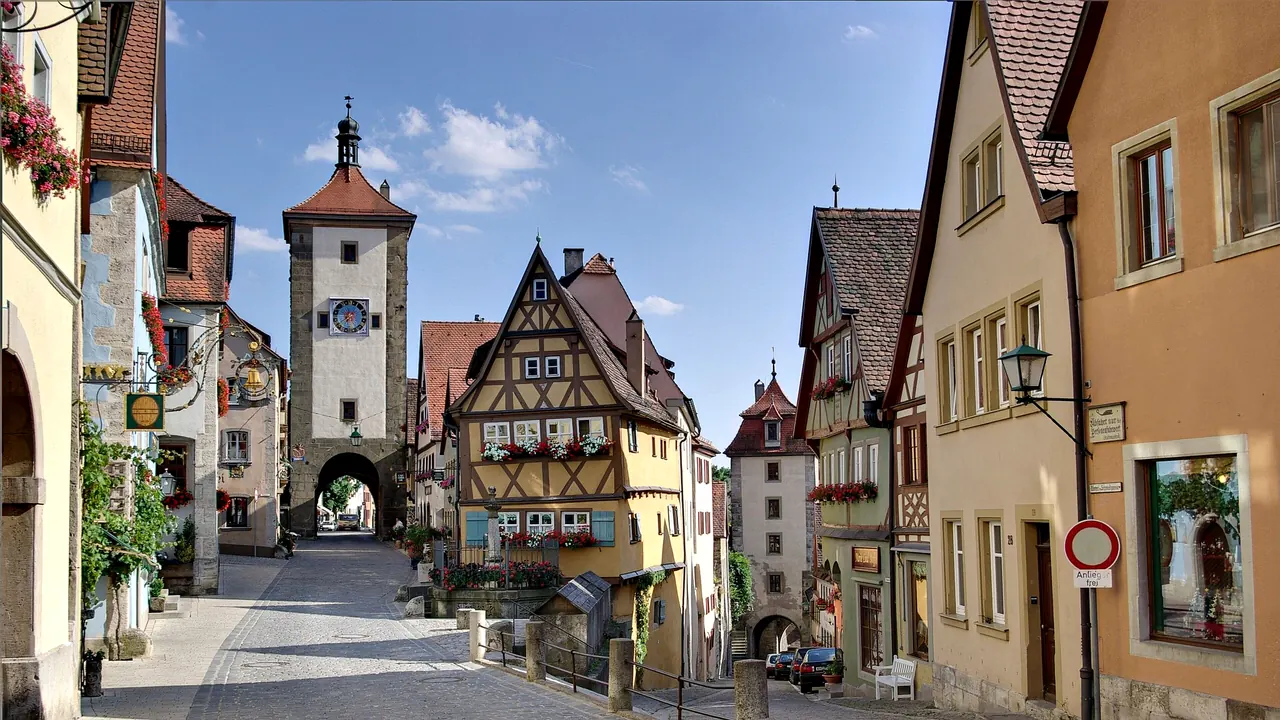
Photos: Dresden by Maksym Kozlenko, CC BY-SA 4.0, cropped; Rothenburg ob der Tauber by Berthold Werner, Public domain.
Dresden or Rothenburg ob der Tauber?
Our verdict in twelve categories, each scored against the same fixed benchmark cities, and the climate month by month, so you can choose for your trip.
Choose Dresden for
- live music and the arts
- nightlife
- nature and the outdoors
Dresden is the stronger choice for a full stay of several days. It pairs collections of world rank and one of Europe's great opera houses with a lively student quarter for the evenings and the sandstone gorges of Saxon Switzerland a short train ride upriver. Trams and suburban trains reach almost everything, so you never need a car, and the food, shopping and prices are all a step better than in Rothenburg.
Choose Rothenburg ob der Tauber for
Rothenburg ob der Tauber does not lead in any category we score.
Rothenburg suits a different trip: a night or two inside one of Europe's most complete medieval walled towns, ideally as one stop on a drive along the Romantic Road. Come for the ramparts, the gabled lanes and the deep quiet once the day visitors leave, and for the year-round Christmas shops. Don't come expecting concerts, varied restaurants or anything to do after dark.
Scoreboard
Twelve categories on one fixed scale from 0 to 100. The shaded stretch is the gap between the two.
Your match
Pick a travel style or drag the sliders, and both match scores follow your weighting.
Wins on live music and the arts and nightlife with your weighting.
Has no clear advantage with the weighting you have chosen.
What matters to you?
Category by category
What the scores mean for a trip.
Beaches & swimming
Neither place is a beach destination, and both leave you looking for somewhere to cool off rather than somewhere to swim properly. Dresden has more of it within easy reach: deckchairs on the sandy Elbe banks (though the river itself is off limits for swimming), flooded gravel pits on the edge of the city and the ponds around Moritzburg.
In Rothenburg it's the town's outdoor pool, or about an hour's drive to grassy bathing areas on the Franconian lakes such as the Altmühlsee.
Food & drink
Dresden eats better. Its afternoon coffee culture, with Eierschecke and Stollen, is a real local ritual, the vineyards around Radebeul and Meissen supply the wine lists, and the Neustadt adds Vietnamese, Middle Eastern and beer-garden meals to the Saxon roasts and dumplings.
Rothenburg's cooking is good Franconian fare in timbered rooms, Schäufele and bratwurst with Silvaner from the Bocksbeutel bottle. The choice is narrow, though, and many places around the Marktplatz cook for coach groups, so the better meals mean walking out to family-run guesthouses and Tauber valley wine taverns.
Culture & sights
The two offer very different kinds of history. Dresden has depth: the electors' collections at the Zwinger, the Residenzschloss and the Albertinum would justify the trip on their own, and the Frauenkirche, the Semperoper and Pillnitz fill three or four days. Much of its baroque core is rebuilt, though, with post-war blocks close by.
Rothenburg has authenticity and completeness rather than great galleries. The walls, towers and gabled lanes survive almost untouched, Riemenschneider's Holy Blood Altar is a true masterpiece, and the Medieval Crime Museum is worth an hour, but the whole visit is over far sooner.
Nightlife
This is one of the widest gaps between the two. Dresden has a proper student quarter in the Äußere Neustadt, with small bars, beer kiosks, courtyard pubs, summer drinking on the pavements and a few clubs in old industrial buildings, enough for several good evenings.
Rothenburg goes quiet once the day visitors leave. A glass in a wine tavern and the night watchman's lantern-lit tour are the whole programme, and for a real night out you would have to drive to Würzburg or Nuremberg.
Nature & outdoors
Dresden has real landscape on its doorstep. The sandstone towers and gorges of Saxon Switzerland, with the Bastei view, the multi-day Malerweg and a historic rock-climbing scene, start well under an hour away by suburban train. The Elbe cycle route, the Dresden Heath and the Ore Mountains add more.
Around Rothenburg the countryside is gentle. Paths drop from the walls into the Tauber valley past mills and meadows, and the riverside cycle path makes a lovely family ride, but beyond the orchards and the rolling Frankenhöhe there is nothing dramatic.
Day trips
Both are good bases for excursions, and Dresden has the edge mainly because it is so easy to get around from it. Meissen, Königstein, Moritzburg, Leipzig, Görlitz and even Prague can all be done by train, a mix of porcelain, fortresses, Bach and a foreign capital.
Rothenburg's surroundings are just as tempting in their own way. Dinkelsbühl, Nördlingen in its meteorite crater, Würzburg's Residenz and Nuremberg all lie within about an hour, but the many look-alike walled towns overlap more, and reaching them really calls for a car.
Good for families
Dresden keeps children busy for longer. The Großer Garten has its zoo and the miniature railway run largely by children, the Transport Museum is full of trams and trains, and the Hygiene Museum has a hands-on section on the body. Paddle steamers and the Saxon Switzerland rocks make good outdoor days.
Rothenburg is enchanting for a day or two. Children can walk the ramparts, climb the Rathaus tower and follow the night watchman, but after that there is little made for them, and the cobbles and steep valley paths are hard on pushchairs and small legs.
Getting around
Both town centres are best seen on foot. Rothenburg's walled core takes only fifteen minutes to cross and keeps cars outside the gates, while Dresden's old town and the Neustadt sit either side of the Augustus Bridge.
Beyond the centre, Dresden pulls ahead. Trams run across the city and suburban trains follow the Elbe in both directions. Rothenburg sits at the end of a branch line that usually means a change at Steinach, and its regional buses are sparse, especially at weekends.
Shopping & style
Dresden has more range. Prager Straße covers the everyday chains, the Neustadt and its Kunsthofpassage courtyards add second-hand clothes and small design shops, and Meissen porcelain showrooms sell the region's signature craft.
Rothenburg is narrower but has a clear speciality: Christmas all year round, with baubles, nutcrackers, smoking men and cuckoo clocks along the Herrngasse. Both places sell Ore Mountain wooden carvings and have celebrated Christmas markets, but in Rothenburg that is nearly all there is, with hardly any fashion or everyday shopping.
Affordability
Your money goes further in Dresden, a moderately priced city where Neustadt meals are good value and one day ticket covers trams and suburban trains. The main cost is museum entry, since each major collection charges separately.
Rothenburg adds a tourist premium to ordinary small-town prices, especially for rooms inside the walls and meals around the Marktplatz. Staying in a village just outside saves a good deal. In both places, rooms cost the most in December.
Live music & performing arts
Dresden is one of Germany's great music cities. The Semperoper and its Staatskapelle carry a history of Wagner and Strauss premieres, and the Kulturpalast, the Kreuzchor and Bach at the Frauenkirche fill the rest of the calendar, with theatre and operetta on top.
Rothenburg's stage is mainly its past. The costumed Meistertrunk play, a small summer open-air theatre and organ concerts in St Jakob are all there is, and on most evenings there is simply no performance to go to.
Wellness & relaxation
Neither place has hot springs of its own, so both offer calm rather than spa culture. Dresden's version is the German public sauna in its municipal baths, the wide Elbe meadows and coffee on a river terrace, with thermal pools at Bad Schandau reachable by train.
Rothenburg's calm is quieter still: empty lanes and the wall walk at dawn or after the coach groups leave. For proper bathing you need a car to reach the floating salt-water pool at Bad Windsheim or the older spa town of Bad Mergentheim.
When should you go?
Pick your month. The climate figures are measured averages, not a forecast.
Dresden in July
Rothenburg ob der Tauber in July
Daytime high, °C
Rainfall in the month, mm
Where the figures come from
Rothenburg ob der Tauber's sunshine is measured 27 km from the centre, at Feuchtwangen-heilbronn.
Temperature and rainfall are climate normals, averaged over the years shown. Dresden: 1991-2020 normals, Dresden-Strehlen (3.8 km from centre). Rothenburg ob der Tauber: 1991-2020 normals, Rothenburg ob der Tauber (0.9 km from centre).
Both places have the same central European year. Winters are cold and grey, with daytime highs only a few degrees above freezing, and summers are warm rather than hot, peaking at about 26°C in Dresden and a degree lower in Rothenburg in July and August. May to September is the comfortable stretch for walking the streets, and in neither place is midsummer too hot for sightseeing. Outdoor pools and lakes only really make sense from June to August. September is the best balance, still mild and drier than high summer. April is also fairly dry, but cool, with highs in the mid-teens.
The real difference is in the rain and the light. In Dresden, summer is the wet season: the rain builds from May and peaks in August at 83mm, so expect showery days at the height of summer. Rothenburg's rain is spread more evenly through the year, so it is wetter than Dresden in winter but drier in midsummer. Rothenburg also gets more sun in July, about 246 hours, but its winter is darker, so a December visit there means short, dim days.
Which traveller are you?
On a culture and arts trip, Dresden is the clear pick. It has Raphael's Sistine Madonna, the Green Vault and the Albertinum by day, and the Semperoper, the Staatskapelle and the Kreuzchor by night. Rothenburg offers a beautiful townscape and one great altar, but almost no stage.
For a food and nightlife trip, go to Dresden. The Äußere Neustadt has varied, casual eating and small bars that stay busy late at weekends, plus Elbe valley wines. Rothenburg's evenings come down to Franconian inns and wine taverns, and the lanes fall silent by eleven.
On an outdoors trip, Dresden wins easily. Saxon Switzerland's sandstone towers, the Malerweg trail and traditional rock climbing are all under an hour away by train. Rothenburg has only the gentle Tauber valley paths and an easy riverside cycle route, with no mountains or wild country nearby.
Before you go
| Measure | Dresden | Rothenburg ob der Tauber |
|---|---|---|
| Official language | German | German |
| Currency | Euro (EUR) | Euro (EUR) |
| Sockets | CF230 V, 50 Hz | CF230 V, 50 Hz |
| Driving side | Right | Right |
| Time zone | UTC+1, UTC+2 in summer | UTC+1, UTC+2 in summer |
| Emergency number | 112 | 112 |
| Elevation | 126 m | 430 m |
| Main airport | Dresden Airport (DRS)10 km from centre13 non-stop destinations | Nuremberg Airport (NUE)66 km from centre56 non-stop destinations |
| Public holidays this year | 11 days | 12 days |
By the numbers
| Measure | Dresden | Rothenburg ob der Tauber |
|---|---|---|
| City population | 562,764 | 11,331 |
| People per km² | 1,713 | 272 |
| Museums within 10 km | 70 | 6 |
| UNESCO World Heritage sites within 50 km | 1 | 2 |
Where else could you go?
Every comparison below shares a destination with this one, so you can follow Dresden or Rothenburg ob der Tauber somewhere new.
- Nurembergvs Rothenburg ob der Tauber
- Bambergvs Rothenburg ob der Tauber
- Stuttgartvs Rothenburg ob der Tauber
- Leipzigvs Dresden
- Heidelbergvs Rothenburg ob der Tauber
- Karlovy Varyvs Dresden