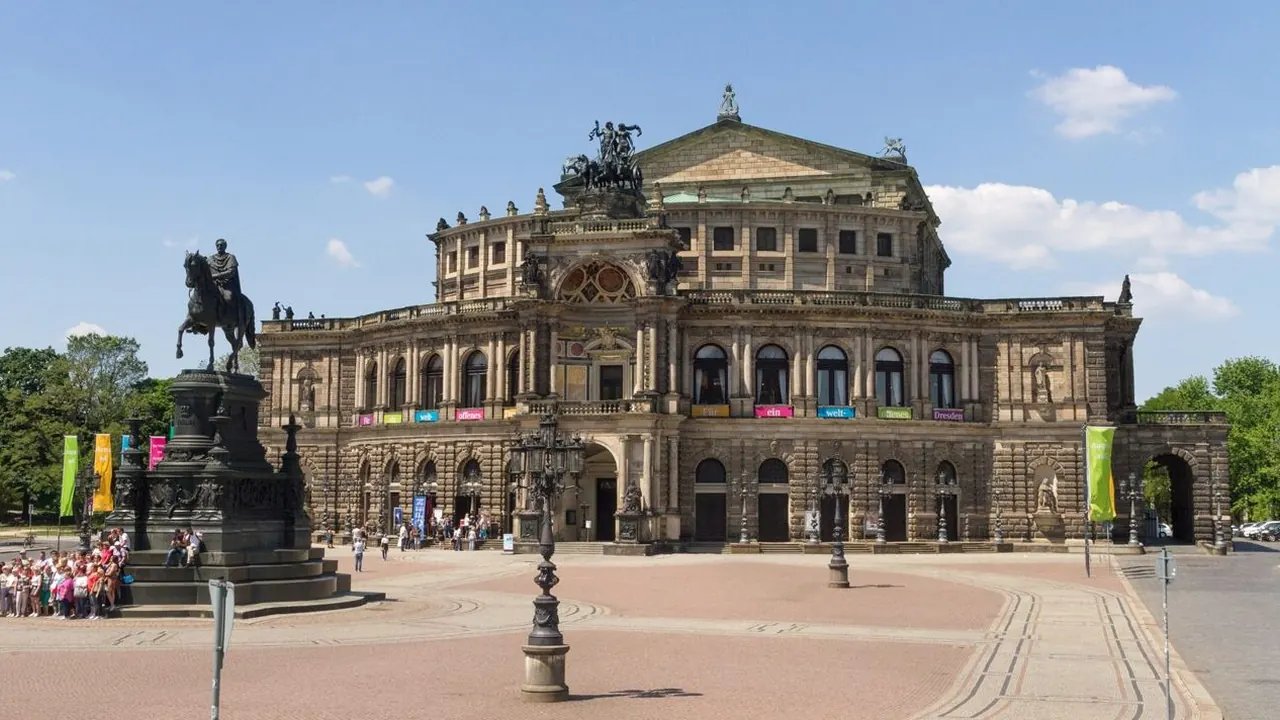
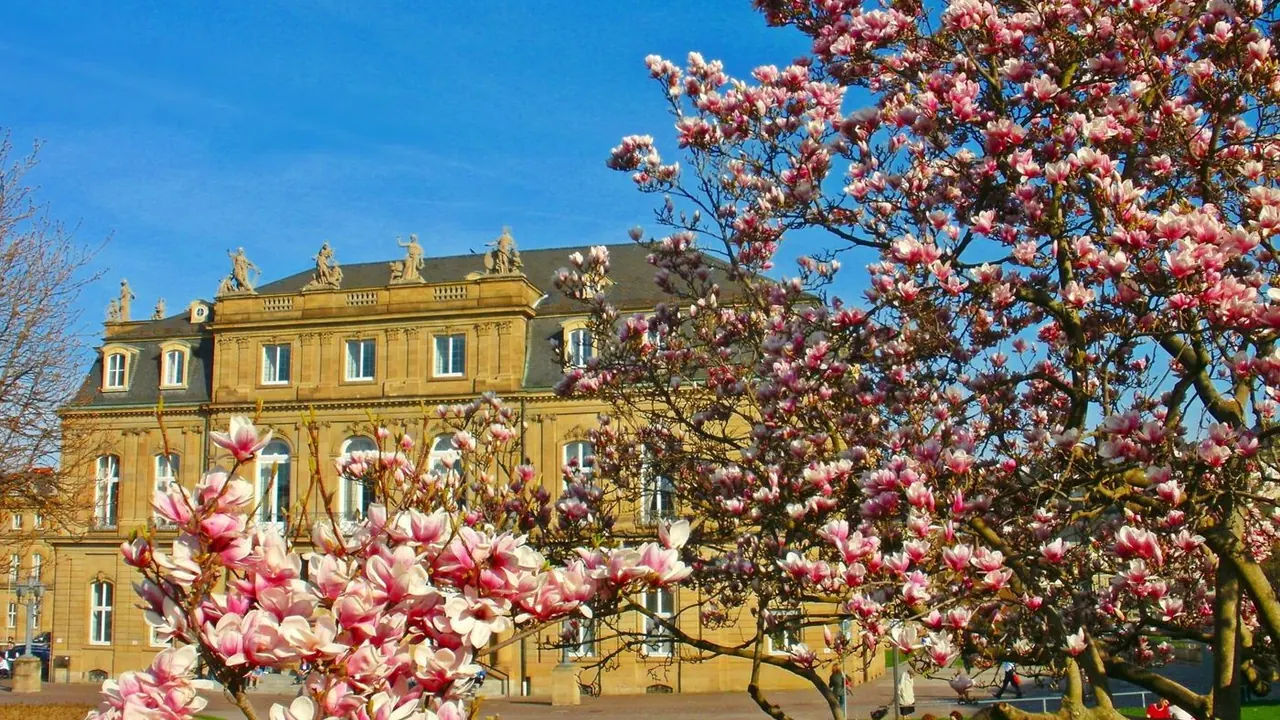
Photos: Dresden by Maksym Kozlenko, CC BY-SA 4.0, cropped; Stuttgart by Baden de, CC BY 3.0, cropped.
Dresden or Stuttgart?
Our verdict in twelve categories, each scored against the same fixed benchmark cities, and the climate month by month, so you can choose for your trip.
Choose Dresden for
- culture and sights
- prices
- nature and the outdoors
Dresden suits travellers who come for great art, classical music and a landscape close at hand. Its baroque riverside core holds the Old Masters, the Green Vault and the rebuilt Frauenkirche. The Semperoper's orchestra carries centuries of tradition, and the sandstone towers of Saxon Switzerland are a short suburban train ride upriver. It is also the easier city on a modest budget.
Choose Stuttgart for
- wellness
- shopping
- food and drink
Stuttgart is the better choice for a more comfortable, indulgent trip. Swabian cooking and wine from vineyards inside the city run deeper here, Königstrasse and the Metzingen outlets give shoppers far more to do, and the mineral baths of Bad Cannstatt offer a proper way to unwind. Families do slightly better too, with Wilhelma filling a whole day. The trade-off is cost, which rises sharply when trade fairs are on.
Scoreboard
Twelve categories on one fixed scale from 0 to 100. The shaded stretch is the gap between the two.
Your match
Pick a travel style or drag the sliders, and both match scores follow your weighting.
Too close to call, level with your weighting
Wins on culture and sights and prices with your weighting.
Wins on wellness and shopping with your weighting.
What matters to you?
Category by category
What the scores mean for a trip.
Beaches & swimming
Neither city is a place for a beach trip, and both are a long way from any sea. What they offer instead differs. In Dresden it is the sandy banks of the Elbe, good for a deckchair but not for swimming, with gravel-pit lakes and the Moritzburg ponds for a dip.
In Stuttgart the swimming is in outdoor pools, some fed by its mineral springs, and Max-Eyth-See is for boating rather than bathing. Lake Constance is the nearest open water, more than two hours away.
Food & drink
Stuttgart eats better. Swabian staples such as Maultaschen, Käsespätzle and Zwiebelrostbraten are served in traditional wine taverns, growers open seasonal Besen taverns in their own homes, and the Art Nouveau Markthalle is a pleasure to browse. Fine dining also runs deeper than you would expect in a city of its size.
Dresden's Saxon cooking is plainer, with sauerbraten, dumplings and game. Its real strength is afternoon coffee with Eierschecke or Stollen. The Neustadt has the most varied eating, while the old town leans towards tourist menus. Both cities pour their own wine: dry Elbe valley whites and sparkling wine in Dresden, Trollinger and Riesling in Stuttgart.
Culture & sights
Dresden is the clear choice for sightseeing. The Zwinger's Old Masters Picture Gallery with the Sistine Madonna, the treasures of the Green Vault in the Residenzschloss and the Albertinum's Caspar David Friedrich paintings are collections of genuine world rank. The Frauenkirche, rebuilt stone by stone, and Brühl's Terrace make a baroque riverside worth three or four days.
Stuttgart's sights tell a different story, one of industry and modern design. The Mercedes-Benz and Porsche museums, the Staatsgalerie's postmodern wing and the Le Corbusier houses of the Weissenhof Estate are the highlights. Its bombed old core survives only in pockets around Schlossplatz, and two or three days covers it.
Nightlife
Going out is low-key in both cities, but the style differs. Dresden's nightlife is packed into the Äußere Neustadt, a student grid of small bars, beer kiosks and courtyard pubs where people drink on the pavements in summer.
Stuttgart's is more spread out, with a strip of bars and lounges on Theodor-Heuss-Strasse and basement clubs for electronic music. Its busiest nights come at set times of year, with the beer tents of the Cannstatter Volksfest and the late-summer wine village.
Nature & outdoors
Dresden has the more striking landscape on its doorstep. Saxon Switzerland's sandstone towers, gorges and table mountains begin under an hour upriver, with the Bastei viewpoint, the multi-day Malerweg trail and a long tradition of free climbing. The Elbe cycle route and the Dresden Heath add easier days.
Stuttgart's countryside is gentler: vineyard trails above the Neckar, the deer forests of the Rotwildpark and Schönbuch, and within about an hour the cliff-edge paths of the Swabian Jura and the fir-covered ridges of the northern Black Forest.
Day trips
Dresden's day trips follow the Elbe and head east towards the Polish and Czech borders, while Stuttgart's spread out in every direction across the southwest. From Dresden, Meissen's cathedral and porcelain manufactory are about forty minutes away, the Königstein fortress stands on its table mountain upriver, and the towered old towns of Bautzen and Görlitz are an hour or so east. Leipzig is an hour by fast train, and Prague fits into a long day along the Elbe gorge.
Stuttgart's trips are mostly short hops to palaces, university towns and abbeys. Ludwigsburg and half-timbered Esslingen are on the S-Bahn, Tübingen is under an hour, Heidelberg's castle is about forty minutes by fast train, and Maulbronn monastery, Hohenzollern Castle and the spire at Ulm lie further out. Strasbourg is to Stuttgart what Prague is to Dresden, a long day across a border.
Good for families
Stuttgart has the edge with children, largely because of Wilhelma, a zoo and botanical garden among Moorish-style pavilions that fills a whole day. The Killesberg park railway, the rack railway, the car museums and Ludwigsburg's fairy-tale garden add plenty more, though the steep streets mean some pushing uphill with a pushchair.
Dresden is easy-going too, with the children's miniature railway in the Großer Garten, the Transport Museum and the Hygiene Museum's hands-on section. Its formal art museums and cobbled old town hold young children's attention less well.
Getting around
Both are easy to get around without a car, but the terrain is different. Dresden is mostly flat: the old town sights are a short walk apart, the Neustadt is just over the Augustus Bridge, and trams and paddle steamers do the rest.
Stuttgart's centre is also flat and compact, but the city climbs steeply up the sides of its basin. Light rail, a rack railway, a funicular and the public stairways called Stäffele handle the hills, all on one ticket.
Shopping & style
Stuttgart is the better place to shop. Königstrasse is one of Germany's longest pedestrian streets, Breuninger covers designer fashion, and the outlet town of Metzingen is about half an hour away. It suits shoppers looking for brands.
Dresden is more about browsing than spending. The best finds are the second-hand and design shops of the Neustadt's Kunsthofpassage, Meissen porcelain and wooden Ore Mountain toys. In Advent the Striezelmarkt fills the Altmarkt with craft stalls.
Affordability
Dresden is the cheaper city, and it is noticeably cheaper than the big cities of western and southern Germany. Its costs rise at predictable points. Old town rooms go up during the Christmas market season and the big festivals, and a few days of sightseeing adds up because each major museum charges its own entry.
Stuttgart's hotel prices follow the business calendar instead. They are high during trade fairs and drop at weekends and in quieter months, so a weekend stay is when it comes closest to Dresden. Tavern and beer garden meals are fair for the portions and transport is fairly priced in both cities, but central hotels and smart restaurants are where a Stuttgart budget goes.
Live music & performing arts
Dresden is the place for orchestral and sacred music, and Stuttgart for ballet and a wider spread of stage entertainment. In Dresden the Semperoper is home to the Staatskapelle, an orchestra with roots in the sixteenth century and premieres by Wagner and Richard Strauss in its history. The Philharmonic plays at the Kulturpalast and the Kreuzchor sings in the Kreuzkirche. Outside the Music Festival and the Dixieland jazz festival, rock, club concerts and jazz are modest.
Stuttgart's state theatre houses both the opera, known for bold productions, and the Stuttgart Ballet, one of Europe's most respected companies since John Cranko's time. Long seasons of big musicals at Möhringen and a well-known jazz club give it more choice beyond classical music. Concert-goers still have the Liederhalle and its Bach tradition.
Wellness & relaxation
Stuttgart has a real bathing culture. Springs at Bad Cannstatt and Berg are among the most productive mineral sources in Europe and feed public baths where you can soak in naturally carbonated warm water indoors and out, with saunas at the larger ones.
Dresden has no springs of its own. It offers municipal saunas and the thermal pool at Bad Schandau, so the best way to relax there is a slow afternoon on the Elbe meadows or over coffee and cake above the river.
When should you go?
Pick your month. The climate figures are measured averages, not a forecast.
Dresden in July
Stuttgart in July
Daytime high, °C
Rainfall in the month, mm
Temperature and rainfall are climate normals, averaged over the years shown. Dresden: 1991-2020 normals, Dresden-Strehlen (3.8 km from centre). Stuttgart: 1991-2020 normals, Stuttgart / Neckartal (2.8 km from centre).
The two cities have almost the same summer. Highs reach about 26°C in July and August, and from May to September both are pleasant for walking the streets and sitting outside. This is also the wettest part of the year in both, with rain coming mostly as summer showers. Dresden's wettest month is August at 83mm. Neither city is near the sea, so warm-weather swimming means outdoor pools and lakes from June to August.
Winter is where they differ a little. Dresden is the colder of the two, with January highs around 4°C against 6°C in Stuttgart, and from November to February both have short, grey days with little sun. Stuttgart gets slightly more sunshine in early spring and in high summer. Late spring and early autumn are the most comfortable times to visit either city.
Which traveller are you?
On a culture and arts trip, Dresden is the stronger pick. The Zwinger's Old Masters, the Green Vault, the Albertinum's Romantics and the rebuilt Frauenkirche form a dense baroque set, and evenings at the Semperoper or with the Kreuzchor round it off well.
For a relaxing and wellness trip, choose Stuttgart. Its naturally carbonated springs feed public mineral baths at Bad Cannstatt and Berg, indoors and out. Dresden offers municipal saunas, and its nearest real thermal pool is out at Bad Schandau.
On a trip on a tight budget, Dresden goes further. Hotels are reasonable for most of the year, the Neustadt is good value for eating out, and a day ticket reaches Meissen and Saxon Switzerland. In Stuttgart, business-driven hotel prices and smart restaurants push costs up.
Before you go
| Measure | Dresden | Stuttgart |
|---|---|---|
| Official language | German | German |
| Currency | Euro (EUR) | Euro (EUR) |
| Sockets | CF230 V, 50 Hz | CF230 V, 50 Hz |
| Driving side | Right | Right |
| Time zone | UTC+1, UTC+2 in summer | UTC+1, UTC+2 in summer |
| Emergency number | 112 | 112 |
| Elevation | 126 m | 245 m |
| Main airport | Dresden Airport (DRS)10 km from centre13 non-stop destinations | Stuttgart Airport (STR)10 km from centre124 non-stop destinations |
| Public holidays this year | 11 days | 12 days |
By the numbers
| Measure | Dresden | Stuttgart |
|---|---|---|
| City population | 562,764 | 609,365 |
| People per km² | 1,713 | 2,938 |
| Museums within 10 km | 70 | 42 |
| UNESCO World Heritage sites within 50 km | 1 | 3 |
Where else could you go?
Every comparison below shares a destination with this one, so you can follow Dresden or Stuttgart somewhere new.