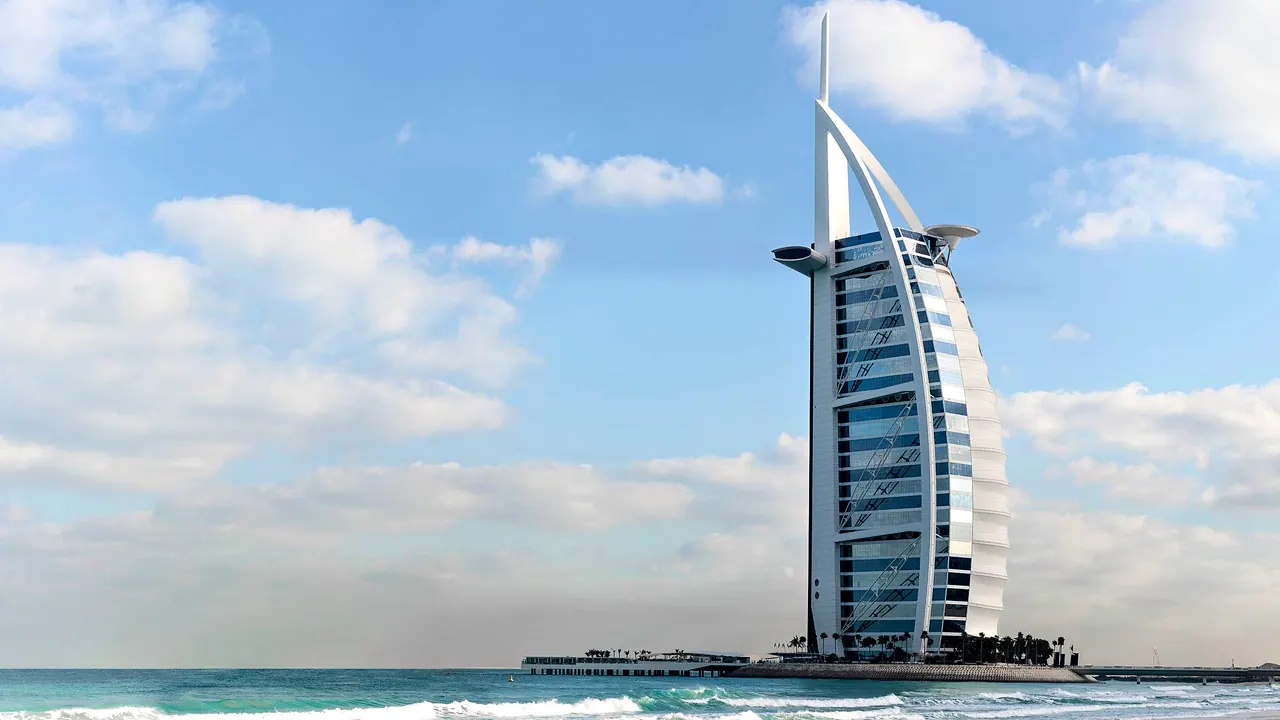
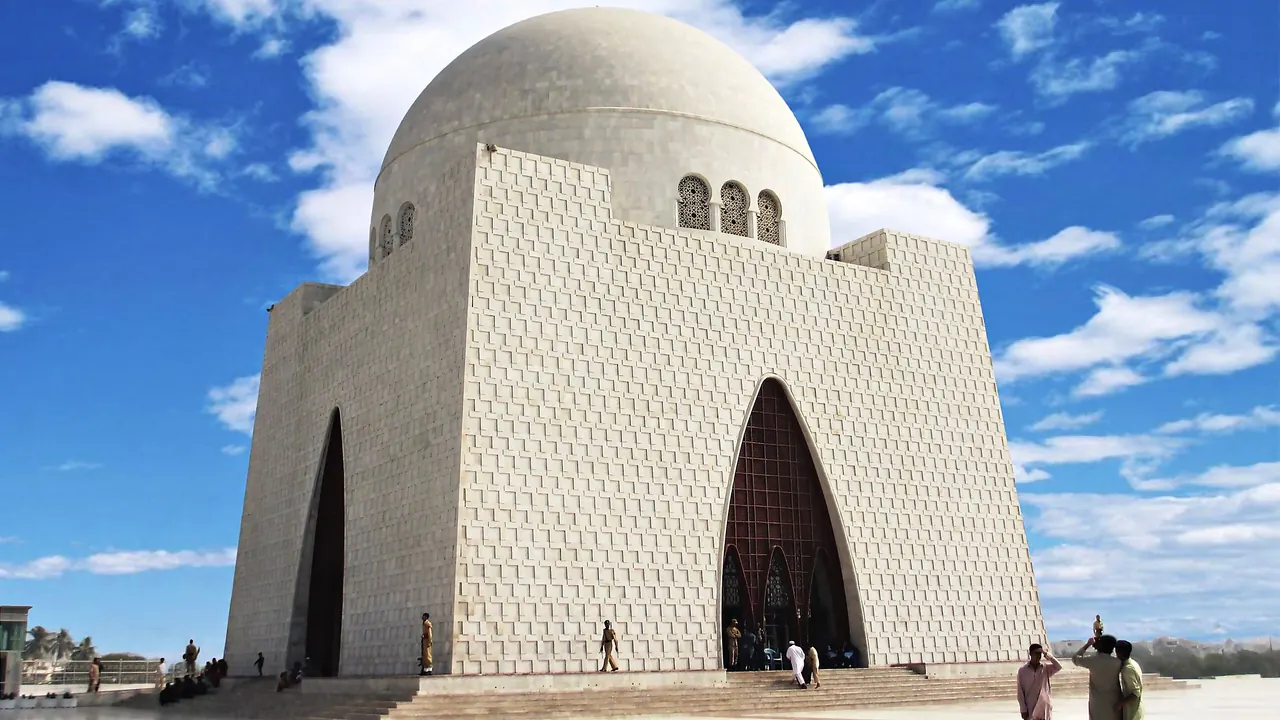
Photos: Dubai by Aleksandar Pasaric, Pexels License; Karachi by M.irfan44, CC BY-SA 4.0, cropped.
Dubai or Karachi?
Our verdict in twelve categories, each scored against the same fixed benchmark cities, and the climate month by month, so you can choose for your trip.
Choose Dubai for
- families
- nightlife
- beaches
Dubai suits travellers who want sun, sea and comfort arranged for them. Its calm, shallow Gulf water, resort beaches with kids' clubs, theme parks, vast malls and a polished hotel night scene make it the stronger pick for families, beach lovers and shoppers. Expect to pay a lot for it, and to move between air-conditioned spaces by taxi rather than on foot.
Choose Karachi for
- prices
- nature and the outdoors
- culture and sights
Karachi is for the traveller who goes somewhere to eat and to see a city on its own terms. Nihari on Burns Road, smoky biryani and kebabs at midnight, Jinnah's marble mausoleum and the sandstone streets of Saddar all come at a fraction of Dubai's cost. There are no bars, the city beach is for strolling, and getting about is hard work, so it rewards seasoned independent visitors and people visiting family far more than first-timers looking for an easy break.
Scoreboard
Twelve categories on one fixed scale from 0 to 100. The shaded stretch is the gap between the two.
Your match
Pick a travel style or drag the sliders, and both match scores follow your weighting.
Wins on families and nightlife with your weighting.
Wins on prices and nature and the outdoors with your weighting.
What matters to you?
Category by category
What the scores mean for a trip.
Beaches & swimming
Dubai's shore is built for swimming: Jumeirah, Kite Beach and the JBR strip have clear, calm water, and the resorts on Palm Jumeirah give guests private sand. It is engineered rather than wild, and in midsummer the sand is too hot by mid-morning, but for a beach stay it works with little effort.
Karachi's beaches are a different idea. Clifton and Sea View are for evening walks, camel rides and snacks, not bathing, and the clean water means an hour's drive to the huts at Hawke's Bay, Sandspit or French Beach. Swimming there is done fully clothed and stops in the monsoon months, so sunbathing is off the table.
Food & drink
The two eat equally well, but in different ways. Dubai's best food comes from its residents: Keralan curries, Afghan bread and Pakistani karahi in Deira and Karama, so you can find a taste of Karachi there. At the other end are chef-led dining rooms in DIFC and the Marina, the long Friday brunch and wine in licensed hotel restaurants.
Karachi's cooking is its own and is the main reason to come. Burns Road's nihari and haleem, potato-studded biryani, charcoal kebabs and seafood cooked to order at Do Darya make for late, sociable meals ending with chai at a roadside stall. There is no alcohol, and street food calls for more care than in Dubai.
Culture & sights
Neither city has a long list of sights, and each is covered in two or three days. Dubai's are mostly modern, from the Burj Khalifa and the Museum of the Future to the skyline at dusk, with older history in the wind-tower lanes of Al Fahidi and Al Shindagha by the Creek.
Karachi's story is colonial and national. Jinnah's white marble mausoleum, Frere Hall, Empress Market and the house where he was born sit alongside the National Museum's Indus Valley and Gandhara collections and the crowds at Abdullah Shah Ghazi's shrine. These sights feel more lived-in than Dubai's, but they are spread far apart across the city.
Nightlife
Dubai has a real night scene, though it is all behind hotel doors: DJ clubs, rooftop bars over Sheikh Zayed Road, Palm beach clubs and the boozy weekend brunch. It is glossy and costly, with dress codes and no street drinking.
Karachi has nothing of the kind open to visitors. Its evenings run late but sober, with a long dinner, tea at a dhaba and a drive or stroll along the Clifton seafront among families out past midnight.
Nature & outdoors
Neither city is a place for green landscapes, and both are hard work outdoors in summer, but the settings differ. Dubai looks inland to the red dunes for sandboarding, camel rides and desert camps, and to the Hajar mountains at Hatta for kayaking and biking, with kitesurfing and paddleboarding on the city's shore.
Karachi's outdoors is mostly at sea. You can take boat trips through the mangrove creeks, go night crabbing, see turtles nesting at Hawke's Bay and Sandspit in winter and snorkel off Churna Island. The bare Kirthar ridges and the bird lakes at Haleji and Keenjhar are within a couple of hours' drive.
Day trips
Dubai has the better range, all on good roads. Abu Dhabi's Grand Mosque and Louvre are an easy day out, neighbouring Sharjah offers museums and a restored heritage quarter, and Al Ain has oases and mud-brick forts.
Karachi has one superb outing east towards Thatta. You pass the carved Chaukhandi tombs and the ruins of Banbhore on the way to the vast stone necropolis of Makli and the tiled Shah Jahan Mosque. Beyond that route there is little, and every trip needs a hired car and driver.
Good for families
Dubai is one of the easiest cities anywhere to bring children to. It has theme parks near Jebel Ali, water parks, indoor snow and an aquarium in the mall, as well as gentle seas and kids' clubs. The city is very safe, and the main drawbacks are summer heat and taxi journeys.
Karachi welcomes children warmly, but there is little to build a trip around beyond the beach rides, mall play areas and a zoo. Long distances, heavy traffic, missing pavements and the care needed over food and water make it tiring with young ones.
Getting around
Both cities are built for cars, but Dubai at least has a spine. The driverless metro runs from the airport through Downtown to the Marina and the old town, the tram and abras fill some gaps, and taxis are plentiful for the rest. Only a few areas, like the Marina promenade and Al Fahidi, are pleasant to walk.
Karachi has no such backbone. Bus lines cover only some routes, and walking works only in parts of Saddar and the old city. Visitors rely on ride-hailing, rickshaws or a driver through heavy, unruly traffic.
Shopping & style
Dubai is a shopping destination in its own right. The Dubai Mall and Mall of the Emirates carry almost every luxury and high-street brand, and the winter shopping festival brings sales. The Deira souks add gold sold by weight, saffron, frankincense and oud.
Karachi is narrower but distinctive. It is the place for South Asian clothing: embroidered lawn and wedding wear in the Zamzama boutiques, quick tailoring, haggling in Zainab Market and Bohri Bazaar, and Sindhi ajrak prints and rilli quilts to take home. Global luxury labels are largely missing.
Affordability
Here Karachi wins by a wide margin. Meals, rickshaws, ride-hailing and modest hotels all cost very little, and the only real expense is the international hotels behind secure compounds that many first-time visitors prefer.
Dubai is expensive in high season, with dear resorts, observation decks, theme parks and some of the costliest alcohol anywhere. Eating in Karama or Deira, riding the metro and travelling in the summer lull all help, but the gap never closes.
Live music & performing arts
Dubai is easier to plan around. The Dubai Opera brings touring ballet, musicals, orchestras and comedy in the cooler months, and an arena hosts the big international tours, though very little is home-grown and the city has no resident company.
Karachi's scene is local but hard for a visitor to tap into. The Arts Council and the National Academy of Performing Arts stage Urdu theatre and classical music now and then. Its most memorable performance is qawwali sung at the Sufi shrines on Thursday evenings, something Dubai cannot offer.
Wellness & relaxation
For rest, Dubai is far better. The resort spas on Palm Jumeirah and the Jumeirah coast offer hammam rituals, hydrotherapy and long massage menus that work in any season, and the desert retreats inland offer real silence.
Karachi is loud, humid and restless. Its one bathing tradition is the sulphur springs at Manghopir beside the shrine of Pir Mangho, which are a rough pilgrim cure rather than a spa. Otherwise there are hotel spas, Clifton salons and a head massage at the local barber.
When should you go?
Pick your month. The climate figures are measured averages, not a forecast.
Dubai in July
Karachi in July
Daytime high, °C
Rainfall in the month, mm
Temperature and rainfall are climate normals, averaged over the years shown. Dubai: 1991-2020 normals, Dubai International Airport (3.3 km from centre). Karachi: 1991-2020 (sunshine 1961-1990) normals, Karachi Airport (13.2 km from centre).
Both cities are at their best from November to February, when the days are warm rather than fierce. Dubai's winter highs of around 25°C, with a Gulf sea near 23°C, make this the season for long beach days and walking Downtown and the Creek. From May to September the heat climbs past 40°C, reaching 42°C at its peak, the sea turns bath-warm and life moves indoors until the evenings. Rain is rare at any time, with only a few light showers in midwinter.
Karachi never gets quite as hot, topping out around 36°C in late spring and again in October, but the summer is humid. Its wet season is the monsoon, with the heaviest rain in July and August, around 67mm in August, when cloud cuts the sunshine sharply and currents close the swimming beaches. Winter brings clear, sunny days and a sea in the low to mid twenties, the best weather for both the coast and the city's sights.
Which traveller are you?
On a family trip with young children, Dubai is the easy decision. The whole city is set up for children, the sea is gentle and the streets are very safe. Karachi welcomes children warmly, but the long journeys, heat and care over food soon wear young ones out.
For a beach and sun trip, Dubai wins outright. From autumn to spring you can swim and sunbathe a few steps from your hotel. Karachi's coast is a place for strolling, and where you can swim, people do it fully clothed.
On a trip with a tight budget, Dubai is costly at every turn, from the hotel room to the tickets for its big sights. Karachi is the obvious pick. Almost everything a visitor pays for there costs little, as long as you avoid the international hotels.
Before you go
| Measure | Dubai | Karachi |
|---|---|---|
| Official language | Arabic | Urdu, English |
| Currency | UAE Dirham (AED) | Pakistan Rupee (PKR) |
| Sockets | CG220 V, 50 Hz | CGM230 V, 50 Hz |
| Driving side | Right | Left |
| Time zone | UTC+4 | UTC+5 |
| Emergency number | 112 | Police 15, ambulance 1122, fire 16 |
| Elevation | 0 m | 8 m |
| Main airport | Dubai International Airport (DXB)7 km from centre295 non-stop destinations | Jinnah International Airport (KHI)16 km from centre36 non-stop destinations |
By the numbers
| Measure | Dubai | Karachi |
|---|---|---|
| Population | 3,944,751 | 14,910,352 |
| People per km² | - | 4,227 |
| Museums within 10 km | 14 | 9 |
| UNESCO World Heritage sites within 50 km | 0 | 0 |
| Swim season, months above 21 °C | 12 months | 12 months |
Where else could you go?
Every comparison below shares a destination with this one, so you can follow Dubai or Karachi somewhere new.