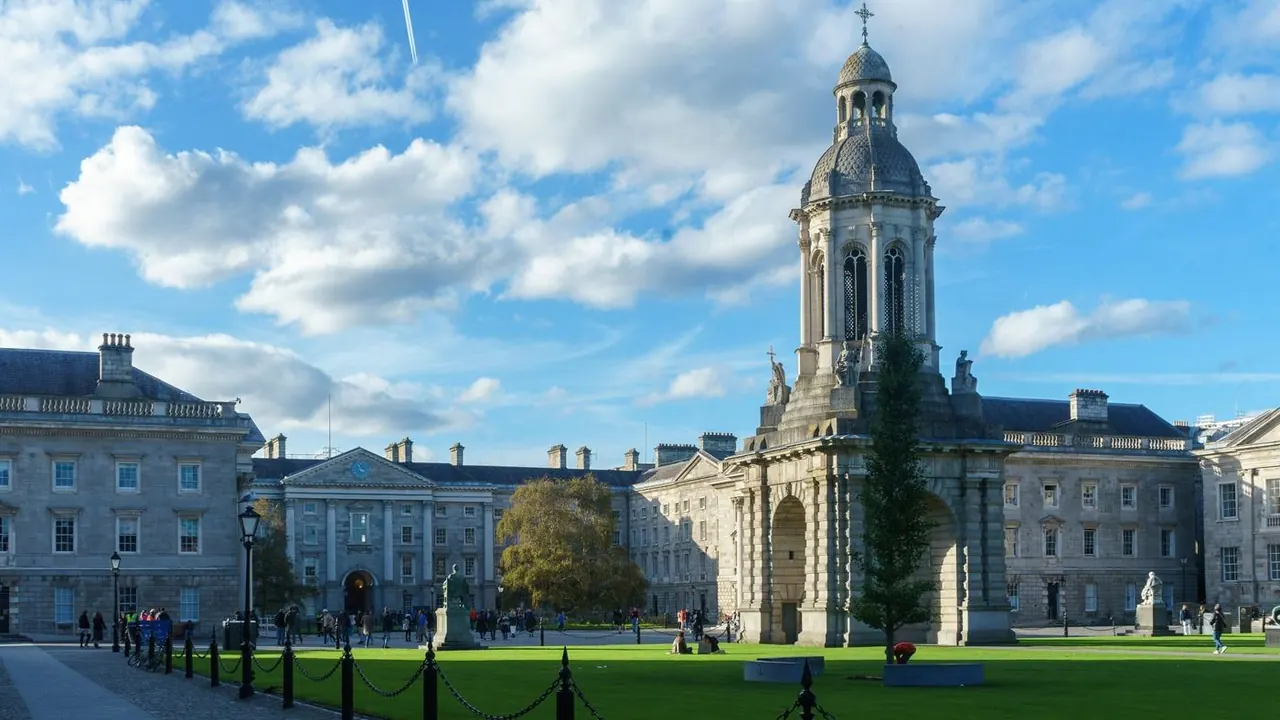
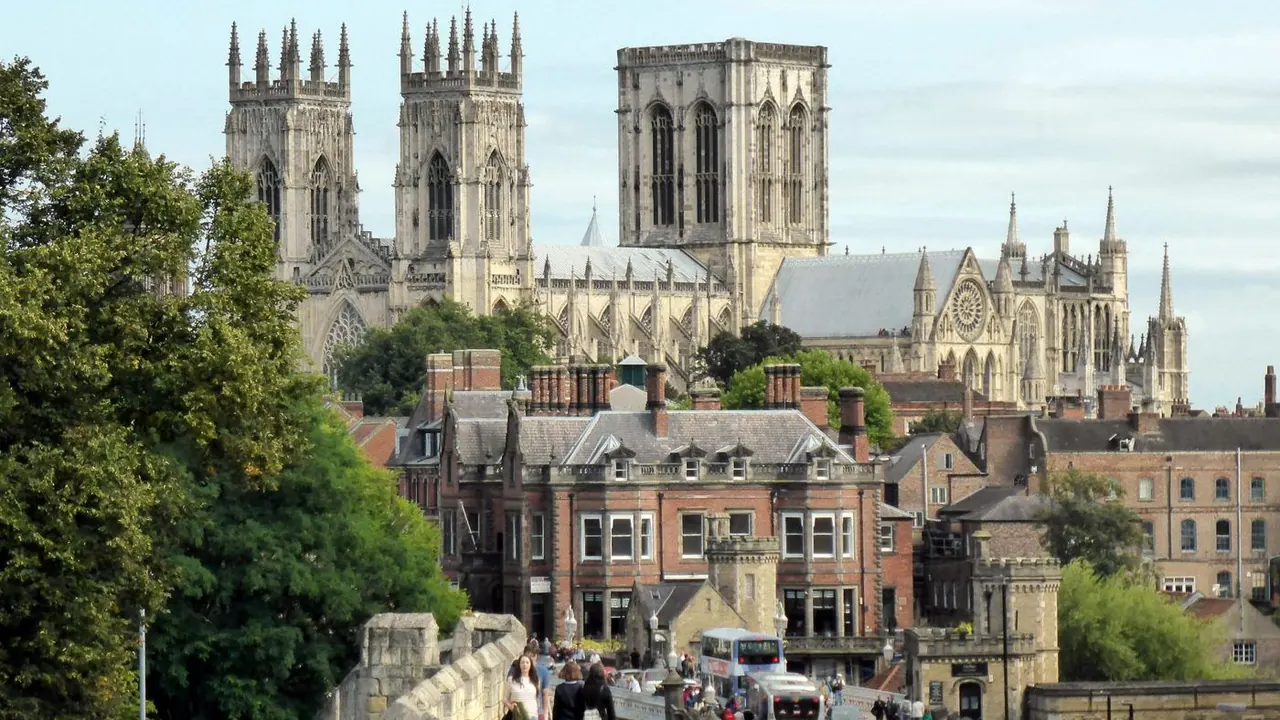
Photos: Dublin by David Kernan, CC BY 4.0, cropped; York by PAUL FARMER, CC BY-SA 2.0, cropped.
Dublin or York?
Our verdict in twelve categories, each scored against the same fixed benchmark cities, and the climate month by month, so you can choose for your trip.
Choose Dublin for
- live music and the arts
- nightlife
- beaches
Dublin suits travellers who want the evenings to count as much as the days: a pint and long conversation in a Victorian pub, a play at the Abbey or the Gate, then a fiddle session somewhere nearby. It also puts sea and hills on a suburban train, with Howth's cliff path and the Wicklow Mountains close at hand. It is an expensive city, so it rewards people who don't mind paying for those evenings.
Choose York for
- prices
- wellness
- day trips
Choose York for a quieter, more concentrated trip built around history. The Minster, the walls, Jorvik and the timber-framed lanes all lie within a short walk of each other, and the station opens up Durham, Harrogate and the coast. It costs noticeably less than Dublin and goes to bed earlier, which suits couples, families and anyone who would rather be on the walls at dawn than out late.
Scoreboard
Twelve categories on one fixed scale from 0 to 100. The shaded stretch is the gap between the two.
Your match
Pick a travel style or drag the sliders, and both match scores follow your weighting.
Wins on live music and the arts and nightlife with your weighting.
Wins on prices and wellness with your weighting.
What matters to you?
Category by category
What the scores mean for a trip.
Beaches & swimming
Neither city is a beach destination, but Dublin at least has sand on its doorstep. The DART runs out to Dollymount, Sandymount, Killiney and Portmarnock. The year-round swimming at the Forty Foot and Seapoint is a local ritual you can join for a morning.
York is inland, so reaching the sea means an hour on the train to Scarborough, or further to Filey and Whitby, as a day out. The water is cold off both coasts, so think of either one as scenery with a bracing dip attached.
Food & drink
Dublin eats better, mostly because it has more range. Modern bistros in Dublin 2 and Dublin 8 cook Atlantic seafood, grass-fed beef and farmhouse cheese, and there are whiskey distilleries and slowly poured stout in Victorian pubs. It does charge a lot for what arrives on the plate.
York's food is more traditional and narrower: afternoon tea with fat rascals, Sunday roasts, real ale, and pies and cheese from the Shambles Market. It is homely and pleasant, but there is little international cooking, and the streets around the Minster lean towards tourist fare.
Culture & sights
York packs more into less space. The Minster dwarfs Dublin's two medieval cathedrals, and the city's Roman, Viking and medieval past is easy to read everywhere, from the walls you can walk on to Jorvik, Clifford's Tower and the abbey ruins in the Museum Gardens.
Dublin's strengths are its collections and its streets: the Book of Kells at Trinity, the Chester Beatty Library, the free national museums, Kilmainham Gaol and the Georgian squares. It is a literary, eighteenth-century city more than a medieval one, and it has fewer landmark monuments.
Nightlife
Both cities go out to the pub, but Dublin does it with far more energy. On Fridays and Saturdays people pack the old pubs around Baggot Street and the younger bars of Camden, Wexford and George's Street. Clubs are few and close early, so a Dublin night is about talk more than dancing.
York's centuries-old inns make a lovely ale crawl along Micklegate and Stonegate. At weekends, though, stag and hen parties take over, and on weeknights the city goes quiet early. Anyone who wants clubs takes the train to Leeds.
Nature & outdoors
Dublin's green and wild places are easier to reach without a car. Phoenix Park, with its fallow deer, is inside the city. The DART takes you to Howth's cliff path and the coastal walk from Bray to Greystones, and the Wicklow Mountains rise just behind the suburbs, with Glendalough about an hour away.
York has fine country in range: the heather of the North York Moors, the sea cliffs at Robin Hood's Bay and the limestone Dales. All of it lies further out, though, and mostly needs a car. Closer in, there is the flat vale, the riverside paths and the open grass of the Strays.
Day trips
York is the better base, largely because the railway does so much of the work. Harrogate and Leeds are half an hour away, Durham's Norman cathedral is under an hour, and Scarborough and Beverley are about an hour. By road, Castle Howard, Fountains Abbey and Rievaulx add country houses and abbey ruins.
Dublin has the single most remarkable outing: the Boyne Valley, where the tombs at Newgrange and Knowth are older than the pyramids. Glendalough and Kilkenny are also within reach, and Belfast is about two hours away by train. Many of the rural sites are awkward to reach without a tour or a hire car.
Good for families
Both cities work well with children for a few days, but in different ways. Dublin offers space: the zoo and the deer in Phoenix Park, rock pools and kites on the strands, Dublinia and the free natural history museum. Rain is the main thing to plan around.
York is more compact and full of stories. The locomotives at the National Railway Museum, Jorvik, the Victorian street in the Castle Museum and a walk along the walls all feel like adventures. Ghost walks keep older children happy too, although the city itself is done in two or three days.
Getting around
York is the easier city to get around, because almost everything lies inside or just outside its walls. The centre is largely pedestrianised, the Minster is about fifteen minutes' walk from the station, and fast trains run from there across the north.
Dublin's centre is also flat and walkable, and the DART along the bay is a real asset. Away from the tram lines and the coast line, though, you rely on buses in slow traffic, including to the airport, because there is no metro.
Shopping & style
Dublin has more to buy, and more of it is distinctively Irish. There is Grafton Street with its long-established department store, the arcade inside the Georgian Powerscourt Townhouse, and design shops around Drury Street selling Aran knitwear, linen, tweed and crystal.
In York the pleasure is mostly the setting: independent bookshops, jewellers and antiques dealers in the medieval lanes of Stonegate and Petergate. The Shambles leans towards souvenirs, there is almost no luxury, and serious shoppers go to Leeds.
Affordability
Neither city is cheap, but York is noticeably easier on the wallet. Room rates there climb steeply at weekends and on race days, but staying midweek and eating pub meals keep costs sensible. Much of the pleasure, from the walls to the railway museum, is free.
Dublin's hotel rooms are among the most expensive in Europe, and eating and drinking out add up quickly. The free national museums and the walkable centre help, but the room bill dominates any budget.
Live music & performing arts
Dublin is a theatre city in a way York is not. The Abbey and the Gate carry a national tradition of drama, and the Gaiety and the theatre at Grand Canal Dock take the big shows. The National Concert Hall is home to the symphony orchestra, and there are traditional sessions in the pubs almost every night.
York has less on, but what it has is full of character: the Theatre Royal and its pantomime, early music in a medieval church, free choral evensong at the Minster, and the occasional street revival of the Mystery Plays. For major touring productions, people from York go to Leeds.
Wellness & relaxation
York is the slightly better place to slow down. Early mornings on the walls, the riverside paths and long afternoon teas set a gentle pace, and the tiled steam rooms and plunge pools of Harrogate are close enough for an afternoon.
Dublin's ritual is a colder one: a sea swim at the Forty Foot or Seapoint, sometimes followed by a sauna on the seafront. Beyond that, calm in Dublin means Phoenix Park, the Georgian squares or the villages along the bay.
When should you go?
Pick your month. The climate figures are measured averages, not a forecast.
Dublin in July
York in July
Daytime high, °C
Rainfall in the month, mm
Where the figures come from
York has no rain gauge within 25 km of the centre, so its rainfall comes from a gridded climate dataset read at the city rather than from a gauge further away.
York's sunshine is measured 48 km from the centre, at Leeming.
Temperature and rainfall are climate normals, averaged over the years shown. Dublin: 1991-2020 normals, Dublin Airport (9.3 km from centre). York: 1991-2020 normals, Linton-On-Ouse (14.9 km from centre).
The two climates are very alike: cool, changeable and never really beach weather. Both are warmest in July, at about 20°C, which is ideal for long days on foot, and neither ever gets too hot for the streets. York is the drier of the two, especially in spring. Dublin's rain builds through autumn to about 83mm in November. Dublin gets its most sunshine in May, not midsummer, so late spring is a good time for its coast and for Wicklow. The Irish Sea only reaches about 15°C from July to September, so a swim there is always a brisk dip.
Winter is grey and dark in both cities, with highs of around 8°C. That is fine for museums, pubs and theatres but less inviting for country walks. York's December is slightly colder and duller than Dublin's, but because its centre is so compact, a cold day there is easy to manage.
Which traveller are you?
For a food and nightlife trip, Dublin is the clear pick. Its pubs, from snugs off Grafton Street to the late bars of Camden and Wexford Streets, can fill a whole evening, and stout and whiskey run far deeper here than York's quiet weeknights allow.
On a trip on a tight budget, York goes further. Rooms are dear at weekends, but staying midweek helps, the National Railway Museum, the walls and the Museum Gardens are free, and you can walk everywhere. Dublin's hotels are among the priciest in Europe.
For a relaxing and wellness trip, York has the edge, mainly because Harrogate is half an hour away by train, with its Victorian Turkish bath in the Royal Baths. Dublin offers a cold dip at the Forty Foot and hotel spas, and little more.
Before you go
| Measure | Dublin | York |
|---|---|---|
| Official language | English, Irish | English |
| Currency | Euro (EUR) | Pound Sterling (GBP) |
| Sockets | G230 V, 50 Hz | G230 V, 50 Hz |
| Driving side | Left | Left |
| Time zone | UTC, UTC+1 in summer | UTC, UTC+1 in summer |
| Emergency number | 112 | 112 or 999 |
| Elevation | 20 m | 25 m |
| Main airport | Dublin Airport (DUB)9 km from centre200 non-stop destinations | Leeds Bradford Airport (LBA)39 km from centre69 non-stop destinations |
| Public holidays this year | 11 days | 8 days |
By the numbers
| Measure | Dublin | York |
|---|---|---|
| City population | 592,713 | 208,400 |
| People per km² | 5,154 | 766 |
| Museums within 10 km | 40 | 24 |
| UNESCO World Heritage sites within 50 km | 1 | 2 |
| Swim season, months above 21 °C | None | - |
Where else could you go?
Every comparison below shares a destination with this one, so you can follow Dublin or York somewhere new.