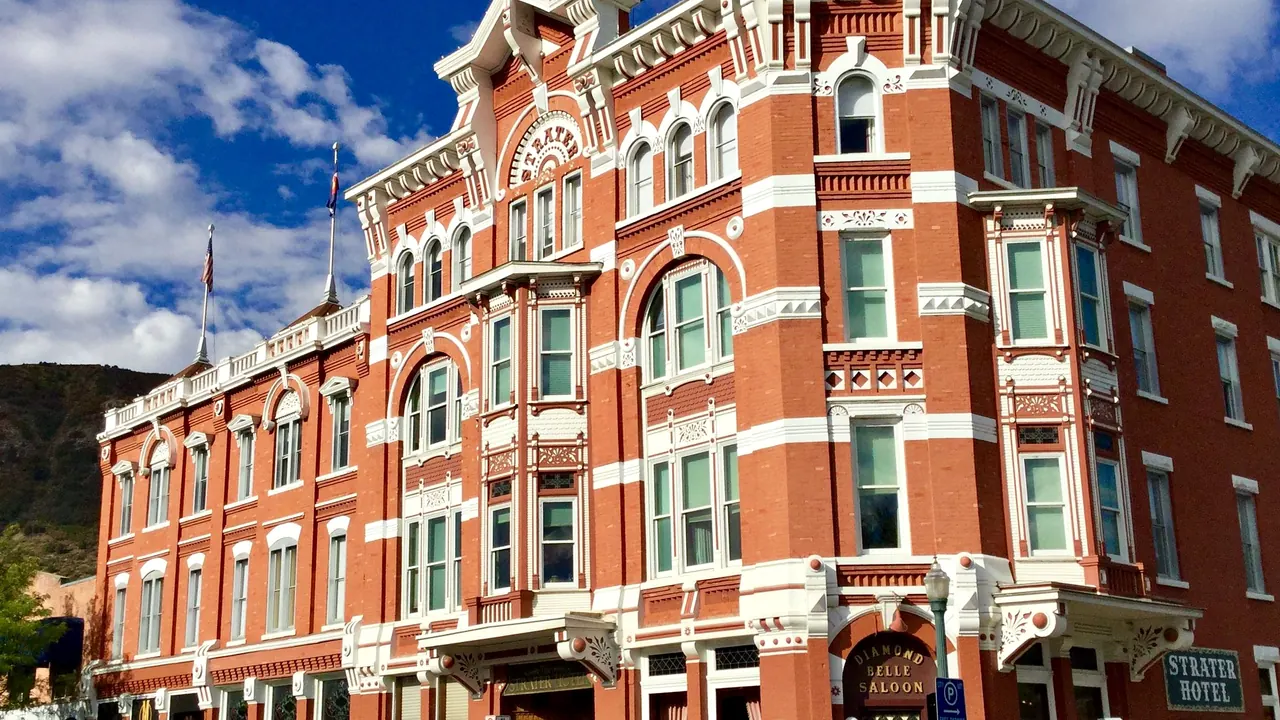
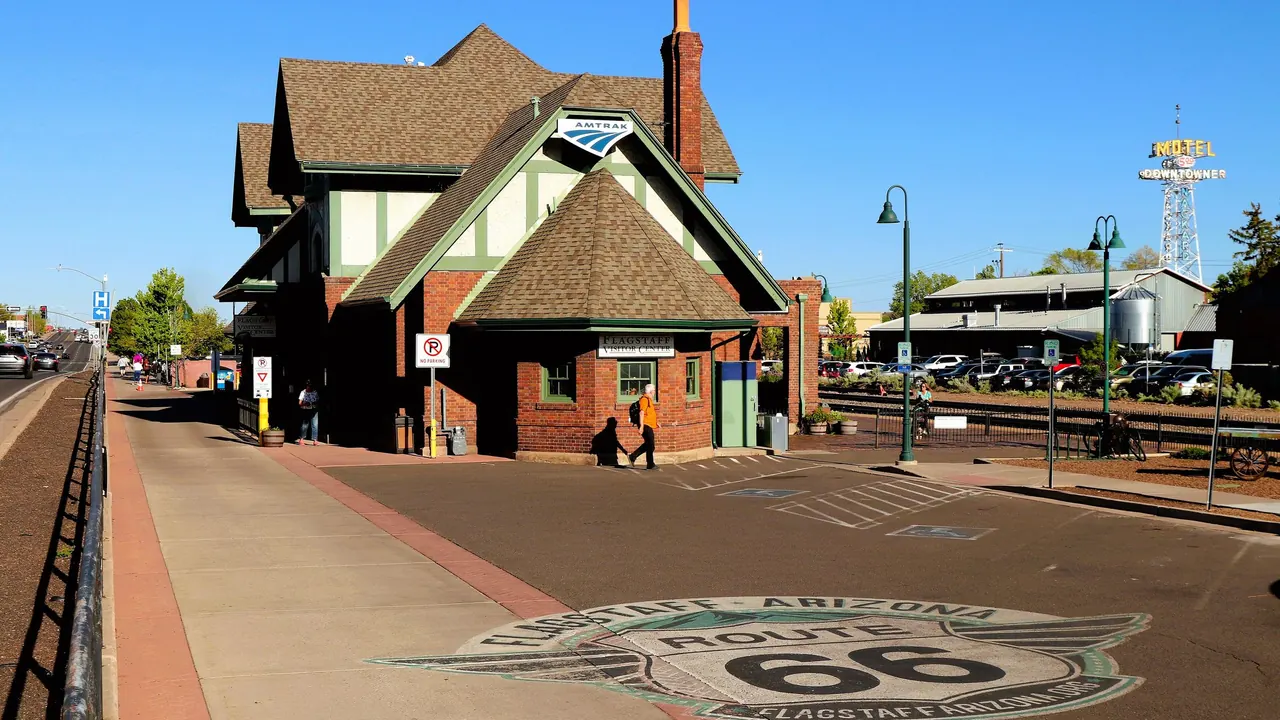
Photos: Durango, Colorado by Adeledstarr, CC BY-SA 4.0, cropped; Flagstaff by Thank You (25 Millions) views, CC BY 2.0, cropped.
Durango, Colorado or Flagstaff?
Our verdict in twelve categories, each scored against the same fixed benchmark cities, and the climate month by month, so you can choose for your trip.
Choose Durango, Colorado for
- wellness
- day trips
- food and drink
Durango suits travellers who want an active mountain vacation with a soak at the end of each day. The San Juans give it riding, rafting and backcountry from the edge of town, and hot springs nearby make recovery easy. The big days out, Mesa Verde's cliff dwellings and the steam train up the canyon to Silverton, are reason enough to come.
Choose Flagstaff for
- nightlife
- prices
- culture and sights
Pick Flagstaff if the Grand Canyon is on your list or you want a little more going on after dark. It is a cheaper base among volcanic peaks and pine forest. Its observatory and Native American museum give a slow afternoon some substance, and the taprooms and saloons of downtown and the Southside make evenings livelier than in Durango.
Scoreboard
Twelve categories on one fixed scale from 0 to 100. The shaded stretch is the gap between the two.
Your match
Pick a travel style or drag the sliders, and both match scores follow your weighting.
Too close to call, 1 point apart
Wins on wellness and day trips with your weighting.
Wins on nightlife and prices with your weighting.
What matters to you?
Category by category
What the scores mean for a trip.
Beaches & swimming
Neither town is anywhere for a beach, and in both the water is cold even in high summer. The difference is the kind of dip. In Durango you float the Animas through town on an inner tube or swim at Lake Nighthorse and the sandy edges of Vallecito Lake. From Flagstaff you drive towards Sedona for the creek pools of Oak Creek Canyon, such as Slide Rock, where the rocks are slippery and weekends are crowded.
Food & drink
Both towns eat best at a brewery, and both have more craft taprooms than their size would suggest. Durango's few more ambitious kitchens use Colorado lamb, trout and local farm produce, alongside green-chile plates on Main Avenue. Flagstaff's table is more of a university-town mix of coffee houses, Mexican and New Mexican cooking, barbecue, and Navajo frybread and tacos.
Neither has much fine dining. Choose on other grounds and expect to eat well enough after a day outdoors.
Culture & sights
Durango's sights take an hour or two. They are mostly about the railway: the steam locomotives at the old Main Avenue depot, the roundhouse museum, and a few blocks of Victorian brick and sandstone from the mining boom. The college on the mesa adds a respected Southwestern and Native American collection.
Flagstaff needs a day or two, and its sights are more varied. At the Lowell Observatory on Mars Hill, where Pluto was found in 1930, you can look through the historic telescopes at night viewings. The Museum of Northern Arizona shows Hopi, Navajo and Zuni art alongside the region's geology. The Riordan Mansion and the Route 66 downtown complete the list. From either town, the great ancient pueblo sites are a separate outing.
Nightlife
Flagstaff gives you more of an evening. Taprooms, cocktail bars and old Route 66 saloons are a few minutes' walk apart across downtown and the Southside, and the university keeps term-time weekends busier than you might expect.
Durango is quieter. Evenings mean a pint on a Main Avenue patio, a saloon with a piano player or a few student bars at weekends, and the town is asleep before midnight. Neither has much dancing or late-night life.
Nature & outdoors
Both are first-rate mountain bases, so the choice comes down to landscape. Durango sits under the jagged San Juans, with singletrack from the edge of town, the start of the Colorado Trail, the Weminuche Wilderness and rafting on the Animas through the centre. It suits mountain bikers, paddlers and backpackers.
Flagstaff's setting is volcanic peaks and ponderosa forest, with Humphreys Peak, the lava flows of Sunset Crater and famously dark night skies. The South Rim of the Grand Canyon and Sedona's red rock are an easy drive away. Each town has a ski area about half an hour away and golden aspens in autumn.
Day trips
Durango's days out carry more weight. Mesa Verde's cliff dwellings, the narrow-gauge steam train up the Animas canyon to Silverton and the Aztec ruins of the Chaco listing are each a major outing, and Ouray and Pagosa Springs are there for more.
Flagstaff's nearby places are smaller and more scattered: Sedona, the hillside town of Jerome, Walnut Canyon, Wupatki and the Verde Valley pueblos, with the Hopi mesas about two hours east. The best of them is the historic railway from Williams to the Grand Canyon rim. You need a car for almost everything around either town.
Good for families
For children, the difference is between doing and looking. Durango keeps them busy outdoors, with the steam train up the canyon, gentle tubing on the Animas, the alpine coaster and ziplines at the ski area in summer, and the ladders into Mesa Verde's cliff dwellings.
Flagstaff gives curious children more to look at: telescope evenings at the Lowell Observatory, dinosaurs at the Museum of Northern Arizona, rope courses in the pines, winter sledding and a drive-through wildlife park near Williams. Its museum also helps on a rainy day, which Durango lacks. Both towns have the same drawbacks. The altitude tires small children for the first day or two, and most outings mean long drives.
Getting around
In both towns you can walk the small historic centre, and beyond it you need a car. Durango's centre is one flat stretch from the depot up Main Avenue, with a riverside trail and a trolley along the main road. Flagstaff's downtown and Southside are just as compact, with an urban trail network and buses serving the university.
Flagstaff is easier to reach without driving, as long-distance trains stop at its downtown station. Most visitors to Durango drive in or rent a car at the small regional airport.
Shopping & style
Neither is a shopping destination, and the best buys are the same in both: outdoor gear and Native American silver, turquoise and rugs. Durango's shopping is a single stroll down Main Avenue, with Western wear, boots and art galleries. Flagstaff spreads its craft across downtown galleries, the museum shop and trading posts outside town, with Hopi kachina carvings as a speciality, and adds bookshops and a regional mall.
Affordability
Flagstaff is easier on the budget. Chain motels along old Route 66 keep a basic room within reach, and brewery meals are reasonable. Rooms do climb on summer weekends, when the town fills up as the base for the Grand Canyon, but staying in town is still far cheaper than staying at the rim or in Sedona.
Durango is a mountain resort. Rooms are scarce in summer and at the peak of the ski season, and the steam train and guided rafting or riding trips soon add up, though spring and late autumn are noticeably cheaper. Some costs are the same in both. Restaurant bills carry a tip and a hire car is close to essential, so neither town is cheap for an international visitor.
Live music & performing arts
Both have a modest stage life, best treated as an evening's extra. Durango's character shows in summer, with a chamber and orchestral festival, a Victorian melodrama where you boo the villain and cowboy music with a chuckwagon supper, and little on the rest of the year. Flagstaff's calendar is steadier through the seasons, with its symphony orchestra, the university music school, touring bands at the restored Orpheum and community theatre.
Wellness & relaxation
Durango is the better place to unwind because it has hot springs. Mineral pools a few minutes north of town are a natural end to a ride or a day on the slopes, and the terraced pools at Pagosa Springs and the spring-fed pools at Ouray are within a drive.
Flagstaff has no springs and only a handful of day spas, so its calm comes from pine air, cool evenings and bright stars. For treatments, visitors drive an hour down to Sedona's resort spas and yoga studios.
When should you go?
Pick your month. The climate figures are measured averages, not a forecast.
Durango, Colorado in July
Flagstaff in July
Daytime high, °C
Rainfall in the month, mm
Where the figures come from
Durango, Colorado has no weather station within reach, so its figures come from a gridded climate model rather than a measured record, and read a broad area rather than the city itself.
Flagstaff has no rain gauge within 25 km of the centre, so its rainfall comes from a gridded climate dataset read at the city rather than from a gauge further away.
Temperature and rainfall are climate normals, averaged over the years shown. Durango, Colorado: 1991-2020 normals, TerraClimate 4 km grid at the town, no weather station within 90 km. Flagstaff: 1991-2020 normals, Flagstaff / Fort Tuthill (7.4 km from centre).
The two towns have a similar mountain year. Winter highs are around 5°C in both, and summers are warm enough for long days of walking and riding. Durango warms up sooner in spring and runs hotter, reaching 30°C in July, while Flagstaff peaks in the mid-twenties and stays fresher. June is the driest month in both, which makes it a good time for long outings.
The real difference is summer rain. In July and August Flagstaff's monsoon brings afternoon storms, and August is its wettest month at about 64mm. Durango's rain is spread more evenly through the year, so its late summer is only a little wetter. For hiking, September and early October suit both towns. The cold creek, lake and river swimming is only worth it from late June to August.
Which traveller are you?
On a relaxing and wellness trip, Durango is the clear choice. Hot mineral pools sit a few minutes from town, and Pagosa Springs and Ouray have more. In Flagstaff, unwinding means quiet pine air, and proper spas are an hour's drive away in Sedona.
For a trip on a tight budget, Flagstaff makes your money go a little further. Chain motels on Route 66 and casual brewery meals keep costs down outside summer weekends. Durango's scarce resort rooms and paid train and rafting trips add up faster.
On a culture and arts trip, Flagstaff has a bit more to fill the days in town. It has the Lowell Observatory, the Museum of Northern Arizona's Hopi and Navajo collections, a symphony orchestra and shows at the Orpheum all year round. Durango has its railway sights and a mostly summer stage.
Before you go
| Measure | Durango, Colorado | Flagstaff |
|---|---|---|
| Currency | US Dollar (USD) | US Dollar (USD) |
| Sockets | AB120 V, 60 Hz | AB120 V, 60 Hz |
| Driving side | Right | Right |
| Time zone | UTC-7, UTC-6 in summer | UTC-7 |
| Emergency number | 911 | 911 |
| Elevation | 1,988 m | 2,106 m |
| Main airport | Durango La Plata County Airport (DRO)18 km from centre4 non-stop destinations | Flagstaff Pulliam Airport (FLG)7 km from centre2 non-stop destinations |
| Public holidays this year | 12 days | 12 days |
By the numbers
| Measure | Durango, Colorado | Flagstaff |
|---|---|---|
| City population | 19,071 | 76,831 |
| People per km² | 739 | 464 |
| Museums within 10 km | 2 | 1 |
| UNESCO World Heritage sites within 50 km | 1 | 0 |
Where else could you go?
Every comparison below shares a destination with this one, so you can follow Durango, Colorado or Flagstaff somewhere new.
- Sedonavs Flagstaff
- Telluridevs Durango, Colorado
- Page, Arizonavs Flagstaff
- Scottsdalevs Flagstaff
- Phoenixvs Flagstaff
- Moabvs Durango, Colorado