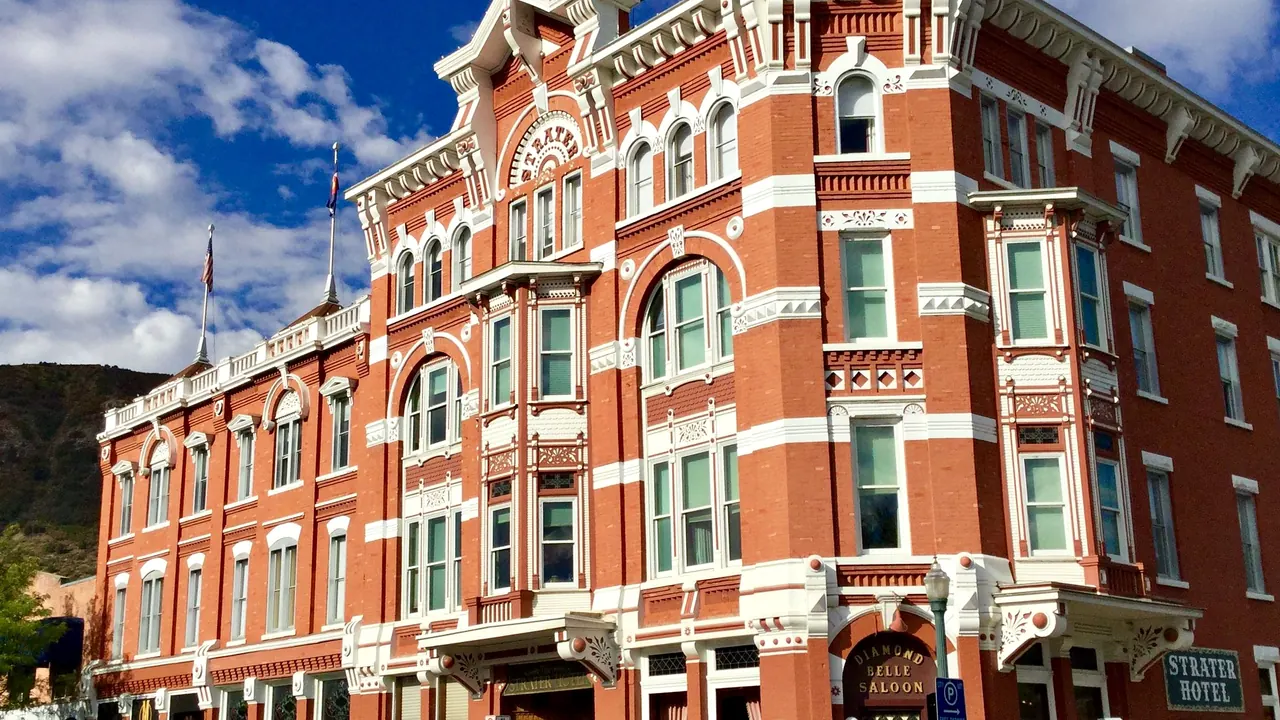
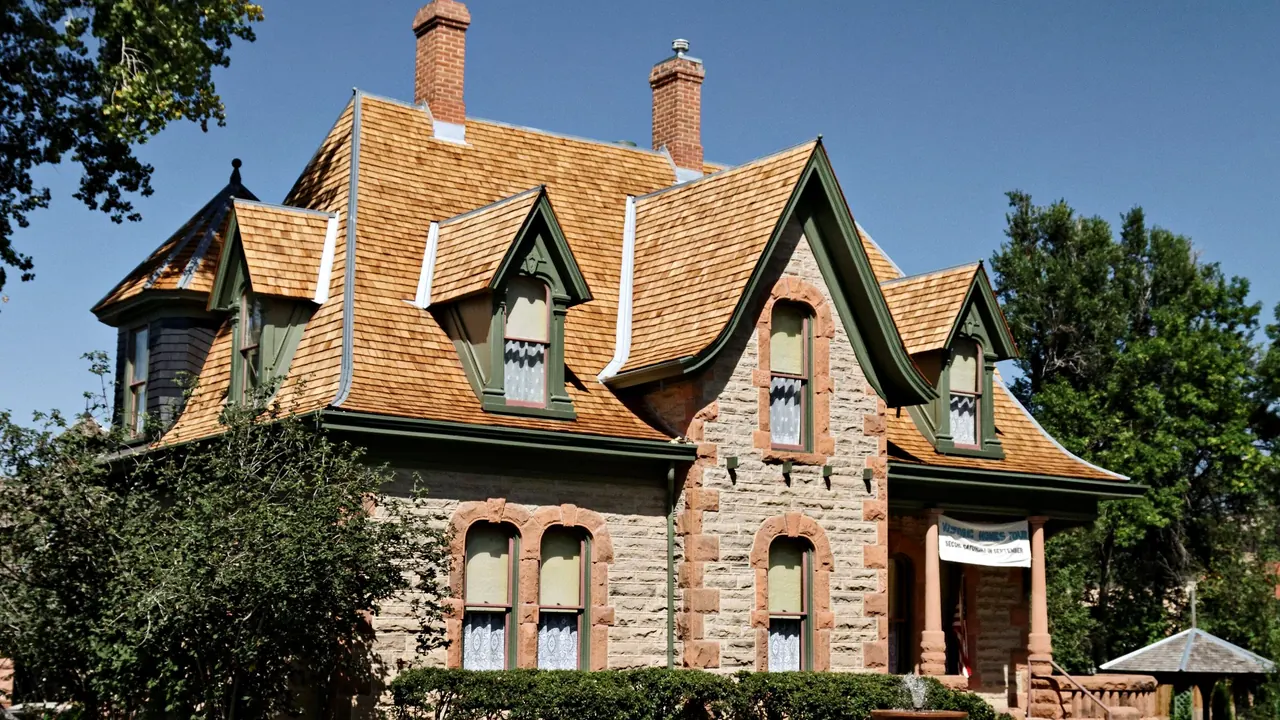
Photos: Durango, Colorado by Adeledstarr, CC BY-SA 4.0, cropped; Fort Collins by Gribeco, CC BY-SA 3.0, cropped.
Durango, Colorado or Fort Collins?
Our verdict in twelve categories, each scored against the same fixed benchmark cities, and the climate month by month, so you can choose for your trip.
Choose Durango, Colorado for
- wellness
- day trips
- culture and sights
Durango suits travellers who want the mountains to be the trip. The San Juans rise straight out of town, singletrack and river runs start from the centre, and a full ski resort lies half an hour north. Add the steam train to Silverton, the cliff dwellings of Mesa Verde and hot springs a few minutes up the valley, and it is the stronger base for an active week in the high country with a car.
Choose Fort Collins for
- nightlife
- getting around
- live music and the arts
Fort Collins is the better pick if you want a small city with the outdoors as one half of the stay rather than all of it. Its university gives Old Town busier evenings, more on stage and a deep bench of breweries, and the centre is easy to get around by bike or bus. The foothills and the Poudre canyon are close, but the scenery is gentler and the skiing is hours away.
Scoreboard
Twelve categories on one fixed scale from 0 to 100. The shaded stretch is the gap between the two.
Your match
Pick a travel style or drag the sliders, and both match scores follow your weighting.
Too close to call, 2 points apart
Wins on wellness and day trips with your weighting.
Wins on nightlife and getting around with your weighting.
What matters to you?
Category by category
What the scores mean for a trip.
Beaches & swimming
Neither town is a swimming destination, and both treat the water as a summer extra. In Durango that means a chilly dip at Lake Nighthorse or Vallecito Lake, or tubing the Animas straight through town.
Fort Collins has the warmer option: Horsetooth Reservoir in the foothills has a proper swim beach and coves full of paddleboards, and the water warms up nicely in July and August.
Food & drink
The two eat in much the same way, and in both the beer outshines the cooking. Durango leans Southwestern, with green-chile plates, steakhouses and a few kitchens using Colorado lamb and trout, and its taprooms fill with rafters and riders at dusk.
Fort Collins is the bigger beer name, with long-established breweries offering tours and taprooms with food trucks across the city, while its menus run to gastropubs, tacos and burgers. For a serious dinner out, Fort Collins people drive to Denver; in Durango there is nowhere else to go.
Culture & sights
Durango has the more memorable sight. Its steam locomotives, depot and roundhouse museum give the town a living piece of its railway founding, and the college on the mesa holds a well-regarded Southwestern and Native American collection.
Fort Collins is more about atmosphere than landmarks: a red-brick Old Town around a pedestrian square, the Museum of Discovery, the Victorian Avery House and the campus art museum. Neither will fill more than a day, but Durango's offer feels more distinctive.
Nightlife
Fort Collins has more going on after dark. A large university fills the pubs, sports bars and rooftop patios around Old Town at weekends, and there are a few cocktail bars and a handful of dance clubs.
Durango's evenings are a pint on a Main Avenue patio or a drink in an old saloon with a piano, and the town winds down well before midnight because most people have an early trail or river start.
Nature & outdoors
Both towns are outdoors towns, but Durango sits deeper in the mountains. The San Juans rise above 4,000m in the Weminuche Wilderness, the Colorado Trail begins just north of town, the mountain biking is famous, and winter brings a full ski resort half an hour away.
Fort Collins sits where the plains meet the foothills, with Horsetooth Mountain and Lory State Park close by, rafting and fishing in the wild Poudre canyon, and Rocky Mountain National Park about an hour and a half off. It is excellent, gentler country, but winter means snowshoes rather than lifts.
Day trips
Durango's day trips are the more remarkable. Mesa Verde's cliff dwellings lie to the west, the narrow-gauge train climbs the Animas canyon to the mining town of Silverton, and the ancestral Puebloan ruins at Aztec and Chimney Rock are within easy reach.
From Fort Collins the outings are more urban: Boulder under the Flatirons, Denver's museums, Golden, Estes Park at the gate of Rocky Mountain National Park, and Cheyenne across the Wyoming line. Both lists need a car.
Good for families
Both are safe, relaxed places for children, and the difference is in the kind of day. Durango's draws are adventures: the steam train, river tubing, the alpine coaster and ziplines at the ski resort, and the ladders at Mesa Verde, though the altitude and long drives can tire small ones.
Fort Collins has more for a rainy or quiet day, with the hands-on Museum of Discovery, the city farm at Lee Martinez Park and the children's garden, plus flat river paths for young cyclists.
Getting around
Fort Collins is the easier place to manage without driving all the time. It is one of the most bike-friendly cities in the country, with protected lanes, bike share and long off-street trails, and a frequent rapid bus runs the main corridor.
Durango's historic centre is a short, flat walk with a river trail and a trolley, but trailheads, the ski area and Mesa Verde all mean a car. In both, anything beyond town needs one.
Shopping & style
Neither is a shopping destination, and both amount to an hour or two of browsing on one main strip. What sets Durango apart is regional craft: Navajo and Pueblo silver, turquoise jewellery, rugs and Western boots along Main Avenue.
Fort Collins has more of a college-town mix, with independent boutiques, bookshops, vintage clothing and Colorado-made gifts in Old Town, plus a regional mall and chain stores out on the highways.
Affordability
Costs are similar, with Fort Collins a touch easier on the wallet. Durango is a mountain resort whose rooms tighten in summer and at peak ski season, and paid extras like the steam train and guided rafting add up.
Fort Collins has plenty of ordinary chain hotels, though prices jump on graduation and football weekends. In both, the trails and river paths are free and a hire car is the biggest extra.
Live music & performing arts
Fort Collins offers more on a typical night. The Lincoln Center brings touring Broadway shows, dance and the local symphony, the university arts centre stages opera and theatre in term time, and small Old Town venues book bluegrass and indie bands.
Durango's stage life is mostly a summer affair, with a chamber and orchestral music festival, a boo-the-villain melodrama and chuckwagon cowboy shows, and little to choose from outside that season.
Wellness & relaxation
Durango wins clearly here because of its hot springs. Mineral pools sit a few minutes up the valley, and the terraced pools at Pagosa Springs and Ouray's spring-fed baths make an easy outing after a ride or a ski day.
Fort Collins has no springs near town, only ordinary day spas and yoga classes, and the nearest soak is a long drive west of Denver. Its calm comes from quiet river paths and sunny days rather than water.
When should you go?
Pick your month. The climate figures are measured averages, not a forecast.
Durango, Colorado in July
Fort Collins in July
Daytime high, °C
Rainfall in the month, mm
Where the figures come from
Durango, Colorado has no weather station within reach, so its figures come from a gridded climate model rather than a measured record, and read a broad area rather than one spot.
Fort Collins has no rain gauge within 25 km of the centre, so its rainfall comes from a gridded climate dataset read at the destination rather than from a gauge further away.
Temperature and rainfall are climate normals, averaged over the years shown. Durango, Colorado: 1991-2020 normals, TerraClimate 4 km grid at the town, no weather station within 90 km. Fort Collins: 2006-2020 (rainfall 1991-2020) normals, Fort Collins / Redmond (16.1 km from centre).
Durango is at its best in June, the driest month of its year at just 12mm, with warm days for hiking, riding and a cool dip in the lakes. July peaks at around 30°C. From August, its wettest month at 48mm, afternoon storms build over the mountains and keep coming through September and October, so the autumn colour comes with a fair chance of showers. Winters are cold, with daytime highs only a few degrees above freezing from December to February, and the steady moisture of those months falls largely as snow on the mountains.
Fort Collins follows the opposite pattern. Its winters are just as cold but very dry, and the rain gathers in spring, peaking at 60mm in May, so April and May are the damper time to come. Summer runs hotter, reaching 32°C in July, which makes midday walking around Old Town hard work. The rain eases through August and September, which makes a warm, drier September the best month here. For Durango, early summer is the safer bet.
Which traveller are you?
On a relaxing and wellness trip, Durango is the clear choice. Spring-fed mineral pools sit a few minutes north of town, with more at Pagosa Springs and Ouray, while Fort Collins has only day spas and a long drive to any soak.
For a food and nightlife trip, Fort Collins pulls ahead. Its big breweries and dense spread of taprooms anchor the drinking, and the student crowd keeps Old Town's pubs, rooftop patios and cocktail bars busy later than Durango's early-to-bed saloons.
For skiers, Durango wins outright. A full resort with deep snow and nordic trails lies about half an hour north, so a winter week can be built around the slopes, whereas Fort Collins offers snowshoeing and cross-country while the downhill resorts are several hours away.
Before you go
| Measure | Durango, Colorado | Fort Collins |
|---|---|---|
| Currency | US Dollar (USD) | US Dollar (USD) |
| Sockets | AB120 V, 60 Hz | AB120 V, 60 Hz |
| Driving side | Right | Right |
| Time zone | UTC-7, UTC-6 in summer | UTC-7, UTC-6 in summer |
| Emergency number | 911 | 911 |
| Elevation | 1,988 m | 1,525 m |
| Main airport | Durango La Plata County Airport (DRO)18 km from centre4 non-stop destinations | Denver International Airport (DEN)88 km from centre231 non-stop destinations |
| Public holidays this year | 12 days | 12 days |
By the numbers
| Measure | Durango, Colorado | Fort Collins |
|---|---|---|
| Population | 19,071 | 169,810 |
| People per km² | 739 | 1,181 |
| Museums within 10 km | 2 | 2 |
| UNESCO World Heritage sites within 50 km | 1 | 0 |
Where else could you go?
Every comparison below shares a destination with this one, so you can follow Durango, Colorado or Fort Collins somewhere new.
- Estes Parkvs Fort Collins
- Bouldervs Fort Collins
- Telluridevs Durango, Colorado
- Denvervs Fort Collins
- Winter Park, Coloradovs Fort Collins
- Keystonevs Fort Collins