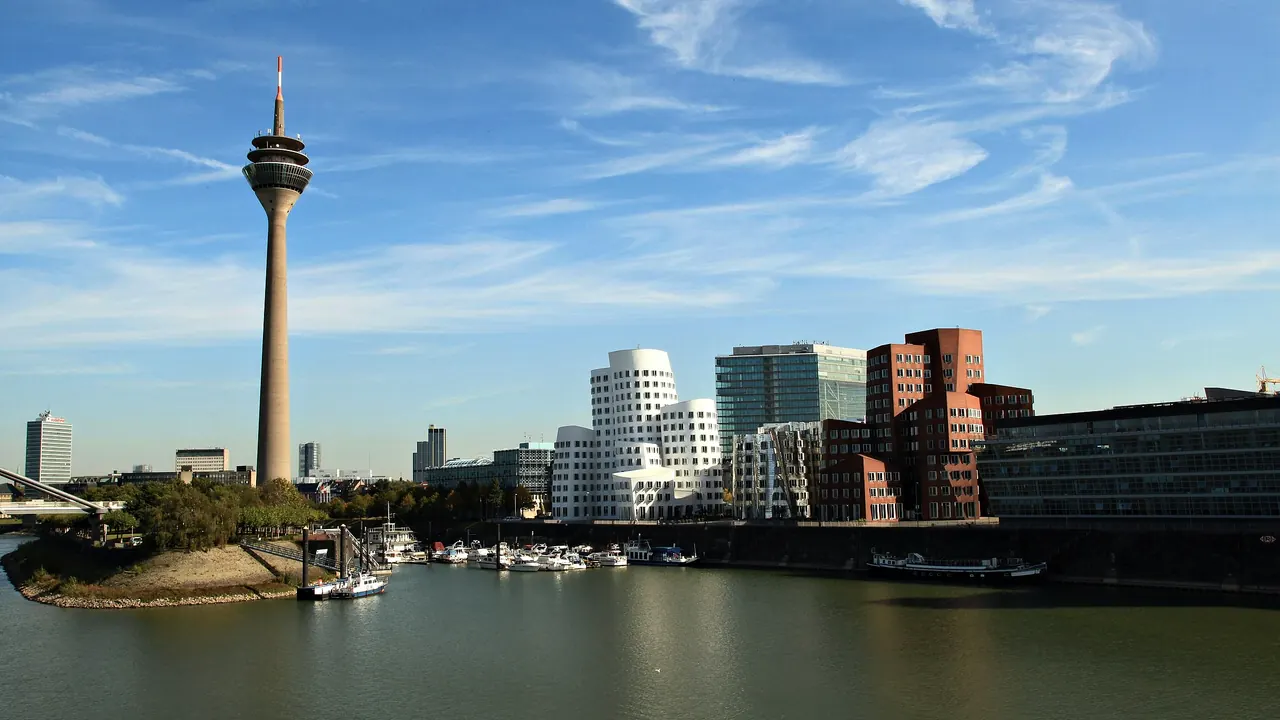
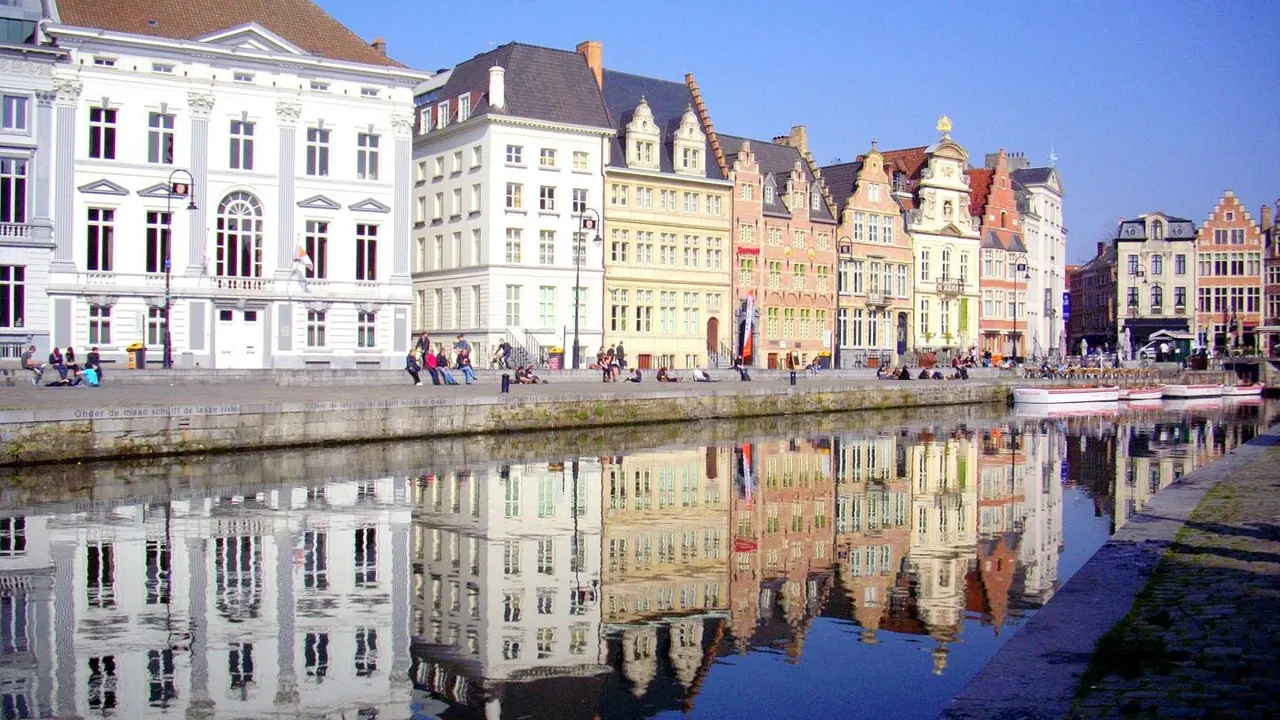
Photos: Dusseldorf by Frank Vincentz, CC BY-SA 3.0, cropped; Ghent by ykeiko, CC BY-SA 3.0, cropped.
Dusseldorf or Ghent?
Our verdict in twelve categories, each scored against the same fixed benchmark cities, and the climate month by month, so you can choose for your trip.
Choose Dusseldorf for
- shopping
- nature and the outdoors
- families
Düsseldorf suits travellers who want a polished, comfortable city with plenty going on beyond the sights: serious shopping on the Königsallee, loud evenings in the Altstadt brewhouses, saunas the German way and easy outings for children. Its art museums are strong, but its appeal lies more in modern city life than in old streets.
Choose Ghent for
- culture and sights
- beaches
- day trips
For anyone who travels for history and painting, Ghent is the better pick. Its medieval centre is intact and still lived in, the van Eyck altarpiece alone justifies the journey, and Bruges, Brussels and Antwerp are all close by train. That makes it a fine base for a wider tour of Flanders.
Scoreboard
Twelve categories on one fixed scale from 0 to 100. The shaded stretch is the gap between the two.
Your match
Pick a travel style or drag the sliders, and both match scores follow your weighting.
Too close to call, 2 points apart
Wins on shopping and nature and the outdoors with your weighting.
Wins on culture and sights and beaches with your weighting.
What matters to you?
Category by category
What the scores mean for a trip.
Beaches & swimming
Neither city is a place for a beach vacation, but Ghent gets closer. The Blaarmeersen on its western edge has a sandy lakeshore with supervised swimming in summer. Ostend and the Belgian coast tram are about an hour away for a day on wide sand and dunes, even if the North Sea stays cool.
In Düsseldorf you swim at Unterbacher See or the gravel-pit lakes around the region, because the Rhine's currents and barge traffic rule the river out. The sea means a long trip to the Dutch coast, so in practice it is out of reach.
Food & drink
Both are rewarding places to eat for a few days without being food destinations, and both centre on beer. The difference is in what you are served. Düsseldorf pours its own dark Altbier in small glasses alongside sauerbraten and pork knuckle. It also has a real second cuisine in the Japanese quarter around Immermannstrasse, with ramen counters and izakaya.
Ghent's strength is the range of Belgian beer in the brown cafés of the Vrijdagmarkt and Patershol, Trappists and lambics rather than a single house style. The food is Flemish: waterzooi, mussels and frites in paper cones. Ghent is also the easier of the two for vegetarians.
Culture & sights
Ghent is the richer city for sightseeing. Its medieval core survives as a working town. The guildhalls of the Graslei and Korenlei face each other across the Leie, the moated Gravensteen stands in the middle of town and three towers line up in the view from St Michael's Bridge. St Bavo's Cathedral holds the van Eyck Ghent Altarpiece, one of the founding works of European painting.
Düsseldorf lost most of its old buildings in the war, so it draws visitors for its art rather than its streets: Klee at K20, the net under K21's glass dome and the Kunstpalast. Benrath Palace and the Gehry buildings in the Medienhafen add to that, but nothing in Düsseldorf matches a walk through Ghent's centre.
Nightlife
Düsseldorf has the bigger night out. The Altstadt crams a few hundred pubs and brewhouses into a handful of streets, and at weekends it becomes a loud, late street party with Altbier drunk standing outside. There are calmer cocktail bars in Carlstadt and the Medienhafen, and Carnival brings the whole city out for days.
Ghent's evenings are smaller in scale. They divide between the student bars of the Overpoort and long sessions over strong beer in the old cafés, with drinking along the quays in summer. Its big moment is the Gentse Feesten in July. Apart from that, neither city has much of a club scene.
Nature & outdoors
Neither has dramatic scenery, but Düsseldorf has more variety within reach. Beyond the Rhine meadows and the cycle path to Kaiserswerth, the wooded Neandertal and the hills of the Bergisches Land begin within half an hour. The Siebengebirge and the volcanic Eifel are a little further.
Around Ghent the land stays flat and farmed, and the outdoors is gentler: cycling along the Leie to Sint-Martens-Latem, birdwatching in the Bourgoyen-Ossemeersen wetland, and the dunes and the Zwin reserve out on the coast.
Day trips
Both are excellent bases, but Ghent's list is hard to beat. Bruges is under half an hour away, Brussels about half an hour and Antwerp under an hour. Beyond them are Mechelen, Leuven, the Ypres battlefields and Lille, all on short, frequent trains, so you can see several in one stay without long days.
Düsseldorf's best outing is Cologne and its cathedral, under half an hour away, with Bonn, the Brühl palaces and the Zollverein colliery close behind. Aachen, Münster, Maastricht and the castles of the Middle Rhine are further, so they make fuller days.
Good for families
Düsseldorf has more for children. The Aquazoo Löbbecke Museum covers a wet day, the game park in Grafenberg forest brings wild boar and deer close for free, and Phantasialand and Movie Park Germany are both within about an hour.
Ghent is safe and largely free of cars. The Gravensteen's battlements, the canal boats and the House of Alijn are easy wins. After that, though, there is little aimed at children, because the zoo and theme parks are elsewhere. Cobbles also make pushchairs hard work, whereas Düsseldorf's trams take buggies without trouble.
Getting around
Both centres are compact, flat and easy on foot, and in neither does a car help. Düsseldorf relies on trams and underground light rail, which reach the Medienhafen and the museums and connect to a regional network serving Cologne and the Ruhr. The airport is only minutes away by train.
Ghent is a cycling city first, with bike streets throughout and most cars kept out of the centre. Allow for the walk or tram ride from Gent-Sint-Pieters, the main station, which is about twenty minutes south of the old town. Take care on the cobbles when they are wet.
Shopping & style
Düsseldorf is a real shopping destination. The Königsallee has luxury flagships and jewellers along its canal, and the department stores of Schadowstrasse and the Kö-Bogen cover the mainstream. Flingern and the Japanese quarter add independent design, stationery and homeware.
Ghent has little luxury, and the Veldstraat is an ordinary high street. Its pleasures are smaller: independent fashion on the Serpentstraat, vintage near the university and edible buys such as cuberdons, chocolate and mustard. Its weekend flea market and the Sunday flower market on the Kouter give it something Düsseldorf lacks.
Affordability
Neither is cheap, and they cost much the same overall. The difference is where the money goes. In Düsseldorf it is the hotels, which are pricey for the city's size and can climb steeply during the big trade fairs, while brewhouse meals and Japanese noodle lunches keep food reasonable.
Ghent's rooms are moderately priced for most of the year, apart from the Gentse Feesten in July, but sit-down dinners with a few Belgian beers soon add up. Free entry to St Bavo's and a centre you can walk around help keep the bill down.
Live music & performing arts
Both have more on stage than their size would suggest, and in both the spoken theatre is mostly in the local language. Düsseldorf is stronger on large-scale classical performance, with the Deutsche Oper am Rhein and the symphony orchestra in the domed Tonhalle. It adds political cabaret and its place in music history as the home of Kraftwerk.
Ghent shares the Flemish national opera company and adds De Bijloke, a concert hall in a medieval hospital known for early music, as well as NTGent's bold productions. For a visitor, the free stages of the Gentse Feesten are the easiest way in.
Wellness & relaxation
Düsseldorf is the better choice if you want to unwind properly. Its public pools have sauna areas used in the German way, mostly mixed and without swimwear. Several large thermal complexes are within about an hour, and the hot springs of Aachen are a little further.
Ghent has no bathing tradition beyond a few hotel spas. Its calm comes from the enclosed gardens of the beguinages, slow walks along the Leie and the Coupure, and quiet Sundays. That makes a pleasant end to a day of sightseeing, but not a reason to go.
When should you go?
Pick your month. The climate figures are measured averages, not a forecast.
Dusseldorf in July
Ghent in July
Daytime high, °C
Rainfall in the month, mm
Where the figures come from
Ghent has no rain gauge within 25 km of the centre, so its rainfall comes from a gridded climate dataset read at the city rather than from a gauge further away.
Ghent's sunshine is measured 45 km from the centre, at Vlissingen.
Temperature and rainfall are climate normals, averaged over the years shown. Dusseldorf: 1991-2020 normals, Düsseldorf (8.3 km from centre). Ghent: 2009-2025 (sunshine 1991-2020, rainfall 1991-2020) normals, Melle / Kalverhaag (10.1 km from centre).
The two cities share much the same climate: mild summers, cold grey winters and rain spread across the whole year. Düsseldorf runs slightly warmer at the height of summer, about 25°C in July against 23°C in Ghent, but Ghent gets noticeably more sunshine from spring through to early autumn. Late May to September is the comfortable time for long days on foot in both. Neither offers real beach weather. The North Sea within reach of Ghent only gets to about 19°C in August, so a day on the coast there is for the sand rather than the swimming.
The difference shows in the second half of the year. Düsseldorf has its wettest weather in high summer and then settles down, while Ghent turns steadily wetter through autumn, reaching around 87mm in December. Winters are cold in both, about 6°C by day in January. That is fine for museums and cafés but chilly for long walks.
Which traveller are you?
On a culture and arts trip, Ghent is the stronger choice. The van Eyck altarpiece, the medieval centre around the Graslei and the Gravensteen, and Bruges, Brussels and Antwerp a short train ride away give far more to see than Düsseldorf's rebuilt old town.
For a shopping trip, Düsseldorf is the clear winner. The Königsallee's flagships and jewellers, the big department stores and Flingern's design shops cater for luxury and independent tastes alike. Ghent has pleasant side streets and markets but little worth travelling for.
On a family trip with children, Düsseldorf has more to fill the days: the Aquazoo, the free game park in Grafenberg forest, trams that take buggies easily and two theme parks within an hour. Ghent is safe and largely car-free, but its children's attractions run out quickly.
Before you go
| Measure | Dusseldorf | Ghent |
|---|---|---|
| Official language | German | French, German, Dutch |
| Currency | Euro (EUR) | Euro (EUR) |
| Sockets | CF230 V, 50 Hz | CE230 V, 50 Hz |
| Driving side | Right | Right |
| Time zone | UTC+1, UTC+2 in summer | UTC+1, UTC+2 in summer |
| Emergency number | 112 | 112 |
| Elevation | 38 m | 12 m |
| Main airport | Düsseldorf Airport (DUS)7 km from centre182 non-stop destinations | Brussels Airport (BRU)56 km from centre191 non-stop destinations |
| Public holidays this year | 11 days | 14 days |
By the numbers
| Measure | Dusseldorf | Ghent |
|---|---|---|
| City population | 619,444 | 272,657 |
| People per km² | 2,849 | 1,728 |
| Museums within 10 km | 25 | 30 |
| UNESCO World Heritage sites within 50 km | 4 | 5 |
| Swim season, months above 21 °C | - | None |
Where else could you go?
Every comparison below shares a destination with this one, so you can follow Dusseldorf or Ghent somewhere new.