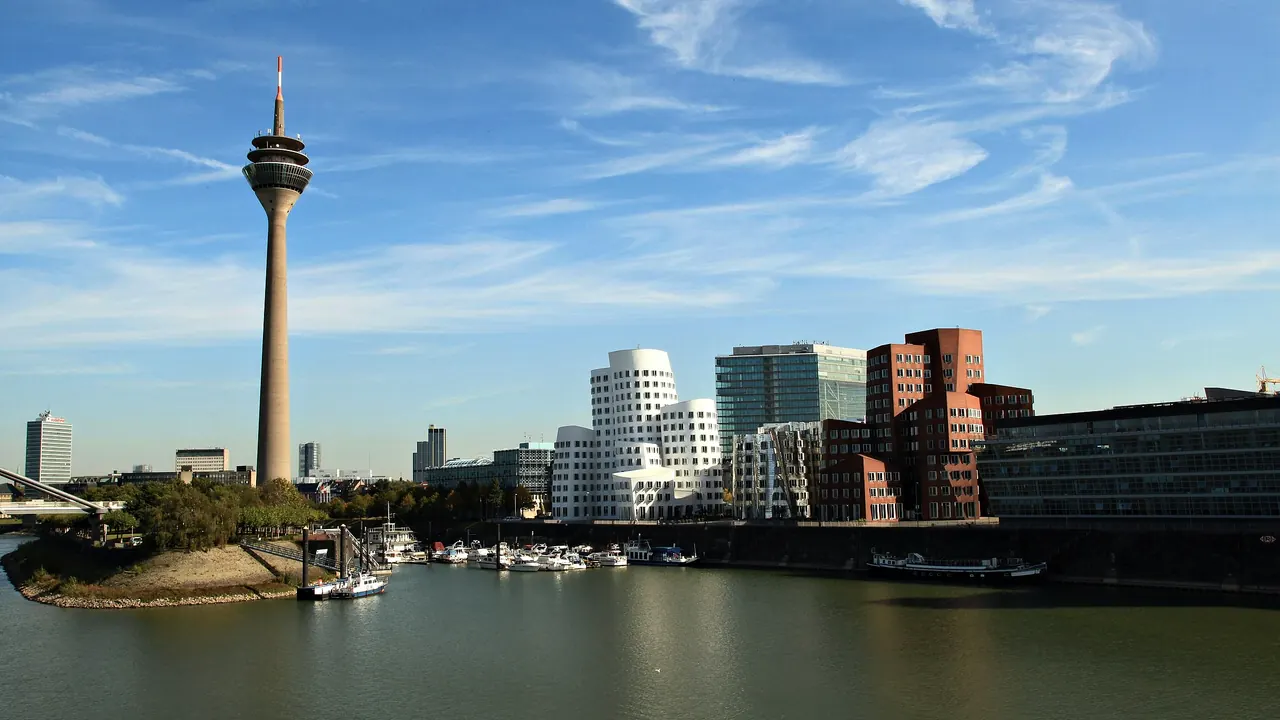
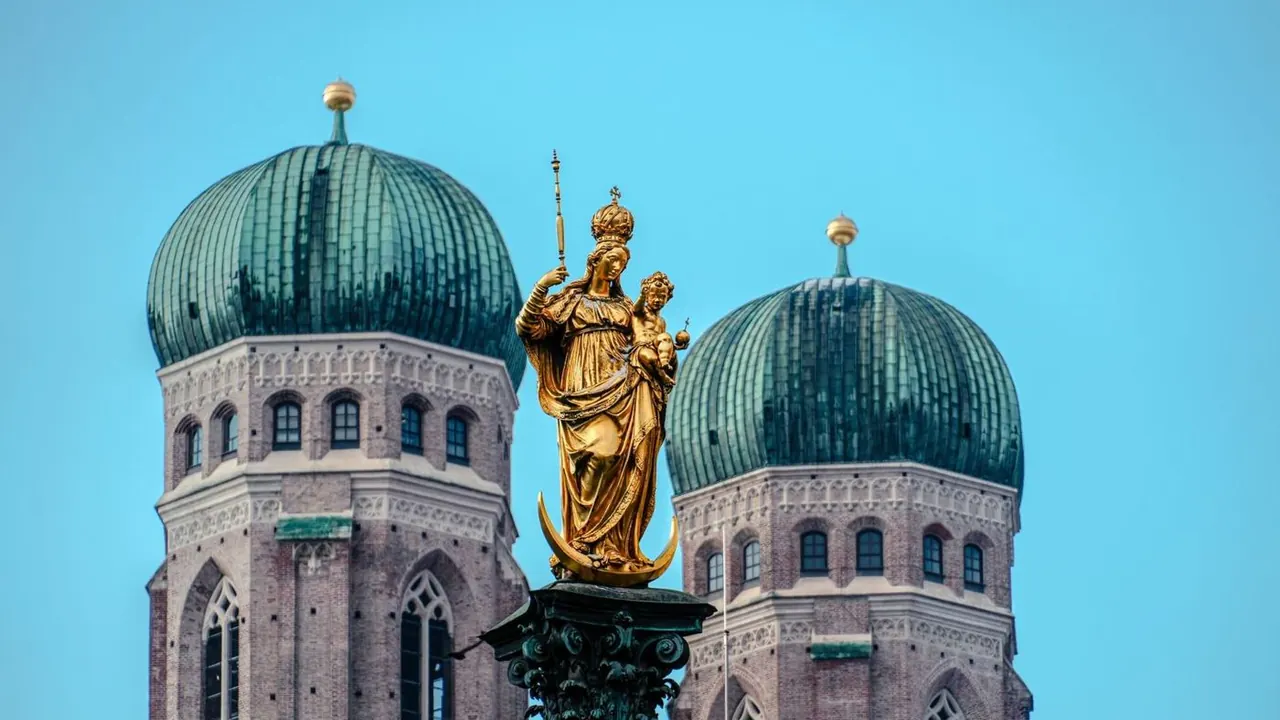
Photos: Dusseldorf by Frank Vincentz, CC BY-SA 3.0, cropped; Munich by 0xd1ma, Pexels License.
Dusseldorf or Munich?
Our verdict in twelve categories, each scored against the same fixed benchmark cities, and the climate month by month, so you can choose for your trip.
Choose Dusseldorf for
- prices
- nightlife
Düsseldorf suits a shorter, livelier city trip built around modern art, Altstadt evenings and good eating. Its packed brewhouse lanes give it the stronger night out, and the Japanese quarter adds a second cuisine that is rare in Germany. It also costs less than Munich. With fast trains to Cologne, Aachen and the Ruhr, it makes a practical base for exploring the Rhineland.
Choose Munich for
- nature and the outdoors
- culture and sights
- live music and the arts
Munich is the stronger choice for a fuller trip that mixes great collections, music and mountains. The Kunstareal, the Residenz and the State Opera go well beyond anything Düsseldorf has, and the Alps, the lakes and the royal castles are all within reach by train. Families and walkers do better here too, as long as they can accept the higher bill.
Scoreboard
Twelve categories on one fixed scale from 0 to 100. The shaded stretch is the gap between the two.
Your match
Pick a travel style or drag the sliders, and both match scores follow your weighting.
Wins on prices and nightlife with your weighting.
Wins on nature and the outdoors and culture and sights with your weighting.
What matters to you?
Category by category
What the scores mean for a trip.
Beaches & swimming
Neither city is a beach destination, but summer swimming is much easier in Munich. The Starnberger See and the Ammersee are under an hour by S-Bahn, with jetties, lawns and clear, fresh alpine water. In town, the Isar gravel banks at the Flaucher make a sunbathing spot.
In Düsseldorf the Rhine looks inviting but is dangerous for swimming because of its currents and shipping. A swim means going to Unterbacher See on the south-eastern edge of the city or to an outdoor pool, and the North Sea is too far away and too cool to count.
Food & drink
Both cities eat around beer and are equally rewarding, but the style is different. In Düsseldorf's Altstadt brewhouses, dark Altbier comes in small glasses and keeps coming until you cover your glass, with a Halve Hahn and the city's spicy mustard on the side. Munich serves Helles by the litre under chestnut trees, with white sausage, pretzels and roast pork, and lets you bring your own picnic.
The real difference lies beyond the beer. Düsseldorf's Japanese quarter around Immermannstrasse, with its ramen counters, izakaya and bakeries, gives it a second cuisine that Munich cannot match. Munich has the Viktualienmarkt beside Marienplatz and a serious coffee-and-cake habit.
Culture & sights
Munich has much the deeper cultural offer. The Kunstareal alone holds the old masters of the Alte Pinakothek, the ancient sculpture of the Glyptothek and the Blue Rider painters at the Lenbachhaus. The Residenz, Nymphenburg Palace and the vast Deutsches Museum add royal and scientific heavyweights.
Düsseldorf is narrower but strong on modern art: Klee at K20, the net under the glass dome at K21 and the Kunstpalast, all shaped by the city's famous art academy. Its rebuilt Altstadt has little old fabric, so its best historic sights, Benrath Palace and the Kaiserswerth ruins, are out on the edges of town.
Nightlife
Düsseldorf has the livelier night out, mostly thanks to the Altstadt. Hundreds of bars are packed into a few streets, and on weekends people drink outside in the lanes until well after midnight. It is loud, stag groups are part of the crowd, and the cocktail bars of Carlstadt and the Medienhafen offer a calmer alternative.
Munich is quieter, especially on weeknights, and an evening often starts and ends in a beer garden. Its handful of techno clubs are a stronger draw for serious clubbers, though. Each city has one big annual party: Carnival in Düsseldorf and the Oktoberfest in Munich.
Nature & outdoors
This is where the two cities differ most. Munich has the Alps on its skyline, and trains reach Garmisch, the Zugspitze and Tegernsee for hiking in summer and skiing in winter. In the city itself there is the English Garden, where surfers ride the standing wave on the Eisbach.
Düsseldorf's outdoors are flat and gentle: Rhine meadows with long cycle paths to Kaiserswerth, the Grafenberg forest and the trails of the Neandertal. The Bergisches Land and the Siebengebirge are good for a day's walking, but they have nothing on a mountain scale.
Day trips
Both are excellent bases, and Munich has the edge on variety. From Düsseldorf, fast trains reach Cologne's cathedral in under half an hour, with Bonn, the Brühl palaces, the industrial sites of the Ruhr, Aachen and Dutch Maastricht further along the line.
Munich adds mountains and fairy-tale castles to its list of towns. Augsburg, Nuremberg and Regensburg are easy by rail, and Salzburg and Innsbruck are just across the Austrian border. Neuschwanstein and Herrenchiemsee are the classic royal excursions.
Good for families
Munich is the easier choice with children. It has a large zoo along the Isar, hands-on sections at the Deutsches Museum, beer gardens with playgrounds and lake beaches in summer. Legoland is about an hour and a half away by car.
Düsseldorf is safe and compact, and the Aquazoo, the tilted windows of the Rheinturm and the free game park in Grafenberg all make good outings, with Phantasialand within an hour. It simply has fewer of them, and the Altstadt is best avoided on weekend nights.
Getting around
Both cities have compact, flat centres where a car is more trouble than it is worth. In Düsseldorf, the Altstadt, the Kö, the Hofgarten and the Japanese quarter around Immermannstrasse are all within walking distance of one another, and the path along the Rhine makes a pleasant walk of its own. Trams and light rail reach the Medienhafen, and the airport is minutes away by train. The regional network stretches to Cologne and the Ruhr, though its fare zones take some getting used to.
Munich's transport runs more smoothly still. Its old town is largely pedestrianised, and one integrated network of U-Bahn, S-Bahn, trams and buses reaches the museums, Nymphenburg, the airport and even the lakes. Long riverside and park routes make it the easier city to cycle, and delays on the central S-Bahn line are the main complaint.
Shopping & style
The two cities are close here, both prosperous and well dressed. Düsseldorf puts its luxury shops along the canal-side Königsallee, and Flingern's boutiques and the stationery and homeware shops of the Japanese quarter offer something different.
Munich spreads its high end along Maximilianstrasse and the Theatinerstrasse arcades. It also sells something Düsseldorf has no answer to: Tracht, the dirndls and lederhosen made by specialist tailors. In December, the Christmas markets add craft stalls.
Affordability
Neither city is cheap, but Düsseldorf costs noticeably less. Its hotels are pricey for a city of its size and soar during trade fairs, but brewhouse meals and Japanese noodle lunches keep day-to-day spending manageable.
Munich is Germany's most expensive city, with dear hotel rooms all year and especially during the Oktoberfest. Its savings are the free things: the parks and lakes, a picnic in a beer garden and museums that charge only a token fee on Sundays.
Live music & performing arts
Munich is one of the great music cities of Europe, and Düsseldorf, though well served, cannot match it. The Bavarian State Opera in the National Theatre, three orchestras of real standing and the gilded Cuvilliés Theatre make an evening of opera or concert the natural highlight of a stay.
Düsseldorf has the Deutsche Oper am Rhein, the Tonhalle in its domed former planetarium, a leading Schauspielhaus and a tradition of political cabaret. Its distinctive claim is electronic music, as the birthplace of Kraftwerk. In both cities, theatre is mostly in German.
Wellness & relaxation
Munich is the better place to unwind. It has the Art Nouveau Müller'sches Volksbad with its Roman-style steam bath, and the huge thermal complex at Erding is about forty minutes away. The spa towns of Bad Tölz and Bad Reichenhall lie towards the mountains.
Düsseldorf has no springs of its own, so a proper spa day means travelling to a thermal complex or to Aachen. Both cities follow the German custom of mixed, swimwear-free saunas. In Düsseldorf you slow down on the Rhine meadows and in the Japanese garden of the Nordpark. In Munich you do it in the beer gardens and on the lawns of the English Garden.
When should you go?
Pick your month. The climate figures are measured averages, not a forecast.
Dusseldorf in July
Munich in July
Daytime high, °C
Rainfall in the month, mm
Temperature and rainfall are climate normals, averaged over the years shown. Dusseldorf: 1991-2020 normals, Düsseldorf (8.3 km from centre). Munich: 1991-2020 normals, München (1.9 km from centre).
Summers are almost identical, with highs around 25°C in July in both cities, and from May to September the streets are pleasant for walking. The difference is the rain. Düsseldorf's is spread fairly evenly through the year and peaks at about 77mm in August, so no month is especially wet. Munich turns wet from May, with around 121mm in June and similar totals through August, though it gets more sunshine than Düsseldorf in every month. Only Munich has a real swimming season, in its alpine lakes from about June to early September.
Winters are cold in both, and from December to February long days on foot lose their appeal. Düsseldorf's winters are a little milder but darker, while Munich's January highs are near 4°C. For sightseeing, April, May and September all work well in Düsseldorf. In Munich, May is already wet, so April and September are the more comfortable months on either side of the summer rain.
Which traveller are you?
On an outdoors trip, Munich wins easily. The Alps rise on its horizon, and trains reach Garmisch and the Zugspitze for hiking or skiing. The lakes and the Isar cycle paths fill shorter days, while Düsseldorf has flat Rhine meadows and gentle wooded hills.
For a food and nightlife trip, Düsseldorf has the edge. The food is a close contest between brewhouse and beer garden, but its Japanese quarter adds real variety. The Altstadt's crowded bar streets also make weekend nights louder and longer than Munich's quieter evenings.
On a tight budget, Düsseldorf is the safer choice, as long as you avoid trade fair weeks. Hotels cost less than in Munich, Germany's most expensive city, and brewhouse meals and noodle-bar lunches keep spending down. In Munich, the free parks and lakes soften the bill.
Before you go
| Measure | Dusseldorf | Munich |
|---|---|---|
| Official language | German | German |
| Currency | Euro (EUR) | Euro (EUR) |
| Sockets | CF230 V, 50 Hz | CF230 V, 50 Hz |
| Driving side | Right | Right |
| Time zone | UTC+1, UTC+2 in summer | UTC+1, UTC+2 in summer |
| Emergency number | 112 | 112 |
| Elevation | 38 m | 519 m |
| Main airport | Düsseldorf Airport (DUS)7 km from centre182 non-stop destinations | Munich Airport (MUC)29 km from centre210 non-stop destinations |
| Public holidays this year | 11 days | 12 days |
By the numbers
| Measure | Dusseldorf | Munich |
|---|---|---|
| City population | 619,444 | 1,505,036 |
| People per km² | 2,849 | 4,844 |
| Museums within 10 km | 25 | 74 |
| UNESCO World Heritage sites within 50 km | 4 | 1 |
Where else could you go?
Every comparison below shares a destination with this one, so you can follow Dusseldorf or Munich somewhere new.