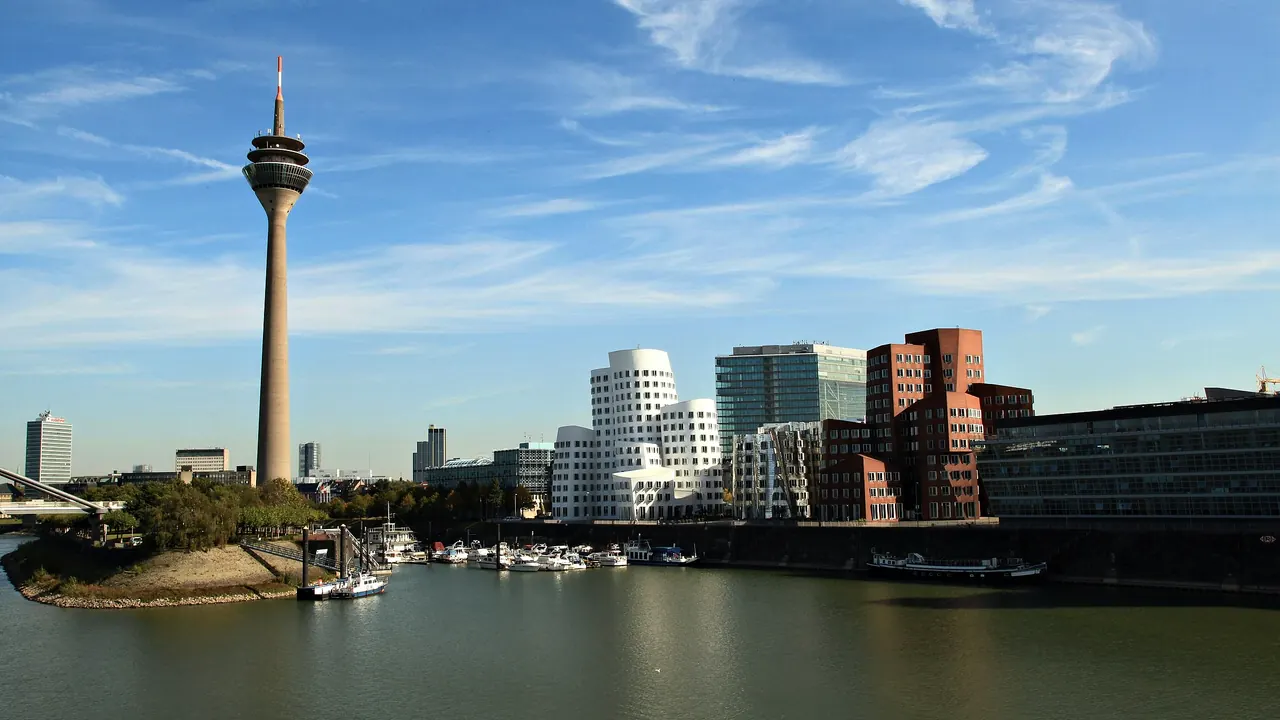
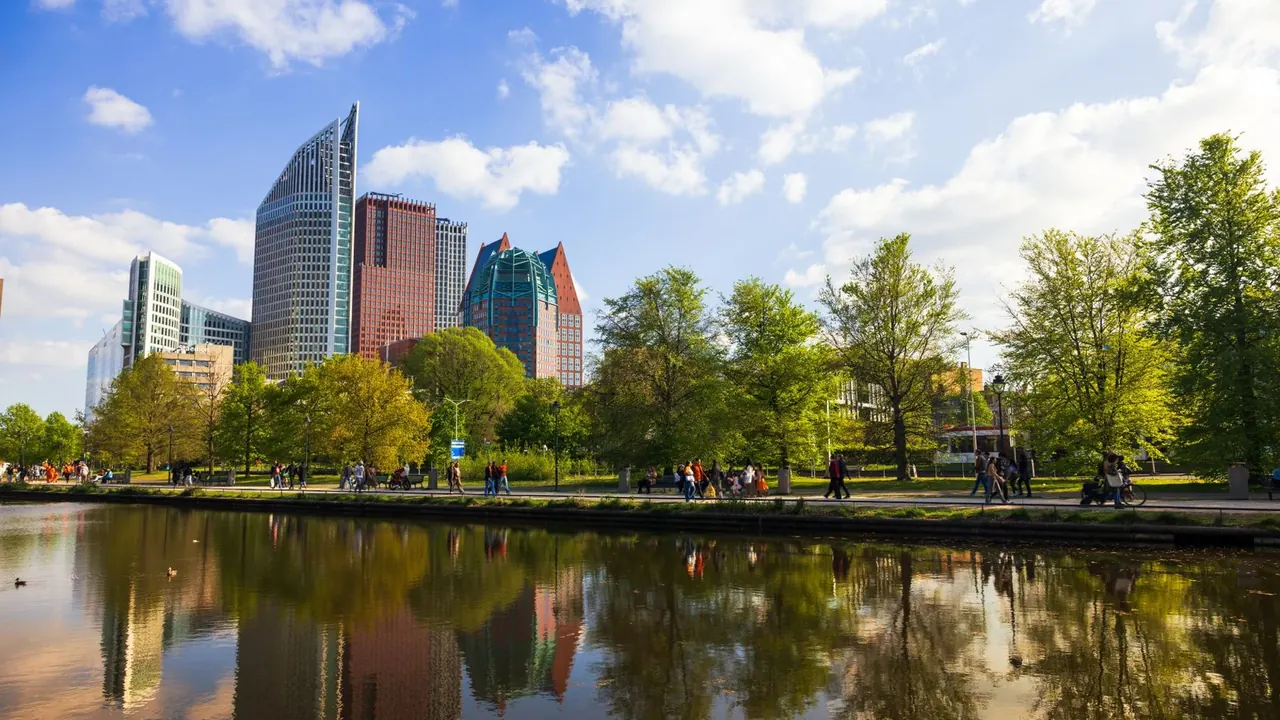
Photos: Dusseldorf by Frank Vincentz, CC BY-SA 3.0, cropped; The Hague by Bráulio jardim, Pexels License.
Dusseldorf or The Hague?
Our verdict in twelve categories, each scored against the same fixed benchmark cities, and the climate month by month, so you can choose for your trip.
Choose Dusseldorf for
- nightlife
- food and drink
- shopping
Düsseldorf is the better pick if you want your evenings to count. The Altstadt's brewhouses and packed lanes make for a real night out, the Japanese quarter and the Altbier tradition make it the more interesting place to eat, and the Königsallee gives shoppers a proper luxury street. It suits adults on a lively weekend who would like some art and shopping as well.
Choose The Hague for
- beaches
- families
- culture and sights
For a calmer stay with more to see, go to The Hague. Its quiet streets of embassies and government offices sit around the Mauritshuis, the Binnenhof and the Peace Palace, which give it the stronger sightseeing. Scheveningen puts a sandy beach a tram ride from the centre, and the city is the easier choice with children. Delft, Leiden and Amsterdam are all close by train, so it also works well as a quiet base for touring the Netherlands.
Scoreboard
Twelve categories on one fixed scale from 0 to 100. The shaded stretch is the gap between the two.
Your match
Pick a travel style or drag the sliders, and both match scores follow your weighting.
Too close to call, level with your weighting
Wins on nightlife and food and drink with your weighting.
Wins on beaches and families with your weighting.
What matters to you?
Category by category
What the scores mean for a trip.
Beaches & swimming
You cannot swim in the Rhine at Düsseldorf because of its currents and shipping, so a swim there means Unterbacher See or a lake out in the region.
The Hague has a real seaside. Scheveningen's wide sandy beach, pier and summer pavilions are a short tram ride from the centre, and Kijkduin is quieter with dunes behind it. The North Sea stays cold, so it is a beach for sunbathing and quick dips, not a swimming vacation.
Food & drink
Düsseldorf is the better city for eating. You get two quite different cuisines: Altstadt brewhouse food such as sauerbraten and Halve Hahn with the local mustard, and around Immermannstrasse one of Europe's largest Japanese communities, with ramen counters and izakaya. Carlsplatz market adds snacks and produce.
The Hague's great strength is Indonesian food, from a full rijsttafel to quick plates of rendang, and here it is unusually good. Beyond that you have herring carts and seafood by Scheveningen harbour, while the bistros are pleasant but rarely memorable.
Culture & sights
The Hague has more to see. The Mauritshuis is small but holds Vermeer's Girl with a Pearl Earring and Rembrandt's Anatomy Lesson, and it sits beside the medieval Binnenhof. The Peace Palace, the Mondrians at the Kunstmuseum and Panorama Mesdag round out two or three unhurried days.
Düsseldorf is mainly about modern art: Klee at K20, the net under the dome at K21, and the Kunstpalast. Wartime bombing left little old fabric, so beyond the galleries the main historic sight is Benrath Palace, out in the suburbs.
Nightlife
Düsseldorf goes out much harder. The Altstadt's few hundred pubs and brewhouses turn into a street party at weekends, there are cocktail bars in Carlstadt and the Medienhafen, and Carnival takes over the whole city for days.
Evenings in The Hague mean café terraces on the Plein, student bars around the Grote Markt and summer sundowners at the beach pavilions. Anyone who wants clubs takes the train to Rotterdam or Amsterdam.
Nature & outdoors
Both cities are flat and gentle, with no dramatic scenery, but the outdoors differs in kind. Düsseldorf's is river country: cycle paths along the Rhine meadows to Kaiserswerth, Grafenberg forest, and the Neandertal and the wooded hills of the Bergisches Land within easy reach.
The Hague's is the coast. Meijendel's protected dunes, the old Haagse Bos forest near the centre, and windy beach walks, surfing and kitesurfing give it a wilder, saltier feel.
Day trips
Both cities are excellent bases for day trips, and The Hague has a slight edge because so much is so close. Delft and Leiden are about fifteen minutes away, Rotterdam and Gouda not much more, and Amsterdam, Haarlem, Utrecht, Kinderdijk and the bulb fields all lie within the hour.
From Düsseldorf the trips feel more varied. Cologne Cathedral is under half an hour away, and Bonn, the Brühl palaces, the Ruhr's industrial heritage at Zollverein, Aachen and the castles of the Middle Rhine are all within reach, though some of them make for longer days.
Good for families
Düsseldorf is a safe, easy city with small children. Its main outings are the Aquazoo, the ride up the Rheinturm and the deer and wild boar of the free Grafenberg game park, and Phantasialand and Movie Park are about an hour away for a bigger day out.
The Hague keeps more of a family's days inside the city. At Madurodam children can walk across the whole country in miniature, which is a good way to start before seeing the real Delft or Kinderdijk. The Scheveningen sea aquarium is the place to go when rain or the cold sea cuts a beach day short. Museon suits school-age children and the Louwman car museum suits older ones, so the city works for children of different ages.
Getting around
Both are easy, with flat, compact centres and trams that cover the rest. Düsseldorf's strength is its regional network, which reaches Cologne and the Ruhr, though the fare zones take some learning.
The Hague is the better city for cycling, with separate lanes almost everywhere and dune paths along the coast. That matters because the beach, Madurodam and the Peace Palace are spread further out from the centre.
Shopping & style
Düsseldorf is the stronger shopping city. The Königsallee lines its canal with luxury flagships and jewellers, Schadowstrasse and the Kö-Bogen take care of mainstream shopping, and Flingern and the Japanese quarter add independent shops.
The Hague is smaller and quieter: antiques, galleries and boutiques on the Denneweg and Noordeinde, and the 1880s Passage arcade. Its best stop is the Haagse Markt, a huge open-air market of fabrics and spices.
Affordability
Neither city is cheap, but Düsseldorf is a little easier on the budget day to day, with fair-value brewhouse meals and cheap Japanese noodle lunches. Its weak point is trade-fair weeks, when hotel rooms become scarce and very expensive.
The Hague charges full Northern European prices. Weekends outside the beach season are the best time for central rooms, and Indonesian and Surinamese eateries and market picnics help keep costs down.
Live music & performing arts
Both cities have a serious programme, and the difference is in what they offer. Düsseldorf has opera and ballet at the Deutsche Oper am Rhein, concerts in the domed Tonhalle, political cabaret and a summer jazz festival, along with its place in music history as the home of Kraftwerk.
The Hague's highlight is dance. Seeing Nederlands Dans Theater on home ground is the reason to go, and the Residentie Orkest and the early-music concerts of the Royal Conservatory add more, but the city has no resident opera company.
Wellness & relaxation
Both cities have the same northern sauna culture, mixed and usually without swimwear, so the difference is in the setting. Düsseldorf relies on the sauna areas of its leisure baths, with larger thermal complexes and the hot springs of Aachen a drive away. In town you can wind down in the Hofgarten or Nordpark's Japanese garden.
The Hague has large all-day sauna complexes on its outskirts. The city's quiet embassy streets and walks along the sea front make unwinding easy without much effort.
When should you go?
Pick your month. The climate figures are measured averages, not a forecast.
Dusseldorf in July
The Hague in July
Daytime high, °C
Rainfall in the month, mm
Where the figures come from
The Hague has no rain gauge within 25 km of the centre, so its rainfall comes from a gridded climate dataset read at the city rather than from a gauge further away.
The Hague's sunshine is measured 60 km from the centre, at De Bilt.
Temperature and rainfall are climate normals, averaged over the years shown. Dusseldorf: 1991-2020 normals, Düsseldorf (8.3 km from centre). The Hague: 1991-2020 normals, Valkenburg (13.6 km from centre).
Both cities are pleasant from May to September and grey and chilly from November to March, but the Rhine gets more summer heat. Düsseldorf reaches about 25°C in July, warm enough to sit out on the river meadows late into the evening. On the coast, The Hague stays nearer 21°C, which keeps a long day of walking comfortable but means the beach needs a still, sunny day. The North Sea is at its warmest in August at about 19°C, so a swim is a quick dip even then. Sunshine is much the same in both, peaking from May to August.
Rain is where they part in the second half of the year. Düsseldorf's rain is spread fairly evenly across the months. The Hague turns wet from September, with about 104mm in October and wind off the sea, so late spring and early summer are its best time. Düsseldorf stays a reasonable bet into early autumn.
Which traveller are you?
For a food and nightlife trip, Düsseldorf is the clear choice. You can start with ramen in the Japanese quarter and finish in the Altstadt's brewhouses, where weekend crowds drink Altbier in the street past midnight. The Hague's evenings are civil and end early.
On a family trip with children, The Hague is easier. Madurodam's miniature Netherlands, the beach and aquarium at Scheveningen, and Duinrell just outside town fill several days. The streets are quiet at night, unlike Düsseldorf's Altstadt at the weekend.
For a shopping trip, choose Düsseldorf. The Königsallee has luxury flagships and jewellers, and Schadowstrasse has the big department stores, a range of fashion The Hague cannot match. The Hague's antique dealers on the Denneweg and its large open-air market are charming but smaller.
Before you go
| Measure | Dusseldorf | The Hague |
|---|---|---|
| Official language | German | Dutch |
| Currency | Euro (EUR) | Euro (EUR) |
| Sockets | CF230 V, 50 Hz | CF230 V, 50 Hz |
| Driving side | Right | Right |
| Time zone | UTC+1, UTC+2 in summer | UTC+1, UTC+2 in summer |
| Emergency number | 112 | 112 |
| Elevation | 38 m | 1 m |
| Main airport | Düsseldorf Airport (DUS)7 km from centre182 non-stop destinations | Rotterdam The Hague Airport (RTM)16 km from centre53 non-stop destinations |
| Public holidays this year | 11 days | 11 days |
By the numbers
| Measure | Dusseldorf | The Hague |
|---|---|---|
| City population | 619,444 | 548,320 |
| People per km² | 2,849 | 5,589 |
| Museums within 10 km | 25 | 54 |
| UNESCO World Heritage sites within 50 km | 4 | 4 |
| Swim season, months above 21 °C | - | None |
Where else could you go?
Every comparison below shares a destination with this one, so you can follow Dusseldorf or The Hague somewhere new.