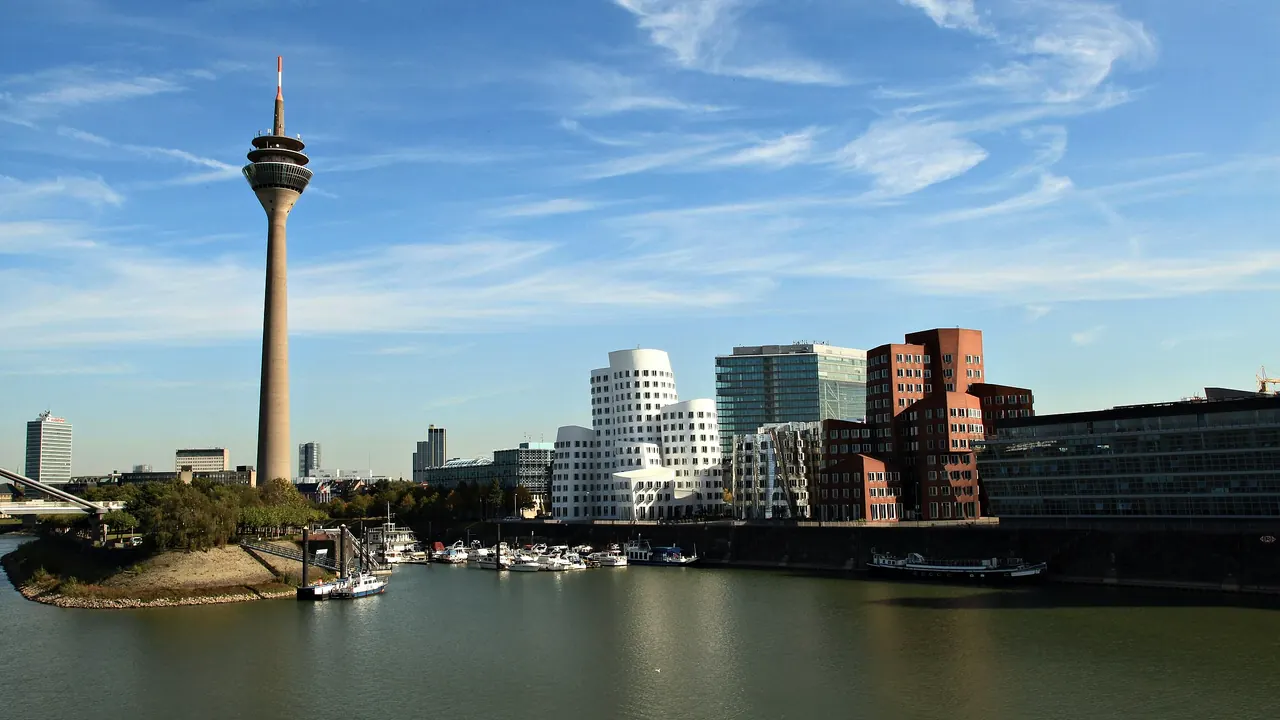
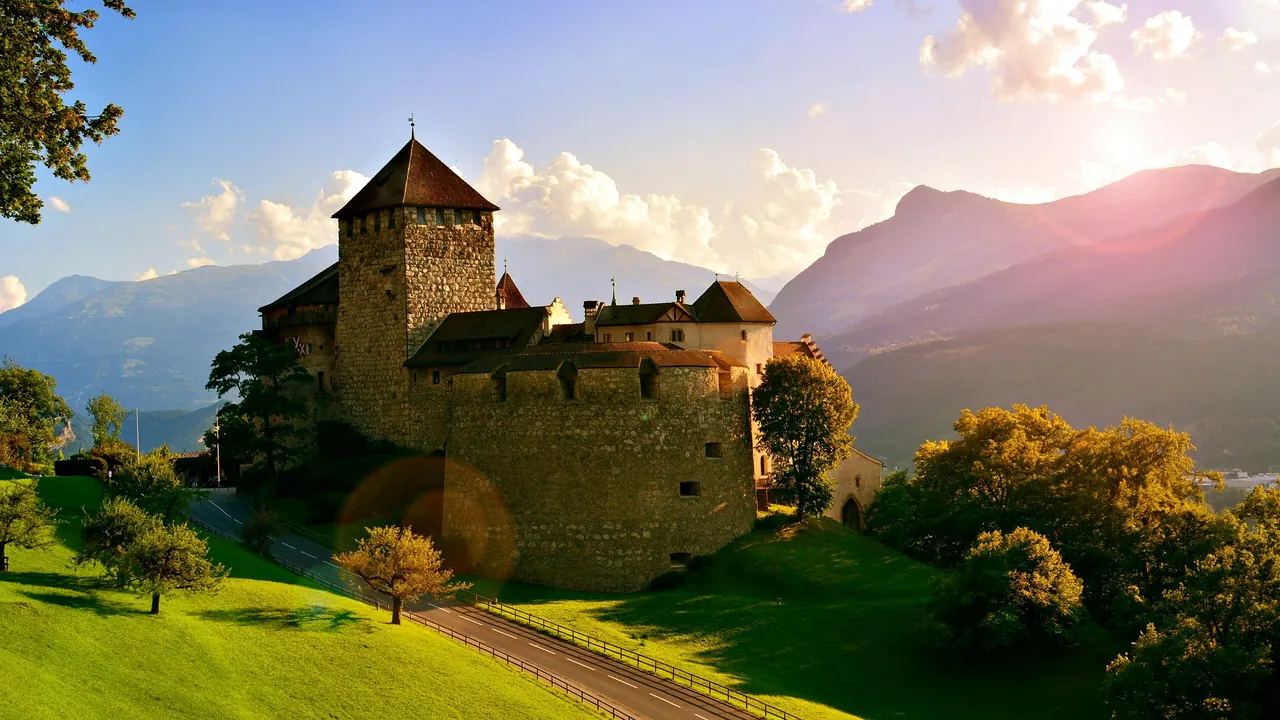
Photos: Dusseldorf by Frank Vincentz, CC BY-SA 3.0, cropped; Vaduz by Justin LaBerge, CC BY 2.0, cropped.
Dusseldorf or Vaduz?
Our verdict in twelve categories, each scored against the same fixed benchmark cities, and the climate month by month, so you can choose for your trip.
Choose Dusseldorf for
- shopping
- nightlife
- live music and the arts
Düsseldorf is the better pick for a city trip with plenty going on in the evenings. It has serious art museums, opera and theatre, the brewhouses and Japanese kitchens, the Königsallee for shopping and the Altstadt's crowded lanes after dark. On top of that, fast trains reach Cologne, Bonn, Aachen and the Ruhr. It costs what a prosperous German city costs, and that is still far less than its rival.
Choose Vaduz for
- nature and the outdoors
- beaches
Vaduz suits travellers who want mountains outside the door and quiet once dinner is over. Its town sights fill a day, but the trails start at the edge of town and climb to Triesenberg, Malbun and the Rätikon ridges. Bad Ragaz's thermal water and the old towns of eastern Switzerland and Austria are close by. Expect very high Swiss-level prices, a handful of restaurants and no nightlife. Come for walking, skiing and fresh air.
Scoreboard
Twelve categories on one fixed scale from 0 to 100. The shaded stretch is the gap between the two.
Your match
Pick a travel style or drag the sliders, and both match scores follow your weighting.
Wins on shopping and nightlife with your weighting.
Wins on nature and the outdoors and beaches with your weighting.
What matters to you?
Category by category
What the scores mean for a trip.
Beaches & swimming
Neither is a swimming destination, and in both the Rhine is off limits. The difference is where you go instead. Düsseldorf has Unterbacher See inside the city limits, with lawns and bathing areas, plus gravel-pit lakes around the region. From Vaduz you drive to the steep-walled Walensee or the shores of Lake Constance, which is a more scenic swim but a short season.
Food & drink
Düsseldorf gives you far more to eat. You get two traditions in one centre: the Altstadt brewhouses, with sauerbraten, Halve Hahn and the city's sharp mustard, and one of Europe's largest Japanese communities around Immermannstrasse. Carlsplatz market and Rhineland wine bars round it out.
Vaduz has a few hotel dining rooms and village inns serving Käsknöpfle, rösti and game in autumn. The cooking is solid, but the choice is narrow. Its one real pleasure is the Pinot Noir from the prince's vineyards below the castle.
Culture & sights
Both are worth visiting for modern art, but Düsseldorf goes much deeper. K20 and K21 of the Kunstsammlung, the Kunstpalast and galleries shaped by the city's art academy can fill several days. Benrath Palace, Kaiserswerth's imperial ruins and the Gehry buildings of the Medienhafen add some architecture to the trip.
Vaduz's sights fit into one easy day. There are the black and white cubes of the Kunstmuseum and Hilti Art Foundation, the National Museum, the Postage Stamp Museum and the walk up to a castle you can only see from outside.
Nightlife
This is where the two differ most. Düsseldorf's Altstadt, called the longest bar in the world, turns into a street party on weekend nights, Carlstadt and Flingern have calmer bars, and the city's Carnival lasts for days. Vaduz has a few wine bars and hotel lounges on the Städtle, and locals who want a night out go to Feldkirch or Zurich.
Nature & outdoors
Vaduz is the place for the outdoors. Mountains rise straight from the valley floor, and the bus or road reaches Malbun and the Rätikon peaks in about half an hour. There are ridge hikes, a trail that crosses the whole country and winter skiing. The Säntis and the Walensee are close as well.
Düsseldorf's outdoors is gentle and flat. There are Rhine meadows with sheep on the dykes, cycle paths to Kaiserswerth, Grafenberg forest and the Neandertal. The Bergisches Land and Eifel hills are good for a day out, but it has nothing like the Alps.
Day trips
Düsseldorf offers more outings, and bigger ones. Most of its day trips go to other cities. Cologne's cathedral is so close it hardly feels like a trip, and Bonn, Aachen and Maastricht each make an easy day by rail. The Ruhr's old collieries add an industrial heritage you won't find anywhere near Vaduz, so a week can take in Roman, medieval and industrial Germany from one station.
Vaduz's outings are smaller in scale and more about scenery, and they cross into Austria and Switzerland as a matter of course. Instead of big cities you get compact old towns such as Feldkirch and St Gallen, with its abbey library, and lakeshores at Lindau and under the Walensee's mountain walls. Zurich is the one large city in range. The best days here pair an old town with a drive past a lake or over a mountain road.
Good for families
Düsseldorf has far more for children to do. The Aquazoo Löbbecke Museum, the Rheinturm's tilted windows, the free game park with wild boar and the Rhine meadow playgrounds are all in town, and Phantasialand and Movie Park are about an hour away.
Vaduz is very safe and calm, but nothing there is built for children. Families spend their days at the open-air pools, on easy walks above Triesenberg or on Malbun's beginner slopes. That suits older children who like hiking better than toddlers.
Getting around
Both centres are flat and easy on foot. Düsseldorf adds trams, underground light rail and a regional network that runs straight on to Cologne and the Ruhr. The airport is minutes away by train, so you don't need a car.
Vaduz's centre is one short pedestrian street, and buses reach every village and run up to Malbun. With no railway station in town, travel further afield means changing, and many visitors hire a car.
Shopping & style
Düsseldorf is a real shopping city. The Königsallee has luxury flagships along its canal, Schadowstrasse and the Kö-Bogen cover mainstream shopping, and Flingern and the Japanese quarter have independent shops. Vaduz has a handful of watch, jewellery and souvenir shops on the Städtle. Stamps and a bottle of local wine are the best things to take home.
Affordability
Neither is cheap, but Düsseldorf is much easier on the budget. Hotels are expensive and soar during trade fairs, but brewhouse meals, Japanese noodle bars, fairly priced transport and some free museum times keep daily spending reasonable.
Vaduz charges Swiss prices for everything and has few hotels, so there is little at the budget end. Buses and museums are affordable, but rooms and meals make even a short stay costly. Some visitors stay across the border in Austria.
Live music & performing arts
Düsseldorf has a full year-round programme. The Deutsche Oper am Rhein stages opera and ballet, and the domed Tonhalle hosts the symphony orchestra. There is also the Schauspielhaus, political cabaret and the electronic-music legacy of Kraftwerk, along with jazz clubs and a summer jazz festival.
Liechtenstein's calendar is respectable for its size but small. There is the theatre stage in Schaan, a short orchestral season, a summer classical festival in Vaduz and occasional church concerts. You will find something to see in a week, but you wouldn't plan a trip around it.
Wellness & relaxation
The two are about level, and both rely on spas outside town. Düsseldorf has the German sauna routine in its public baths, mostly mixed and without swimwear, with large thermal complexes and Aachen's hot springs an hour or more away. Its calm comes from the Rhine meadows and the Japanese garden in Nordpark.
Vaduz has the historic thermal water of Bad Ragaz twenty-five minutes away, and quiet streets with mountain views all around. That makes a slow, restful stay easy, although spa facilities in town are limited to a few hotels.
When should you go?
Pick your month. The climate figures are measured averages, not a forecast.
Dusseldorf in July
Vaduz in July
Daytime high, °C
Rainfall in the month, mm
Where the figures come from
Vaduz's temperatures are measured 51 km from the centre, at Sigmarszell-Zeisertsweiler.
Vaduz has no rain gauge within 25 km of the centre, so its rainfall comes from a gridded climate dataset read at the destination rather than from a gauge further away.
Temperature and rainfall are climate normals, averaged over the years shown. Dusseldorf: 1991-2020 normals, Düsseldorf (8.3 km from centre). Vaduz: 1991-2020 normals, Sigmarszell-Zeisertsweiler (51.3 km from centre).
The two climates are close in temperature but quite different in rain. Both warm up from May, peak in July and August at about 25°C in Düsseldorf and 24°C in Vaduz, and are pleasant for walking from May to September. Winters are cold in both, though Vaduz is a little colder, which brings snow to Malbun for skiing. Neither city has summers for a beach vacation, and a lake swim is a warm-afternoon outing in July and August.
Rain is where they part. Düsseldorf's falls fairly evenly through the year, never much above 75mm in a month, so no season is clearly wetter. Vaduz gets its heaviest rain in summer, about 126mm in August, often as mountain showers, even though July is also its sunniest month. For hiking in the Alps, June to September is still the season, but plan around wet afternoons. Early autumn is a good time in both. Later in autumn, Vaduz's valley floor can sit under fog while the heights stay sunny.
Which traveller are you?
On a food and nightlife trip, Düsseldorf wins easily. Altbier brewhouses, the ramen counters and izakaya around Immermannstrasse and Carlsplatz market keep you fed. Then the Altstadt's packed lanes run past midnight. In Vaduz, evenings end early over a hotel dinner.
For an outdoors trip, choose Vaduz. Trails climb from the town centre through vineyards and beech forest, the Rätikon peaks and the Fürstensteig are half an hour away, and Malbun has skiing in winter. Düsseldorf offers flat Rhine cycle paths and gentle forest walks.
For a shopping trip, Düsseldorf is the only real option. The Königsallee has luxury flagships and arcades, Schadowstrasse has the department stores, and Flingern and the Japanese quarter add independent shops. Vaduz has one short street of watches, souvenirs and stamps.
Before you go
| Measure | Dusseldorf | Vaduz |
|---|---|---|
| Official language | German | German |
| Currency | Euro (EUR) | Swiss Franc (CHF) |
| Sockets | CF230 V, 50 Hz | CJ230 V, 50 Hz |
| Driving side | Right | Right |
| Time zone | UTC+1, UTC+2 in summer | UTC+1, UTC+2 in summer |
| Emergency number | 112 | 112 |
| Elevation | 38 m | 455 m |
| Main airport | Düsseldorf Airport (DUS)7 km from centre182 non-stop destinations | Zürich Airport (ZRH)81 km from centre226 non-stop destinations |
| Public holidays this year | 11 days | 21 days |
By the numbers
| Measure | Dusseldorf | Vaduz |
|---|---|---|
| Population | 619,444 | 5,668 |
| People per km² | 2,849 | 328 |
| Museums within 10 km | 25 | 7 |
| UNESCO World Heritage sites within 50 km | 4 | 3 |
Where else could you go?
Every comparison below shares a destination with this one, so you can follow Dusseldorf or Vaduz somewhere new.
- Colognevs Dusseldorf
- Zurichvs Vaduz
- Maastrichtvs Dusseldorf
- Lucernevs Vaduz
- Luganovs Vaduz
- Interlakenvs Vaduz