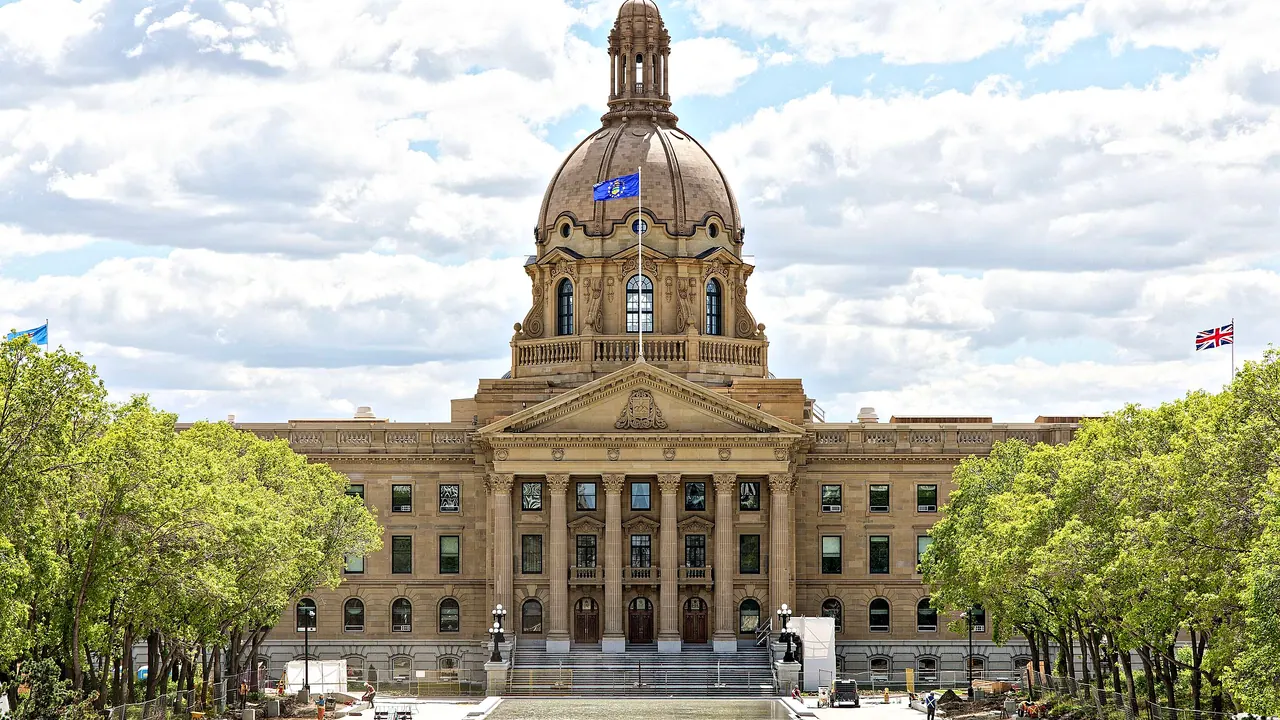
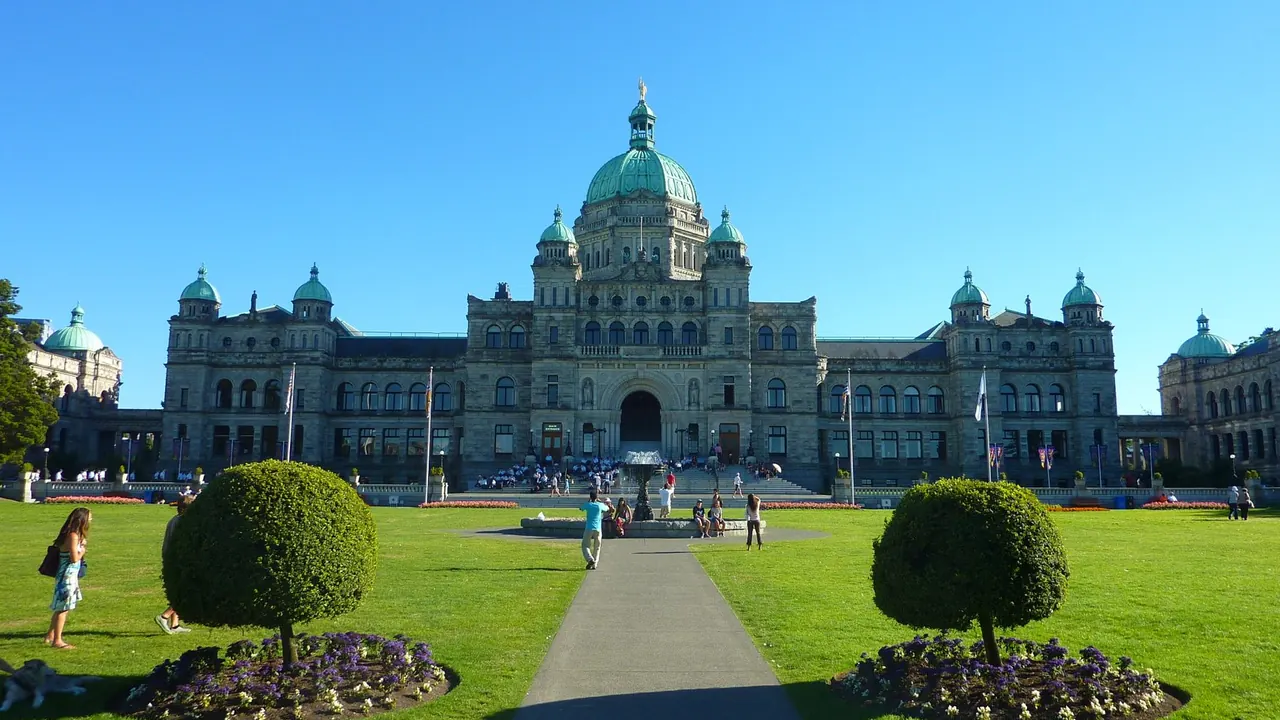
Photos: Edmonton by D. Benjamin Miller, CC0; Victoria by Guilice, CC BY-SA 3.0, cropped.
Edmonton or Victoria?
Our verdict in twelve categories, each scored against the same fixed benchmark cities, and the climate month by month, so you can choose for your trip.
Choose Edmonton for
- live music and the arts
- prices
- nightlife
Edmonton suits a summer trip built around festivals, theatre and evenings out, above all in August, when the Fringe fills Old Strathcona and the folk festival takes over the hillside in Gallagher Park. Rooms cost less, the bars along Whyte Avenue stay open later, and West Edmonton Mall gives families somewhere to go whatever the weather. Bring a car, and don't expect much scenery beyond the river valley.
Choose Victoria for
- day trips
- nature and the outdoors
- getting around
Choose Victoria for the coast, the gardens and a slower pace. The harbour centre is easy to walk, and whale-watching, kayaking and clifftop paths start at the edge of town. Butchart Gardens, the Cowichan Valley and the Gulf Islands make much better outings than anything near Edmonton. It costs more to stay and goes quiet early, but it suits travellers who want to walk, cycle and slow down in a mild climate.
Scoreboard
Twelve categories on one fixed scale from 0 to 100. The shaded stretch is the gap between the two.
Your match
Pick a travel style or drag the sliders, and both match scores follow your weighting.
Wins on live music and the arts and prices with your weighting.
Wins on day trips and nature and the outdoors with your weighting.
What matters to you?
Category by category
What the scores mean for a trip.
Beaches & swimming
Neither city is a beach destination, but Victoria at least sits on the sea. Willows Beach and Gonzales Bay are pleasant for a walk or a paddle, and the Dallas Road shore is lined with driftwood, but the cold strait puts most people off a real swim. For that, locals drive about 20 minutes to Thetis Lake or out to the river pools at the Sooke Potholes.
Edmonton is far inland. The nearest swimming is at prairie lakes such as Pigeon Lake and Wabamun Lake, about an hour's drive away, where the season is short and algae can close the water in late summer. The indoor wave pool at West Edmonton Mall is the more reliable option.
Food & drink
The two cities eat about equally well, in different ways. Edmonton's food comes from the prairie and its immigrants: Alberta beef in the steakhouses, Ukrainian perogies and cabbage rolls, and Vietnamese, Ethiopian and Filipino cooking in strip malls along the main roads. Whyte Avenue and 124 Street are the easiest areas to explore.
Victoria relies on the sea and the farms nearby: salmon, Dungeness crab, oysters and spot prawns, produce from Saanich and Cowichan, serious brunch, a long-standing craft beer culture and afternoon tea at the Empress. Neither city has much fine dining or street food.
Culture & sights
Both can be seen in two or three days, and each has a provincial legislature and a large museum with strong First Nations galleries. What differs is the setting. Edmonton's sights are spread out: the Royal Alberta Museum and the Art Gallery of Alberta downtown, the domed Legislature above the river, and the living-history streets of Fort Edmonton Park further out.
Victoria puts its main sights side by side on an elegant harbour front, with the Parliament Buildings, the Empress, the Royal BC Museum and the totem poles of Thunderbird Park. Craigdarroch Castle and the Emily Carr House are a short way out.
Nightlife
Edmonton is the better place for a night out. Whyte Avenue is a long strip of pubs, dive bars and small clubs, full of university students and loud at weekends. Downtown fills up around hockey games and concerts, and bars stay open until 2am.
Victoria's evenings are gentler. You get pubs, brewery taprooms and a few cocktail bars in the old brick streets around Wharf Street and Yates Street, plus a small student club scene. Most of the town is in bed before midnight.
Nature & outdoors
Victoria is much the stronger of the two outdoors, and most of it begins at the edge of town. There is the Dallas Road clifftop path facing the Olympic Mountains, whale-watching from the Inner Harbour, easy sea kayaking around Discovery Island, and coastal hiking at East Sooke and along the Juan de Fuca Marine Trail. The mild climate means you can get out all year.
Edmonton's highlight is the North Saskatchewan River Valley, a forested green belt with well over 150km of trails and deer and beavers along the banks. Bison and dark skies are close by at Elk Island National Park. Beyond that the land is flat, and the Rockies take several days to visit.
Day trips
Victoria has far more within a day's reach. Butchart Gardens is half an hour north, and the seaside town of Sidney sits further up the same peninsula. The Cowichan Valley's wineries and the murals of Chemainus are about an hour away over the Malahat, and ferries go to Salt Spring Island, though the crossings make these outings longer than they look on a map.
From Edmonton the choice is thin. The Ukrainian Cultural Heritage Village and the vintage cars and aircraft of the Reynolds-Alberta Museum are worth a day, but Drumheller, Jasper and Banff all need an overnight stay.
Good for families
Both work equally well for children, in opposite ways. Edmonton has large attractions that work in any weather: the waterpark and indoor rides at West Edmonton Mall, the steam train at Fort Edmonton Park, the science centre and the Valley Zoo. You need a car to get between them.
Victoria is small-scale and mostly outdoors. There is the petting farm in Beacon Hill Park, seaplanes and little harbour ferries to watch, whale-watching for older children and a small aquarium in Sidney. It has no zoo or theme park.
Getting around
Victoria is much easier without a car. The main sights, from the Inner Harbour to Beacon Hill Park, are within about 20 minutes' walk of each other. Harbour ferries hop between docks, and protected bike lanes lead out to long trails, though the buses are slow beyond the city.
In Edmonton, downtown and Old Strathcona are walkable and joined by the High Level Bridge, and the LRT runs north to south. But the big mall and Fort Edmonton Park are far apart, so most visitors hire a car or use ride-hailing. In winter, the pedways help downtown.
Shopping & style
Neither is a fashion destination, and the real difference is scale. Edmonton has West Edmonton Mall, a vast complex of chain stores that many visitors come for, plus record and vintage shops on Whyte Avenue and boutiques on 124 Street.
Victoria's shops are small and independent: the heritage storefronts of Lower Johnson Street, Market Square, the curio shops of Chinatown, Cowichan sweaters and second-hand bookshops. Indigenous art is worth looking for in both cities.
Affordability
Edmonton is the cheaper place to stay. Hotel rooms, even downtown, are moderately priced outside festival weeks and big hockey games, car hire costs less, and much of the summer festival programme is free.
Victoria costs noticeably more, especially from June to September when the harbour hotels fill up, and whale-watching, Butchart Gardens and ferries add up. You save on transport because the centre is walkable, and room rates drop a long way from November to March. Eating out costs about the same in both cities.
Live music & performing arts
Edmonton has the bigger stage life, above all in August. That is when its Fringe, the largest of its kind in North America, takes over Old Strathcona and the folk festival fills the hillside at Gallagher Park. The Citadel, the Winspear Centre and the Jubilee Auditorium keep a steady programme going for the rest of the year.
Victoria has a pleasant, smaller calendar. The symphony, opera and ballet play the historic Royal Theatre and McPherson Playhouse, the Belfry stages contemporary theatre, and the symphony gives a free summer concert on a barge in the Inner Harbour. Its own Fringe is much smaller.
Wellness & relaxation
Victoria is the more restful of the two, more for its pace than its spas. It has gardens, seafront walks, long afternoon teas and quiet streets in Oak Bay and James Bay, along with hotel spas and a few waterfront resorts in Sooke and on the Saanich Peninsula.
Edmonton offers something narrower but different: Nordic-style spas with saunas, cold plunges and outdoor hot pools, best enjoyed with snow on the ground. You need a car to reach most of them.
When should you go?
Pick your month. The climate figures are measured averages, not a forecast.
Edmonton in July
Victoria in July
Daytime high, °C
Rainfall in the month, mm
Where the figures come from
Victoria's sunshine is measured 87 km from the centre, at Vancouver International Airport.
Temperature and rainfall are climate normals, averaged over the years shown. Edmonton: 1991-2020 normals, University Of Alberta Metabolic Centre (2.5 km from centre). Victoria: 1991-2020 normals, Victoria Gonzales CS (3.6 km from centre).
Edmonton has a short, clear season. From June to August the days are warm, peaking around 25°C in July. July is also the wettest month at 104mm, so expect showers in high summer. May and September are cool but fine for walking. From November to March the days stay around or below freezing, dropping to -5°C in midwinter, and sightseeing moves indoors.
Victoria is mild all year and never extreme either way. Summer is its best time: June to August is dry, bright and comfortably warm for walking and cycling, and July is the sunniest month. The rain arrives in October and peaks at 116mm in November, and the winters are grey but rarely cold. The sea never rises above 12°C, so swimming means the lakes. From October to April Victoria is the far more comfortable choice. In July and August both cities are at their best.
Which traveller are you?
On an outdoors trip, Victoria is the clear pick. Whale-watching, easy sea kayaking, the clifftop Dallas Road path, car-free cycle trails and the old-growth cedar of Goldstream are all close by. Edmonton has its river valley, but the mountains are four hours away.
On a trip on a tight budget, your money goes further in Edmonton. Rooms are moderately priced, car hire and parking cost less, and the river valley trails and many summer festivals are free. In Victoria, harbour hotels get much dearer in summer, and whale-watching and ferries add up.
For a short city break, Victoria is easier. The Inner Harbour, the Royal BC Museum, Chinatown and Beacon Hill Park are a short walk apart, so two days go a long way. Edmonton's sights are spread out and best reached by car.
Before you go
| Measure | Edmonton | Victoria |
|---|---|---|
| Official language | French, English | French, English |
| Currency | Canadian Dollar (CAD) | Canadian Dollar (CAD) |
| Sockets | AB120 V, 60 Hz | AB120 V, 60 Hz |
| Driving side | Right | Right |
| Time zone | UTC-7, UTC-6 in summer | UTC-8, UTC-7 in summer |
| Emergency number | 911 | 911 |
| Elevation | 645 m | 23 m |
| Main airport | Edmonton International Airport (YEG)25 km from centre52 non-stop destinations | Victoria International Airport (YYJ)25 km from centre16 non-stop destinations |
| Public holidays this year | 13 days | 11 days |
By the numbers
| Measure | Edmonton | Victoria |
|---|---|---|
| City population | 1,010,899 | 91,867 |
| People per km² | 1,316 | 4,711 |
| Museums within 10 km | 13 | 6 |
| UNESCO World Heritage sites within 50 km | 0 | 0 |
| Swim season, months above 21 °C | - | None |
Where else could you go?
Every comparison below shares a destination with this one, so you can follow Edmonton or Victoria somewhere new.