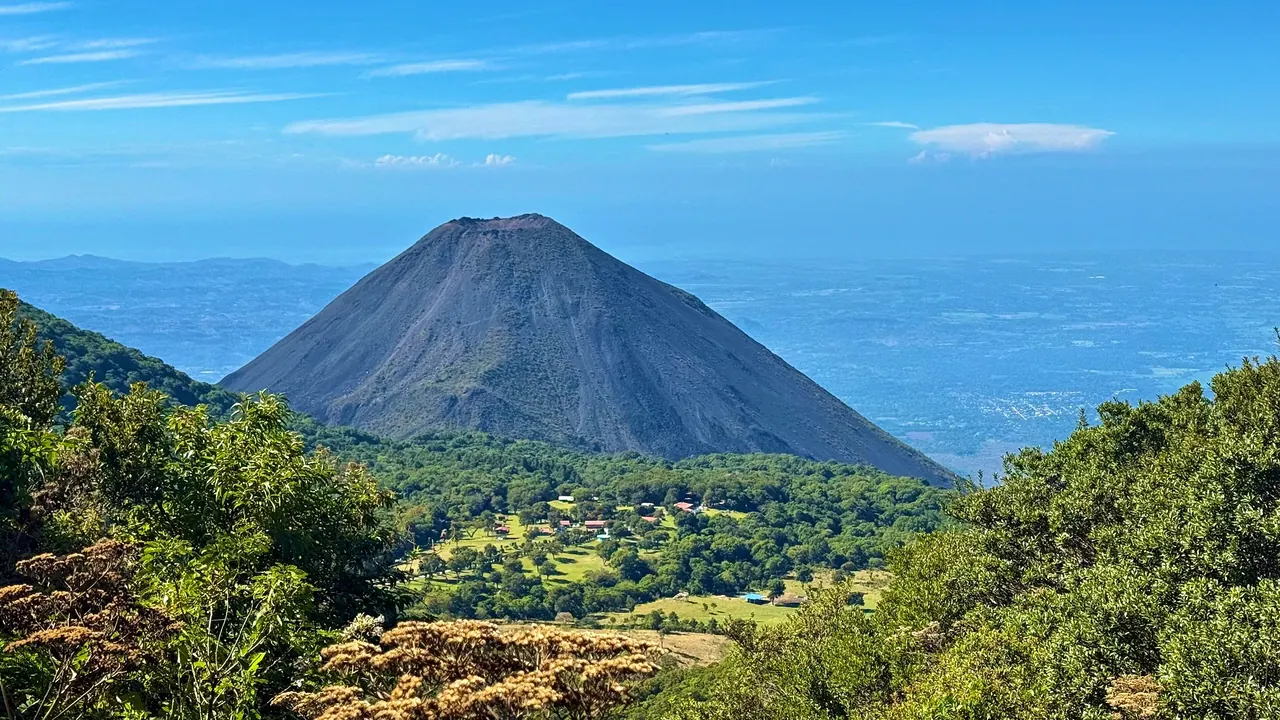
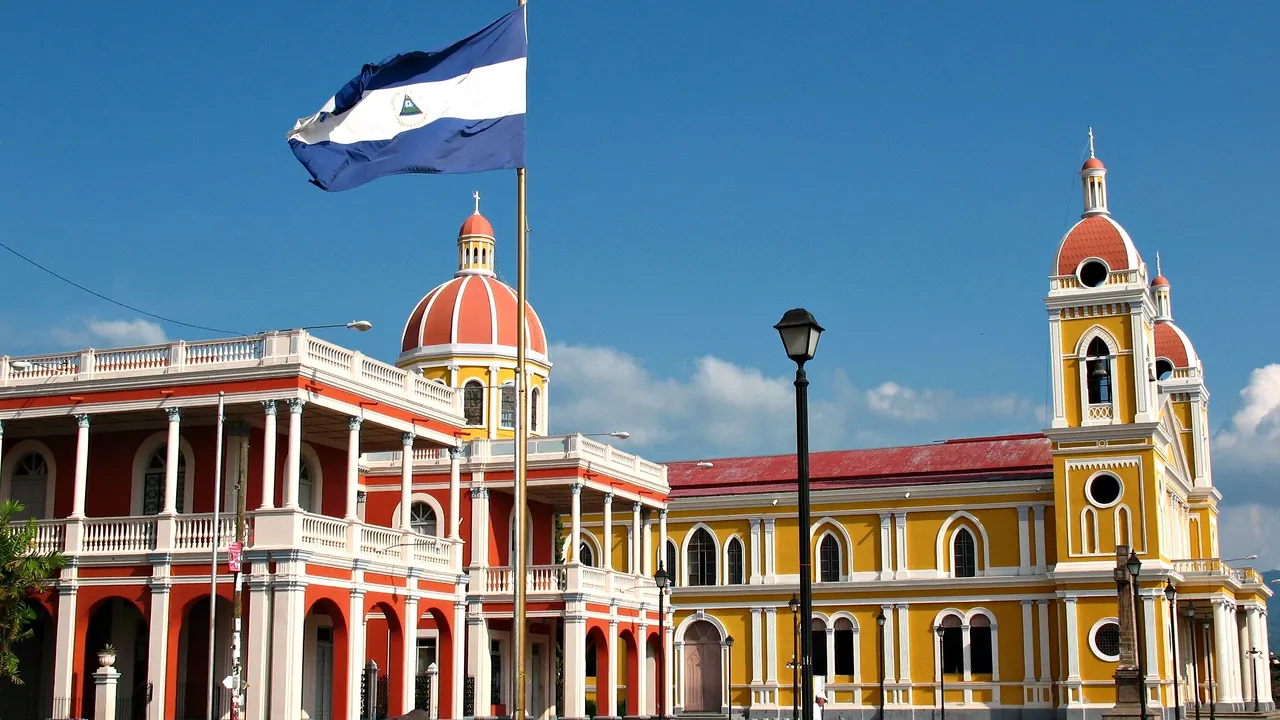
Photos: El Salvador by Dead.rabbit, CC BY-SA 4.0, cropped; Nicaragua by Elemaki, CC BY 3.0, cropped.
El Salvador or Nicaragua?
Our verdict in twelve categories, each scored against the same fixed benchmark cities, and the climate month by month, so you can choose for your trip.
Choose El Salvador for
- food and drink
- families
- shopping
El Salvador suits a compact, active trip where you want to cover a lot without long journeys. The Santa Ana volcano, the coffee towns of the Ruta de las Flores, the surf breaks at El Tunco and El Zonte and the capital's restaurants all sit within a couple of hours of each other. It is a good choice for surfers and for anyone with a week who would rather spend it doing things than travelling between them. The pupusa culture also gives everyday eating a bit more character.
Choose Nicaragua for
- prices
- culture and sights
- nature and the outdoors
Nicaragua rewards a longer, slower journey and a smaller budget. Granada and León are proper colonial cities to stay in, the volcano list runs from sandboarding Cerro Negro to climbing Concepción on Ometepe, and the Corn Islands add Caribbean water that El Salvador cannot offer. Travellers who want more history and more adventure, and want their money to go further, will get more from it, as long as they accept ferries, flights and bumpy roads along the way.
Scoreboard
Twelve categories on one fixed scale from 0 to 100. The shaded stretch is the gap between the two.
Your match
Pick a travel style or drag the sliders, and both match scores follow your weighting.
Wins on food and drink and families with your weighting.
Wins on prices and culture and sights with your weighting.
What matters to you?
Category by category
What the scores mean for a trip.
Beaches & swimming
Both countries have a Pacific surf coast that is warm and beautiful but rough, with rip currents on many beaches. El Salvador's shore is darker and rockier, made of volcanic sand and boulder points, and it is close to everything. For calmer swimming you head to the long beach at Costa del Sol or the bays at Las Flores and El Cuco.
Nicaragua's wild bays from Popoyo to San Juan del Sur are similar, though its sheltered coves are easier for a swim. What really sets it apart is choice. Laguna de Apoyo offers warm, calm crater-lake swimming, and the Corn Islands have white sand and turquoise water for snorkelling, though they take a flight and, for Little Corn, a boat.
Where in El Salvador: Costa del Sol, El Cuco and Las Flores, El Tunco and El Zonte, Los Cóbanos
Where in Nicaragua: Corn Islands, San Juan del Sur, Popoyo, Laguna de Apoyo
Food & drink
El Salvador has a slight edge, thanks to the pupusa. Pupuserías are everywhere and Olocuilta is famous for them. Juayua's weekend food fair and the coffee farms of the Ruta de las Flores give you food worth planning a day around, and San Benito and Santa Tecla have a real cluster of restaurants.
Nicaragua's cooking is plainer: gallo pinto, vigorón around Granada's square and evening fritanga grills. Its strengths are aged rum and the coffee hills of Matagalpa. Outside Granada, León and San Juan del Sur, the choice is narrow.
Where in El Salvador: San Salvador, Juayua, Ruta de las Flores, Olocuilta
Where in Nicaragua: Granada, León, Masaya, Matagalpa
Culture & sights
Nicaragua has clearly more to see. Granada and León are both colonial cities where you can spend days, with the yellow cathedral and Convento San Francisco in one and Central America's largest cathedral and its revolutionary museum in the other. León Viejo and the petroglyphs on Ometepe add depth.
El Salvador's heritage is smaller but has its own interest. Joya de Cerén shows ordinary Maya village life preserved under ash, Suchitoto is a tidy colonial town, and the capital is closely tied to the memory of Archbishop Romero. You can see it all in a few days.
Where in El Salvador: Joya de Cerén, Suchitoto, San Salvador, Santa Ana and Tazumal
Where in Nicaragua: León, Granada, León Viejo, Ometepe
Nightlife
Nicaragua is a little livelier on an ordinary night. León's student bars keep going through the week, Calle La Calzada in Granada fills with terraces, and San Juan del Sur is a backpacker party town with its pool-party crawl.
El Salvador's going out is more of a weekend affair. Thursday to Saturday is when the cocktail bars and clubs of San Benito and the Zona Rosa get busy, along with the pedestrian bar street of Paseo El Carmen and the beach bars of El Tunco. Its clubs are a bit more polished, but most weeknights are quiet.
Where in El Salvador: San Salvador, El Tunco, Santa Tecla
Where in Nicaragua: San Juan del Sur, León, Granada
Nature & outdoors
Both are volcano countries, but Nicaragua offers more variety and more drama. You can sandboard down Cerro Negro, look into the fuming crater of Masaya and climb Ometepe's two lake volcanoes. Add Somoto Canyon, turtle nestings at La Flor and the Río San Juan rainforest, and it outweighs its neighbour.
El Salvador's strength is how compact it is. The Santa Ana climb to its turquoise crater lake, the view over Lake Coatepeque and the cloud forest of Montecristo sit close to the long right-hand point breaks at El Zonte and Punta Roca. Volcano mornings and surf afternoons fit into the same trip with little driving.
Where in El Salvador: Los Volcanes National Park, El Zonte, El Imposible National Park, Ruta de las Flores
Where in Nicaragua: Ometepe, León, Pacific coast, Laguna de Apoyo
Day trips
These are evenly matched, but they work differently. Because El Salvador is so small, nearly the whole country is a day out from San Salvador or Santa Ana: the mural towns of the Ruta de las Flores, Suchitoto, and Joya de Cerén with San Andrés and Tazumal in one go.
In Nicaragua, day trips revolve around Granada. Masaya's market, the potters and lookouts of the Pueblos Blancos and a boat through Las Isletas are all within an hour. Its best places, Ometepe and the Corn Islands, need overnight stays instead.
Where in El Salvador: Ruta de las Flores, Suchitoto, Joya de Cerén and San Andrés, Panchimalco
Where in Nicaragua: Granada, León, Masaya
Good for families
Neither country is easy with small children, though El Salvador is a little more manageable. It has a children's museum in Tin Marín, a zoo and the spring-fed pools of the turicentros where local families spend weekends. Costa del Sol is the calm beach.
Nicaragua's family moments are outdoors: calm water at Laguna de Apoyo, monkeys on Las Isletas and turtle-watching near San Juan del Sur. Long bumpy journeys and limited medical care outside Managua make it better suited to older, adventurous children.
Where in El Salvador: San Salvador, Costa del Sol
Where in Nicaragua: Laguna de Apoyo, Granada, San Juan del Sur
Getting around
Getting around is broadly similar: old school buses for the brave, shuttles or drivers for most visitors, and no trains. El Salvador is smaller and its highways are good, so a hire car brings everything within about two hours, although San Salvador itself is too spread out to walk.
Nicaragua's main route from León to San Juan del Sur is easy by shuttle, and Granada and León are flat towns you can walk. Once you leave it, you need a lake ferry to Ometepe and a flight to the Corn Islands, and many surf beaches are reached by dirt roads.
Where in El Salvador: Suchitoto, Ruta de las Flores, La Libertad surf coast
Where in Nicaragua: Granada, León, San Juan del Sur
Shopping & style
In both countries shopping means crafts, coffee and little else. El Salvador's crafts come from particular towns: painted naïve woodwork from La Palma, tiny clay figures from Ilobasco and indigo textiles from Suchitoto. Conveniently, they are all gathered in one market in the capital.
Nicaragua's centre is Masaya's old market hall, where you can buy handwoven hammocks, leather and painted gourds. Nearby, San Juan de Oriente makes burnished pottery, and a bottle of aged rum is the obvious extra to bring home.
Where in El Salvador: San Salvador, La Palma, Ilobasco, Suchitoto
Where in Nicaragua: Masaya, San Juan de Oriente, Granada
Affordability
Nicaragua is the cheaper of the two, and the difference shows across the whole trip. León's comedores and rooms, and Ometepe's farm stays and guesthouses, cost very little. Even Granada's boutique hotels have cheaper streets nearby, and the main extra costs are volcano tours and the Corn Islands flight.
El Salvador is cheap for pupusas, buses and park entry, and the Ruta de las Flores and Suchitoto are good for stretching a budget. Comfort raises costs quickly, though. Boutique stays at El Zonte and the reliance on hire cars or shuttles make a comfortable trip moderately priced.
Where in El Salvador: Ruta de las Flores, Suchitoto, El Tunco
Where in Nicaragua: León, Ometepe, Granada
Live music & performing arts
Neither country is a place to plan a trip around performances, but what you might find differs. In El Salvador, live performance is mostly indoors at San Salvador's Teatro Nacional, home to the national symphony and ballet. The theatre in Santa Ana is worth seeing for the building alone.
Nicaragua's live culture is in the street. There is marimba and folk dance at Masaya's patron saint festivities, and the masked satire of El Güegüense at Diriamba's fiestas. These are worth catching if your dates line up.
Where in El Salvador: San Salvador, Santa Ana
Where in Nicaragua: Masaya, Diriamba, Managua
Wellness & relaxation
Neither offers much beyond a slow pace, but El Salvador has the one thing that comes close to a spa: geothermal hot-spring pools in gardens near Ahuachapán. Lake Coatepeque and the yoga retreats of El Zonte add quiet days.
Nicaragua's appeal is in places where there is simply nothing to do. Little Corn and Ometepe have hardly any cars, the crater-lake lodges at Laguna de Apoyo offer massages and gentle swims, and there are surf-and-yoga lodges around Playa Maderas.
Where in El Salvador: Ahuachapán, Lake Coatepeque, El Zonte
Where in Nicaragua: Playa Maderas, Laguna de Apoyo, Little Corn Island, Ometepe
When should you go?
Pick your month, and for a country the place in it. The climate figures are measured averages, not a forecast.
Where in Nicaragua
San Salvador (El Salvador) in July
Granada, Nicaragua (Nicaragua) in July
Daytime high, °C
Rainfall in the month, mm
Where the figures come from
Granada, Nicaragua (Nicaragua)'s temperatures are measured 34 km from the centre, at Managua A. C. Sandino.
Granada, Nicaragua (Nicaragua) has no rain gauge within 25 km of the centre, so its rainfall comes from a gridded climate dataset read at the destination rather than from a gauge further away.
Temperature and rainfall are climate normals, averaged over the years shown. San Salvador (El Salvador): 1994-2020 (rainfall 1961-1990) normals, San Salvador / Ilopango (8.1 km from centre). Granada, Nicaragua (Nicaragua): 1961-1990 (sunshine 1991-2020, rainfall 1991-2020) normals, Managua A. C. Sandino (33.7 km from centre).
El Salvador's dry season runs from November to April, and San Salvador gets almost no rain from December to March. The rain sets in during May and is heavy from June to September, with July the wettest month at about 336mm, then eases through October. Highs stay in the low thirties all year, so sightseeing is warm work in any month. The sea is warm enough to swim in all year and reaches 30°C in the wet middle months, so for the beach the rain matters more than the water.
Nicaragua has the same dry and wet pattern, but its rain comes later. Granada is wettest in October, and San Juan del Sur on the coast is wetter still that month. Granada also gets a short easing in July between two wetter spells. The end of the dry season is hotter than in El Salvador. Granada reaches 35°C in April, and the coast at San Juan del Sur hits 36°C in March and April, so January and February are the most comfortable months for walking Granada's streets and climbing volcanoes. Granada is sunniest in March and April. Early in the year the Pacific there is a little cooler, around 26°C, but still pleasant for a swim. Nicaragua is wetter than San Salvador in October and November, so El Salvador is the safer choice as the dry season begins.
Which traveller are you?
For a culture and arts trip, Nicaragua is the stronger choice. You can stay in two colonial cities rather than visit one small town, walk across the roof of León's cathedral, and see pre-Columbian statues from the lake islands in Granada.
On a trip on a tight budget, Nicaragua lets you manage without a car. Local buses cover the route from León to San Juan del Sur, both colonial cities are flat and walkable, and you can get round Ometepe by bicycle. El Salvador's buses are harder to use without Spanish.
On a family trip with older children, El Salvador is the easier of the two. Its main sights sit within about two hours of each other on good highways, with no ferries or flights. Teenagers can climb Santa Ana or take surf lessons on the gentler breaks.
More comparisons
Each shares a side with El Salvador or Nicaragua.
Where else could you go?
Set El Salvador or Nicaragua against any other country.