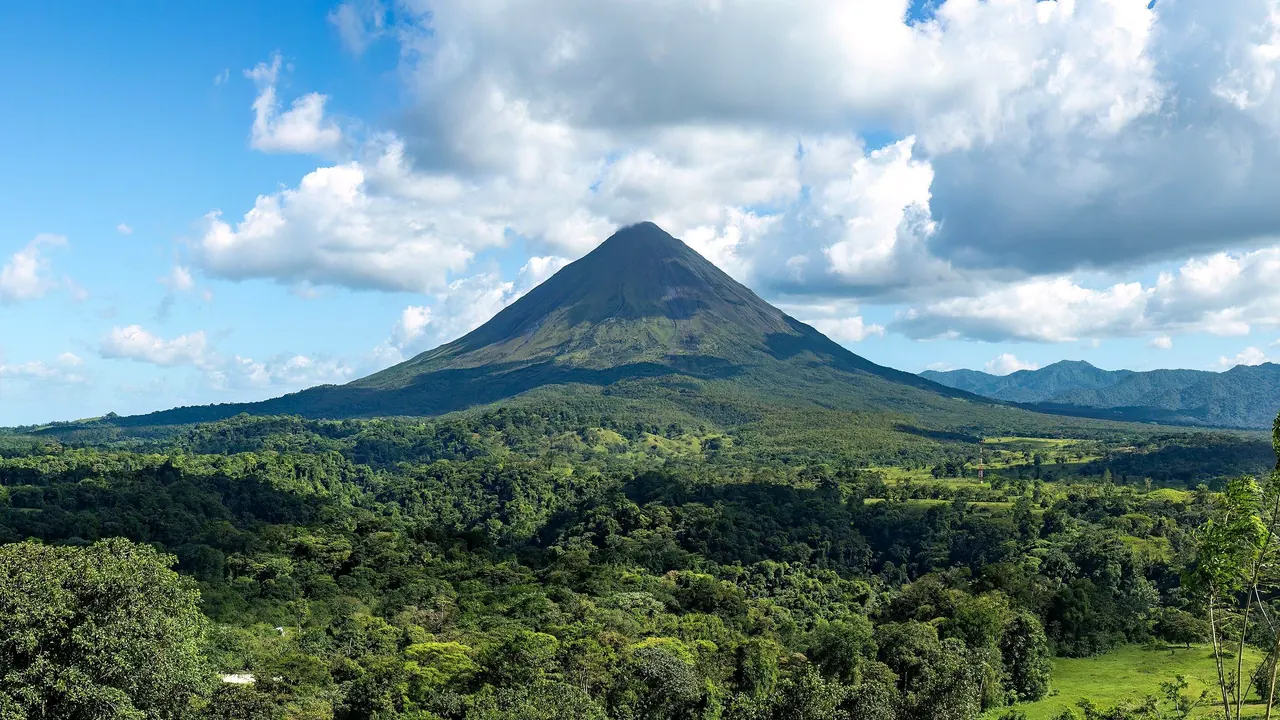
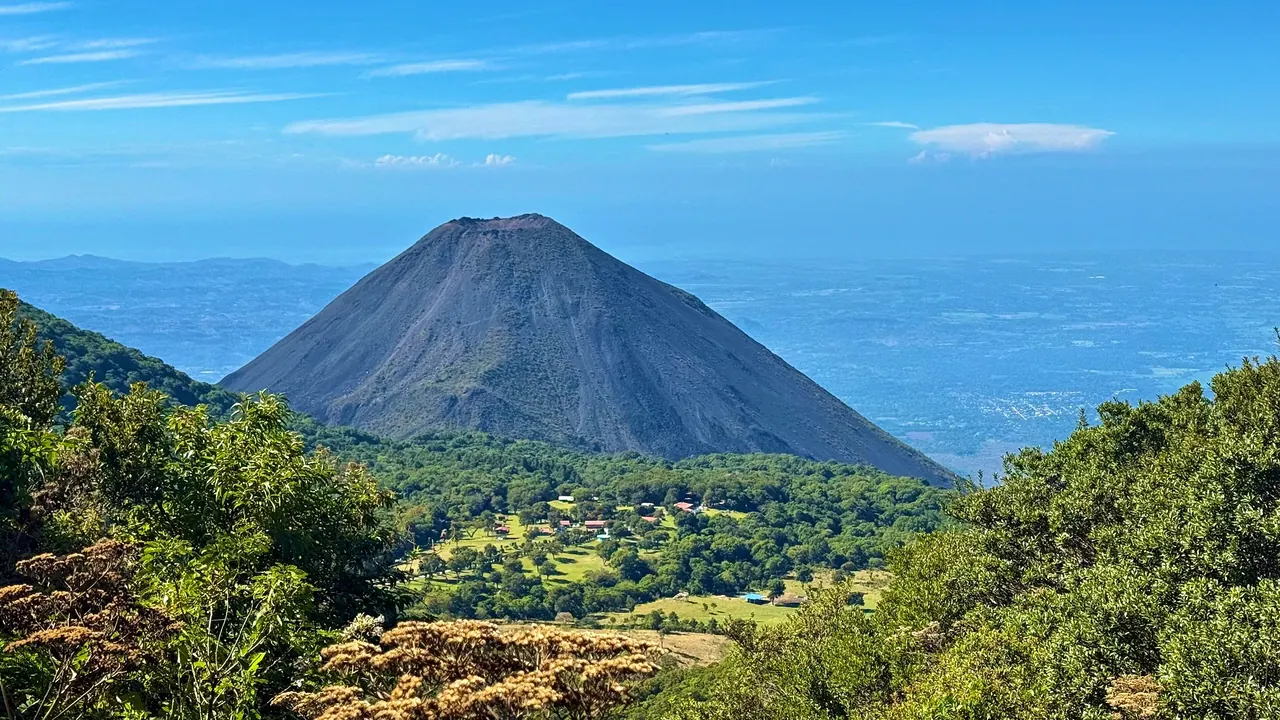
Photos: Costa Rica by Rhododendrites, CC BY-SA 4.0, cropped; El Salvador by Dead.rabbit, CC BY-SA 4.0, cropped.
Costa Rica or El Salvador?
Our verdict in twelve categories, each scored against the same fixed benchmark cities, and the climate month by month, so you can choose for your trip.
Choose Costa Rica for
- wellness
- families
- beaches
Costa Rica is the stronger choice when the trip is about wild places and time on the beach. Cloud forest at Monteverde, the volcano and hot springs at Arenal, the rainforest of the Osa Peninsula and the sheltered bays of Guanacaste are hard to match. It also works well for families and for anyone who wants yoga, thermal pools and early nights. The catches are cost and slow roads, so it rewards a longer trip with two or three bases.
Choose El Salvador for
- prices
- day trips
- shopping
El Salvador is for travellers who want a smaller, cheaper country where everything is close. You can climb the Santa Ana volcano, surf the point breaks at El Zonte, walk the cobbles of Suchitoto and see the buried Maya village of Joya de Cerén within a few days, mostly as easy day outings. It has a little more heritage and far lower everyday costs. Its coast is rough, though, and there is little made for small children.
Scoreboard
Twelve categories on one fixed scale from 0 to 100. The shaded stretch is the gap between the two.
Your match
Pick a travel style or drag the sliders, and both match scores follow your weighting.
Wins on wellness and families with your weighting.
Wins on prices and day trips with your weighting.
What matters to you?
Category by category
What the scores mean for a trip.
Beaches & swimming
Costa Rica has the better beaches, mainly because you can choose. Guanacaste's sheltered bays, such as Conchal and the Papagayo coves, give calm water and dependable dry-season sun. Sámara's reef-protected bay is gentle too, Manuel Antonio puts rainforest behind the sand, and the Caribbean coves around Punta Uva offer a second season.
El Salvador has one Pacific shore of dark volcanic sand and boulder points, built for surfing at El Tunco and El Zonte. Calm swimming is limited to places like Costa del Sol and the bays of El Cuco and Las Flores. Both seas are equally warm, but only Costa Rica reliably has easy water for swimming.
Where in Costa Rica: Guanacaste, Nicoya Peninsula, Manuel Antonio, Southern Caribbean coast
Where in El Salvador: Costa del Sol, El Cuco and Las Flores, El Tunco and El Zonte, Los Cóbanos
Food & drink
The two are about level. In both, the cooking is honest and everyday, and neither is a reason to travel. Costa Rica's staples are the casado and gallo pinto from small sodas, with good ceviche on both coasts. Its most distinctive cooking is the coconut-rich Afro-Caribbean food around Puerto Viejo and Cahuita.
El Salvador's signature is the pupusa, a stuffed corn tortilla served with pickled cabbage. You will find it everywhere, and towns like Olocuilta are known for it. Juayua's weekend food fair is the liveliest place to eat. Both countries grow fine coffee and serve it on the farm, in Tarrazú and the Central Valley or along the Ruta de las Flores.
Where in Costa Rica: San José, Southern Caribbean coast, Central Valley, Tarrazú
Where in El Salvador: San Salvador, Juayua, Ruta de las Flores, Olocuilta
Culture & sights
El Salvador has a little more to see, though neither country is a culture destination. Joya de Cerén preserves the homes of ordinary Maya farmers under volcanic ash, Suchitoto is a properly kept colonial town, and San Salvador ties its sights to the memory of Archbishop Romero.
Costa Rica's culture is concentrated in San José, where the National Theatre and the Gold and Jade museums hold real quality. Outside the capital it is thinner, with the basilica at Cartago, the old church at Orosi and the curious stone spheres of the Diquís delta.
Where in Costa Rica: San José, Cartago, Orosi Valley, Diquís Delta
Where in El Salvador: Joya de Cerén, Suchitoto, San Salvador, Santa Ana and Tazumal
Nightlife
Costa Rica has more going on after dark. San José combines the craft beer and cocktail bars of Barrio Escalante with salsa clubs, and Tamarindo and Jacó keep their beach bars busy late through the dry season. Puerto Viejo adds reggae and dancehall nights.
El Salvador's nights are mostly a weekend affair. You will find cocktail bars in San Benito and the Zona Rosa, street bars along Santa Tecla's Paseo El Carmen and reggaeton in El Tunco. On weeknights all of them go quiet.
Where in Costa Rica: San José, Tamarindo, Puerto Viejo, Jacó
Where in El Salvador: San Salvador, El Tunco, Santa Tecla
Nature & outdoors
Costa Rica is one of the great nature destinations, and El Salvador is good rather than exceptional. Costa Rica has the quetzals of Monteverde's cloud forest, tapirs and scarlet macaws in Corcovado, turtle nesting at Tortuguero, whales off Marino Ballena and serious rafting on the Pacuare. The range and the density of wildlife are on another level.
El Salvador's strength is its volcanoes. The climb up Santa Ana ends at a turquoise crater lake above Lake Coatepeque, and El Boquerón is a short drive from the capital. Its right-hand point breaks at El Zonte and Punta Roca rival anything in Costa Rica, and they sit close enough to the volcanoes to combine in one trip.
Where in Costa Rica: Arenal, Monteverde, Osa Peninsula, Tortuguero
Where in El Salvador: Los Volcanes National Park, El Zonte, El Imposible National Park, Ruta de las Flores
Day trips
El Salvador is the better country for day trips, because it is small enough to see most of it from San Salvador or Santa Ana. The Ruta de las Flores links Juayua, Apaneca and Ataco with their murals and coffee. Suchitoto, Joya de Cerén, San Andrés and Panchimalco are all easy outings.
In Costa Rica, a day out usually means forest or sea rather than towns. Town outings are mostly limited to the Central Valley, with Cartago and the Orosi valley to the east and Sarchí's painted ox-carts to the northwest.
Where in Costa Rica: Central Valley, Cartago, Orosi Valley, Sarchí
Where in El Salvador: Ruta de las Flores, Suchitoto, Joya de Cerén and San Andrés, Panchimalco
Good for families
Costa Rica is far easier with children. Rescue centres near La Fortuna and Manuel Antonio, wildlife walks full of sloths and frogs, child-sized ziplines and Arenal's hot pools keep them busy, and Guanacaste's calm bays at Flamingo and Hermosa suit young swimmers. The one warning is to limit long winding drives.
El Salvador's options are a children's museum and a zoo in the capital, plus turicentro pools. The surf coast is rough for small swimmers, so families usually end up at Costa del Sol or a hotel pool.
Where in Costa Rica: Arenal, Guanacaste, Manuel Antonio, Southern Caribbean coast
Where in El Salvador: San Salvador, Costa del Sol
Getting around
Both are car-and-shuttle countries with slow, confusing public buses, so neither is easy. The difference is distance. In Costa Rica, mountain roads turn short hops into two- or three-hour drives, and the far corners such as the Osa Peninsula and Tortuguero are best reached by small plane.
El Salvador's good highways put the capital, the surf coast, Santa Ana and the highlands within about two hours of one another. The trade-off is a sprawling capital that is not made for walking, whereas San José's centre is walkable on its pedestrian streets.
Where in Costa Rica: Central Valley, Arenal, Guanacaste
Where in El Salvador: Suchitoto, Ruta de las Flores, La Libertad surf coast
Shopping & style
El Salvador has somewhat more to buy, and almost all of it is craft: brightly painted wood from La Palma, Ilobasco ceramics, Suchitoto's indigo textiles and wicker from Nahuizalco. The national crafts market in San Salvador gathers them in one place.
Costa Rica's best things to take home are farm coffee, Sarchí ox-cart crafts and Boruca masks. Beyond those and the stalls of the Mercado Central, its beach towns offer mostly surf shops.
Where in Costa Rica: San José, Sarchí
Where in El Salvador: San Salvador, La Palma, Ilobasco, Suchitoto
Affordability
El Salvador is much cheaper. Pupusas, comedor set lunches, cheap buses, modest park fees and old-house guesthouses in Suchitoto or Ataco keep a simple trip very low-cost. It only becomes moderately priced once you add boutique hotels and private transport.
Costa Rica prices lodges and guided activities close to North American levels, especially in Guanacaste, Manuel Antonio and La Fortuna, and car hire with compulsory insurance adds a lot. Sodas, cabinas, the Caribbean coast and the green season soften the bill without making it a bargain.
Where in Costa Rica: Southern Caribbean coast, Central Valley
Where in El Salvador: Ruta de las Flores, Suchitoto, El Tunco
Live music & performing arts
The two are about equal, and in both countries performance comes down to one grand theatre in the capital. San José's gilded National Theatre has a regular symphony season with opera and dance. San Salvador's Teatro Nacional hosts the national orchestra and ballet, and Santa Ana's theatre is worth seeing for the building. The local music differs: calypso on Costa Rica's Caribbean coast, cumbia and marimba at Salvadoran town fiestas.
Where in Costa Rica: San José, Southern Caribbean coast
Where in El Salvador: San Salvador, Santa Ana
Wellness & relaxation
Costa Rica is the place to unwind. The thermal rivers and lagoons below the Arenal volcano make an evening soak part of almost any itinerary, and Rincón de la Vieja adds mud baths. Nosara and Santa Teresa are built around yoga retreats and slow surf-town days.
El Salvador has the same volcanic heat on a much smaller scale, with garden hot springs near Ahuachapán and a few yoga spots at El Zonte. Lake Coatepeque is its calmest place for a few quiet days, but you would not plan a trip around it.
Where in Costa Rica: Arenal, Nosara, Santa Teresa, Rincón de la Vieja
Where in El Salvador: Ahuachapán, Lake Coatepeque, El Zonte
When should you go?
Pick your month, and for a country the place in it. The climate figures are measured averages, not a forecast.
Where in Costa Rica
San Jose, Costa Rica (Costa Rica) in July
San Salvador (El Salvador) in July
Daytime high, °C
Rainfall in the month, mm
Where the figures come from
San Jose, Costa Rica (Costa Rica)'s station stands 241 m below the city centre, so the centre is likely a little cooler than the figures say.
Temperature and rainfall are climate normals, averaged over the years shown. San Jose, Costa Rica (Costa Rica): 1991-2020 (sunshine 1971-2000) normals, Juan Santamaria (16.8 km from centre). San Salvador (El Salvador): 1994-2020 (rainfall 1961-1990) normals, San Salvador / Ilopango (8.1 km from centre).
Both countries follow the same broad pattern: hot all year, with a dry season from about December to April and heavy rain from May to October, so rain matters more than temperature when choosing a month. In Costa Rica, Guanacaste is the dry-season beach base and gets almost no rain from January to March, though by March and April the afternoons reach 36°C, which is hard work away from the water. San José in the Central Valley is milder and sunniest from January to March. Around La Fortuna and Arenal it rains in every month, least in March and April, and October brings more than 420mm. The Caribbean coast keeps a different season and is often at its best in September and October, when the Pacific side is at its wettest.
El Salvador's dry season runs from November to April, the best time for the volcano climbs and for walking the colonial towns, though San Salvador is hot through March and April. June to September is the wettest stretch, with more than 300mm in each of those months. The sea stays at 28°C to 30°C all year, and surfers often aim for March to October, when the point breaks work best, accepting the afternoon rain.
Which traveller are you?
On a family trip with children, Costa Rica is the easier choice: wildlife children remember, turtle nights at Tortuguero for older ones and family-run lodges. El Salvador has little made for children, its heat is hard work, and its surf beaches are rough for young swimmers.
For a trip on a tight budget, El Salvador goes much further. Costa Rica's lodges and guided outings cost close to North American levels. In El Salvador, pupusas, comedor lunches and local buses cost little, and El Tunco has plenty of surf hostels.
On a relaxing and wellness trip, Costa Rica has rest built in, with an evening soak in Arenal's thermal rivers and spa treatments and open-air yoga at jungle lodges. El Salvador's garden hot springs near Ahuachapán make a pleasant pause between activities, not a reason to go.
More comparisons
Each shares a side with Costa Rica or El Salvador.
 Aruba vs Costa Rica
 Bali vs Costa Rica
 Belize vs Costa Rica
 Costa Rica vs Cancun
 Costa Rica vs Colombia
 Costa Rica vs Ecuador
 Costa Rica vs Guatemala
 Costa Rica vs Hawaii
 Costa Rica vs Honduras
 Costa Rica vs Mexico
 Costa Rica vs Nicaragua
 Costa Rica vs Peru
 Costa Rica vs Puerto Rico
 Cuba vs Costa Rica
 Dominican Republic vs Costa Rica
 El Salvador vs Guatemala
- El Salvador vs Nicaragua
- Honduras vs El Salvador
 Jamaica vs Costa Rica
 Panama vs Costa Rica
 The Bahamas vs Costa Rica
Where else could you go?
Set Costa Rica or El Salvador against any other country.