San Salvador
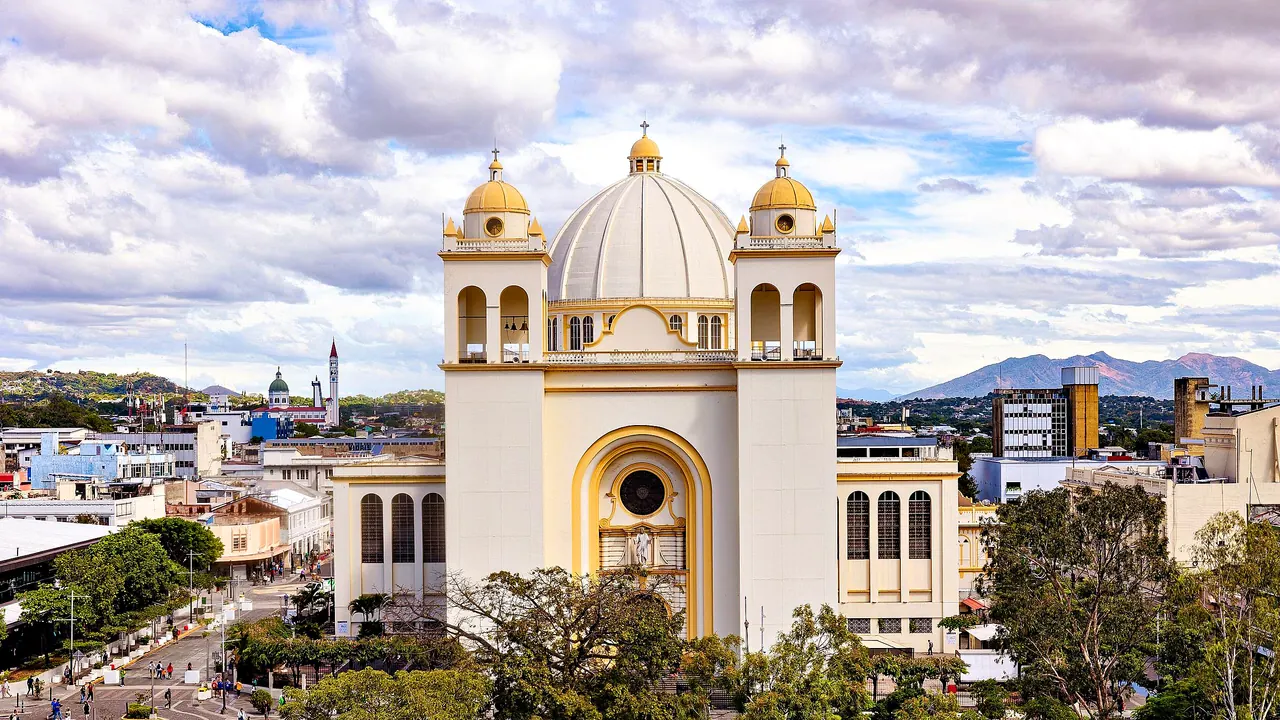
The Metropolitan Cathedral and its square, with the volcano behind
- Nature & outdoors70
- Affordability68
- Day trips62
Photo: Arne Müseler, CC BY-SA 3.0 DE, cropped
Match
43
Every category weighted equally
- Beach & sun46
- Culture & arts40
- Food & nightlife40
- Family trip47
- Outdoors51
- Relax & unwind44
- Shopping & style39
- On a budget46
San Salvador in twelve categories
Our verdict on each, scored 0 to 100 against the same fixed benchmark cities, so a score means the same thing on every page.
Beaches & swimming. Scores 52 out of 100.
Food & drink. Scores 46 out of 100.
Culture & sights. Scores 33 out of 100.
Nightlife. Scores 36 out of 100.
Nature & outdoors. Scores 70 out of 100.
Day trips. Scores 62 out of 100.
Good for families. Scores 38 out of 100.
Getting around. Scores 27 out of 100.
Shopping & style. Scores 36 out of 100.
Affordability. Scores 68 out of 100.
Live music & performing arts. Scores 27 out of 100.
Wellness & relaxation. Scores 24 out of 100.
San Salvador category by category
Beaches & swimming
52San Salvador sits inland at about 650m, so beaches are an outing rather than part of daily life. The La Libertad coast is the nearest, roughly 40 minutes to an hour away by road. El Tunco, El Sunzal and El Zonte line a shore of dark volcanic sand and rock points, and the Pacific is warm, around 28°C for most of the year.
The catch is the water. This is a surf coast with powerful waves and rip currents, and many stretches are better for watching or surfing than for swimming. Calmer, longer beaches lie further east along the Costa del Sol, about an hour away. Most visitors stay at the coast for a night or two rather than commuting from the city.
Food & drink
46The heart of eating here is the pupusa, a thick corn or rice tortilla stuffed with cheese, beans, pork or loroco flower and served with pickled cabbage and tomato salsa. Pupuserías are everywhere, from roadside griddles to family dining rooms, and the town of Olocuilta on the road to the coast is known for its rice versions. Panes con pollo, yuca frita, tamales and sweet atol fill out a cheap, filling street-food repertoire.
El Salvador grows excellent highland coffee, and good cafés serving single-estate beans are easy to find in San Benito and Escalón. Beyond that the range thins: these districts and nearby Santa Tecla have steakhouses, seafood and international places, but little fine dining and not much depth.
Culture & sights
33Repeated earthquakes have left San Salvador with little colonial fabric, but the historic centre around Plaza Barrios has some worthwhile sights. The Metropolitan Cathedral holds the tomb of Saint Óscar Romero, and the neoclassical National Palace and the ornate National Theatre sit close by. Nearby, the Iglesia El Rosario is a striking concrete arch with stained glass that turns the interior into colour.
The best museums are in the western districts. The national anthropology museum (MUNA) gives a clear introduction to the country's Maya and Pipil past, and the MARTE covers Salvadoran art. The Monumento al Divino Salvador del Mundo is the city's emblem. Allow two days; the major heritage sites are outside the city.
Nightlife
36Going out centres on a few districts. Zona Rosa and the streets of San Benito have cocktail bars, lounges and a handful of clubs, and Santa Tecla's Paseo El Carmen, a pedestrian street just west of the city, fills with bars and terraces at weekends. Thursday to Saturday are the lively nights. The rest of the week is quiet.
The scene is local, well dressed and mostly reached by car or taxi, with little street life linking one area to another. It is pleasant for an evening out, but it is not a reason to choose the city. The beach towns on the coast keep a looser, backpacker-style party going at weekends.
Nature & outdoors
70The city lies in a valley of volcanoes, and the landscape is close. The San Salvador volcano rises on the western edge, and short paths in El Boquerón park circle a deep crater with a small cone inside. Lake Ilopango fills a vast caldera just east of the city, and Lake Coatepeque, a deep blue crater lake ringed by steep green walls, is under an hour away.
About an hour and a half west, the Santa Ana volcano is the country's classic hike, a guided climb to a turquoise crater lake with views over Izalco and Coatepeque. The coffee highlands offer waterfalls and cool forest walks. On the coast, the right-hand point breaks around El Tunco and El Zonte draw surfers all year. The dry season from November to April is best for hiking.
Day trips
62El Salvador is small, so much of the country fits into a day. Joya de Cerén, about 40 minutes away, is a Maya farming village buried by volcanic ash around 600 AD and preserved down to its kitchens and storehouses. It makes an easy pairing with the ruins of San Andrés, and the pyramid at Tazumal lies near Chalchuapa, a little further west.
Suchitoto, about an hour north, is the best-preserved colonial town, with cobbled streets, a white church and views over Lake Suchitlán. The Ruta de las Flores links coffee-country villages such as Juayúa, Apaneca and Concepción de Ataco, known for murals and weekend food fairs, about an hour and a half to two hours west. Panchimalco and the city of Santa Ana are also within reach.
Good for families
38Salvadoran life is strongly family-centred, and children are welcome in restaurants and public spaces. The Tin Marín children's museum is the main attraction made for them, with hands-on exhibits housed partly in an old aircraft. The national zoo and the shaded lawns and playgrounds of Parque Cuscatlán and Parque Bicentenario add to it. Large air-conditioned malls are where many local families spend their weekends.
The practical side is harder. Distances mean a car or taxi for most outings, pavements are uneven, and the midday heat is tiring. The surf beaches are rough for small children, so the calmer lakes, Coatepeque in particular, often suit young families better.
Getting around
27San Salvador has no metro or tram, and the city sprawls along busy avenues from the historic centre west to Escalón, San Benito and Santa Tecla. The historic centre is compact and pleasant to walk around, but getting between it and the western districts where most visitors stay means a taxi or ride-hailing app. These are cheap and easy to use.
City buses are cheap and cover the whole city, but the routes are confusing for a visitor and the buses are often crowded. Rush-hour traffic can be heavy. For day trips, most people hire a car, book a driver or join a tour.
Shopping & style
36Shopping here mostly means large, modern malls in the western districts, with international chains, cinemas and food courts. Many locals treat them as a cool place to spend an afternoon. There is no traditional shopping street, and independent boutiques are few.
For something local, the national crafts market on the western side of the city gathers goods from around the country. These include the brightly painted naïve wooden pieces from La Palma, ceramics from Ilobasco, hammocks and indigo-dyed textiles. The Mercado Central downtown is a crowded everyday market for produce and household goods rather than souvenirs. Bags of local highland coffee make the most useful thing to take home.
Affordability
68Everyday costs are low. Pupusas and market meals cost very little, city buses are almost free, and ride-hailing across the city is cheap. Museums and parks charge modest entrance fees or nothing at all.
The upper end is a different matter. Comfortable hotels and sit-down restaurants in Escalón and San Benito are priced at international business-city levels rather than at the rates found elsewhere in Central America. Hiring a car or driver for day trips also adds up, since public transport to the sights outside the city is slow and hard to use. A visitor who eats locally and stays in simple guesthouses will spend little; one who stays in business hotels and eats out in the western districts will not find it a bargain.
Live music & performing arts
27The National Theatre in the historic centre is the main stage, an early twentieth-century hall with a painted ceiling. The national symphony orchestra, ballet and touring productions perform there and at the Teatro Presidente. Programmes are irregular, though, and a short stay may not coincide with anything.
Live music is easier to find in bars around San Benito and Santa Tecla at weekends, mostly local rock, cumbia and cover bands. There is no distinctive tradition a visitor can reliably catch, and big concerts come through only occasionally.
Wellness & relaxation
24San Salvador is a working capital rather than a place to slow down. Wellness in the city means hotel spas and day spas in the western districts, and there is no bathing tradition of its own. Volcanic hot springs exist near Ahuachapán in the west, but they are about two hours away and make a long excursion.
For rest, most visitors leave the city. They go to quiet lodges on the rim of Lake Coatepeque or to the cooler coffee highlands, where the pace slows.
When should you go?
Pick a month to see what it is like. The climate figures are measured averages, not a forecast.
San Salvador in July
Daytime high, °C
Rainfall in the month, mm
The whole year
Shaded against this destination’s own year: the deepest cell is its best month for that figure and the palest its weakest.
Temperature and rainfall are climate normals, averaged over the years shown. San Salvador: 1994-2020 (rainfall 1961-1990) normals, San Salvador / Ilopango (8.1 km from centre).
Before you go
| Measure | San Salvador |
|---|---|
| Official language | Spanish |
| Currency | US Dollar (USD) |
| Sockets | AB115 V, 60 Hz |
| Driving side | Right |
| Time zone | UTC-6 |
| Emergency number | Police 911, ambulance 911, fire 911/913 |
| Elevation | 670 m |
| Main airport | El Salvador International Airport Saint Óscar Arnulfo Romero y Galdámez (SAL)32 km from centre34 non-stop destinations |
| Public holidays this year | 13 days |
By the numbers
| Measure | San Salvador |
|---|---|
| Population | 330,543 |
| People per km² | 4,572 |
| Museums within 10 km | 9 |
| UNESCO World Heritage sites within 50 km | 1 |
| Swim season, months above 21 °C | 12 months |
Compare San Salvador with
Every comparison with a written verdict behind it.