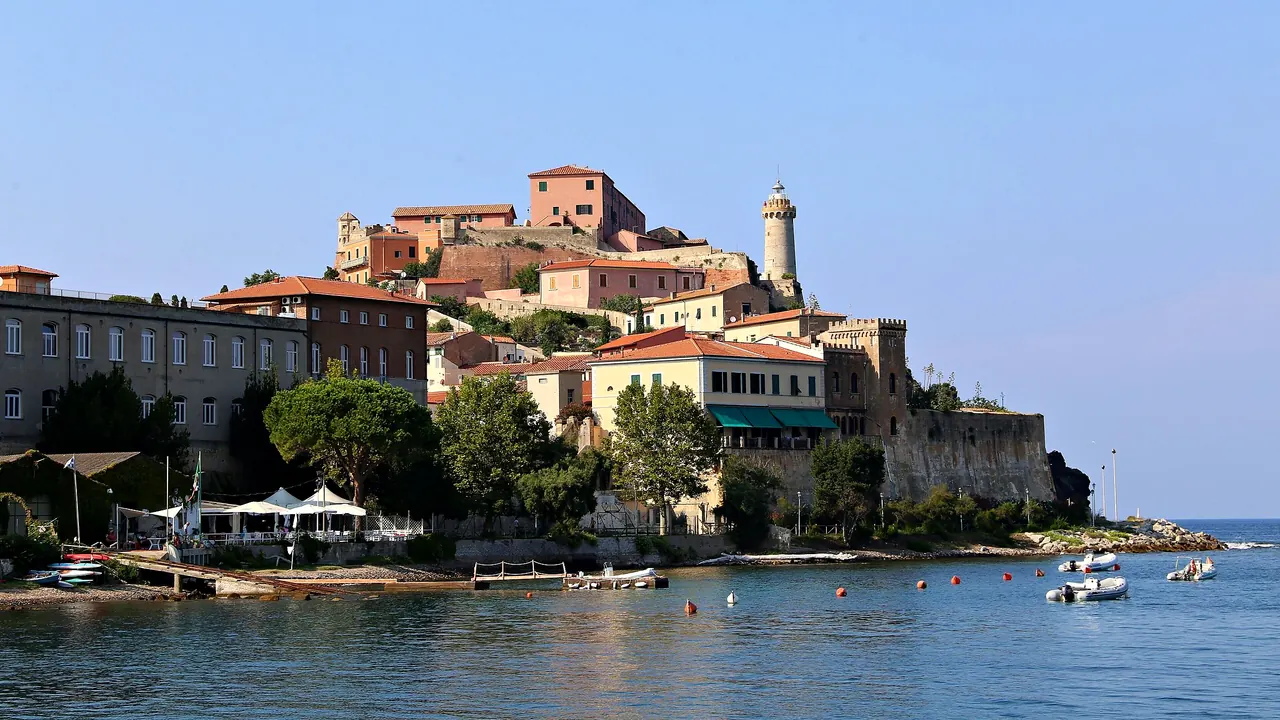
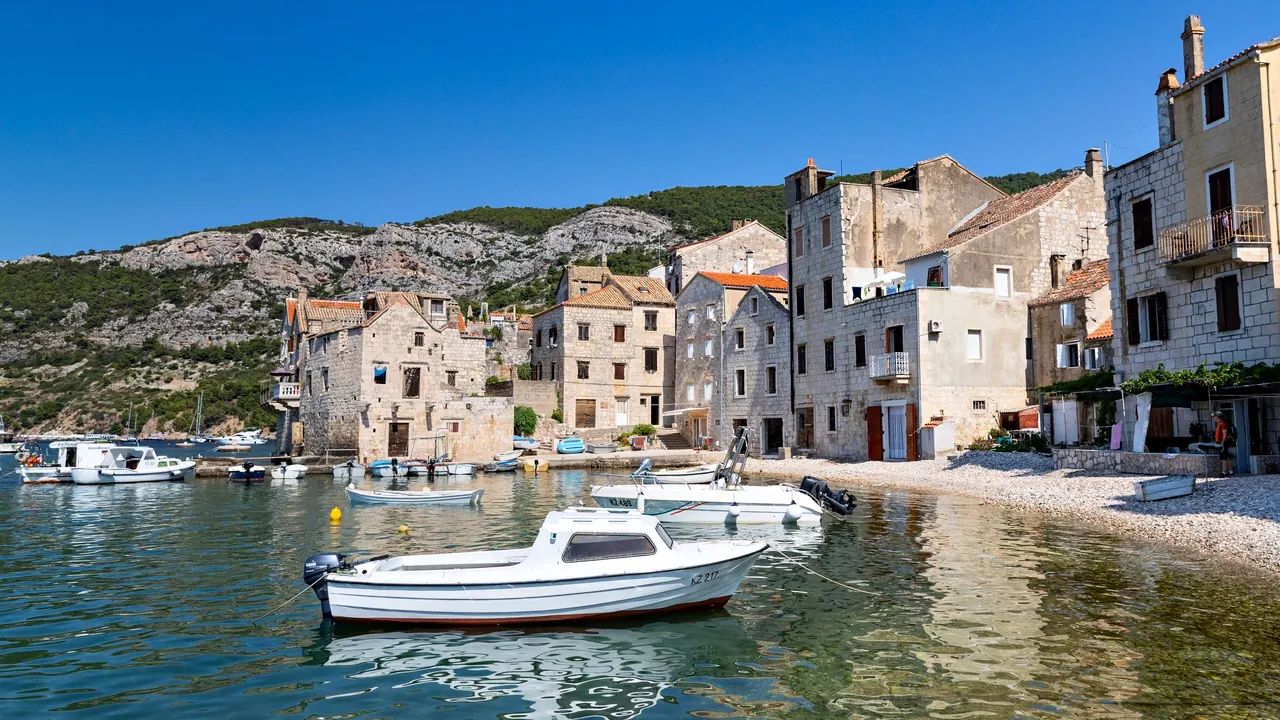
Photos: Elba by Sailko, CC BY 3.0, cropped; Vis by dronepicr, CC BY 2.0, cropped.
Elba or Vis?
Our verdict in twelve categories, each scored against the same fixed benchmark cities, and the climate month by month, so you can choose for your trip.
Choose Elba for
- families
- shopping
- day trips
Elba is the more rounded island and the easier one to reach, only an hour's ferry from the Tuscan coast. Choose it for a family beach vacation on sand, or for sea days mixed with walks on Monte Capanne, Napoleon's Portoferraio and an outing or two to the mainland. It also suits anyone who wants hill villages for dinner and some life in the piazzas on summer evenings.
Choose Vis for
- prices
Vis asks more of you, and what it gives back is distance. It suits couples and independent travellers who are happy to hire a scooter or take taxi boats to pebble coves in exceptionally clear water. You can dive its wrecks and walls and end each day at a harbour table in Komiza. Go knowing there is little to do beyond the sea, the island's odd military past and long dinners.
Scoreboard
Twelve categories on one fixed scale from 0 to 100. The shaded stretch is the gap between the two.
Your match
Pick a travel style or drag the sliders, and both match scores follow your weighting.
Wins on families and shopping with your weighting.
Wins on prices with your weighting.
What matters to you?
Category by category
What the scores mean for a trip.
Beaches & swimming
Both islands are built around sea days, and the main difference is what you lie on. Elba has sand: the long bay at Marina di Campo, gently shelving Lacona and Biodola, and the granite-framed bays of Fetovaia and Cavoli in the south-west. For pebbles there are the white coves of Sansone and Capo Bianco on the north coast.
Vis is almost all pebble and rock with little shade, but its water is among the clearest in the Adriatic, and coves such as Stiniva between its cliffs, Srebrna and Stoncica feel a long way from anywhere. The best of them take a scooter ride or a taxi boat to reach, while on Elba many lie beside a road and a town.
Food & drink
Both islands cook what the boats bring in, but Elba has a little more to work with. There is cacciucco, stuffed squid, the wine-soaked schiaccia briaca and two island wines, Ansonica and Aleatico Passito, and the best trattorias are up in Capoliveri, Marciana and Sant'Ilario. Vis keeps to its konobas, with lobster, peka and the anchovy pogaca of Komiza, and some farms pour their own Vugava and Plavac.
Neither island has fine dining or proper markets, and on both many places close outside summer. Over a week, Elba's hill villages give you a few more places to choose from. On Vis the choice is mostly between Komiza's harbour and the waterfront of Vis town.
Culture & sights
Elba has more to visit. There are Napoleon's Palazzina dei Mulini and his villa at San Martino, the bastioned Medici port of Portoferraio, the star-shaped fortress at Porto Azzurro and the Pisan castle at Marciana, which together make several good half-days.
Vis has less, but it is stranger. The walls of Greek Issa and the bronze head in the harbour fortress museum sit alongside Tito's cave on Hum and the tunnels and submarine pens of a former military zone, which guides take you through. On neither island does history fill the whole trip.
Nightlife
Neither island is for clubbing, but Elba stays up later. In July and August the piazza at Capoliveri and the harbours of Porto Azzurro and Marina di Campo stay full past midnight, and a few open-air discos around Marina di Campo and Procchio run on summer weekends. Vis has harbour tables and a handful of late wine and cocktail bars in Vis town and Komiza, and the whole island is asleep well before dawn.
Nature & outdoors
Elba is the more varied island for being outdoors. Monte Capanne rises to about 1,000m above chestnut woods, the Grande Traversata Elbana follows the ridges from east to west, and the iron-red east has paths past old mines and rough mountain-bike tracks. Much of the island lies within the Tuscan Archipelago National Park.
Vis is drier and emptier: a plateau of vineyards and abandoned terraces, cliffs along the south and the view from Hum, with volcanic islets and sea caves offshore in its geopark. Divers will find excellent wrecks and walls there, but Elba has its own granite reefs and far more walking on land.
Day trips
From Elba you can at least reach the mainland. An hour's ferry to Piombino puts the Etruscan tombs of Populonia, the hill towns of Campiglia Marittima and Suvereto, Massa Marittima and the Bolgheri wine estates within a day, and boats also run to Pianosa and Capraia. From Vis the mainland is too far to go and come back in a day, so outings are boat trips to the Blue Cave on Bisevo, Ravnik and the outer islets, plus a visit to the island's other town.
Good for families
Elba is the easier island with children, and part of that is the pace of an Italian summer. Restaurants welcome children late into the evening, so dinner can come after a long afternoon rest. The drawbacks are the winding hill roads, which can be hard on car-sick children, and August, when the heat and crowds mean getting to the beach early.
Vis is safe and slow, and children can roam the small harbour towns of Vis and Komiza with real freedom. For small swimmers, head for the shallow water at Stoncica in the east or the quieter bays near Komiza. Beyond those, families need to be content with simple sea days, because there is no organised entertainment at all.
Getting around
Elba is closer and simpler to reach: an hour's ferry from Piombino, plus a small airport. Once there you will want a car, scooter or e-bike, because the buses are too sparse to rely on, and in August traffic queues into Portoferraio and the car parks by the beaches fill up.
Vis takes over two hours on the car ferry from Split, or about an hour and a half on the catamaran, and there are few sailings. Vis town and Komiza are linked by bus and are easy to walk around, but the coves mean a scooter on winding roads or a taxi boat.
Shopping & style
There is little to buy on either island, but Elba is good for an evening's browsing. The lanes of Capoliveri, Porto Azzurro and Portoferraio sell linen, beachwear and jewellery, there are summer evening markets, and you can take home island wine, honey and minerals from the old mines. Vis has grocery stores, a few souvenir stalls and producers selling wine, olive oil, carob and herbal brandies, so pack anything else before you board the ferry.
Affordability
Neither island is cheap in summer, and the costs come from different places. On Elba they come from hotels near the best beaches, the car ferry, car hire, parking and sunbeds, eased by plenty of campsites and self-catering apartments. On Vis they come from fish and lobster priced by weight, taxi boats and scooter hire, eased by private apartments and small guesthouses.
If cost matters, June and September are the months to choose on both, and on Elba avoid August above all.
Live music & performing arts
Neither island is a reason to travel for live performance, but Elba at least gives you something to plan around. A music lover who times the trip for late summer can book an evening or two of chamber music at its long-running classical festival, and in the high season Portoferraio's forts and churches serve as stages for other concerts. Come in spring or autumn, though, and you will find nothing on stage at all.
On Vis the music is folk rather than classical, and you come across it rather than seek it out. On a summer night you may hear klapa, the unaccompanied Dalmatian harmony singing, across a harbour, and Komiza's fishermen's feasts bring the whole town out. There is no programme to plan an evening around, so anyone who wants a seat and a printed schedule will be happier on Elba.
Wellness & relaxation
Elba has a real bathing tradition in the thermal establishment at San Giovanni, across the bay from Portoferraio, which offers mud treatments and seawater baths. The larger hotels around Biodola and Procchio also have spas. Vis has only a few massage rooms and small hotel offers.
If you just want to slow down, the gap is smaller. Elba's hill villages and vineyard farmhouses are quiet in June and September, though the August crowds spoil that. Vis is remote, with little traffic and evenings that end early, which suits someone who wants to switch off rather than be pampered.
When should you go?
Pick your month. The climate figures are measured averages, not a forecast.
Elba in July
Vis in July
Daytime high, °C
Rainfall in the month, mm
Where the figures come from
Elba's temperatures are measured 62 km from the centre, at Grosseto.
Elba has no rain gauge within 25 km of the centre, so its rainfall comes from a gridded climate dataset read at the destination rather than from a gauge further away.
Vis's temperatures are measured 55 km from the centre, at Split / Marjan.
Vis has no rain gauge within 25 km of the centre, so its rainfall comes from a gridded climate dataset read at the destination rather than from a gauge further away.
Vis's sunshine is measured 55 km from the centre, at Split / Marjan.
Temperature and rainfall are climate normals, averaged over the years shown. Elba: 1991-2020 (sunshine 1961-1990) normals, Grosseto (61.7 km from centre). Vis: 1991-2020 (sunshine 1971-2000) normals, Split / Marjan (54.8 km from centre).
Both islands follow the same summer pattern. June to September is the beach season, with the sea around 22°C in June and 25°C in August at both, and July and August are hot and almost rainless, reaching 32°C around Elba's main resorts. Walking at midday in those two months is hard work on either island, so the hill trails and the interiors are better in May, June, late September and October.
Through the year Vis gets more sunshine and is a little cooler in winter, while Elba is slightly drier in most months. On both, the autumn rain sets in from September and peaks in November, at about 92mm on Elba and 94mm on Vis. From November to April the sea is too cold for most swimmers, and the islands only make sense for quiet walks.
Which traveller are you?
On a family trip with young children, Elba is the clear choice. Its gently shelving sandy bays at Marina di Campo and Lacona, its family-ready campsites, the aquarium and the open lift up Monte Capanne all beat Vis, where steep paths, pebbles without shade and nothing built for children make the days harder.
For a culture and arts trip, Elba gives you more, though neither island is strong on it. It has Napoleon's two residences, Medici Portoferraio, several fortresses, late-summer chamber concerts and Etruscan Populonia a ferry ride away. Vis has Greek Issa and its military tunnels but less to fill the days.
On a beach and sun trip, choose by what you want underfoot. Elba has sand and long bays with towns behind them. Vis has pebble coves in some of the Adriatic's clearest water, more sunshine and a remoteness that makes boat days to empty islets the heart of a stay.
Before you go
| Measure | Elba | Vis |
|---|---|---|
| Official language | Italian | Croatian |
| Currency | Euro (EUR) | Euro (EUR) |
| Sockets | CFL230 V, 50 Hz | CF230 V, 50 Hz |
| Driving side | Right | Right |
| Time zone | UTC+1, UTC+2 in summer | UTC+1, UTC+2 in summer |
| Emergency number | 112 | 112 |
| Main airport | Pisa International Airport (PSA)82 non-stop destinations | Split Saint Jerome Airport (SPU)69 non-stop destinations |
| Public holidays this year | 13 days | 14 days |
By the numbers
| Measure | Elba | Vis |
|---|---|---|
| Population | 32,000 | - |
| People per km² | 143 | - |
| Swim season, months above 21 °C | 4 months | 4 months |
Where else could you go?
Every comparison below shares a destination with this one, so you can follow Elba or Vis somewhere new.