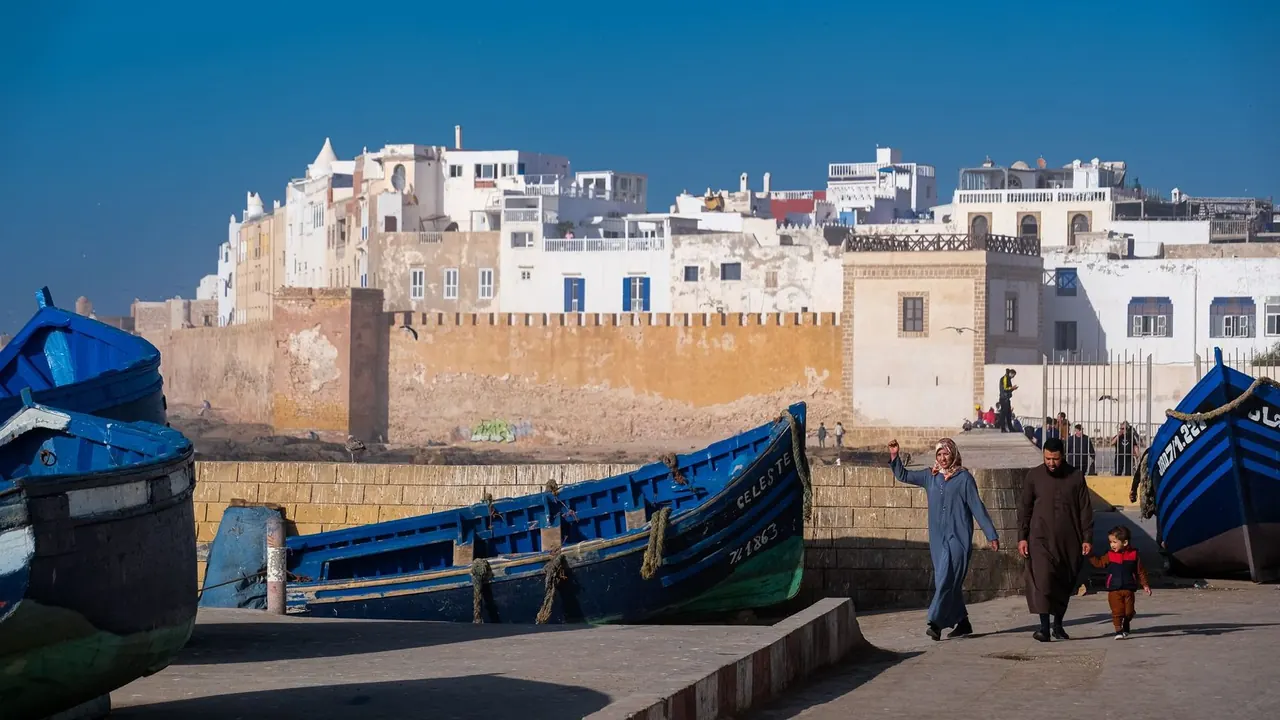
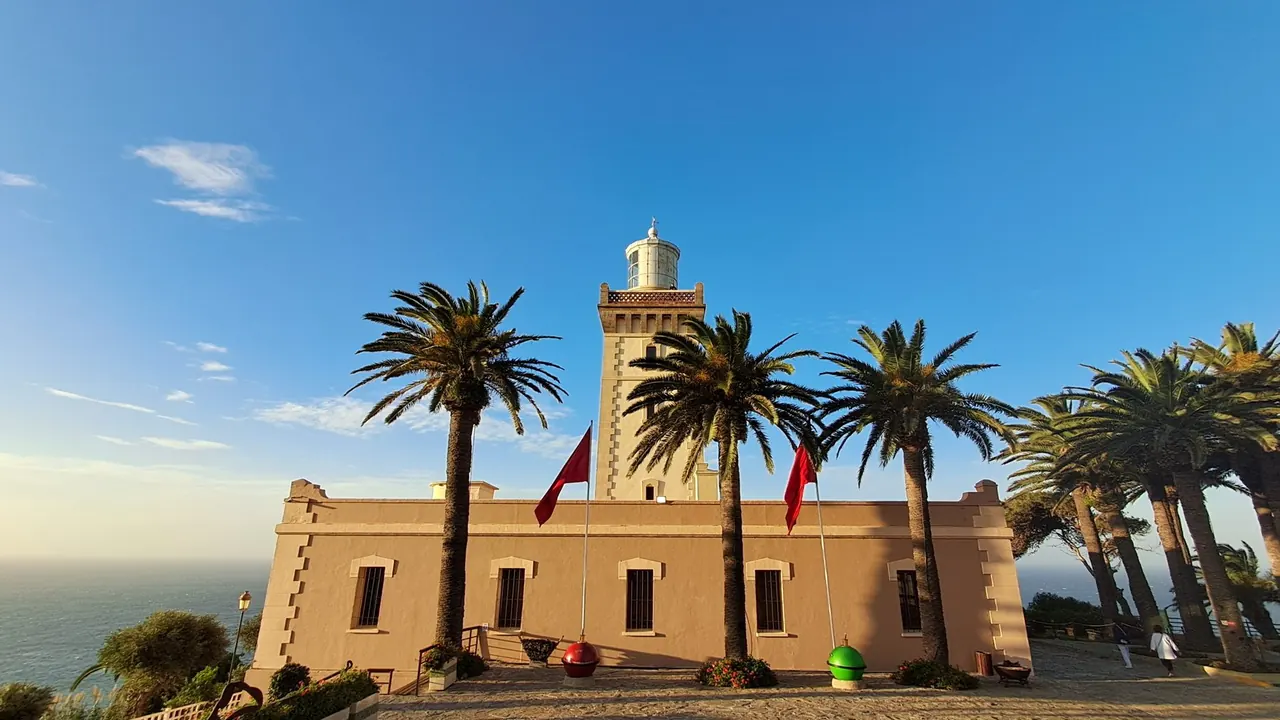
Photos: Essaouira by Manel Cusido, Pexels License; Tangier by Ideophagous, CC BY-SA 4.0, cropped.
Essaouira or Tangier?
Our verdict in twelve categories, each scored against the same fixed benchmark cities, and the climate month by month, so you can choose for your trip.
Choose Essaouira for
- getting around
- wellness
- families
Essaouira suits a traveller who wants to stop moving. The flat, traffic-free medina, the beach at the foot of the walls and the long, unhurried days on riad roof terraces make it a natural choice for a restful week, for families with small children, and for anyone drawn by the wind for kitesurfing. You pay for that calm with isolation. There is little to see beyond the town, the food is narrow and the evenings end early.
Choose Tangier for
- day trips
- nightlife
- food and drink
Tangier is the better pick for a curious, restless visitor. Its sights go deeper, from the kasbah museum to the American Legation and the Ville Nouvelle of the international era, and the cafés and food stalls give more to eat. It also works as a base for northern Morocco, with Asilah, Tetouan, Chefchaouen, Rabat by train and even Spain by ferry all within reach. Expect steeper streets, a harder sell in the souks and less ease.
Scoreboard
Twelve categories on one fixed scale from 0 to 100. The shaded stretch is the gap between the two.
Your match
Pick a travel style or drag the sliders, and both match scores follow your weighting.
Wins on getting around and wellness with your weighting.
Wins on day trips and nightlife with your weighting.
What matters to you?
Category by category
What the scores mean for a trip.
Beaches & swimming
Neither is a place for hot, lazy beach days, but the sand works differently in each. In Essaouira the wide pale crescent starts right below the medina walls and is part of every walk. The steady wind and cool water mean you spend your time there riding, watching kites or swimming on a calm morning by the port, more than sunbathing.
Tangier's city beach along the bay is more a promenade than a place to swim. The better sand lies west at Achakar and Cap Spartel, or south near Asilah, so a beach day means a taxi out of town. In return, the water there is a touch warmer in late summer.
Food & drink
Both cities cook Moroccan home food with fish from the port, but Tangier gives you more of it. Around the Grand Socco there are breakfast bowls of bissara, harira, snail broth, bakeries and small grill counters. Its terrace cafés looking over the Strait are a reason to visit in themselves.
Essaouira's best meal is simple: you choose sardines, bream or spider crab at the harbour stalls and they are grilled in front of you. Beyond that the choice soon narrows to riad dining rooms and European-style cafés, though the argan oil and amlou from the hills are worth seeking out. Alcohol is limited in both.
Culture & sights
Tangier has more to see. The kasbah palace museum, the Moorish house of the American Legation, St Andrew's church and the Art Deco streets of the Ville Nouvelle tell the story of a city where Europe and Africa met, with Paul Bowles and the Beat writers in the background.
Essaouira has one main sight, and it is a fine one. The 18th-century medina, a planned grid of whitewashed houses behind sea walls, is on the UNESCO list, and walking the cannon-lined Skala ramparts and the old mellah is the point of a visit. It is atmospheric, but a day or two covers it.
Nightlife
Neither city stays up late, but Tangier gives you more to do after dark. There are a few old bars from the international era, hotel lounges in the Ville Nouvelle and beach clubs on the bay in summer, and the seafront fills with families strolling on warm nights.
In Essaouira the evening usually means a sunset drink on a rooftop, dinner, then a last walk along the ramparts. The medina is silent well before midnight, and only the surfers and kitesurfers linger in a couple of beach bars.
Nature & outdoors
The outdoors is about equally good in both, but different in character. Essaouira's draw is wind and sand: kitesurfing and windsurfing schools on the bay, rougher waves at Sidi Kaouki, horse and camel rides towards the Diabat dunes, goats in the argan trees, and Eleonora's falcons over the offshore islands in summer.
Tangier's outdoors is greener and higher. You can walk among the pines and cliffs of Cap Spartel above the meeting of two seas, or in the wooded Perdicaris park. Storks and raptors cross the Strait in spring and autumn, and boats go out to watch dolphins. In both places real mountain hiking means a long trip inland.
Day trips
Tangier is far ahead here. Asilah and Tetouan's UNESCO-listed medina are each about an hour away, and Chefchaouen makes a long but rewarding day out. The fast train puts Rabat within two hours, and a ferry crossing gets you to Tarifa in Spain in about an hour.
Essaouira is cut off by comparison. The outings are small ones: Sidi Kaouki, the thuya workshops at Ghazoua, the argan cooperatives and Safi's pottery quarter two hours up the coast. Marrakech is too far for a comfortable round trip in a day.
Good for families
Essaouira is the gentler choice with children. The medina is small, flat and mostly free of cars, the beach is a few minutes away, and camels, horses, fishing boats and gulls keep small children busy. The cool sea and summer wind, and the steep stairs and open roof terraces in riads, are the things to watch.
Tangier works for a family with a pool hotel and short outings: the promenade, the Perdicaris park, the Caves of Hercules, and a ferry ride to Spain that children enjoy. Its steep, stepped medina and persistent touts make everyday wandering harder. Neither city has a zoo, aquarium or theme park.
Getting around
In Essaouira you walk everywhere. The flat medina, the port and the beach promenade are all within about twenty minutes of each other, and porters with carts take your luggage from the gate to the riad. Only the villages and cooperatives outside town need a driver.
Tangier's walkable core is hillier and more confusing, so you will use the blue petit taxis often, and Cap Spartel and the western beaches need a car. Where Tangier does better is onward travel. The train links it with Rabat and Casablanca, and the ferry port sits in the city centre.
Shopping & style
Both are craft towns rather than fashion destinations, and they offer the same kind of shopping on a similar scale. Essaouira's speciality is fragrant thuya wood, carved and inlaid in workshops under the ramparts, together with small galleries of naive and gnawa-inspired painting, and the sellers there are noticeably more relaxed.
Tangier's souk lanes near the Petit Socco sell slippers, lanterns and the red-and-white striped cloth of the Rif, and farm women bring produce and woven hats to the Saturday markets. The sales pitch is harder, but the Ville Nouvelle adds antique shops and modern malls on the bay.
Affordability
The two are about equally cheap. Grilled fish, street snacks, mint tea and taxis cost little in both, and the medinas are free to wander. Costs rise in different places. In Essaouira it is the smarter riads, the rooftop restaurants and the festival weekends. In Tangier it is the sea-view hotels and the summer seafront, and in both alcohol is the one thing that is not cheap.
Live music & performing arts
Neither has a theatre, opera or regular concert season, and each has its own musical identity. Essaouira is the home of gnawa trance music. Its yearly Gnaoua World Music Festival fills the ramparts with free concerts, while on other nights you hear gnawa informally in a few restaurants and squares.
Tangier's music is more varied but harder to find. It has Andalusian classical music, Jilala and the legacy of the Jajouka musicians, along with a long-running jazz festival. The historic art-house cinema on the Grand Socco is the steadiest cultural venue in the city.
Wellness & relaxation
Essaouira is the easier place to slow down. With no traffic in the medina, sea air and little to tick off, the days drift by, and yoga and surf-and-yoga retreats along the coast build on that. Riad spas offer argan oil massages, though the wind can spoil lounging outdoors.
Tangier's strength is its everyday hammam culture. Neighbourhood bathhouses offer the full ritual of steam, black soap and a kessa scrub, and hotel spas provide a more comfortable version. Its terraces above the Strait are calm, but the port and traffic below are a constant reminder that this is a working city.
When should you go?
Pick your month. The climate figures are measured averages, not a forecast.
Essaouira in July
Tangier in July
Daytime high, °C
Rainfall in the month, mm
Where the figures come from
Essaouira has no rain gauge within 25 km of the centre, so its rainfall comes from a gridded climate dataset read at the city rather than from a gauge further away.
Temperature and rainfall are climate normals, averaged over the years shown. Essaouira: 1991-2020 normals, Essaouira (1.4 km from centre). Tangier: 1991-2020 normals, Tanger Aerodrome (9.5 km from centre).
Essaouira hardly changes through the year. The cool Atlantic keeps days mild in every month, peaking at around 24°C in September, so the town is never too hot for walking and never truly cold. From May to September it is almost completely dry. The modest rains arrive in October and last through the winter. The sea stays cool all year, and summer brings the strongest wind, so a sunny July day by the water can still feel brisk.
Tangier has real seasons. July and August are hot, near 30°C, with long sunny days and the sea at its warmest at about 22°C, which is the best time for a swim and the hardest time for climbing the medina in the afternoon. May, June, September and early October are the easiest months for sightseeing. From late October the rain sets in heavily, reaching about 117mm in December, so winter is a much wetter, greyer prospect than on Essaouira's coast.
Which traveller are you?
On a relaxing and wellness trip, Essaouira is the better choice. The whole town moves at walking pace and asks little of you beyond a massage and a sunset. Tangier has fine hammams, but it never stops being a working port.
On a family trip with young children, Essaouira is the simpler base. Everything is close and level, and the sand is never far away. In Tangier, more of the day goes on taxis and the hotel pool.
For a culture and arts trip, Essaouira's walled town is beautiful but quickly seen. Tangier rewards a longer stay, with the history of a city between Europe and Africa in its museums and streets, and other old medinas close by.
Before you go
| Measure | Essaouira | Tangier |
|---|---|---|
| Official language | Arabic, Standard Moroccan Tamazight | Arabic, Standard Moroccan Tamazight |
| Currency | Moroccan Dirham (MAD) | Moroccan Dirham (MAD) |
| Sockets | CE50 Hz | CE50 Hz |
| Driving side | Right | Right |
| Time zone | UTC+1 | UTC+1 |
| Emergency number | Police 19/112, ambulance 15, fire 15 | Police 19/112, ambulance 15, fire 15 |
| Elevation | 11 m | 56 m |
| Main airport | Essaouira-Mogador Airport (ESU)15 km from centre13 non-stop destinations | Tangier Ibn Battuta Airport (TNG)11 km from centre50 non-stop destinations |
| Public holidays this year | 11 days | 11 days |
By the numbers
| Measure | Essaouira | Tangier |
|---|---|---|
| City population | 82,962 | 1,275,428 |
| People per km² | 16,592 | 6,393 |
| Museums within 10 km | 2 | 6 |
| UNESCO World Heritage sites within 50 km | 1 | 1 |
| Swim season, months above 21 °C | None | 3 months |
Where else could you go?
Every comparison below shares a destination with this one, so you can follow Essaouira or Tangier somewhere new.