Eswatini
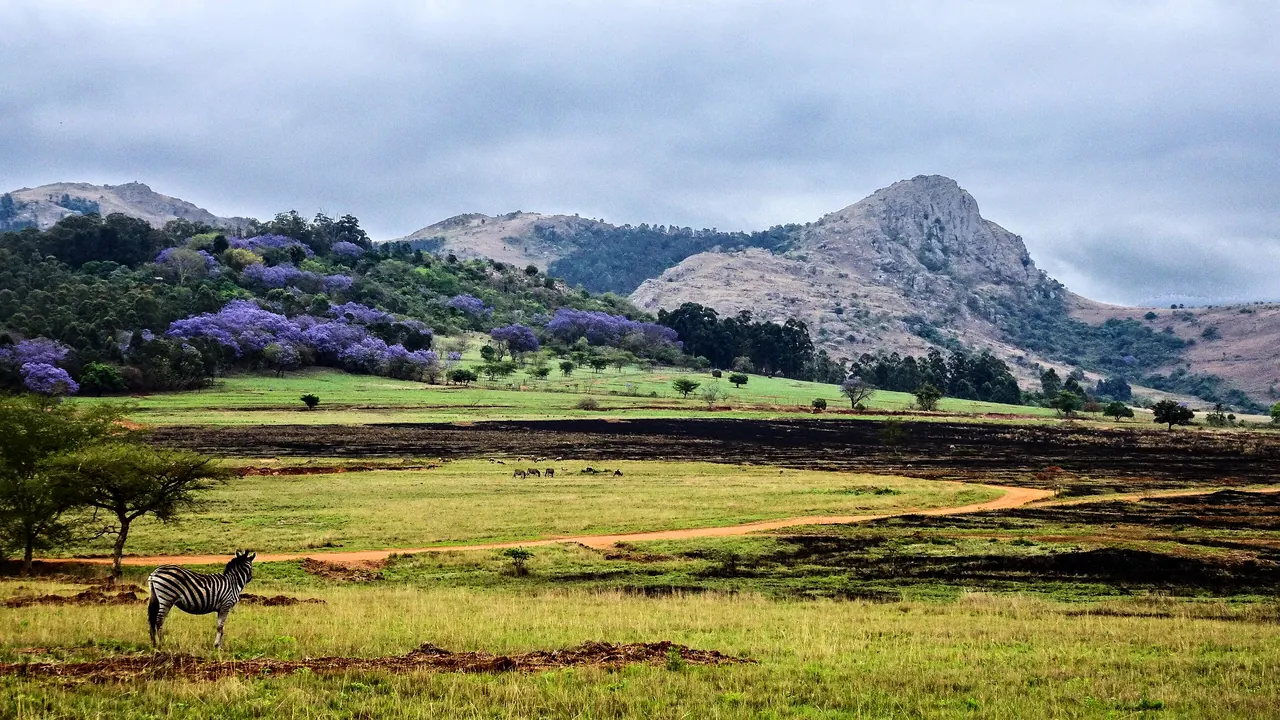
Zebra in Mantenga Nature Reserve under flowering jacarandas, with the peaks of the Ezulwini Valley behind
- Nature & outdoors66
- Affordability64
- Families42
Photo: Jean-Marc Astesana from Voisins le Bretonneux, France, CC BY-SA 2.0, cropped
Match
33
Every category weighted equally
- Beach & sun31
- Culture & arts32
- Food & nightlife28
- Family trip36
- Outdoors37
- Relax & unwind33
- Shopping & style31
- On a budget36
Eswatini in twelve categories
Our verdict on the country as a whole, scored 0 to 100 against the same fixed benchmark cities as every destination, so a score means the same thing on every page.
Beaches & swimming. Scores 2 out of 100.
Food & drink. Scores 25 out of 100.
Culture & sights. Scores 32 out of 100.
Nightlife. Scores 12 out of 100.
Nature & outdoors. Scores 66 out of 100.
Day trips. Scores 22 out of 100.
Good for families. Scores 42 out of 100.
Getting around. Scores 30 out of 100.
Shopping & style. Scores 35 out of 100.
Affordability. Scores 64 out of 100.
Live music & performing arts. Scores 30 out of 100.
Wellness & relaxation. Scores 32 out of 100.
Eswatini category by category
Under each: where in Eswatini it is best, and our destinations in Eswatini that score highest on it.
Beaches & swimming
2Eswatini is landlocked, and its rivers and dams are not places for a swim: bilharzia is a risk in many lowveld waters, and crocodiles live in some of them. Swimming means a lodge or hotel pool. The nearest sea is across the border in Mozambique or South Africa, so a beach has to be a separate part of the trip.
Our top destinations in Eswatini
Food & drink
25Swazi food is plain and filling: maize porridge with stews, grilled meat at roadside braai stands, pumpkin and sugar beans, and the sour fermented porridge served at home. A visitor meets it mostly at Manzini's market and in small takeaway places in the towns, along with the South African chains that fill the shopping centres.
The nicer meals happen in the Ezulwini and Malkerns valleys, where farm cafés and lodge restaurants cook with local produce, and the lowveld grows sugar cane, citrus and pineapples. A good dinner at your lodge is the usual pattern. There is little depth and no fine dining, and nobody plans a trip around the food.
Where: Malkerns Valley, Ezulwini Valley, Manzini
Our top destinations in Eswatini
Culture & sights
32Eswatini's heritage is a living monarchy more than a collection of monuments. Lobamba, in the Ezulwini Valley, is the royal and ceremonial heart, with the parliament, the National Museum's displays on Swazi history and dress, and the memorial park to King Sobhuza II. Nearby, a reconstructed beehive-hut village shows how a traditional homestead was laid out.
The great draws are the ceremonies. The Umhlanga Reed Dance gathers tens of thousands of young women in late August or early September, and the sacred Incwala kingship rites take place around December and January, with parts of both open to spectators. Outside those seasons there is little to see: no historic towns, few buildings of interest, and rock art reached only on guided walks.
Where: Lobamba, Ezulwini Valley
Our top destinations in Eswatini
Nightlife
12Going out is limited to a few bars, a casino resort strip and weekend clubs in Mbabane, Manzini and the Ezulwini Valley between them, mostly used by locals. Most visitors stay in game reserves and rural lodges, where the evening ends with dinner and a drink by the fire.
Where: Ezulwini Valley, Manzini
Our top destinations in Eswatini
Nature & outdoors
66This small country packs a lot of landscape into a short drive. Highveld grassland and granite domes in the west drop through the middleveld valleys to hot bushveld in the east. Malolotja is the wildest corner, with long hiking trails, waterfalls, a canopy zipline over a forested gorge and a cool climate. In Mlilwane, close to the main road, you can walk, ride horses and cycle among zebra and antelope without a guide. Sibebe, one of the largest granite domes in the world, rises just outside Mbabane.
In the lowveld, Hlane has lions, elephants and white rhino around its waterholes, and Mkhaya is a protected refuge for black rhino, visited on guided drives and walks. The Great Usutu River has whitewater rafting. The dry winter, May to September, is best for game viewing. The parks are smaller and less wild than the great reserves of the region.
Where: Malolotja Nature Reserve, Hlane Royal National Park, Mkhaya Game Reserve, Mlilwane Wildlife Sanctuary
Our top destinations in Eswatini
Day trips
22Day trips here are mostly drives to craft workshops, a market or a game reserve, rather than to other towns worth a day. From a base in the Ezulwini Valley, the Malkerns craft route, Manzini's market and the small capital Mbabane are each less than an hour away, but none of them fills a full day. Across the northern border, Barberton is an old South African gold-rush town with mining-era buildings. The country's real outings are into its parks, which are covered under nature.
Where: Malkerns Valley, Manzini, Mbabane
Our top destinations in Eswatini
Good for families
42For a family, Eswatini is a manageable bush trip. Distances are short, and most families base themselves in the Ezulwini Valley, where hotels and lodges have family rooms, pools and gardens and self-catering cottages are easy to find. Mlilwane, at the valley's edge, is the best place for children: they can walk or cycle past zebra and warthog on easy trails. In Hlane, big game such as elephant and rhino is seen from a vehicle, and in Malolotja the canopy zipline over a forested gorge suits older children. Swazi people are warm towards children.
The drawbacks are real, though. Nothing here is built for children apart from lodge pools and playgrounds, a hire car is close to essential, and Hlane and the rest of the eastern lowveld carry a seasonal malaria risk in the wet summer months. Families with very young children tend to stay in the cooler highveld and middleveld.
Where: Mlilwane, Ezulwini Valley, Hlane, Malolotja
Our top destinations in Eswatini
Getting around
30The country is small, roughly two hours' drive from west to east, and the main road running from the Ngwenya border post through Mbabane, Ezulwini and Manzini is good. Away from it, the roads to reserves and villages are slower, with potholes, wandering cattle and steep stretches in the highveld. There is no passenger rail. Shared minibus taxis connect the towns, but they are crowded and hard for a visitor to use for reaching parks. Most travellers hire a car, often as one leg of a longer self-drive trip through the region, or travel with a tour.
Where: Ezulwini Valley, Manzini
Our top destinations in Eswatini
Shopping & style
35Crafts are the reason to shop here, and they are of a high standard. In the Malkerns and Ezulwini valleys you can visit workshops making hand-moulded candles, woven sisal and grass baskets, mohair and cotton weaving, and batik. Near the Ngwenya border, glassblowers make animals and tableware from recycled glass. Roadside stalls and the Ezulwini handicraft market sell soapstone carvings, wooden bowls and beadwork, and Manzini's market has woven goods alongside fresh produce. Beyond crafts, shopping means ordinary malls with South African chains.
Where: Malkerns Valley, Ezulwini Valley, Ngwenya, Manzini
Our top destinations in Eswatini
Affordability
64Eswatini is good value, especially for wildlife. Park entry and the rest camps and huts in the reserves, such as those at Mlilwane and Hlane, are modest, and a stay in the bush costs much less than at the private game lodges elsewhere in southern Africa. The Ezulwini Valley, where most visitors stay, has a wide spread of rooms, from backpacker hostels and guesthouses to resort hotels. In the neighbouring Malkerns Valley, farm cafés and small guesthouses keep meals and nights reasonable. Local food and fuel are cheap.
The costs come from car hire, which most trips need, and from the small number of upmarket lodges. Supermarket goods are largely imported from South Africa and cost about the same as there.
Where: Ezulwini Valley, Malkerns Valley, Mlilwane, Hlane
Our top destinations in Eswatini
Live music & performing arts
30Live performance here is mostly traditional. The cultural village in the Ezulwini Valley stages regular Swazi song and dance shows, energetic and well done if aimed at visitors. The Malkerns Valley is home to a long-running festival of music and arts that draws African and international acts and a regional crowd.
The most remarkable song and dance a visitor can see belongs to the royal ceremonies at Lobamba, the kingdom's ceremonial heart. At the Umhlanga Reed Dance, in late August or early September, tens of thousands of young women sing and dance before the royal residence. The Incwala kingship rites, around December and January, have days of song and dance that spectators may attend. Otherwise there is very little: no regular theatre, opera or concert programme, and live music means the occasional band in a bar or lodge.
Where: Lobamba, Ezulwini Valley, Malkerns Valley
Our top destinations in Eswatini
Wellness & relaxation
32The Ezulwini Valley, whose name means "place of heaven", has a natural warm mineral spring. Visitors have bathed in its pool, set among gardens, for generations, and the valley's resort hotels have spas offering massage and treatments. Beyond that there is no bathing tradition. The rest comes from the pace: quiet lodges in the hills, evenings with no noise, and days set by early light and game walks. It suits a few calm days, not a wellness trip.
Where: Ezulwini Valley
Our top destinations in Eswatini
Where to go in Eswatini
Eswatini is small enough to be one trip, about two hours' drive from west to east, and many visitors fit it into a longer self-drive through the region. The real choice is where to sleep and how to split a few days between the central valleys, the cool highveld and the lowveld bush.
The Ezulwini Valley is the natural first base. It is central, has rooms from hostels to resort hotels, and holds the warm mineral spring, the handicraft market and the cultural village's dance shows. Lobamba, within the valley, has the National Museum and hosts the royal ceremonies, so time a visit for the Umhlanga in late August or early September or Incwala around December and January. Mlilwane, at the valley's edge, is where families walk and cycle among zebra. Next door, the Malkerns Valley suits a slower stay with farm cafés, guesthouses and craft workshops. Manzini's market and the small capital, Mbabane, are short drives for a morning.
West towards the Ngwenya border, the highveld is cooler and emptier. Malolotja is the place for long hikes, waterfalls and the canopy zipline, and the granite dome of Sibebe rises just outside Mbabane. This is the quiet, outdoor end of the country, and it suits families with young children better than the hot east.
The eastern lowveld is hot bushveld and the place for game: Hlane for lions, elephants and rhino at the waterholes, and Mkhaya for guided walks and drives among black rhino. A night or two here follows easily after the valleys, and it is best in the dry winter from May to September, outside the wet-summer malaria season. There is no beach anywhere, so pair the trip with the coast in Mozambique or South Africa.
When should you go?
Eswatini has no single climate. Its months are measured at Mbabane; pick one to see it. The figures are measured averages, not a forecast.
Mbabane in July
Daytime high, °C
Rainfall in the month, mm
Where the figures come from
Mbabane has no weather station within reach, so its figures come from a gridded climate model rather than a measured record, and read a broad area rather than one spot.
Temperature and rainfall are climate normals, averaged over the years shown. Mbabane: 1991-2020 normals, TerraClimate 4 km grid at the town, no weather station within 90 km.
Compare Eswatini with
Every comparison with a written verdict behind it, and any other country below.
Our destinations in Eswatini
Every place in Eswatini with its own page: its twelve scores, its texts and its months.