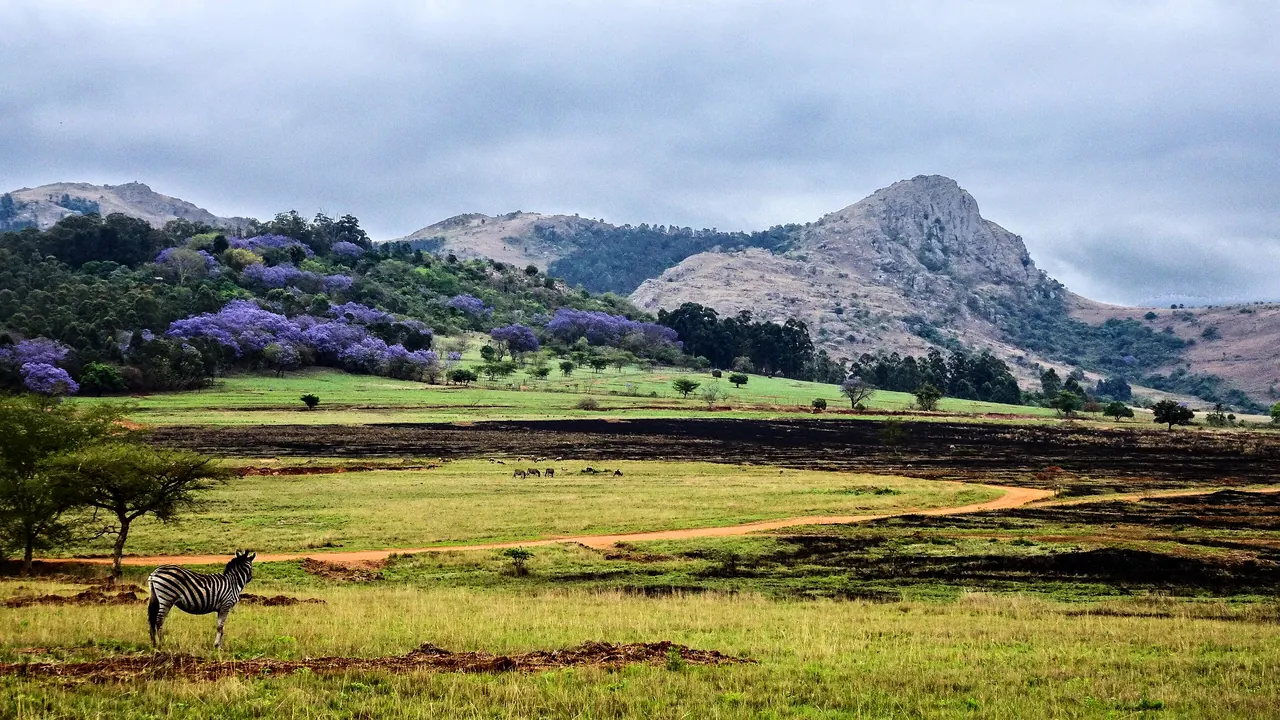
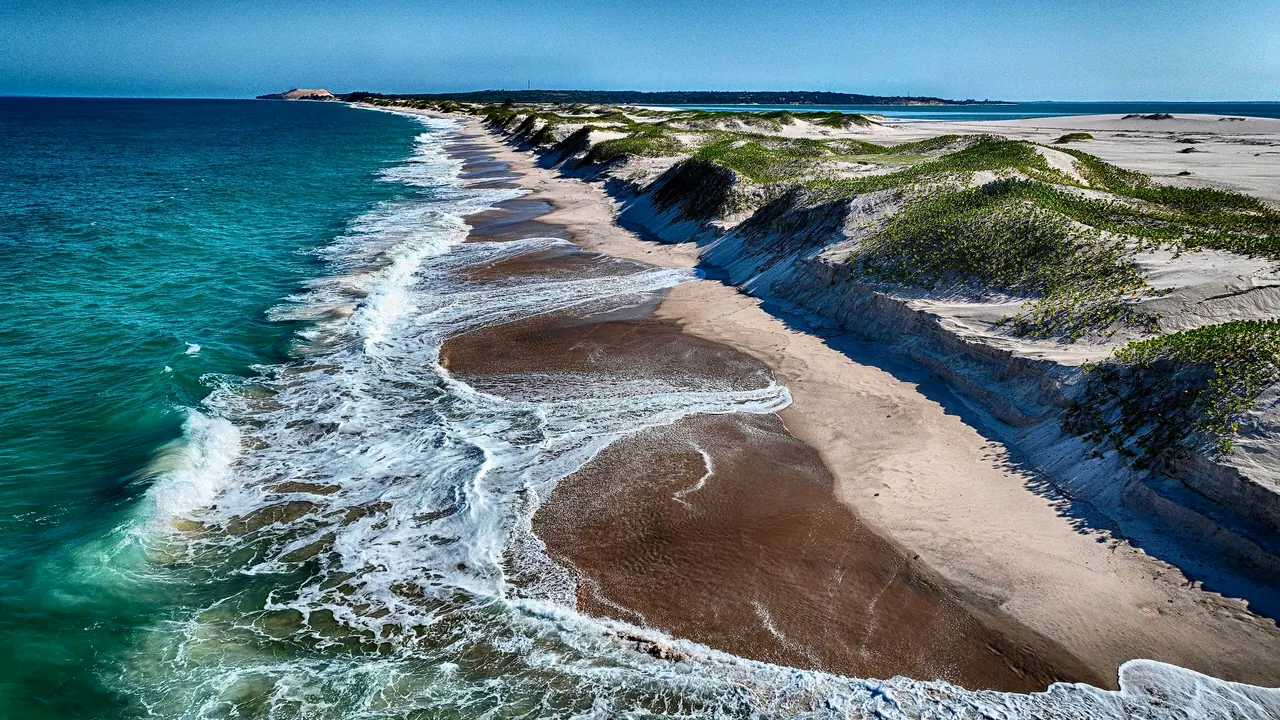
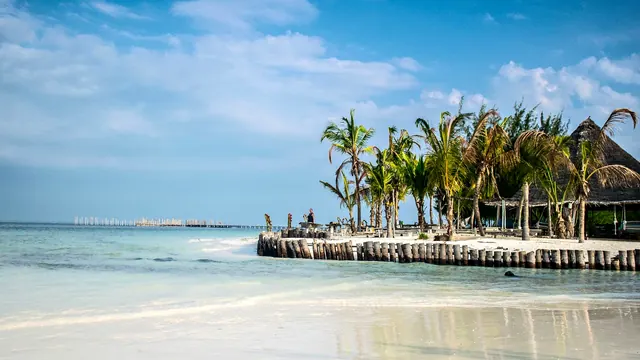
Photos: Eswatini by Jean-Marc Astesana from Voisins le Bretonneux, France, CC BY-SA 2.0, cropped; Mozambique by Tom Corser, CC BY-SA 3.0, cropped.
Eswatini or Mozambique?
Our verdict in twelve categories, each scored against the same fixed benchmark cities, and the climate month by month, so you can choose for your trip.
Choose Eswatini for
- families
- getting around
- prices
Eswatini is the one for a compact, self-driven bush trip. The whole kingdom is a short drive across, so from one base in the Ezulwini Valley you can walk among zebra at Mlilwane, look for rhino at Hlane and hike the gorges of Malolotja without spending days on the road. It is easier with children, cheaper for wildlife and better for crafts. If you can time it for the Umhlanga Reed Dance or the Incwala rites, you also see a living monarchy at work.
Choose Mozambique for
- beaches
- nightlife
- food and drink
Mozambique is for travellers who want the Indian Ocean. Its long coast gives you surf beaches at Tofo and Ponta do Ouro and the calm sandbanks of the Bazaruto islands, with whale sharks and manta rays offshore and grilled prawns at the end of the day. It also has a real capital in Maputo for late nights and colonial streets. The price is distance: places are far apart, roads are slow, and most trips settle on one stretch of coast.
Scoreboard
Twelve categories on one fixed scale from 0 to 100. The shaded stretch is the gap between the two.
Your match
Pick a travel style or drag the sliders, and both match scores follow your weighting.
Wins on families and getting around with your weighting.
Wins on beaches and nightlife with your weighting.
What matters to you?
Category by category
What the scores mean for a trip.
Beaches & swimming
There is no real contest here. Eswatini has no coast, and its rivers and dams carry bilharzia and sometimes crocodiles, so swimming means a lodge pool and the sea means crossing a border.
Mozambique is one of the region's great beach countries. Ponta do Ouro and Tofo have open sand, dunes and surf, but also strong currents. The shallow channel off Vilanculos and the Bazaruto islands give calm, clear water for gentler swimmers. Pick one stretch, because moving between them eats days.
Where in Mozambique: Bazaruto Archipelago, Vilanculos, Tofo, Ponta do Ouro
Food & drink
Mozambique eats better, mostly because of the sea. Prawns, crab and line fish come grilled with peri-peri, alongside matapa and coconut curries that show the Indian Ocean side of the kitchen. Maputo's fish market, where you pick your catch and have it cooked, and the beach shacks of Tofo are the highlights.
Eswatini's food is plain maize porridge, stews and braai meat. The best meals are at farm cafés and lodge restaurants in the Malkerns and Ezulwini valleys, which make good use of local produce but rarely give you a reason to travel.
Where in Eswatini: Malkerns Valley, Ezulwini Valley, Manzini
Where in Mozambique: Maputo, Inhambane, Tofo
Culture & sights
Mozambique has more to see in stone. Ilha de Moçambique, the UNESCO-listed former capital with its fortress, chapels and arcaded Stone Town, is the finest historic site in either country, though it is a long trip north on its own. Maputo adds colonial and modernist avenues and its domed railway station.
Eswatini's heritage is people and ritual rather than buildings. Lobamba holds the parliament, the National Museum and the Sobhuza II memorial. The real reason to come is the Umhlanga Reed Dance or the Incwala rites, and outside those seasons there is little to see.
Where in Eswatini: Lobamba, Ezulwini Valley
Where in Mozambique: Ilha de Moçambique, Maputo, Inhambane
Nightlife
Evenings in Eswatini are quiet. Mbabane, Manzini and the Ezulwini Valley have a handful of bars used mostly by locals, a casino strip and some weekend clubs between them. Most visitors sleep in reserves and rural lodges, though, where the night ends with dinner and a drink by the fire.
Mozambique is clearly the better place for a night out, and almost all of it happens in Maputo. In Polana and the Baixa, weekends start in pavement bars and end in clubs playing marrabenta, kizomba and Afro house long after midnight, with a taxi home rather than a walk. Tofo and Vilanculos have beach bars that fill up around Christmas, New Year and Easter, when South Africans drive up the coast.
Where in Eswatini: Ezulwini Valley, Manzini
Where in Mozambique: Maputo, Tofo, Vilanculos
Nature & outdoors
Both are strong outdoors, but in different elements, and Mozambique has the edge thanks to its sea. Divers and snorkellers meet whale sharks and mantas off Tofo, humpbacks pass from July to October, and the Bazaruto marine park shelters reefs, turtles and dugongs. Inland, Gorongosa is a separate trip, rich in birds and elephants but lighter on predators.
Eswatini is all land, packed close together. You can hike and zipline in Malolotja, walk or ride among game at Mlilwane, track black rhino at Mkhaya and raft the Great Usutu, all within a couple of hours' drive. The parks are small, but they are easy to combine.
Where in Eswatini: Malolotja Nature Reserve, Hlane Royal National Park, Mkhaya Game Reserve, Mlilwane Wildlife Sanctuary
Where in Mozambique: Tofo, Bazaruto Archipelago, Gorongosa National Park, Ponta do Ouro
Day trips
Neither country is built for day trips, and both send you to the parks or the water instead. From the Ezulwini Valley, Eswatini's outings are short drives to the Malkerns craft route, Manzini's market or Mbabane, none of them worth a full day, with old gold-rush Barberton across the northern border.
Mozambique's excursions are mostly by boat: the ferry from Maputo to Catembe, a trip out to Inhaca Island's fishing village, or a dhow from Tofo across to the old port of Inhambane.
Where in Eswatini: Malkerns Valley, Manzini, Mbabane
Where in Mozambique: Inhaca Island, Inhambane, Catembe
Good for families
Eswatini is the gentler family choice. Short drives and family rooms with pools in the Ezulwini Valley make it manageable, and Mlilwane lets children walk or cycle past zebra and warthog. Malaria is only a seasonal risk in the eastern lowveld, so families with small children can stay in the cooler hills.
Mozambique can work as one stay at a calm-water lodge, at the Bilene lagoon, the Bazaruto shallows or the sheltered side of Barra, with snorkelling for older children. Against that, malaria is present everywhere, the roads are long and rough, and medical care outside Maputo is basic.
Where in Eswatini: Mlilwane, Ezulwini Valley, Hlane, Malolotja
Where in Mozambique: Bilene, Bazaruto Archipelago, Barra
Getting around
Eswatini is far easier to cover. You can drive across it in about two hours, and the main road through Mbabane, Ezulwini and Manzini is good, though the roads to the reserves are slower. A hire car or a tour is the realistic way to see it.
Mozambique runs for more than 2,000km of coast, and Maputo to Vilanculos takes most of a day on a potholed, truck-heavy highway. Most visitors fly to Vilanculos or Inhambane and rely on lodge transfers, chapas and four-wheel drives on sandy tracks.
Where in Eswatini: Ezulwini Valley, Manzini
Where in Mozambique: Maputo, Vilanculos, Tofo
Shopping & style
Both countries are about crafts, and Eswatini's are the better reason to shop. In the Malkerns and Ezulwini valleys you can watch candles being moulded, sisal baskets woven and mohair spun, and Ngwenya's glassblowers turn recycled glass into animals and tableware.
Mozambique's strengths are Makonde ebony carving in Maputo's craft markets and capulana cloth, bought by the length in Maputo or Inhambane and tailored in town. Away from those two cities there is little beyond lodge shops.
Where in Eswatini: Malkerns Valley, Ezulwini Valley, Ngwenya, Manzini
Where in Mozambique: Maputo, Inhambane
Affordability
Eswatini is the cheaper trip, above all for wildlife. The rest camps at Mlilwane and Hlane cost a fraction of private game lodges, and the Ezulwini Valley has rooms at every level. Car hire is the main cost.
Mozambique is cheap only at the backpacker end, in Tofo and Vilanculos with market food and chapas. Maputo's hotels, island resorts on Bazaruto, diving and domestic flights all push a comfortable trip well up the scale.
Where in Eswatini: Ezulwini Valley, Malkerns Valley, Mlilwane, Hlane
Where in Mozambique: Tofo, Vilanculos, Maputo
Live music & performing arts
Neither country has opera, orchestras or a regular concert season, and the difference is one of setting. Eswatini's live performance is traditional: dance shows at the Ezulwini cultural village, a long-running music festival in the Malkerns Valley, and above all the massed song and dance of the royal ceremonies at Lobamba.
Mozambique's is urban and contemporary. Maputo's bars and cultural centres host marrabenta, jazz and Afro-fusion, and the city has a small theatre scene. The Chopi timbila orchestras of Inhambane are remarkable but rarely staged for visitors.
Where in Eswatini: Lobamba, Ezulwini Valley, Malkerns Valley
Where in Mozambique: Maputo, Inhambane
Wellness & relaxation
Mozambique is slightly better for resting, because the beach does most of the work. Spa rooms and massage at the Bazaruto island lodges and around Vilanculos and Tofo, yoga by the dunes and long empty days by the sea make for an easy, unhurried stay.
Eswatini's calm comes from the hills: quiet lodges, silent nights and early game walks, plus the warm mineral spring and hotel spas of the Ezulwini Valley. It is restful, but better for a few calm days than a whole trip.
Where in Eswatini: Ezulwini Valley
Where in Mozambique: Bazaruto Archipelago, Vilanculos, Tofo
When should you go?
Pick your month, and for a country the place in it. The climate figures are measured averages, not a forecast.
Mbabane (Eswatini) in July
Maputo (Mozambique) in July
Daytime high, °C
Rainfall in the month, mm
Where the figures come from
Mbabane (Eswatini) has no weather station within reach, so its figures come from a gridded climate model rather than a measured record, and read a broad area rather than one spot.
Temperature and rainfall are climate normals, averaged over the years shown. Mbabane (Eswatini): 1991-2020 normals, TerraClimate 4 km grid at the town, no weather station within 90 km. Maputo (Mozambique): 1991-2020 (sunshine 1981-2010) normals, Maputo / Mavalane (5.8 km from centre).
Both countries share the same rhythm of a wet summer and a dry winter, but they feel different within it. In Mbabane, up in the highveld, the rain is heavy from November to March, with over 200mm in January, while May to September is dry, sunny and mild, with afternoons around 20°C to 22°C. That dry spell is also the best time for game viewing. Nights in the hills can be cool then, and the heat never gets in the way of walking.
On the Mozambique coast, Maputo is hotter all year, above 30°C from November to March, when most of the rain falls and the air is humid. The dry months from May to September are the most comfortable, warm rather than hot and with plenty of sunshine. The sea stays swimmable year round, about 28°C in February and rarely below 22°C in winter, so the beach never really closes. A combined trip in the dry season works well for both.
Which traveller are you?
On a beach and sun trip, Mozambique wins easily. Eswatini is landlocked and its rivers are unsafe for swimming, while Mozambique has warm sea all year, surf beaches at Tofo and Ponta do Ouro and calm island water around Bazaruto.
On a family trip with children, Eswatini is the easier choice. Distances are short, Ezulwini lodges have family rooms and pools, and children can cycle past zebra at Mlilwane. Mozambique means long, bumpy journeys, malaria throughout the country and little made for children.
For a trip on a tight budget, Eswatini goes further. Rest camps at Mlilwane and Hlane make wildlife cheap, and the Ezulwini Valley has hostels and guesthouses. Mozambique can be cheap in Tofo's backpacker lodges, but islands, diving and domestic flights quickly add up.
More comparisons
Each shares a side with Eswatini or Mozambique.
Where else could you go?
Set Eswatini or Mozambique against any other country.