Mbabane
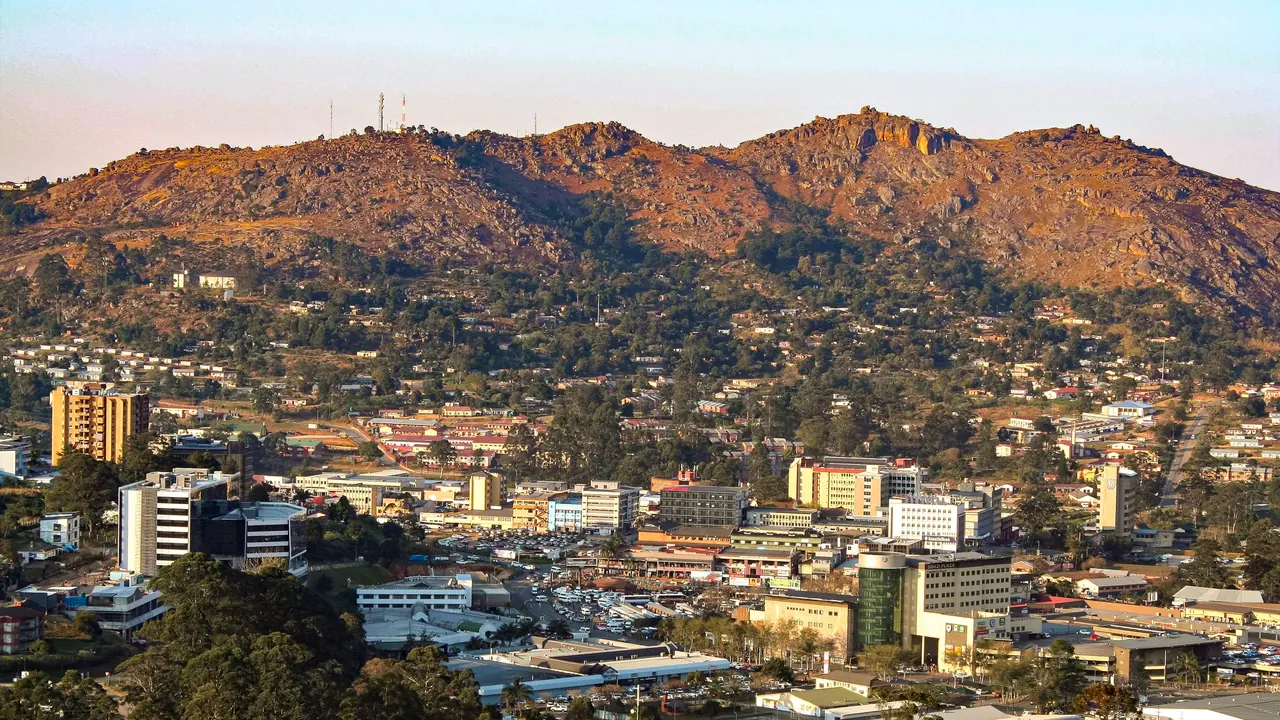
Mbabane in warm evening light below the rocky hills that ring the town
- Nature & outdoors75
- Affordability64
- Families40
Photo: Khaya Motsa, Pexels License
Match
32
Every category weighted equally
- Beach & sun32
- Culture & arts30
- Food & nightlife26
- Family trip36
- Outdoors39
- Relax & unwind34
- Shopping & style29
- On a budget36
Mbabane in twelve categories
Our verdict on each, scored 0 to 100 against the same fixed benchmark cities, so a score means the same thing on every page.
Beaches & swimming. Scores 3 out of 100.
Food & drink. Scores 26 out of 100.
Culture & sights. Scores 28 out of 100.
Nightlife. Scores 14 out of 100.
Nature & outdoors. Scores 75 out of 100.
Day trips. Scores 32 out of 100.
Good for families. Scores 40 out of 100.
Getting around. Scores 18 out of 100.
Shopping & style. Scores 30 out of 100.
Affordability. Scores 64 out of 100.
Live music & performing arts. Scores 22 out of 100.
Wellness & relaxation. Scores 34 out of 100.
Mbabane category by category
Beaches & swimming
3Mbabane has no beach. Eswatini is landlocked, and the nearest coast is in Mozambique, several hours' drive away with a border crossing. Swimming means a hotel or lodge pool. Some visitors combine Eswatini with a separate stay on the Mozambican or KwaZulu-Natal coast, but that is a different trip.
Food & drink
26Eating out in Mbabane is modest. A visitor will mostly eat in hotel and lodge restaurants, in the restaurants along the Ezulwini Valley road, or at the grill houses and takeaways in town where braaied meat, pap and stews are the staples. The town market sells fruit, vegetables and simple cooked food. It is the easiest place to try everyday Swazi cooking, such as sishwala porridge and slow-cooked greens.
There is no fine-dining scene to speak of and little street food culture. The menus that stand out are on the farm-style terraces of the Malkerns Valley, where pineapple and citrus grow. Come for the country, and treat meals as practical.
Culture & sights
28Mbabane is a small, mostly modern hill town with few sights of its own. Its cultural interest lies in the Ezulwini Valley below it. At Lobamba, the royal and parliamentary seat, the National Museum covers Swazi history and traditional dress, and the King Sobhuza II Memorial Park honours the king who led the country to independence in 1968. Mantenga Cultural Village rebuilds a traditional beehive-hut homestead.
In the hills to the west, the Ngwenya iron ore mine is among the oldest known mines in the world, worked for red ochre tens of thousands of years ago. These things fill a day or two. There is no historic architecture or major museum to build a stay around.
Nightlife
14Going out is limited. There are local bars and a few places that play music at weekends in town and in Manzini, and the hotel strip in the Ezulwini Valley has casino bars. Most visitors stay at lodges outside town and end the evening after dinner. Driving at night on the unlit valley roads is a good reason to stay put.
Nature & outdoors
75This is Mbabane's real strength. The town sits at around 1,200m in the green highveld, among granite domes and grassy ridges. Sibebe Rock, one of the largest granite outcrops in the world, rises just outside town and can be climbed with a guide. About half an hour north, Malolotja Nature Reserve has the country's best hiking: high grassland, deep gorges, waterfalls and a canopy tour. In the Ezulwini Valley, Mlilwane Wildlife Sanctuary lets you walk, cycle or ride a horse among zebra, wildebeest and antelope, and Mantenga Falls is a short walk from the road.
Lowveld reserves are an easy drive east. Hlane Royal National Park has lions, elephants and rhino, and Mkhaya has rhino tracking and rafting on the Great Usutu River. Summers bring heavy afternoon storms and hillsides at their greenest. The dry winter has the clearest air for walking and the best game viewing.
Day trips
32Eswatini is small, so most of the country is within two hours, but few of its towns are destinations in themselves. The best outings are the Ezulwini and Malkerns valleys, with the royal town of Lobamba, craft workshops, candle and basket makers, and pineapple farms. Manzini, the commercial hub, has a busy market. Glassworks near the Ngwenya border post and the old forestry town of Piggs Peak in the north make another loop.
Across the South African border, the gold-rush town of Barberton and the city of Mbombela are roughly two hours away, with paperwork at the crossing. Most of what draws people further afield is wildlife and landscape rather than towns.
Good for families
40Families come for the animals. Mlilwane Wildlife Sanctuary is gentle and easy, with zebra and warthogs wandering around the rest camp and short guided walks and rides. Game drives at Hlane add elephants and rhino within a day's reach. The dancing at Mantenga Cultural Village goes down well with children, and Swazi culture is warm towards them.
Otherwise very little is made for children: no aquarium, theme park or science museum, and few playgrounds in town. Everything is spread along valley roads, so you will spend time in the car. Good medical care can mean a trip to a larger centre, so bring what young children need. Malaria is a lowveld concern rather than a highland one, but check before going to the eastern reserves.
Getting around
18Mbabane's centre is small enough to walk, though it is steep. Beyond it, the town is hard to use without a car. Public transport means shared kombi minibuses and buses between towns. They are cheap and frequent on the main road but crowded and informal, and they don't reach the reserves or lodges. Most visitors hire a car or use a driver. Roads are generally good, but the mountain routes are winding, there is livestock on the roads and night driving is best avoided.
Shopping & style
30Shopping in Mbabane is all about crafts. Eswatini is known for handmade goods: recycled glass blown near Ngwenya, brightly coloured animal candles, sisal and grass baskets woven by rural women, carvings and soapstone. Most of this is sold at workshops and craft centres in the Malkerns and Ezulwini valleys and at roadside craft markets, with more stalls at the market in town. The town's malls cover everyday needs and nothing more. There is no fashion or design shopping to speak of.
Affordability
64Day to day, Mbabane is inexpensive. Local meals, kombi fares, craft purchases and entry to the reserves and museums all cost little by Western standards. The main costs are a hire car, which most visitors need, and accommodation. Lodges and hotels in the Ezulwini Valley and the reserves are priced for international guests, and there are only a few backpacker places in between. Self-catering cottages and the national parks' rest camps keep a trip cheaper.
Live music & performing arts
22Formal performance is scarce. There is no opera house or regular concert hall, and theatre is occasional. What a visitor can reliably see is traditional song and dance, performed most days at Mantenga Cultural Village, energetic and well done.
The calendar is where the country comes alive. The Umhlanga Reed Dance in late winter and the Incwala kingship ceremony in summer are national rituals at the royal residence near Lobamba. Parts of them are open to respectful spectators. Each year the Malkerns Valley also hosts the Bushfire festival, a multi-day arts and music festival with performers from across southern Africa. Outside these dates, evenings are quiet.
Wellness & relaxation
34The Ezulwini Valley, whose name means "place of heaven", has a warm natural mineral spring feeding an open-air pool known as the Cuddle Puddle, alongside a few hotel and resort spas offering massages and treatments. There is no wider bathing culture to explore. The real restorative pull is the pace. Lodges in the valleys and reserves are quiet, evenings are early and the highveld air is cool. It suits a few slow days well, but not a dedicated spa trip.
When should you go?
Pick a month to see what it is like. The climate figures are measured averages, not a forecast.
Mbabane in July
Daytime high, °C
Rainfall in the month, mm
The whole year
Shaded against this destination’s own year: the deepest cell is its best month for that figure and the palest its weakest.
Where the figures come from
Mbabane has no weather station within reach, so its figures come from a gridded climate model rather than a measured record, and read a broad area rather than one spot.
Temperature and rainfall are climate normals, averaged over the years shown. Mbabane: 1991-2020 normals, TerraClimate 4 km grid at the town, no weather station within 90 km.
Before you go
| Measure | Mbabane |
|---|---|
| Official language | English, Swazi |
| Currency | Lilangeni (SZL) |
| Sockets | M230 V, 50 Hz |
| Driving side | Left |
| Time zone | UTC+2 |
| Emergency number | Police 999, ambulance 977, fire 933 |
| Elevation | 1,243 m |
| Main airport | King Mswati III International Airport (SHO)58 km from centre4 non-stop destinations |
| Public holidays this year | 10 days |
By the numbers
| Measure | Mbabane |
|---|---|
| Population | 76,218 |
| People per km² | 508 |
| Museums within 10 km | 1 |
| UNESCO World Heritage sites within 50 km | 0 |
Compare Mbabane with
Every comparison with a written verdict behind it.