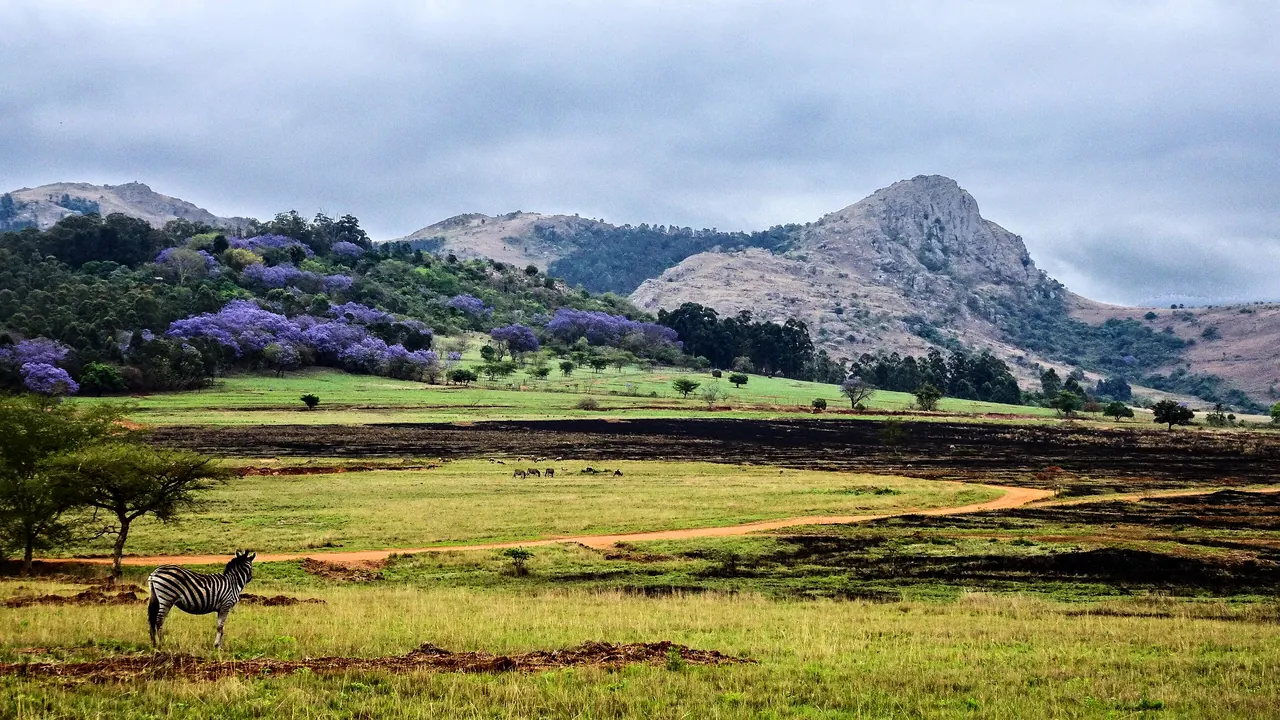
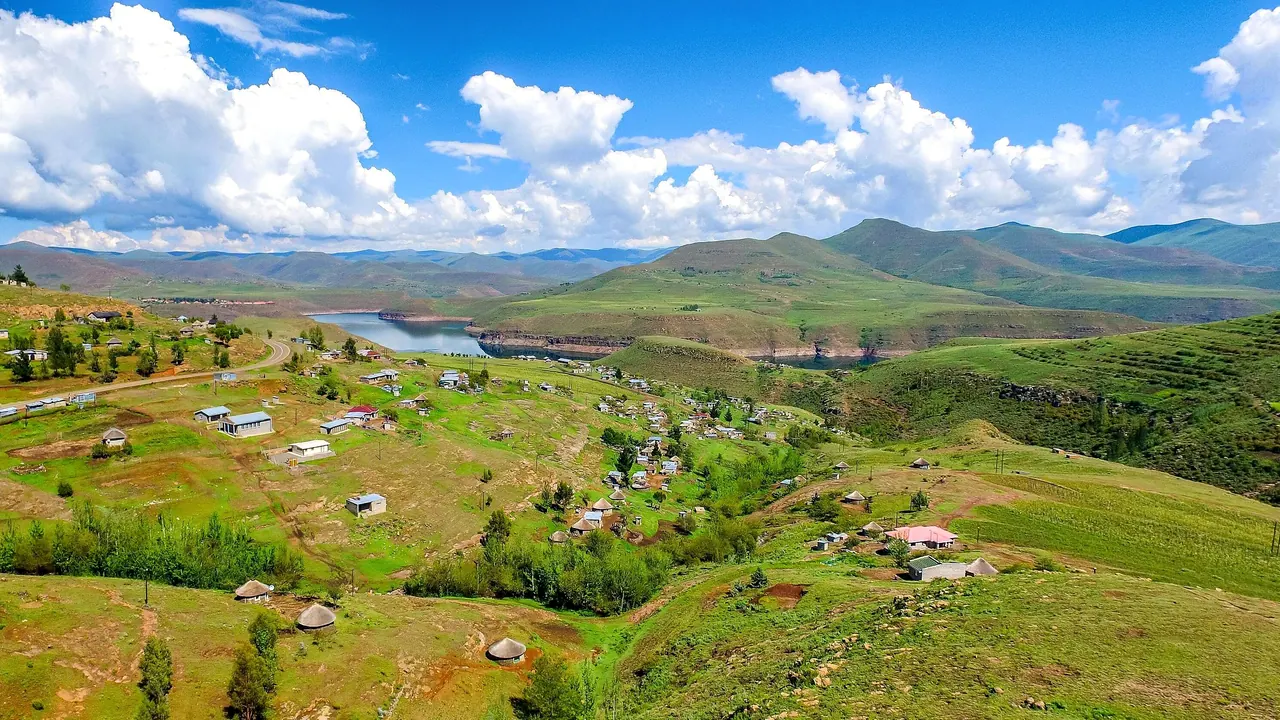
Photos: Eswatini by Jean-Marc Astesana from Voisins le Bretonneux, France, CC BY-SA 2.0, cropped; Lesotho by SkyPixels, CC BY-SA 4.0, cropped.
Eswatini or Lesotho?
Our verdict in twelve categories, each scored against the same fixed benchmark cities, and the climate month by month, so you can choose for your trip.
Choose Eswatini for
- families
- getting around
- shopping
Eswatini suits a compact bush trip with variety. In a country you can cross in about two hours, you can watch rhino and elephant at Hlane, cycle among zebra at Mlilwane, browse the craft workshops of the Malkerns Valley and soak in the Ezulwini warm spring, all from one valley base on a good main road. It is the easier choice for families, for first-timers in the region and for anyone who can time a visit to the Umhlanga or Incwala ceremonies.
Choose Lesotho for
- nature and the outdoors
- prices
- beaches
Lesotho is for travellers who want mountains and are willing to work for them. The rewards are pony treks between stone-hut villages from Malealea or Semonkong, the drop of the Maletsunyane Falls and the climb over Sani Pass towards the highest peak in southern Africa. The roads are slower and the comforts simpler, and there is little to do in the evenings, but for hikers and riders the scale and the silence beat anything Eswatini's smaller parks can offer.
Scoreboard
Twelve categories on one fixed scale from 0 to 100. The shaded stretch is the gap between the two.
Your match
Pick a travel style or drag the sliders, and both match scores follow your weighting.
Wins on families and getting around with your weighting.
Wins on nature and the outdoors and prices with your weighting.
What matters to you?
Category by category
What the scores mean for a trip.
Beaches & swimming
Both are landlocked and neither offers a swim beyond a lodge pool. In Eswatini the lowveld waters carry bilharzia and sometimes crocodiles. In Lesotho the highland rivers and reservoirs are simply too cold for most of the year. The practical difference is that Eswatini sits close to the Mozambican coast, so a sea stay is easier to tack on there.
Food & drink
Eswatini eats noticeably better. The Ezulwini and Malkerns valleys have farm cafés and lodge kitchens cooking with local produce, the lowveld supplies citrus, pineapples and sugar cane, and Manzini's market shows everyday Swazi cooking at its liveliest. It is still not a food trip, but a good dinner is easy to find.
In Lesotho the meal is usually papa with moroho greens or stewed meat, followed by a hearty set dinner at a highland lodge. Maseru has a handful of grill houses, while outside the capital the choice shrinks to roadside chicken. The one distinctive touch is village sorghum beer, sold at houses marked by a pole outside.
Where in Eswatini: Malkerns Valley, Ezulwini Valley, Manzini
Where in Lesotho: Maseru
Culture & sights
Eswatini's culture is a living monarchy rather than a set of monuments, and that gives it the edge if you time your trip well. Lobamba holds the parliament, the National Museum and the Sobhuza II memorial, but the real draw is seeing the Umhlanga Reed Dance or the Incwala rites. Outside those seasons there is little to fill the days.
Lesotho's heritage is in places rather than events: the mountain fortress and royal grave at Thaba-Bosiu, the museum and dinosaur footprints at Morija, and San rock paintings at Liphofung and in remote Sehlabathebe. It rewards anyone curious about Basotho history at any time of year, but it is a small offer.
Where in Eswatini: Lobamba, Ezulwini Valley
Where in Lesotho: Thaba-Bosiu, Morija, Sehlabathebe National Park, Liphofung
Nightlife
Neither country has a night out worth travelling for, and in both the usual evening is dinner and a drink by the lodge fire. Eswatini has slightly more on offer, with a casino resort strip in the Ezulwini Valley and weekend clubs in Mbabane and Manzini. Lesotho's going out is limited to a few Maseru bars, and in the highlands it is better not to drive after dark at all.
Where in Eswatini: Ezulwini Valley, Manzini
Where in Lesotho: Maseru
Nature & outdoors
Lesotho is the stronger choice for landscape. Nowhere in the country lies below about 1,400m. You can ride a Basotho pony between villages from Malealea or Semonkong, abseil beside the Maletsunyane Falls, drive up Sani Pass towards Thabana Ntlenyana at 3,482m, or hike the sandstone plateau of Sehlabathebe. Wildlife is sparse. What you come for is space.
Eswatini trades that scale for animals and variety. Hlane has lions, elephants and white rhino, Mkhaya protects black rhino, and at Mlilwane you can walk or cycle among antelope without a guide. Malolotja adds waterfalls and a canopy zipline, and the Great Usutu has whitewater rafting. It is gentler country, but far more of it is wildlife.
Where in Eswatini: Malolotja Nature Reserve, Hlane Royal National Park, Mkhaya Game Reserve, Mlilwane Wildlife Sanctuary
Where in Lesotho: Semonkong, Malealea, Sani Pass and Thabana Ntlenyana, Sehlabathebe National Park
Day trips
Neither country is built for day trips to other towns, and in both the best outings head into the countryside. From the Ezulwini Valley in Eswatini, the short hops are to the Malkerns craft route, Manzini's market and Mbabane, with the gold-rush town of Barberton across the northern border. From Maseru the outings lean towards history: Thaba-Bosiu, the Morija museum, the rock shelters of Ha Baroana and the weavers of Teyateyaneng.
Where in Eswatini: Malkerns Valley, Manzini, Mbabane
Where in Lesotho: Thaba-Bosiu, Morija, Teyateyaneng, Roma
Good for families
Eswatini is much the better family destination. Families can base themselves in the Ezulwini Valley, with lodge pools and self-catering cottages, then let children cycle past zebra and warthog at Mlilwane, watch elephant from the car at Hlane and try the Malolotja zipline if they are older. The caveats are a hire car and seasonal malaria in the eastern lowveld.
Lesotho really only suits adventurous families with older children. Malealea is the gentlest base, offering short pony rides and walks to rock paintings, and Semonkong suits teenagers who like to ride. With long mountain drives, cold nights and limited medical care, small children are hard work there.
Where in Eswatini: Mlilwane, Ezulwini Valley, Hlane, Malolotja
Where in Lesotho: Malealea, Semonkong
Getting around
Eswatini is the easier country to drive. You can cross it in roughly two hours, and a good main road links the Ngwenya border, Mbabane, Ezulwini and Manzini, although side roads to the reserves are slower.
Lesotho's paved roads to Semonkong, Malealea and Katse are steep and winding, so every trip takes longer than the map suggests, and Sani Pass and Sehlabathebe need a four-wheel drive. Neither country has passenger trains, and in both the minibus taxis are a struggle for visitors, so plan on hiring a car or joining a tour.
Where in Eswatini: Ezulwini Valley, Manzini
Where in Lesotho: Maseru, Malealea
Shopping & style
Eswatini gives a shopper more to do. Its craft workshops line the Malkerns and Ezulwini valleys, close to where most visitors stay, so buying becomes part of the trip rather than an errand. You can watch candles, baskets and woven cloth being made, stop at the glassworks near the Ngwenya border post, and look through carvings and beadwork at the Ezulwini handicraft market or at roadside stalls.
Lesotho has less to choose from, though what it has is very much its own. The things to take home are the Basotho blanket and the conical mokorotlo hat, both sold at the hat-shaped craft centre in Maseru, and the mohair tapestries from the weaving workshops at Teyateyaneng, an easy stop north of the capital. Beyond those few pieces there is little to look at, and neither country has fashion shopping worth the journey.
Where in Eswatini: Malkerns Valley, Ezulwini Valley, Ngwenya, Manzini
Where in Lesotho: Teyateyaneng, Maseru
Affordability
Both are cheap, and the money goes on different things. In Eswatini the bargain is wildlife: rest camps and huts at Mlilwane and Hlane cost far less than private game lodges in the region, and the Ezulwini Valley offers everything from hostels to resorts.
In Lesotho the bargain is time in the mountains. Pony treks and village walks at Malealea and Semonkong are cheap and led by local guides. Car hire is the main cost in both countries, but Lesotho's roads call for a vehicle with more clearance.
Where in Eswatini: Ezulwini Valley, Malkerns Valley, Mlilwane, Hlane
Where in Lesotho: Malealea, Semonkong, Maseru
Live music & performing arts
Eswatini has more to see and hear. The cultural village in the Ezulwini Valley stages regular Swazi song and dance, the Malkerns Valley hosts a long-running music festival with African and international acts, and the royal ceremonies at Lobamba bring song and dance on a huge scale.
Lesotho's own music is famo, an accordion-driven style you are more likely to hear on a minibus radio than at a venue. Organised performances come down to cultural shows near Thaba-Bosiu and the autumn arts festival at Morija.
Where in Eswatini: Lobamba, Ezulwini Valley, Malkerns Valley
Where in Lesotho: Morija, Thaba-Bosiu
Wellness & relaxation
Eswatini has the only real pampering of the two. The Ezulwini Valley has a warm mineral spring that people have bathed in for generations, and resort spas offering massage.
Lesotho's version of rest is silence. At Malealea there is no traffic, the nights are cold and starry, and the days are set by a walk or a pony ride. Either country suits a few quiet days, but only Eswatini offers warm water and treatments.
Where in Eswatini: Ezulwini Valley
Where in Lesotho: Malealea
When should you go?
Pick your month, and for a country the place in it. The climate figures are measured averages, not a forecast.
Mbabane (Eswatini) in July
Maseru (Lesotho) in July
Daytime high, °C
Rainfall in the month, mm
Where the figures come from
Mbabane (Eswatini) has no weather station within reach, so its figures come from a gridded climate model rather than a measured record, and read a broad area rather than one spot.
Maseru (Lesotho)'s temperatures are measured 68 km from the centre, at Ficksburg.
Maseru (Lesotho) has no rain gauge within 25 km of the centre, so its rainfall comes from a gridded climate dataset read at the destination rather than from a gauge further away.
Temperature and rainfall are climate normals, averaged over the years shown. Mbabane (Eswatini): 1991-2020 normals, TerraClimate 4 km grid at the town, no weather station within 90 km. Maseru (Lesotho): 1998-2020 (rainfall 1991-2020) normals, Ficksburg (67.7 km from centre).
Neither country is a beach destination in any month, so the season is about rain, warmth and walking. Both have wet summers and dry winters, from May to September. Mbabane, in Eswatini's highveld, is mild all year, with highs in the low to mid twenties, but summer is very wet, with about 219mm of rain in January. The dry winter months are pleasant for walking and are also the best time for game viewing in the lowveld parks.
Lesotho has bigger swings. Maseru, in the lowlands, reaches 29°C in December and January, with afternoon storms that turn the slopes green, and drops to highs of 18°C in June and July, when rainfall falls to about 7mm and the northern highlands can get snow. For trekking, the clear shoulder months of April and May or September and October avoid both the summer storms and the cold winter nights at altitude.
Which traveller are you?
On a family trip with children, Eswatini is far easier. Distances are short, Ezulwini lodges have pools and family rooms, and children can walk among zebra at Mlilwane. Lesotho's steep roads, cold nights and basic care beyond Maseru make it hard going.
For an outdoors trip, Lesotho wins. Pony trekking from Malealea, the abseil beside the Maletsunyane Falls and the Sani Pass escarpment add up to real mountain country. Eswatini has more big game, but its parks are smaller and tamer.
On a culture and arts trip, Eswatini has the edge, especially if timed for the Umhlanga Reed Dance or the Incwala rites at Lobamba, with cultural village shows and the Malkerns festival besides. Lesotho's Thaba-Bosiu and Morija are absorbing, but a few days cover them.
More comparisons
Each shares a side with Eswatini or Lesotho.
Where else could you go?
Set Eswatini or Lesotho against any other country.