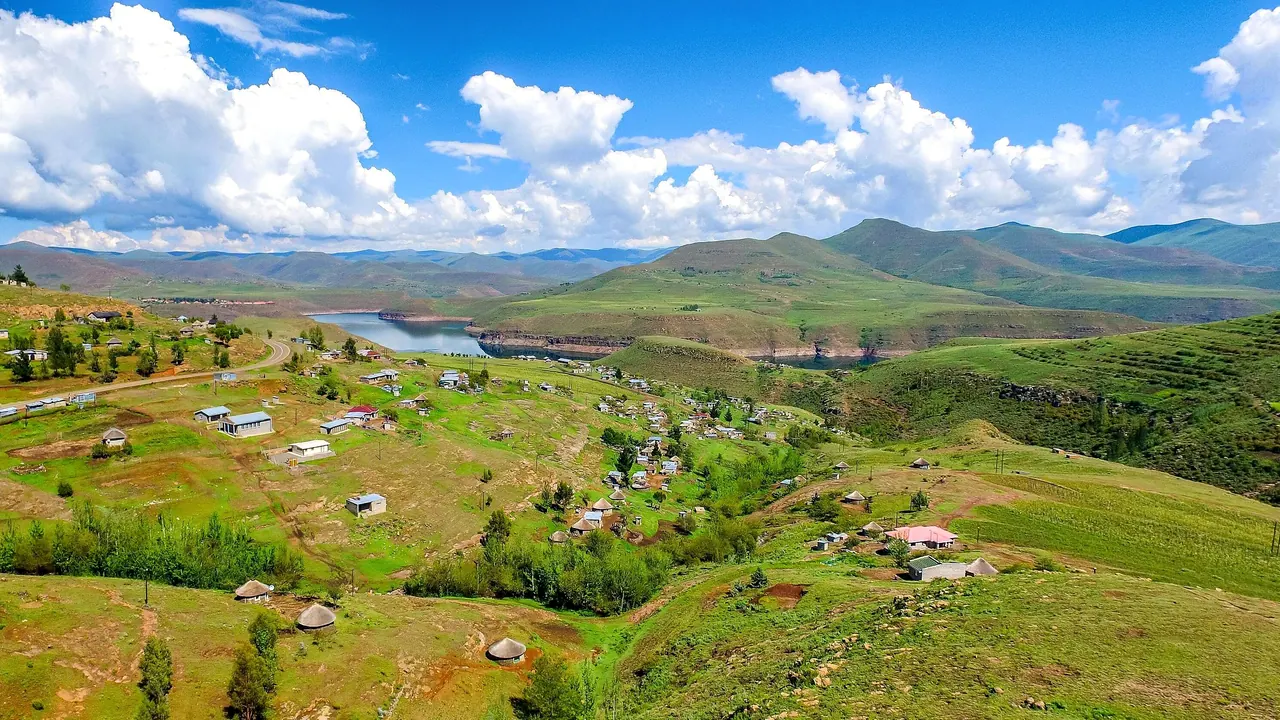
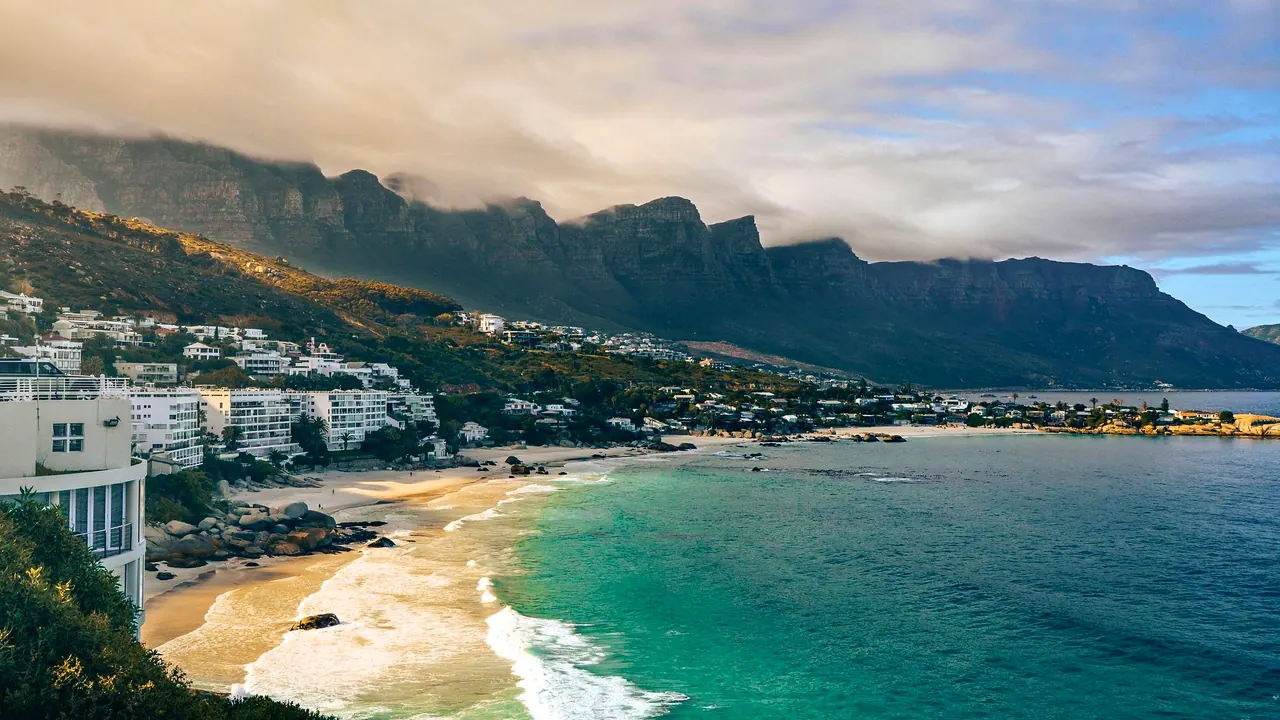
Photos: Lesotho by SkyPixels, CC BY-SA 4.0, cropped; South Africa by Andrea Gambirasio, Pexels License.
Lesotho or South Africa?
Our verdict in twelve categories, each scored against the same fixed benchmark cities, and the climate month by month, so you can choose for your trip.
Choose Lesotho for
- prices
Lesotho is for travellers who want mountains and not much else. That means riding a Basotho pony between stone-hut villages from Malealea or Semonkong, looking into the Maletsunyane gorge, climbing Sani Pass and ending each day by a lodge fire under a cold, starry sky. The country is small and entirely highland, so the trip is about space and silence, with a short helping of Basotho history at Thaba-Bosiu and Morija. Go knowing that food, evenings out and anything built for children are very thin.
Choose South Africa for
- beaches
- food and drink
- families
Choose South Africa for almost any broader trip. In one country you get Big Five safaris in Kruger, Table Mountain and the Cape Peninsula, warm Indian Ocean beaches in KwaZulu-Natal, long lunches in the Winelands and the history of the struggle against apartheid in Johannesburg and Cape Town. The cost of that range is flights or long drives between regions. Lesotho sits entirely inside South Africa, so many visitors add a few highland days to a South African route rather than choosing between them.
Scoreboard
Twelve categories on one fixed scale from 0 to 100. The shaded stretch is the gap between the two.
Your match
Pick a travel style or drag the sliders, and both match scores follow your weighting.
Wins on prices with your weighting.
Wins on beaches and food and drink with your weighting.
What matters to you?
Category by category
What the scores mean for a trip.
Beaches & swimming
Lesotho has no coast at all, and its highland rivers and reservoirs are too cold for bathing. A hotel or lodge pool is as close as it gets to swimming.
South Africa has two very different seas. The Indian Ocean off KwaZulu-Natal is warm enough for real swimming, at lifeguarded, shark-netted beaches such as Umhlanga or on the wilder Elephant Coast with its reef snorkelling. The Atlantic at Clifton and Camps Bay is beautiful but cold, while False Bay and the Garden Route are pleasant for swimming in high summer.
Where in South Africa: KwaZulu-Natal coast, Elephant Coast, Garden Route, False Bay
Food & drink
The two countries share the same maize porridge, papa in Lesotho and pap beside the South African braai. That is where the overlap ends. In Lesotho it is the meal itself, with greens, beans or stewed meat, home-brewed sorghum beer in the villages and a modest choice of grill houses in Maseru.
South Africa is a reason to travel in itself. You can taste Chenin Blanc and Pinotage at Stellenbosch and Franschhoek estates, eat Cape Malay curries in the Bo-Kaap, find bunny chow in Durban and dine more widely in Johannesburg than anywhere in Lesotho.
Where in Lesotho: Maseru
Where in South Africa: Cape Winelands, Cape Town, Johannesburg, Durban
Culture & sights
Both countries have San rock paintings, at Liphofung and Sehlabathebe in Lesotho and across the Drakensberg on the South African side. Lesotho adds the story of the Basotho nation, told at Moshoeshoe I's mountain fortress of Thaba-Bosiu and the museum at Morija. It is absorbing, but a few days cover it.
South Africa offers much more. The Apartheid Museum, Constitution Hill and Soweto in Johannesburg, Robben Island and Zeitz MOCAA in Cape Town, and the Cradle of Humankind give it sites of world importance. The catch is that they lie far apart.
Where in Lesotho: Thaba-Bosiu, Morija, Sehlabathebe National Park, Liphofung
Where in South Africa: Johannesburg, Cape Town, Cradle of Humankind, Drakensberg
Nightlife
Nightlife is not something to plan a Lesotho trip around. Maseru has a few bars and, at weekends, somewhere to dance, but they are places where people who live in the capital meet, not a scene a visitor seeks out. Up in the highlands the lodge dinner is the whole evening, and since the mountain roads are no place to drive after dark, nobody goes on anywhere afterwards.
South Africa gives you cities whose nights are worth staying up for. A single district of Johannesburg, such as Braamfontein, Maboneng or Melville, has more going on than all of Maseru, and the city is the place to dance late to amapiano and house. Cape Town suits an evening built around drinks, with rowdy Long Street and the more polished wine bars of Bree Street close together, after summer sundowners on the Atlantic shore. In both cities you get between venues by ride-hailing rather than on foot.
Where in Lesotho: Maseru
Where in South Africa: Johannesburg, Cape Town, Durban
Nature & outdoors
This is Lesotho's strength. The whole country sits above about 1,400m, and you cross it on foot or on a Basotho pony, from Malealea and Semonkong to the Maletsunyane Falls, up Sani Pass towards Thabana Ntlenyana and across the Sehlabathebe plateau. Wildlife is sparse, and the reward is open highland on a huge scale.
South Africa still offers more, because it has the same Drakensberg seen from below plus everything Lesotho lacks. That means Big Five safaris in and around Kruger, Table Mountain and the penguins at Boulders, whales off Hermanus, the Garden Route forests and the iSimangaliso wetlands.
Where in Lesotho: Semonkong, Malealea, Sani Pass and Thabana Ntlenyana, Sehlabathebe National Park
Where in South Africa: Kruger National Park, Cape Peninsula, Garden Route, Drakensberg
Day trips
From Maseru the outings are short and few: Thaba-Bosiu, the Morija museum, Roma and the Ha Baroana rock shelters, and the weaving workshops of Teyateyaneng. After that, a day out in Lesotho means heading into the mountains.
South Africa's cities have better day trips. From Cape Town, Stellenbosch, Franschhoek and Paarl are each about an hour away, and Hermanus is not much further. From Johannesburg, the Gautrain reaches Pretoria in under an hour and the Cradle of Humankind is a short drive.
Where in Lesotho: Thaba-Bosiu, Morija, Teyateyaneng, Roma
Where in South Africa: Cape Town, Johannesburg, Durban
Good for families
Lesotho works only for adventurous families with older children. They do best at Malealea, with short pony rides and walks to rock paintings, or at Semonkong for teenagers keen to ride to the gorge rim. Steep roads, cold nights, simple rooms and limited medical care make it hard work with small children.
South Africa is far easier. Malaria-free reserves in the Eastern Cape and Pilanesberg bring safari within reach of younger children. Cape Town has the Boulders penguins, the Two Oceans Aquarium and the Table Mountain cable car, and Durban adds warm beaches and a marine park.
Where in Lesotho: Malealea, Semonkong
Where in South Africa: Cape Town, Eastern Cape, Durban, Pilanesberg
Getting around
You need a car in both countries, but the driving is very different. In Lesotho there are no trains, the minibuses are crowded, and the paved roads to Semonkong, Malealea and Katse climb and twist so slowly that map distances mislead you. Sani Pass and Sehlabathebe need a four-wheel drive.
South Africa is easier. Its main roads are good and clearly signposted, and domestic flights cut out the longest stretches between Cape Town, Johannesburg, Durban and Kruger. Around Johannesburg, the Gautrain is a rare stretch of useful rail.
Where in Lesotho: Maseru, Malealea
Where in South Africa: Cape Town, Garden Route
Shopping & style
Lesotho has a few distinctive things to bring home. They are the heavy Basotho wool blanket and the conical mokorotlo hat from the hat-shaped craft centre in Maseru, plus handwoven mohair tapestries from the Teyateyaneng workshops.
South Africa has both malls and local design. The big malls are at Sandton, Rosebank and the V&A Waterfront, and the more rewarding finds are in Woodstock's design studios, along Bree Street, in Maboneng and at weekend markets selling ceramics, beadwork and baskets.
Where in Lesotho: Teyateyaneng, Maseru
Where in South Africa: Cape Town, Johannesburg
Affordability
Both countries are kind to a modest budget, but in different ways. In Lesotho, everyday costs are low, the lodges at Malealea and Semonkong offer simple rooms and campsites, and treks with village guides cost little. The big unavoidable cost is a hire car that can handle mountain roads.
In South Africa, your money buys quality, with excellent restaurants, cheap estate wine, Garden Route cottages and Kruger rest camps at modest cost. Spending only climbs steeply at private safari lodges and at Cape Town's seaside hotels in high summer.
Where in Lesotho: Malealea, Semonkong, Maseru
Where in South Africa: Kruger National Park, Cape Winelands, Garden Route, Durban
Live music & performing arts
In Lesotho you mostly hear music by chance: famo accordion songs on minibus radios, or choirs and dances at cultural shows near Thaba-Bosiu. The Morija Arts and Cultural Festival each autumn is the one event worth planning around.
South Africa has a real stage. Protest theatre has its home at Johannesburg's Market Theatre, Cape Town's Artscape stages opera and ballet, and you can hear jazz in small clubs in both cities. The National Arts Festival in Makhanda and the Cape Town jazz festival anchor the calendar.
Where in Lesotho: Morija, Thaba-Bosiu
Where in South Africa: Johannesburg, Cape Town, Makhanda
Wellness & relaxation
Neither country has a bathing tradition. Lesotho's form of rest is simply quiet: the plateau at Malealea, with no traffic, long mountain views and days set by the pace of a pony ride. It has hardly any spas.
South Africa adds real comfort. There are estate spas with vineyard views around Franschhoek and Stellenbosch, plunge pools at bush lodges along Kruger and slow seaside retreats near Knysna. The hot springs at Montagu are busy family resorts rather than quiet places to soak.
Where in Lesotho: Malealea
Where in South Africa: Cape Winelands, Kruger National Park, Garden Route, Montagu
When should you go?
Pick your month, and for a country the place in it. The climate figures are measured averages, not a forecast.
Where in South Africa
Maseru (Lesotho) in July
Cape Town (South Africa) in July
Daytime high, °C
Rainfall in the month, mm
Where the figures come from
Maseru (Lesotho)'s temperatures are measured 68 km from the centre, at Ficksburg.
Maseru (Lesotho) has no rain gauge within 25 km of the centre, so its rainfall comes from a gridded climate dataset read at the destination rather than from a gauge further away.
Temperature and rainfall are climate normals, averaged over the years shown. Maseru (Lesotho): 1998-2020 (rainfall 1991-2020) normals, Ficksburg (67.7 km from centre). Cape Town (South Africa): 1991-2020 normals, Cape Town Airport (17.5 km from centre).
Lesotho has two clear seasons. From May to September it is dry, sunny and good for trekking. Days in Maseru are mild, but highland nights are bitterly cold and snow can close the passes. From November to March it is warm and green, but afternoon storms arrive and Maseru gets about 112mm of rain in January. Spring and autumn, roughly April and October, are the easiest compromise.
South Africa's seasons depend on the region. Cape Town is dry and sunny in summer from December to March and wet in winter, with about 97mm in June, and its Atlantic stays cool all year. Durban is the place to swim all year, with the sea between 21°C and 26°C. Kruger is best for game in the dry months from May to September, when its summer highs of around 33°C have eased. In the southern winter, Kruger and the Highveld share Lesotho's dry, clear weather, and summer suits Cape Town and the coast.
Which traveller are you?
For a beach and sun trip, South Africa is the only real option. Lesotho is landlocked. South Africa has the warm, lifeguarded Indian Ocean beaches of Durban and the Elephant Coast, plus the summer swimming at False Bay and Plettenberg Bay.
On a food and nightlife trip, South Africa wins easily. It has cellar-door tastings and estate restaurants in the Winelands, Cape Malay and Durban curries, and amapiano clubs in Johannesburg. Lesotho offers plain papa and stews, and evenings that end at the lodge.
On a trip on a tight budget, Lesotho stretches money slightly further on the ground. Its lodge rooms, campsites and village-guided pony treks at Malealea and Semonkong cost little. The main expense is a car, and South Africa's guesthouses and park camps are only a little dearer.
More comparisons
Each shares a side with Lesotho or South Africa.
Where else could you go?
Set Lesotho or South Africa against any other country.