South Africa
Stellenbosch
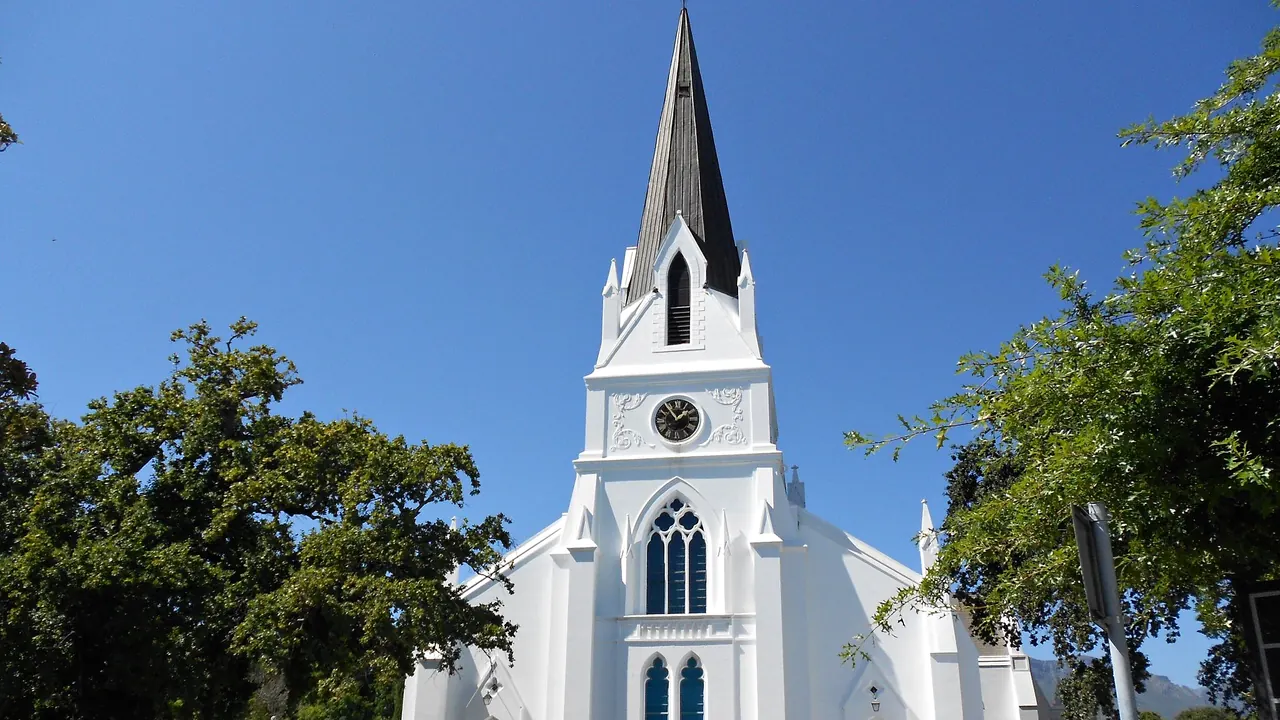
The Moederkerk and its white spire
- Nature & outdoors85
- Day trips76
- Food & drink72
Photo: Lugerda, CC BY-SA 3.0, cropped
Match
50
Every category weighted equally
- Beach & sun52
- Culture & arts47
- Food & nightlife46
- Family trip52
- Outdoors59
- Relax & unwind53
- Shopping & style46
- On a budget51
Stellenbosch in twelve categories
Our verdict on each, scored 0 to 100 against the same fixed benchmark cities, so a score means the same thing on every page.
Beaches & swimming. Scores 40 out of 100.
Food & drink. Scores 72 out of 100.
Culture & sights. Scores 40 out of 100.
Nightlife. Scores 35 out of 100.
Nature & outdoors. Scores 85 out of 100.
Day trips. Scores 76 out of 100.
Good for families. Scores 45 out of 100.
Getting around. Scores 25 out of 100.
Shopping & style. Scores 32 out of 100.
Affordability. Scores 66 out of 100.
Live music & performing arts. Scores 33 out of 100.
Wellness & relaxation. Scores 46 out of 100.
Stellenbosch category by category
Beaches & swimming
40Stellenbosch is an inland valley town, so the sea is an outing, not part of daily life. The nearest beaches are on False Bay. Strand and Gordon's Bay are about half an hour by car, and Muizenberg, with its long surf beach and striped bathing huts, is a little further. False Bay is the warmer side of the Cape, reaching around 19-21°C in high summer, and Gordon's Bay has sheltered water that suits a calm swim. The Atlantic beaches of the Cape Peninsula are further off and much colder.
In town, swimming means a hotel or guesthouse pool, and in the heat of January and February most visitors are glad of one.
Food & drink
72Food and wine are the reason most people come to Stellenbosch. The valley has more than a hundred and fifty wine farms, from historic Cape Dutch estates to modern cellars. Tasting rooms pour Chenin Blanc, Cabernet, Pinotage and Cape blends at prices that can surprise European visitors. The serious cooking happens on the estates: long tasting menus overlooking vineyards, relaxed farm lunches under oak trees, and picnics on the lawns in summer. Helshoogte, Jonkershoek and the slopes of the Simonsberg and Helderberg are where the most celebrated tables are.
The town itself is more casual, with student cafés, bakeries and bistros around Church Street and Dorp Street, and weekend food markets. Look out for Cape Malay and Afrikaans dishes such as bobotie, bredie and melktert, and for a proper braai. Street food is not much of a thing here, and outside the estates the range thins quickly.
Culture & sights
40Founded in the seventeenth century, Stellenbosch is one of the oldest European settlements in South Africa. It has the best-kept historic streetscape in the region: whitewashed Cape Dutch and Georgian houses, gabled facades and long avenues of oak trees, which gave it the nickname Eikestad, the city of oaks. Dorp Street is the street to walk. The Village Museum covers four houses from different periods, the Moederkerk has a fine neo-Gothic spire, and the Braak is the old village green, surrounded by early buildings.
The university adds a botanical garden and modest art and history collections, and private galleries show contemporary South African art. The historic wine estates are part of the heritage too. Everything can be seen in a day or two, and none of it is of world rank.
Nightlife
35Nights out in Stellenbosch are shaped by its large university. In term time, the streets around Bird Street and Plein Street fill with student pubs, sports bars and a few dance venues that stay loud late on weekends. For older visitors, evenings tend to mean a long dinner, a glass of wine on a terrace and an early night before another day of tastings.
During the long summer break and the other university vacations the town gets much quieter. Anyone after a real club scene or late cocktail bars heads to Cape Town.
Nature & outdoors
85Stellenbosch sits in a bowl of jagged sandstone mountains, and the landscape is a big part of being here. The Jonkershoek Nature Reserve begins at the edge of town, with trails up to waterfalls, fynbos slopes and views across the vineyards. The Helderberg, Simonsberg and Banhoek peaks frame every road. The valley is one of the country's main mountain-biking centres, with networks of singletrack running through wine farms and forest. Road cyclists ride the mountain passes.
Within about an hour there is Table Mountain and the trails of the Cape Peninsula. Over Sir Lowry's Pass are the Hottentots Holland and Kogelberg reserves, with their rich fynbos. Whale watching along the Walker Bay coast is a little further. Spring brings wildflowers, and summer is hot and dry, so the best hiking is in the early morning.
Day trips
76The obvious day out is Cape Town, under an hour away by car, with the V&A Waterfront, Bo-Kaap, the Castle of Good Hope, the museums and the boats to Robben Island. Closer to home, the Winelands make a chain of easy trips. Franschhoek, with its Huguenot heritage and estate restaurants, is about half an hour over the Helshoogte Pass. Paarl has the Taal Monument and old wine cellars, and Wellington and Somerset West are nearby.
Further out, Hermanus is about an hour and a half away on the coast, and Tulbagh's restored Church Street and the Robertson wine valley lie inland at a similar distance. Most trips need a car or a booked tour, because public transport does not reach them in a useful way.
Good for families
45Stellenbosch is a pleasant, relaxed place for a family, but it is made for adults who like wine. Some estates welcome children with lawns, playgrounds, farm animals and picnic baskets, and a few have open-air play areas so that parents can taste in peace. Just outside town there is a small wildlife park with giraffes and other animals, and the forest trails of Jonkershoek suit older children.
Distances between attractions mean a lot of time in the car. Summer heat can be hard on small children, and the valley has few attractions designed for children. Families usually pair it with Cape Town's aquarium, beaches and Table Mountain cable car.
Getting around
25The historic centre is small, flat and easy to walk, with shaded streets, cafés and museums within a few blocks of each other. Beyond that, a car becomes necessary. The wine farms are spread across the valleys along winding roads, and public transport, including the suburban train to Cape Town, is of little practical use to visitors. Most hire a car or use ride-hailing apps, which work well. Some also join hop-on hop-off wine tours, which take the problem of drinking and driving out of the day. Cycling between nearby estates is possible for confident riders.
Shopping & style
32Shopping in Stellenbosch is small-scale and mostly about taking the region home. The best thing to buy is wine, straight from the cellar doors, and many estates will ship it. Dorp Street and the streets around the Braak have art galleries, ceramics and design shops, and a long-established general store with an old-fashioned clutter of preserves, sweets and curios. Weekend markets on the wine farms sell crafts, food and produce. For fashion or department stores, people go to Cape Town or the large malls on the edge of town.
Affordability
66Stellenbosch is one of the pricier towns in South Africa, but for most visitors from Europe or North America it is still good value. Wine tastings, bottles from the cellar door and long lunches on wine estates cost much less than the same experience in other famous wine regions. Guesthouses and self-catering cottages are reasonably priced. The well-known estate hotels and celebrated tasting menus charge international rates, though, and a hire car or tours add a steady cost, because getting around without one is hard.
Live music & performing arts
33The university's music conservatorium has a concert hall with a steady season of recitals and chamber and orchestral concerts in term time. In summer, an open-air amphitheatre on a wine estate holds evening concerts under the stars. The town's biggest cultural event is its long-running Afrikaans arts festival in the autumn, which fills halls and gardens with theatre, music and readings for about ten days. Outside these, the programme is thin. For opera, ballet or larger theatre, people make the drive to Cape Town.
Wellness & relaxation
46Stellenbosch has no thermal springs or bathing tradition. What it offers instead is a slow pace. Days drift between long lunches, shaded verandas and gardens with mountain views, and the valleys around town are very quiet. Several of the larger wine estates and country hotels have proper spas with treatment rooms and pools, and some guesthouses offer massages. It suits travellers who want a restful few days, but wellness here means comfort and calm rather than a culture of spas or baths.
When should you go?
Pick a month to see what it is like. The climate figures are measured averages, not a forecast.
Stellenbosch in July
Daytime high, °C
Rainfall in the month, mm
The whole year
Shaded against this city’s own year: the deepest cell is its best month for that figure and the palest its weakest.
Temperature and rainfall are climate normals, averaged over the years shown. Stellenbosch: 1991-2020 normals, Cape Town Airport (24.7 km from centre).
Before you go
| Measure | Stellenbosch |
|---|---|
| Official language | English, Zulu, Xhosa, Afrikaans, Venda, Northern Sotho, Swazi, Tswana, Tsonga, Sesotho, Southern Ndebele, South African Sign Language |
| Currency | Rand (ZAR) |
| Sockets | CMN230 V, 50 Hz |
| Driving side | Left |
| Time zone | UTC+2 |
| Emergency number | 112 |
| Elevation | 136 m |
| Main airport | Cape Town International Airport (CPT)24 km from centre45 non-stop destinations |
| Public holidays this year | 13 days |
By the numbers
| Measure | Stellenbosch |
|---|---|
| City population | 80,316 |
| People per km² | 9,795 |
| Museums within 10 km | 2 |
| UNESCO World Heritage sites within 50 km | 2 |
| Swim season, months above 21 °C | None |
Compare Stellenbosch with
Every comparison with a written verdict behind it.