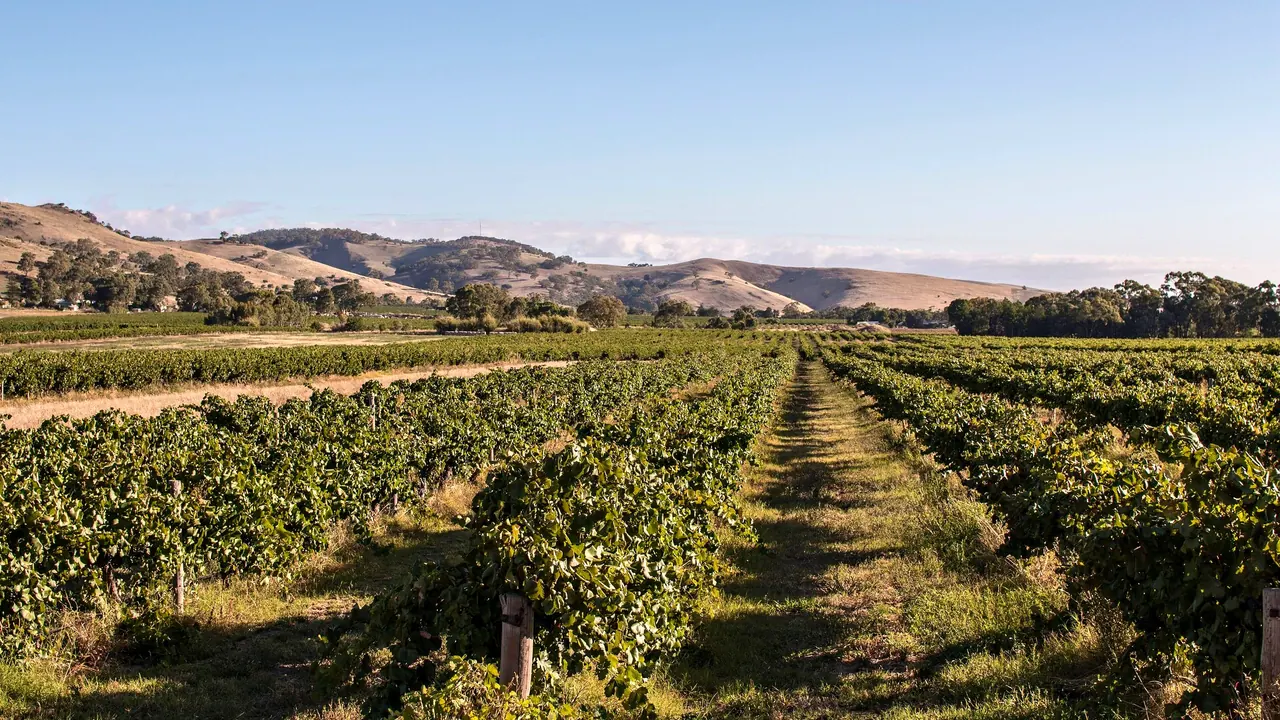
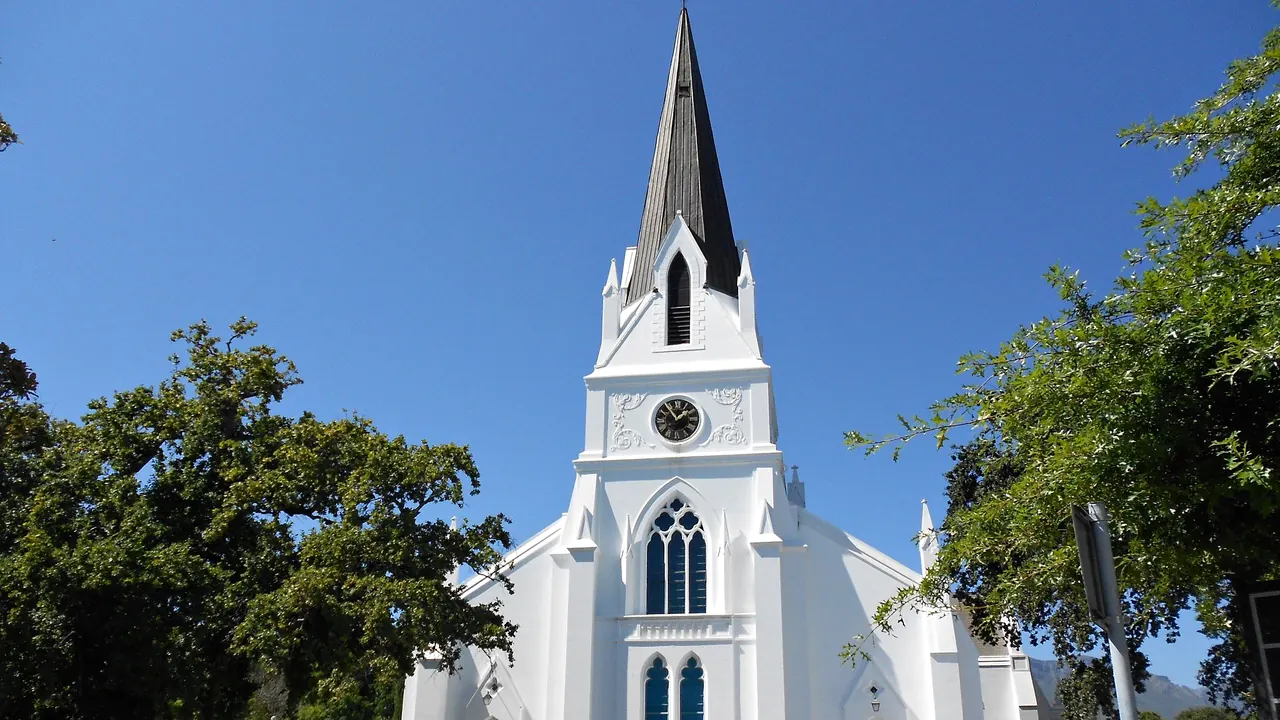
Photos: Barossa Valley by Olivier Lemoine, CC BY-SA 4.0, cropped; Stellenbosch by Lugerda, CC BY-SA 3.0, cropped.
Barossa Valley or Stellenbosch?
Our verdict in twelve categories, each scored against the same fixed benchmark cities, and the climate month by month, so you can choose for your trip.
Choose Barossa Valley for
- getting around
- food and drink
Pick the Barossa if the wine itself is the whole point. Its old-vine Shiraz and Grenache, the Riesling of Eden Valley and the Lutheran bakeries and butchers of its villages make it a focused eating and tasting trip. The towns sit close together along one road, and Adelaide is near enough for a city day. It suits couples on a slow wine weekend who expect little else from the evenings or the landscape.
Choose Stellenbosch for
- nature and the outdoors
- prices
- nightlife
Stellenbosch gives a broader trip for the same love of wine. Its estates sit beneath jagged mountains that you can hike and ride, Cape Town and the False Bay beaches are within easy reach, and a long stay costs a good deal less. It is the better choice for active travellers, families and anyone who wants more than tastings in a week.
Scoreboard
Twelve categories on one fixed scale from 0 to 100. The shaded stretch is the gap between the two.
Your match
Pick a travel style or drag the sliders, and both match scores follow your weighting.
Wins on getting around and food and drink with your weighting.
Wins on nature and the outdoors and prices with your weighting.
What matters to you?
Category by category
What the scores mean for a trip.
Beaches & swimming
Neither destination has a beach of its own, but Stellenbosch is much closer to one. Strand and the sheltered water of Gordon's Bay are about half an hour away on False Bay, and Muizenberg's surf beach with its striped bathing huts is only a little further. A swim can easily fit into a morning there.
From the Barossa, the sandy Adelaide beaches of Glenelg and Henley Beach take more than an hour to reach, so a beach day uses up most of the day. The Gulf St Vincent water is a few degrees warmer than False Bay when you get there.
Food & drink
Both are trips built around the table, and they are equally strong, but they taste different. The Barossa is about old Shiraz and Grenache vines, Eden Valley Riesling and food shaped by Silesian settlers: mettwurst, rye bread, bienenstich and the Angaston farmers market. Cheap or late meals are hard to find.
Stellenbosch pours Chenin Blanc, Pinotage and Cape blends from more than a hundred and fifty farms, and its best cooking is the estate tasting menu around Helshoogte or Jonkershoek. The student cafés and bistros along Church Street and Dorp Street add a casual layer, and bobotie, bredie and a proper braai give it a local flavour of its own.
Culture & sights
Stellenbosch has the richer townscape to walk. Dorp Street's whitewashed Cape Dutch and Georgian houses, the oak avenues, the Village Museum's four period houses and the old green of the Braak make a coherent historic centre that dates back to the seventeenth century.
The Barossa's heritage is more scattered and rural: the strip fields and cottages of Bethany, Lutheran spires at Tanunda and Langmeil, and the palm avenue up to Seppeltsfield. You can see either in a day or two, so neither is a reason to travel for culture alone.
Nightlife
In term time, Stellenbosch has a real if student-heavy night out. Pubs, sports bars and a few dance venues around Bird Street and Plein Street stay loud on weekends, although the town goes quiet during university breaks.
In the Barossa the evening ends after dinner, with perhaps a beer in an old country hotel in Tanunda or Nuriootpa. For anything later, both send you to the big city, but Cape Town is nearer to Stellenbosch than Adelaide is to the Barossa.
Nature & outdoors
This is where the two differ most. Stellenbosch sits in a ring of sandstone peaks, with the Jonkershoek reserve's trails to waterfalls and fynbos starting at the edge of town. It is also one of the country's main mountain-biking centres, and Table Mountain, the Kogelberg reserve and the whale-watching coast at Walker Bay are all within reach.
The Barossa's landscape is gentle and farmed: the view over the vines from Mengler Hill, the kangaroos and granite outcrops of Kaiserstuhl, and dawn balloon flights. It is pleasant to look at but offers little to climb.
Day trips
Stellenbosch has the stronger outings, led by Cape Town under an hour away, with Robben Island, Bo-Kaap and the Waterfront. Franschhoek over the Helshoogte Pass, Paarl's Taal Monument and the coast at Hermanus add a chain of very different days.
The Barossa's outings are pleasant rather than compelling. There is Adelaide's North Terrace and Central Market, the German village of Hahndorf, the motor museum at Birdwood and the mining heritage of Burra. The Clare Valley largely repeats the wine you are already drinking.
Good for families
Neither is made for children, but Stellenbosch copes better. Some estates have playgrounds, farm animals and play areas built so parents can taste in peace, a small wildlife park with giraffes is just outside town, and older children can walk the Jonkershoek forest trails.
Barossa families make do with the echo of the Whispering Wall, flat stretches of cycle path and town playgrounds, then drive more than an hour to Adelaide's zoo and beaches. Cape Town's aquarium and cable car are closer to Stellenbosch.
Getting around
The Barossa is the easier of the two to move around. Its four main towns line a single valley road, each ten to twenty minutes from the next, and a sealed cycle path on an old rail line links them through the vines, so a bike can replace the car for part of the trip.
Stellenbosch has a small, flat, shaded centre that is pleasant on foot, but its wine farms are spread across several valleys on winding roads. In both places, tasting and driving do not mix, so most visitors book a tour or a driver. In Stellenbosch, ride-hailing apps make this simpler.
Shopping & style
In both, what you take home is mostly wine from the cellar door, but Stellenbosch has a little more besides. Dorp Street and the streets around the Braak have galleries, ceramics and design shops, there are craft markets on the wine farms at weekends, and large malls sit on the edge of town.
The Barossa's other shopping is edible: smallgoods from the butchers, cheese and preserves from providores, and a few gift and antique shops in Angaston and Tanunda.
Affordability
The Barossa is the dearer place to spend a few days. Its accommodation is built around couples on a wine weekend, so the typical bed is a restored cottage or vineyard lodge, and tasting fees, a driver and a winery lunch add up on top of it. Staying cheaply is possible, but it means giving up the comfort the valley is known for.
Night for night, Stellenbosch costs a good deal less. Guesthouses and self-catering cottages are fairly priced, and a day of cellar-door tastings with a long lunch on an estate comes to much less than a similar day in the Barossa. The one cost you cannot avoid is transport, because a hire car or a booked tour is almost essential. The celebrated estate hotels and tasting menus charge international rates for anyone who wants them.
Live music & performing arts
Stellenbosch has a modest but regular programme. Its university conservatorium holds recitals and orchestral concerts in term time, a wine-estate amphitheatre hosts summer concerts under the stars, and the autumn Afrikaans arts festival fills the town with theatre and music for about ten days.
In the Barossa, live performance mostly means Lutheran choirs, brass bands at festivals, occasional pipe organ recitals at the Tanunda gallery and concerts during the Vintage Festival. Serious theatre or opera means driving to Adelaide or Cape Town.
Wellness & relaxation
Both are slow places without a bathing tradition, and either suits a restful few days. The difference is in the extras. Several larger Stellenbosch estates and country hotels have proper spas with pools and treatment rooms, set against mountain views. The Barossa has only a few treatment rooms at its resorts, and its calm comes instead from quiet villages and a cottage verandah over the vines.
When should you go?
Pick your month. The climate figures are measured averages, not a forecast.
Barossa Valley in July
Stellenbosch in July
Daytime high, °C
Rainfall in the month, mm
Where the figures come from
Barossa Valley's sunshine is measured 68 km from the centre, at Adelaide Airport.
Temperature and rainfall are climate normals, averaged over the years shown. Barossa Valley: 1991-2020 normals, Nuriootpa (4.5 km from centre). Stellenbosch: 1991-2020 normals, Cape Town Airport (24.7 km from centre).
Both valleys lie in the southern hemisphere, so summer runs from December to February and spring and autumn are the easiest seasons in each. The Barossa has the harder summer heat, with January highs around 30°C under long, cloudless days, so the autumn harvest weeks and the green months of October and November suit cellar-door touring best. Winter is its wetter season, with about 55mm a month from June to September and cool, greyer days, though the rain is modest. The sea off the Adelaide coast is warmest in late summer at about 22°C, the better swimming of the two.
Stellenbosch has a sharper split between its seasons. Summer is very sunny and almost rainless, a little less hot than the Barossa, but winter brings heavy rain, close to 97mm in June, even though the days stay milder. False Bay peaks at about 19°C, so swimming really belongs to January and February. For hiking and walking the streets, March and April or October and November are the months to aim for in both places.
Which traveller are you?
For an outdoors trip, Stellenbosch is far ahead. Jonkershoek's waterfall trails begin at the edge of town, mountain-bike singletrack runs through the wine farms, and Table Mountain is about an hour away. The Barossa offers gentle cycle paths and balloon flights instead.
On a trip on a tight budget, Stellenbosch stretches money much further. Tastings, cellar-door bottles and estate lunches cost less than in other famous wine regions, and guesthouses are fairly priced. The Barossa leans towards boutique cottages and fine-dining winery restaurants.
On a food and nightlife trip, the eating is equally strong but different in kind: German-Lutheran smallgoods and old-vine reds in the Barossa, Cape Malay dishes and estate tasting menus in Stellenbosch. Only Stellenbosch has a night out, in its student pubs during term time.
Before you go
| Measure | Barossa Valley | Stellenbosch |
|---|---|---|
| Official language | English | English, Zulu, Xhosa, Afrikaans, Venda, Northern Sotho, Swazi, Tswana, Tsonga, Sesotho, Southern Ndebele, South African Sign Language |
| Currency | Australian Dollar (AUD) | Rand (ZAR) |
| Sockets | I230 V, 50 Hz | CMN230 V, 50 Hz |
| Driving side | Left | Left |
| Time zone | UTC+9:30, UTC+10:30 in summer | UTC+2 |
| Emergency number | 000 | 112 |
| Elevation | - | 136 m |
| Main airport | Adelaide International Airport (ADL)35 non-stop destinations | Cape Town International Airport (CPT)24 km from centre45 non-stop destinations |
| Public holidays this year | 12 days | 13 days |
By the numbers
| Measure | Barossa Valley | Stellenbosch |
|---|---|---|
| Population | - | 80,316 |
| People per km² | - | 9,795 |
| Museums within 10 km | - | 2 |
| UNESCO World Heritage sites within 50 km | - | 2 |
| Swim season, months above 21 °C | 3 months | None |
Where else could you go?
Every comparison below shares a destination with this one, so you can follow Barossa Valley or Stellenbosch somewhere new.
- Cape Townvs Stellenbosch
- Hermanusvs Stellenbosch
- Kangaroo Islandvs Barossa Valley
- Knysnavs Stellenbosch
- Great Ocean Roadvs Barossa Valley
- Blue Mountainsvs Barossa Valley