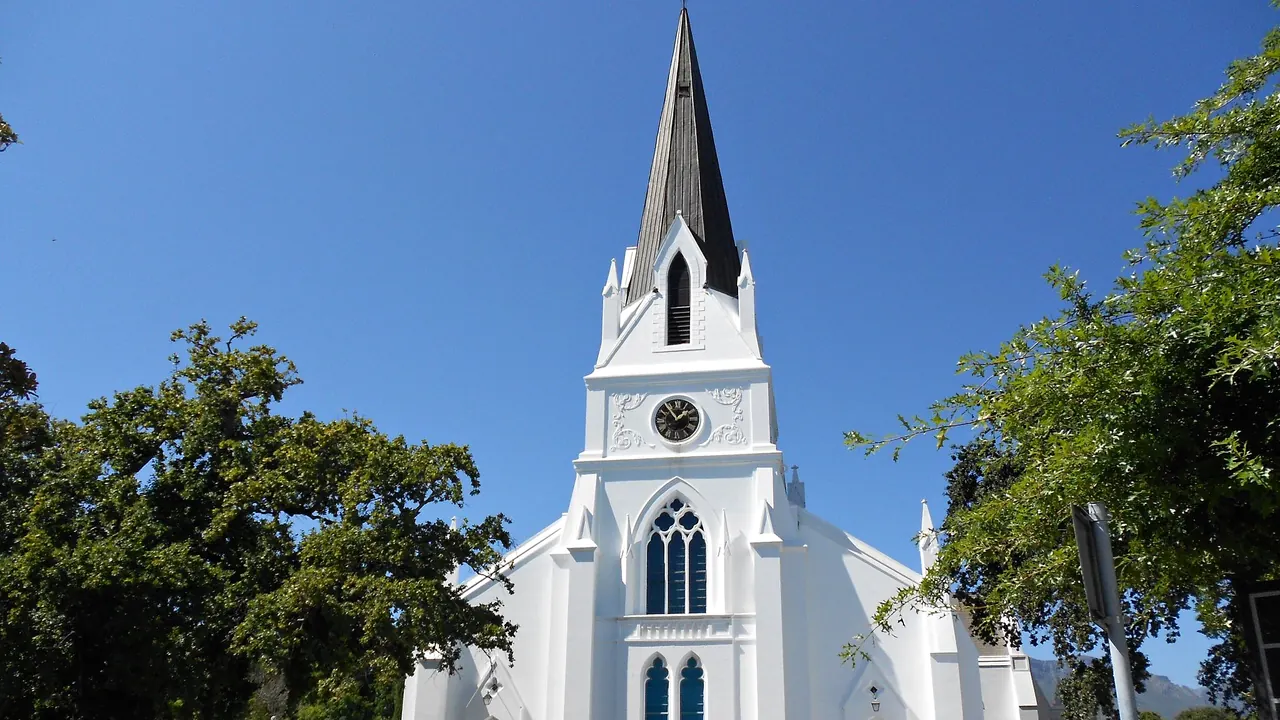
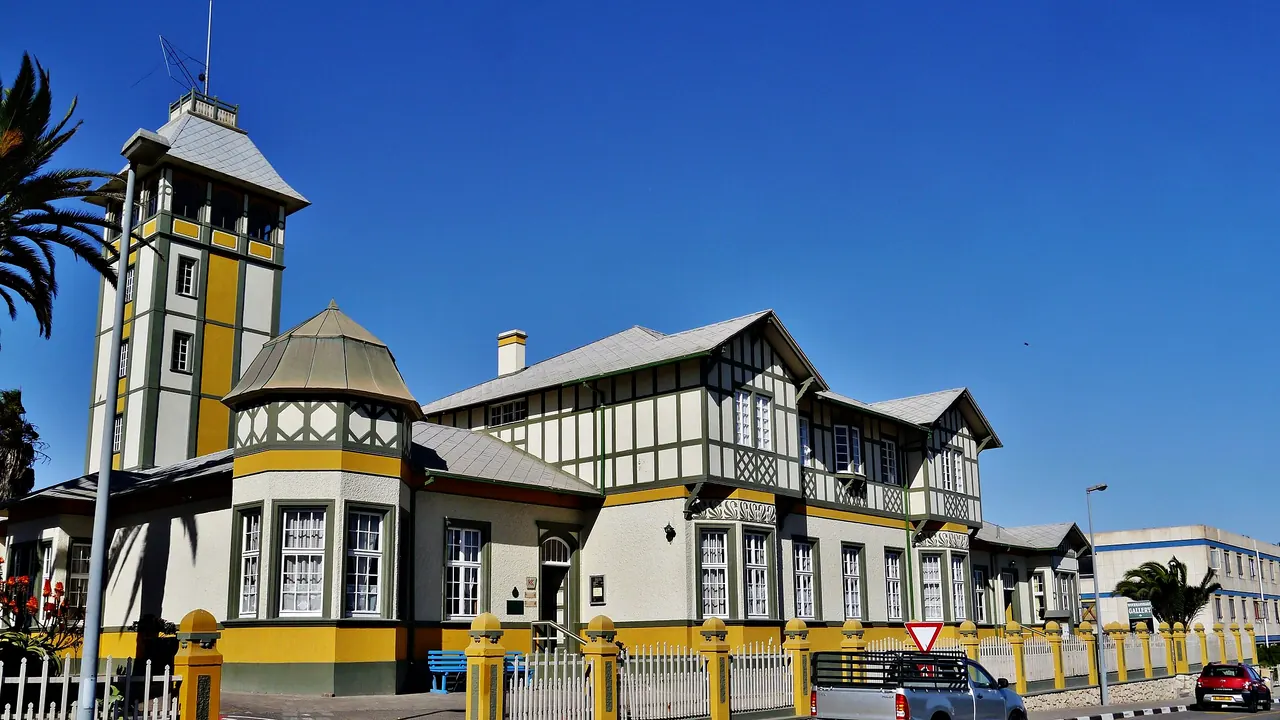
Photos: Stellenbosch by Lugerda, CC BY-SA 3.0, cropped; Swakopmund by Zairon, CC BY-SA 4.0, cropped.
Stellenbosch or Swakopmund?
Our verdict in twelve categories, each scored against the same fixed benchmark cities, and the climate month by month, so you can choose for your trip.
Choose Stellenbosch for
- day trips
- food and drink
- live music and the arts
Stellenbosch is the better choice if eating, drinking and landscape are what you want from the trip. It has wine estates with serious kitchens, mountain trails that start at the edge of town and Cape Town less than an hour away, so there is far more to fill a week. On top of that, you can find a concert or a student pub when you want one.
Choose Swakopmund for
- getting around
- families
Swakopmund works best as a stop on a Namibian road trip, not as a destination to weigh like for like. Come for the Namib dunes, the seals and flamingos around Walvis Bay, and a few cool, quiet days with fresh fish after the heat of the interior. Don't expect much beyond that.
Scoreboard
Twelve categories on one fixed scale from 0 to 100. The shaded stretch is the gap between the two.
Your match
Pick a travel style or drag the sliders, and both match scores follow your weighting.
Wins on day trips and food and drink with your weighting.
Wins on getting around and families with your weighting.
What matters to you?
Category by category
What the scores mean for a trip.
Beaches & swimming
Neither town is a beach destination, but Stellenbosch gives a swimmer more. Its sea is half an hour away by car on False Bay. Gordon's Bay has sheltered water and is warm enough for a proper swim in summer, and Muizenberg adds surf and striped bathing huts.
Swakopmund has the opposite problem. Long sandy beaches start at the end of the street, but the cold Benguela sea, the morning fog and the rough surf keep most people to a paddle and a sunset walk.
Food & drink
Food is Stellenbosch's strongest point, and the gap is wide. There are more than a hundred and fifty wine farms, the most celebrated tables are around Jonkershoek and the Helderberg, and long lunches among the vineyards make eating the main event. Bobotie and melktert fill in at the bistros in town.
Swakopmund eats well on a smaller scale: Walvis Bay oysters, kob and kingklip, oryx and kudu, and German cakes and beer in its coffee houses. A week covers the best of it, while Stellenbosch's estates could fill several visits.
Culture & sights
Stellenbosch has the deeper heritage. It dates from the seventeenth century and has the oak-lined Dorp Street, the Braak and the four period houses of the Village Museum, plus university collections and galleries of contemporary South African art. Swakopmund's interest is one striking contrast: half-timbered German buildings from the early 1900s set against the desert. Together with the museum and a tour of Mondesa township, that fills an afternoon or two, and in neither town are the sights the main reason to go.
Nightlife
Stellenbosch at least has a night out in term time. Student pubs, sports bars and a few dance venues around Bird Street and Plein Street stay loud late on weekends. Swakopmund's evenings run to a sundowner by the jetty or a beer in a German-style pub, and the town is mostly quiet well before midnight. Out of term, especially over the long summer break, Stellenbosch slows down too, and a long dinner becomes the main evening plan.
Nature & outdoors
Both are outdoor places, of very different kinds. Stellenbosch is mountain country, with Jonkershoek trails to waterfalls, fynbos slopes and mountain-bike singletrack through the wine farms. Table Mountain and the Kogelberg are within reach, which gives it the wider range.
Swakopmund is desert and cold coast. The dunes start at the edge of town, flamingos and pelicans fill the Walvis Bay lagoon, kayakers paddle among seals, and the Moon Landscape and Spitzkoppe lie inland. There are no forests or mountain trails, though.
Day trips
On day trips the two are far apart. From Stellenbosch, Cape Town is less than an hour away, with Robben Island and the Bo-Kaap. Franschhoek and Paarl are short hops through the Winelands, and Hermanus and Tulbagh make longer days out.
Swakopmund offers the port and boat departures at Walvis Bay, the small resort of Henties Bay and the stone cross at Cape Cross. The rock art at Spitzkoppe is the one cultural outing, and the bigger trips, to Sossusvlei or Damaraland, need a night away.
Good for families
For families the two are about even, for different reasons. Stellenbosch has estates with lawns, playgrounds and farm animals, and a small wildlife park outside town. But summer heat and long drives are hard on small children, so families often add Cape Town's aquarium and cable car.
Swakopmund is calmer and milder, and has its own marine aquarium and snake park in town. Older children get dune boarding and seal trips. Its weak point is the long drives on gravel roads to sights further out.
Getting around
Both towns have a compact, flat centre that is easy on foot, and both need a car beyond it, but Swakopmund is the simpler place to manage. Its seafront, jetty and restaurants are a few minutes apart, and activity operators collect you from where you are staying.
In Stellenbosch the wine farms are spread along winding valley roads, so visitors rely on a hire car, ride-hailing apps or a hop-on hop-off wine tour. The tour is the sensible answer to drinking and driving.
Shopping & style
Neither is a shopping destination, and people looking for fashion go elsewhere from both. The difference is in what you take home. In Stellenbosch it is wine bought at the cellar door and shipped, plus ceramics and gallery pieces from the streets around the Braak. In Swakopmund it is Namibian gemstones, karakul rugs, kudu-hide shoes and carvings from the craft markets by the lighthouse.
Affordability
Costs are similar. In both, everyday spending is low by European standards and the extras add up. In Stellenbosch the bargains are wine tastings and estate lunches, and the expense is the hire car, tours, and the best-known estate hotels and tasting menus.
In Swakopmund, fish, game and beer are cheap, but dune tours, boat trips and above all scenic flights and skydives are priced for international visitors. Rooms also book out early in December and January.
Live music & performing arts
Stellenbosch is the clear choice for an evening performance. The conservatorium runs recitals and orchestral concerts in term time, an amphitheatre on a wine estate holds concerts under the stars in summer, and the autumn Afrikaans arts festival fills the town for about ten days. Swakopmund has only occasional community shows and weekend pub bands, nothing you could plan an evening around.
Wellness & relaxation
Stellenbosch is the more comfortable choice for a restful stay. On its bigger wine estates and country hotels you can book a full spa day with a pool as well as treatments, and fit it around tastings and a long lunch. The quiet valleys around town help just as much.
Swakopmund's spa offer is smaller and simpler, a handful of day spas and massage rooms attached to lodges and guesthouses. Its rest is of another kind: cool sea air after the desert heat, slow walks along the promenade and cake in the afternoon. Neither town has hot springs or a bathing culture, and Swakopmund suits a pause on a road trip better than a stay planned around being pampered.
When should you go?
Pick your month. The climate figures are measured averages, not a forecast.
Stellenbosch in July
Swakopmund in July
Daytime high, °C
Rainfall in the month, mm
Where the figures come from
Swakopmund's temperatures are measured 26 km from the centre, at Walvis Bay-Pelican Point.
Swakopmund has no rain gauge within 25 km of the centre, so its rainfall comes from a gridded climate dataset read at the city rather than from a gauge further away.
Temperature and rainfall are climate normals, averaged over the years shown. Stellenbosch: 1991-2020 normals, Cape Town Airport (24.7 km from centre). Swakopmund: 2005-2025 (rainfall 1991-2020) normals, Walvis Bay-Pelican Point (26.2 km from centre).
Stellenbosch has a Mediterranean pattern. December to March is hot and very dry, with highs around 28°C in February and long, sunny days. That suits estate lunches, but it is warm enough that hikes are best done early. False Bay is at its warmest then, near 19°C, which is swimmable if you don't mind cool water. The rain sets in from May and peaks in June at about 97mm, with cool, wet days through August. Spring in September and October brings wildflowers and comfortable walking.
Swakopmund hardly has seasons. It is almost rainless all year, and daytime highs stay in the twenties, reaching about 27°C in May and dipping in August and September. The sea never gets properly warm and falls to 13°C in September, so there is no beach season to plan around. Any month works, and the mild coast is a relief whenever the interior is hot.
Which traveller are you?
For a food and nightlife trip, Stellenbosch wins easily. It has tasting menus and farm lunches on the wine estates, Cape Malay dishes in town and student pubs around Bird Street in term time. Swakopmund has a handful of seafront restaurants and quiet evenings that end early.
On a culture and arts trip, Stellenbosch is ahead again. It has Cape Dutch streets, the Village Museum, conservatorium concerts and the autumn Afrikaans arts festival, and Cape Town's museums are less than an hour away. Swakopmund has a colonial walk and one museum.
For adventure sports in the dunes, Swakopmund has something Stellenbosch can't offer. Sandboarding, guided quad biking, scenic flights and skydiving over the place where the Namib meets the Atlantic all start at the edge of town. Further south, 4x4 trips go to Sandwich Harbour.
Before you go
| Measure | Stellenbosch | Swakopmund |
|---|---|---|
| Official language | English, Zulu, Xhosa, Afrikaans, Venda, Northern Sotho, Swazi, Tswana, Tsonga, Sesotho, Southern Ndebele, South African Sign Language | English |
| Currency | Rand (ZAR) | Namibia Dollar (NAD) |
| Sockets | CMN230 V, 50 Hz | M220 V, 50 Hz |
| Driving side | Left | Left |
| Time zone | UTC+2 | UTC+2 |
| Emergency number | 112 | 112 |
| Elevation | 136 m | 6 m |
| Main airport | Cape Town International Airport (CPT)24 km from centre45 non-stop destinations | Walvis Bay International Airport (WVB)37 km from centre2 non-stop destinations |
| Public holidays this year | 13 days | 13 days |
By the numbers
| Measure | Stellenbosch | Swakopmund |
|---|---|---|
| City population | 80,316 | 75,921 |
| People per km² | 9,795 | 419 |
| Museums within 10 km | 2 | 1 |
| UNESCO World Heritage sites within 50 km | 2 | 0 |
| Swim season, months above 21 °C | None | None |
Where else could you go?
Every comparison below shares a destination with this one, so you can follow Stellenbosch or Swakopmund somewhere new.
- Cape Townvs Stellenbosch
- Windhoekvs Swakopmund
- Johannesburgvs Stellenbosch
- Durbanvs Stellenbosch
- Windhoekvs Stellenbosch
- Victoria Fallsvs Swakopmund