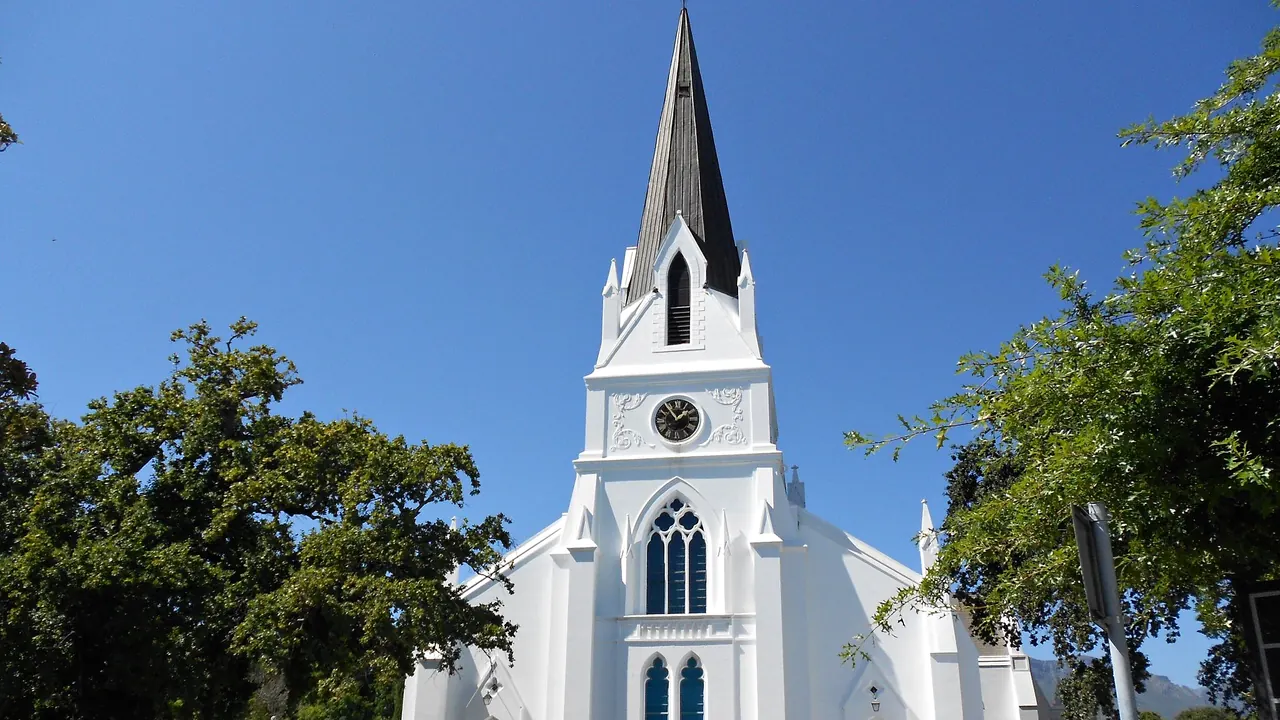
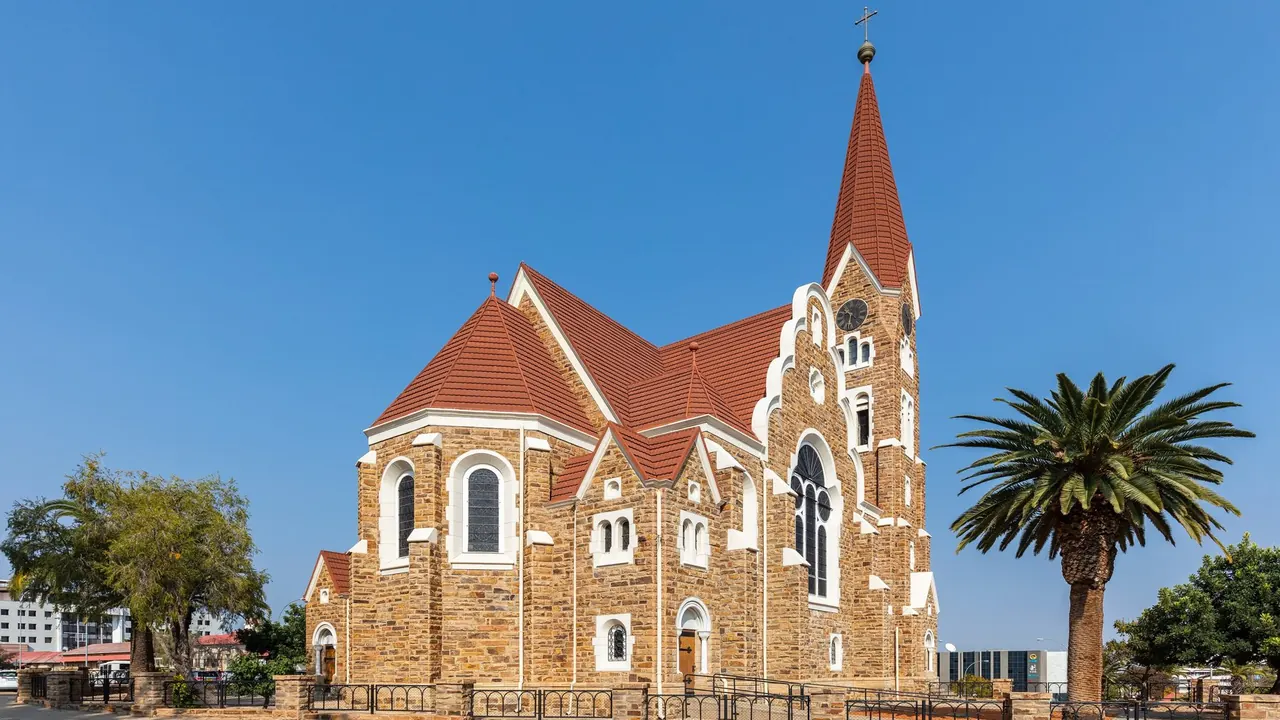
Photos: Stellenbosch by Lugerda, CC BY-SA 3.0, cropped; Windhoek by Diego Delso, CC BY-SA 4.0, cropped.
Stellenbosch or Windhoek?
Our verdict in twelve categories, each scored against the same fixed benchmark cities, and the climate month by month, so you can choose for your trip.
Choose Stellenbosch for
- day trips
- beaches
- food and drink
Stellenbosch is the choice for a trip built around pleasure: wine tastings, estate lunches under the oaks, and mountain trails and bike routes starting at the edge of town. Cape Town, Franschhoek and the False Bay beaches are all close enough for a day out. It suits couples and food lovers who want a comfortable base with enough to fill a week.
Choose Windhoek for
Windhoek does not lead in any category we score.
Windhoek makes sense mainly as the start or end of a journey through Namibia. If you are heading for Etosha or the dunes of Sossusvlei, you will find a quiet, reasonably priced capital. Game drives are half an hour away, there are kapana stalls and German bakeries, and one museum explains the country's history frankly. It rarely rewards more than a night or two on its own.
Scoreboard
Twelve categories on one fixed scale from 0 to 100. The shaded stretch is the gap between the two.
Your match
Pick a travel style or drag the sliders, and both match scores follow your weighting.
Wins on day trips and beaches with your weighting.
Has no clear advantage with the weighting you have chosen.
What matters to you?
Category by category
What the scores mean for a trip.
Beaches & swimming
Neither town is on the coast, but Stellenbosch is far closer to good swimming. False Bay is about half an hour's drive away, with sheltered water at Gordon's Bay and the long surf beach and painted huts of Muizenberg. The sea there warms to about 19°C in high summer.
Windhoek has nothing comparable. The nearest shore is at Swakopmund, four hours across the desert, where the Benguela current keeps the Atlantic too cold for a comfortable swim. Here, the guest-house pool is the only realistic place to swim.
Food & drink
Stellenbosch is a place to travel to for its food and wine. More than a hundred and fifty wine farms surround the town, and they have the best tables: long tasting menus with vineyard views around Helshoogte and Jonkershoek, farm lunches under the oaks and picnics on the lawns in summer. Back in town, the bistros around Church Street and Dorp Street serve bobotie, bredie and melktert.
Windhoek's food is simpler and more filling. Oryx and kudu are on most menus, kapana is grilled over open fires in Katutura, and the German bakeries and lagers brewed to the old purity law are a legacy of the colonial years. It has character, but there is little fine dining, and the choice wears thin on a longer stay.
Culture & sights
Both can be seen in a day or two, but Stellenbosch is the more rewarding place to explore on foot. Dorp Street is lined with whitewashed Cape Dutch houses and oak avenues, the Village Museum shows four period houses, and the Braak is still surrounded by early buildings. The historic wine estates add to the heritage.
Windhoek's sights are fewer and more political. The Christuskirche, the Alte Feste and the Tintenpalast stand together on one ridge. The Independence Memorial Museum, with its frank galleries on the Herero and Nama genocide and the liberation struggle, is the best reason to spend an afternoon here.
Nightlife
In Stellenbosch, the university calendar decides how lively the evenings are. In term time, the student pubs and sports bars around Bird Street and Plein Street stay loud until late at weekends. In the long breaks the town goes quiet, and for most older visitors an evening means dinner and a glass of wine on a terrace.
Windhoek's nights are shorter, and you need more local knowledge to enjoy them. The obvious options are beer gardens, lounge bars and a few weekend clubs playing amapiano and kwaito. The shebeens of Katutura, where much of the city goes out, are best visited with someone local. Walking between venues after dark is not advised, so visitors tend to take a taxi home early.
Nature & outdoors
Stellenbosch has the more dramatic setting, and it is easier to get out into. Jonkershoek's waterfall trails begin at the edge of town, and the valley is one of the country's main mountain-biking centres. Table Mountain and the fynbos of the Kogelberg are about an hour away.
Windhoek's surroundings are a quieter thornbush highland, but they bring wildlife closer. At Daan Viljoen, half an hour west, you can hike among zebra and oryx. Sossusvlei and Etosha, the landscapes that draw people to Namibia, need overnight trips rather than a day out.
Day trips
Stellenbosch is an excellent base for day trips. Cape Town is under an hour away, and Franschhoek is half an hour over the Helshoogte Pass. Paarl, Hermanus and Tulbagh's restored Church Street all make easy outings by car.
From Windhoek, the choice is thin. Okahandja's woodcarvers' market and the Gross Barmen hot springs fill a modest morning. Swakopmund and the great desert sites are four hours or more away and belong on a road trip with overnight stops.
Good for families
For families, Stellenbosch has more to fill the days between big outings. Several wine estates have lawns, playgrounds and farm animals, so children can play while parents taste. There is a small wildlife park just outside town, and Cape Town's aquarium and Table Mountain cable car are under an hour away. The downsides are the summer heat and long hours in the car.
Windhoek has no zoo or aquarium of note and little else made for children. Its one real draw is wildlife. On a game drive at Daan Viljoen or a nearby farm, children can easily see giraffe and zebra. A suburban guest house with a garden and pool makes a calm base for a night or two before Etosha.
Getting around
In both places the walkable centre is small, and beyond it a car does most of the work. The difference is in the alternatives. Stellenbosch has ride-hailing apps that work well, plus hop-on hop-off wine tours that spare you driving after tastings. In Windhoek, visitors book taxis through their lodging, the shared sedan taxis take some confidence, and walking after dark is best avoided.
Shopping & style
Neither is worth the trip for shopping, and in both, fashion means a suburban mall. What you take home is what differs. From Stellenbosch, it is wine from the cellar door, shipped if needed, plus ceramics and art from the streets around Dorp Street and the Braak. From Windhoek, it is Herero dolls, baskets, ostrich-shell jewellery and karakul wool from the Namibia Craft Centre in the old brewery.
Affordability
Both are good value for visitors from Europe, and in both the cost rises because of the car or tours you can hardly do without. The difference is where the money goes. In Stellenbosch, tastings and estate lunches are the bargain and the celebrated tasting menus are the splurge. In Windhoek, the city stay itself is inexpensive, but the safari lodges and guided trips around it are priced for an international market.
Live music & performing arts
Stellenbosch gives you more to plan around. The university conservatorium holds recitals and orchestral concerts in term time, and a wine-estate amphitheatre hosts evening concerts in summer. The long-running Afrikaans arts festival fills the town for about ten days in autumn.
Windhoek relies on the National Theatre and student concerts at the College of the Arts. Shambo and Namibian kwaito turn up in bars, but there is no regular circuit, so check what is on during your stay.
Wellness & relaxation
Stellenbosch is the easier place to slow down. Neither town has a bathing tradition, so here rest comes from the rhythm of the days: lunches that run into the afternoon, shaded verandas looking up at the peaks, and valleys that fall very quiet once you leave town. If you want treatments as well, the larger wine estates and country hotels have proper spas with pools.
Windhoek's calm is sparser: low-rise suburbs, garden guest houses, wide skies and clear, cool winter nights. Its spas are limited to hotels and lodges, some of them on the game farms outside the city. The thermal pools at Gross Barmen, about an hour north, are something Stellenbosch cannot match. Even so, the city works best as a day of rest before or after a long road trip.
When should you go?
Pick your month. The climate figures are measured averages, not a forecast.
Stellenbosch in July
Windhoek in July
Daytime high, °C
Rainfall in the month, mm
Temperature and rainfall are climate normals, averaged over the years shown. Stellenbosch: 1991-2020 normals, Cape Town Airport (24.7 km from centre). Windhoek: 1991-2020 (sunshine 1971-2000) normals, Windhoek (1.7 km from centre).
Stellenbosch is at its best from November to March, when days reach about 28°C, there is almost no rain and the sun shines for long hours. False Bay is warmest then too, around 19°C, which is enough for a refreshing swim. From June to August the valley is cool and wet, with close to 97mm of rain in June. Spring brings milder, drier walking weather again.
Windhoek's year runs the other way. Its rain falls in the hot summer, peaking near 96mm in February. May to September is almost completely dry and very sunny, with mild days that suit walking and game drives. The months before the rains are the hardest for being outdoors, with highs climbing to 33°C by December. That is exactly when Stellenbosch is at its most pleasant.
Which traveller are you?
For a food and nightlife trip, Stellenbosch is the clear pick. Estate tasting menus, farm lunches and cellar-door wines give it real depth, and student bars add late nights in term time. Windhoek's game dishes and beer gardens have character but little range.
On a beach and sun trip, Stellenbosch at least puts the sea within reach. Sheltered False Bay water is about half an hour away, and the summers are long and dry. Windhoek is four hours from a coast too cold for comfortable swimming.
For a wildlife trip, Windhoek is the better starting point. You can hike among zebra and oryx at Daan Viljoen, half an hour away, private game farms run guided drives, and Etosha is a long drive north. Stellenbosch offers only a small wildlife park.
Before you go
| Measure | Stellenbosch | Windhoek |
|---|---|---|
| Official language | English, Zulu, Xhosa, Afrikaans, Venda, Northern Sotho, Swazi, Tswana, Tsonga, Sesotho, Southern Ndebele, South African Sign Language | English |
| Currency | Rand (ZAR) | Namibia Dollar (NAD) |
| Sockets | CMN230 V, 50 Hz | M220 V, 50 Hz |
| Driving side | Left | Left |
| Time zone | UTC+2 | UTC+2 |
| Emergency number | 112 | 112 |
| Elevation | 136 m | 1,650 m |
| Main airport | Cape Town International Airport (CPT)24 km from centre45 non-stop destinations | Hosea Kutako International Airport (WDH)41 km from centre15 non-stop destinations |
| Public holidays this year | 13 days | 13 days |
By the numbers
| Measure | Stellenbosch | Windhoek |
|---|---|---|
| City population | 80,316 | 486,169 |
| People per km² | 9,795 | 95 |
| Museums within 10 km | 2 | 5 |
| UNESCO World Heritage sites within 50 km | 2 | 0 |
| Swim season, months above 21 °C | None | - |
Where else could you go?
Every comparison below shares a destination with this one, so you can follow Stellenbosch or Windhoek somewhere new.
- Cape Townvs Stellenbosch
- Swakopmundvs Windhoek
- Livingstonevs Windhoek
- Johannesburgvs Windhoek
- Johannesburgvs Stellenbosch
- Durbanvs Stellenbosch