South Africa
Cape Town
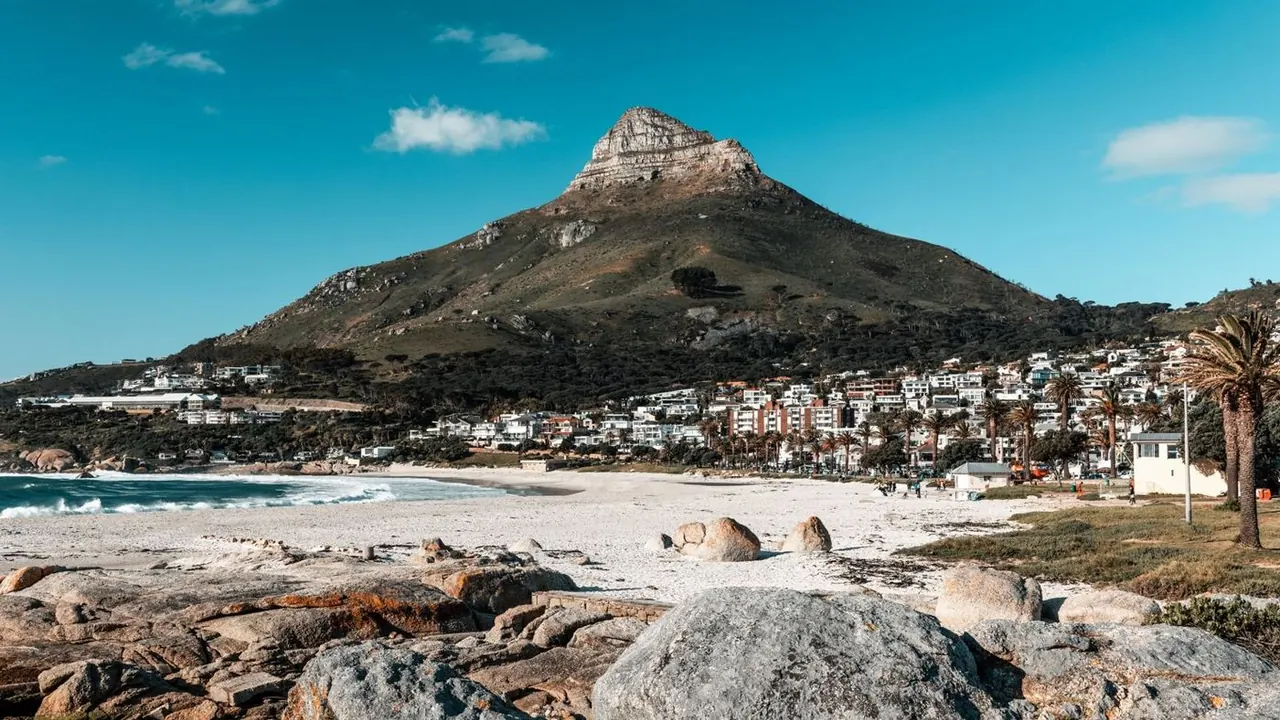
Lion's Head above Clifton Beach
- Nature & outdoors98
- Food & drink72
- Affordable cities72
Photo: Stephan Louis, Pexels License
Match
61
Every category weighted equally
- Beach & sun62
- Culture & arts58
- Food & nightlife58
- Family trip62
- Outdoors67
- Relax & unwind62
- Shopping & style57
- On a budget62
Cape Town in twelve categories
Our verdict on each, scored 0 to 100 against the same fixed benchmark cities, so a score means the same thing on every page.
Beaches & swimming. Scores 58 out of 100.
Food & drink. Scores 72 out of 100.
Culture & sights. Scores 60 out of 100.
Nightlife. Scores 60 out of 100.
Nature & outdoors. Scores 98 out of 100.
Day trips. Scores 68 out of 100.
Good for families. Scores 58 out of 100.
Getting around. Scores 35 out of 100.
Shopping & style. Scores 50 out of 100.
Affordability. Scores 72 out of 100.
Live music & performing arts. Scores 52 out of 100.
Wellness & relaxation. Scores 45 out of 100.
Cape Town category by category
Beaches & swimming
58Cape Town has two very different coasts. On the Atlantic side, Clifton's four coves, Camps Bay and Llandudno are some of the most beautiful beaches anywhere, with white sand under granite boulders and the Twelve Apostles behind. The water there comes up from the Antarctic, though, and often sits around 12°C to 15°C even in midsummer. Most people sunbathe, take a quick, sharp dip and get out again.
For actual swimming, go to False Bay, about half an hour away. In summer the water at Muizenberg, St James, Kalk Bay's tidal pools and Boulders reaches about 18°C to 21°C, with gentle surf, painted bathing huts and penguins sharing the sand. Beach life is a big part of a summer stay from December to March. For the rest of the year the beaches are for looking at, not swimming.
Food & drink
72Eating in Cape Town brings together a creole kitchen of its own, a serious restaurant scene and some of the best wine country in the southern hemisphere, which starts on the city's edge. Cape Malay cooking, from the Bo-Kaap and the old Muslim quarters, gives the city its own flavours: fragrant curries, bobotie, samoosas, koeksisters and the gatsby, a huge filled roll that sells in takeaways across the Cape Flats. The braai, or wood-fire grill, and line fish such as snoek and yellowtail eaten by the harbour at Kalk Bay or Hout Bay complete the local picture.
The city's ambitious chefs cluster around Bree Street, the City Bowl and Woodstock's converted warehouses. Tasting menus are inventive and cost well below the Northern Hemisphere norm. Coffee culture is strong, weekend food markets fill old industrial buildings, and the wine lists lean heavily on Chenin Blanc, Pinotage and Cape blends from estates less than an hour away. What it lacks is a dense street-food culture you can graze through on foot.
Culture & sights
60Cape Town's sights are less about grand architecture and more about a hard, layered history. Robben Island, reached by ferry from the V&A Waterfront, is where Nelson Mandela spent most of his imprisonment, and former prisoners have long led tours there. The District Six Museum tells the story of a community removed under apartheid, and the Castle of Good Hope, the oldest surviving colonial building in the country, recalls the Dutch East India Company's settlement.
Around the Company's Garden, the original Dutch vegetable garden, you'll find the South African Museum, the National Gallery and Parliament. The Bo-Kaap's brightly painted houses and old mosques climb the slopes of Signal Hill. Zeitz MOCAA, in a converted grain silo, is a major museum of contemporary African art. That makes three or four days of meaningful sightseeing rather than a dense historic city, and much of the colonial fabric survives in fragments, not whole quarters.
Nightlife
60Going out in Cape Town centres on a few streets in the City Bowl. Long Street is the rowdy backpacker strip with balconied bars and clubs. Bree Street and Kloof Street are for cocktail bars, wine bars and late dinners that run on. De Waterkant is the city's long-established gay quarter. In summer there's a strong sundowner habit: drinks on Camps Bay's beachfront or a rooftop as the sun drops into the Atlantic, and on weekends people go on to clubs that run into the small hours.
The scene is sociable and good value, but spread out. Most people use ride-hailing between areas at night rather than walking, and the quieter streets feel unsafe after dark. Outside the December to March season, things are a lot calmer.
Nature & outdoors
98Few cities sit so directly inside wild landscape. Table Mountain rises straight behind the centre, and you can reach its flat summit by cableway or by hiking up Platteklip Gorge or the longer routes from Kirstenbosch. Lion's Head is a short, steep climb that locals do for sunrise or under a full moon, and the whole mountain chain forms a national park that runs down the peninsula to the cliffs of Cape Point. The fynbos that covers it belongs to the smallest and richest of the world's six floral kingdoms, and Kirstenbosch botanical garden lies on the mountain's eastern slopes.
Wildlife is close at hand: African penguins at Boulders, seals off Hout Bay, baboons and ostriches on the Cape Point reserve, and southern right whales in False Bay from about June to November. Muizenberg is a classic place to learn to surf, the winds make the Atlantic beaches a kitesurfing centre, and Chapman's Peak Drive is one of the great coastal roads. Winters bring rain and storms, and the strong summer south-easter can close the cableway and bring a tablecloth of cloud over the mountain.
Day trips
68The great day out from Cape Town is the Winelands, under an hour inland. Stellenbosch is an old university town of oak-lined streets and whitewashed Cape Dutch buildings. Franschhoek, founded by Huguenot refugees, sits in a valley ringed by mountains and is known for its restaurants, while Paarl, Constantia and the smaller valleys add hundreds of estates for tastings and long lunches. You can easily fill several days here without repeating yourself.
Beyond the vineyards the list thins. Hermanus, about an hour and a half east, is a seaside town famous for watching whales from its clifftops. Darling and the fishing villages of the West Coast make a quieter trip, and Tulbagh's restored Church Street is a beautiful stretch of Cape Dutch houses. You'll need a car or a tour for nearly all of these, as trains to them are not practical for visitors.
Good for families
58Children tend to love Cape Town's outdoor side. The Two Oceans Aquarium at the V&A Waterfront is excellent, the penguins at Boulders are hard to beat, and the Table Mountain cableway is an adventure in itself. Kirstenbosch has lawns for picnics and a treetop walkway, and False Bay's warm tidal pools and calm stretches at St James and Fish Hoek are good for small swimmers. Farm stalls and wine estates in the Winelands often have play areas, so lunch there works for parents too.
The harder part is logistics. Sights are spread out, so families nearly always need a car. The Atlantic beaches are too cold for long swims, and you'll need the general street awareness that a South African city calls for. There's no large theme park.
Getting around
35Cape Town is mostly a car or ride-hailing city. The City Bowl, Bree Street area, Bo-Kaap and V&A Waterfront are walkable by day, and the MyCiTi buses connect the centre with the airport, the Atlantic seaboard beaches and Hout Bay. Visitors rarely use the suburban trains to the southern suburbs and False Bay.
The things most people come for are spread around the peninsula and the Winelands, though, and reaching them means driving, a tour or ride-hailing, which is cheap and widely used. Driving is on the left and the roads are good, and Chapman's Peak and the False Bay coast are a pleasure to drive. After dark, take a car door to door rather than walking between areas.
Shopping & style
50Most shopping centres on the V&A Waterfront, a large harbourside mall with international chains, South African labels and a covered hall for local makers. For something more individual, Woodstock's converted warehouses and the shops on Bree Street and Kloof Street sell local design, ceramics, leather, homeware and fashion by South African designers.
Greenmarket Square in the old centre and the stalls along the Waterfront sell African crafts, beadwork, wire art and carvings from across the continent, but you'll need to know what you're looking at. Wine is the obvious thing to take home, along with rooibos and gemstones. Luxury shopping is limited to a few stores in the Waterfront mall, and nobody plans a trip around the city's shops.
Affordability
72For visitors coming from Europe, North America or Australia, Cape Town is good value. Meals at good restaurants, even multi-course tasting menus, cost a fraction of what they would cost back home. Wine is cheap in shops, restaurants and tastings at the estates. Ride-hailing, car hire and fuel are inexpensive, and entry to most sights and the national park is moderate.
Rooms are the main exception. Guesthouses and apartments in Camps Bay, Clifton and the Waterfront area are expensive in the December to January peak, and the best hotels charge international rates. The cableway, Robben Island and guided tours add up for a family. Outside high summer, accommodation becomes easier to find and noticeably cheaper.
Live music & performing arts
52Cape Town has its own musical voice in Cape jazz, a sound that grew out of the city's mixed communities and was carried abroad by pianists such as Abdullah Ibrahim. A few clubs and restaurants keep it alive. The annual Cape Town International Jazz Festival is one of the biggest on the continent, and in summer the Sunday sunset concerts on Kirstenbosch's lawns are a city tradition, with picnics on the grass beneath the mountain.
The formal side is smaller. Artscape on the Foreshore stages opera, ballet and musicals, the Baxter Theatre in Rondebosch is the leading home for South African drama, and the Cape Philharmonic plays a regular season. There's enough to fill a couple of evenings, but it's rarely why people come.
Wellness & relaxation
45Cape Town has no bathing culture of its own, no thermal baths or hammams, so it's not a place to come for treatments. What it does offer is a slow, outdoor pace that many visitors find restorative. You could spend long lunches on a wine estate, early yoga classes in the Atlantic seaboard suburbs, or afternoons in the quiet fishing village feel of Kalk Bay and St James.
Spas are mostly found in good hotels and on the grander Winelands estates, and they compare well on quality and price. The tidal pools along False Bay get regular morning swimmers in all seasons, which is the closest thing to a local ritual. For hot springs you'll have to drive inland to the old spa towns of the Overberg.
When should you go?
Pick a month to see what it is like. The climate figures are measured averages, not a forecast.
Cape Town in July
Daytime high, °C
Rainfall in the month, mm
The whole year
Shaded against this city’s own year: the deepest cell is its best month for that figure and the palest its weakest.
Temperature and rainfall are climate normals, averaged over the years shown. Cape Town: 1991-2020 normals, Cape Town Airport (17.5 km from centre).
Before you go
| Measure | Cape Town |
|---|---|
| Official language | English, Zulu, Xhosa, Afrikaans, Venda, Northern Sotho, Swazi, Tswana, Tsonga, Sesotho, Southern Ndebele, South African Sign Language |
| Currency | Rand (ZAR) |
| Sockets | CMN230 V, 50 Hz |
| Driving side | Left |
| Time zone | UTC+2 |
| Emergency number | 112 |
| Elevation | 5 m |
| Main airport | Cape Town International Airport (CPT)18 km from centre45 non-stop destinations |
| Public holidays this year | 13 days |
By the numbers
| Measure | Cape Town |
|---|---|
| City population | 3,776,313 |
| People per km² | 1,538 |
| Museums within 10 km | 22 |
| UNESCO World Heritage sites within 50 km | 3 |
| Swim season, months above 21 °C | None |
Compare Cape Town with
Every comparison with a written verdict behind it.