Photos: Cape Town by Stephan Louis, Pexels License; Livingstone by Matti Blume, CC BY-SA 4.0, cropped.
Cape Town or Livingstone?
Our verdict in twelve categories, each scored against the same fixed benchmark cities, and the climate month by month, so you can choose for your trip.
Choose Cape Town for
- beaches
- food and drink
- day trips
Cape Town is the better choice if you want a full city trip as well as wild scenery. Table Mountain and the peninsula sit right next to restaurants on Bree Street, Cape Malay cooking in the Bo-Kaap, Robben Island and the Winelands an hour inland. It suits a trip of a week or more where beaches, wine, history and evenings out all matter, and it works well for couples, friends and families who are happy to drive.
Choose Livingstone for
Livingstone does not lead in any category we score.
Livingstone is a narrower and wilder trip, built almost entirely around Victoria Falls and the Zambezi. Pick it if you want to raft the Batoka Gorge, swim at the lip of the falls, walk to see rhino and cruise past hippos and elephants, with Chobe close by. The town has little in the way of food, nightlife or culture, so it suits a few active days, often as part of a wider southern African trip, rather than a stay with plenty of variety.
Scoreboard
Twelve categories on one fixed scale from 0 to 100. The shaded stretch is the gap between the two.
Your match
Pick a travel style or drag the sliders, and both match scores follow your weighting.
Wins on beaches and food and drink with your weighting.
Has no clear advantage with the weighting you have chosen.
What matters to you?
Category by category
What the scores mean for a trip.
Beaches & swimming
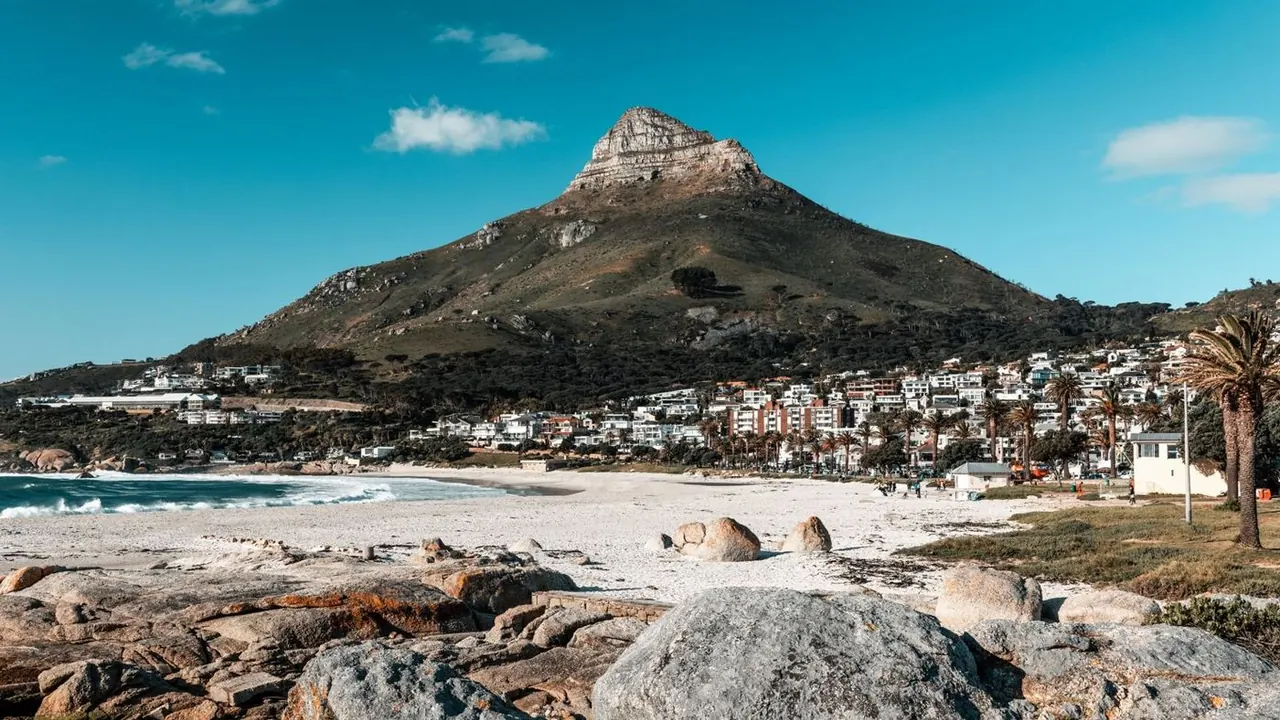
Cape Town has real beach life and Livingstone has none. The Atlantic side has white sand under granite boulders at Clifton and Camps Bay, but the water is cold. For proper swimming you go to False Bay, where tidal pools and gentle surf are warm enough in summer.
Livingstone is far inland, and crocodiles, hippos and strong currents make the Zambezi unsafe for swimming. The one exception is a guided dip in Devil's Pool at low water. It is a thrill, but it is no substitute for a beach.
Food & drink
Cape Town is one of the best places to eat on the continent. Its own cooking includes Cape Malay curries, bobotie and the gatsby, there are inventive tasting menus around Bree Street and Woodstock, and the wine estates start where the city ends.
Livingstone's eating is mostly lodge grills and game meat, plus a few restaurants on the main road. Nshima and whole Zambezi bream are worth trying. Still, the best memory is usually the deck above the river, not what is on the plate.
Culture & sights
Cape Town has several days of sightseeing with real weight behind it. You can take the ferry to Robben Island, visit the District Six Museum and the Castle of Good Hope, see the museums around the Company's Garden, and finish at Zeitz MOCAA in its converted grain silo.
Livingstone takes an afternoon. The Livingstone Museum, with the explorer's letters, the steam locomotives at the railway museum and the steel arch of the Victoria Falls Bridge are enough to round off a day at the falls.
Nightlife
A night out at the Cape is spread across a handful of City Bowl streets. Long Street has rowdy backpacker bars, Bree and Kloof Streets have cocktail and wine bars, De Waterkant is the gay quarter, and summer weekends carry on into clubs. You will need ride-hailing between areas after dark.
In Livingstone, the evening is a sundowner on a river cruise and an early night before rafting or a game drive. Apart from a couple of backpacker bars and local taverns, there is nothing to stay out for.
Nature & outdoors
Both places are outstanding, but in different ways. Cape Town's nature is mountain and coast: Table Mountain and Lion's Head right behind the city, fynbos running down to Cape Point, penguins at Boulders, whales in False Bay, surfing at Muizenberg and the drive along Chapman's Peak.
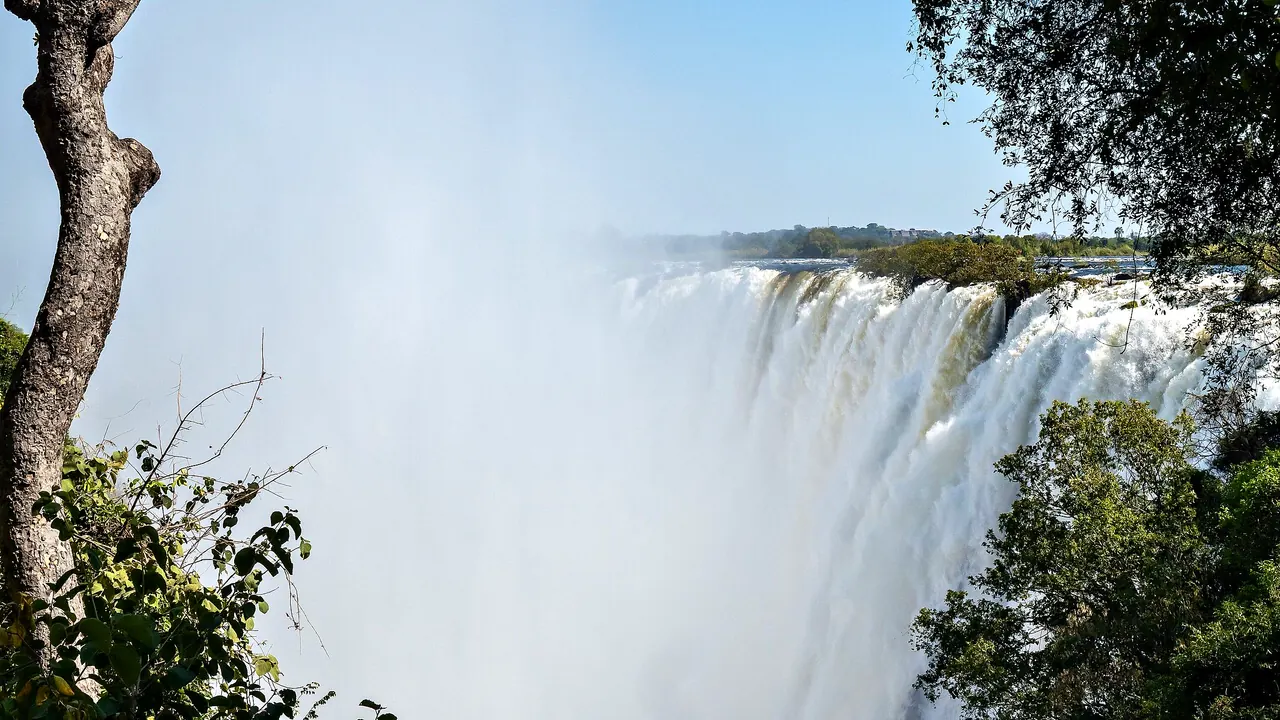
Livingstone's is big river and bush. You get the spray of Victoria Falls, white-water rafting and gorge swings in the Batoka Gorge, rhino on foot, and elephants and hippos on the upper Zambezi. Choose Cape Town for hiking and the sea, and Livingstone for adrenaline and big game.
Day trips
The Winelands alone outdo anything within reach of Livingstone. Stellenbosch, Franschhoek and Paarl could fill several days of tastings and long lunches, and Hermanus, the West Coast villages and Tulbagh's Cape Dutch street add more variety. You will need a car or a tour for almost all of them.
From Livingstone, the main options are crossing the bridge to Victoria Falls town in Zimbabwe, a guided visit to Mukuni village, and the road to Kasane for safaris in Botswana. These are trips for wildlife and border crossings rather than for exploring towns.
Good for families
Cape Town is the easier choice with children of all ages. The Two Oceans Aquarium, the penguins at Boulders, the cableway and Kirstenbosch's lawns all work well, and False Bay's tidal pools suit small swimmers. Expect to drive between sights.
Livingstone is really for families with older children and teenagers who will love the game walks and river cruises. Malaria all year, minimum ages on the main activities and the heat in October and November make it hard going with young children.
Getting around
Neither is a place to get around on foot or by public transport, but Cape Town has slightly more choice. The City Bowl and the Waterfront are walkable by day, MyCiTi buses run out to the Atlantic beaches, and cheap ride-hailing and good roads cover the rest.
In Livingstone, taxis, lodge shuttles and operators' pick-ups do almost all the work, because there is no public transport to speak of. Walking the roads outside town is unwise because elephants roam there.
Shopping & style
If you want shopping beyond souvenirs, only Cape Town really offers it. The V&A Waterfront has a large mall and a hall for local makers, and Woodstock and Kloof Street sell South African design, ceramics and fashion. Wine and rooibos are easy things to take home.
Livingstone's shopping is crafts and not much else. The curio markets sell carvings, baskets and copper work, and you are expected to bargain. A length of bright chitenge cloth is the most distinctive thing to bring home.
Affordability
Cape Town gives visitors from Europe or North America a lot for their money. Tasting menus, wine and car hire are all cheap, and rooms are the main cost, especially in the December to January peak.
Livingstone looks cheap at first, with low-cost taxis, local meals and hostels. However, the reasons to go are priced for international travellers: rafting, helicopter flights, park fees, visas and riverside lodges. A week full of excursions there can easily cost more than a comparable week at the Cape.
Live music & performing arts
You can fill a couple of evenings with music and theatre at the Cape, though the choice is modest. There is Cape jazz in a few clubs, the big International Jazz Festival, and summer concerts at sunset on Kirstenbosch's lawns. Artscape has opera and ballet, and the Baxter Theatre stages South African drama.
Livingstone has no theatre or concert hall. What you can see is traditional drumming and dance at cultural centres and lodge dinners, sometimes including masked Makishi dancers.
Wellness & relaxation
Neither place has a bathing tradition, so in both, wellness means a hotel or lodge spa and a slower pace. In Cape Town, the calm comes from long lunches on wine estates, morning swims in the False Bay tidal pools and quiet days in Kalk Bay.
In Livingstone, rest means a deck over the upper Zambezi with birdsong at dawn and empty hours between a game walk and an evening cruise. Pick a quiet lodge upstream, away from the adrenaline crowd near the falls.
When should you go?
Pick your month. The climate figures are measured averages, not a forecast.
Cape Town in July
Livingstone in July
Daytime high, °C
Rainfall in the month, mm
Temperature and rainfall are climate normals, averaged over the years shown. Cape Town: 1991-2020 normals, Cape Town Airport (17.5 km from centre). Livingstone: 1991-2020 (sunshine 1981-2010) normals, Livingstone (6.5 km from centre).
The two places have opposite seasons. Cape Town's summer, from December to March, is dry and sunny, with highs of about 28°C and long beach days. Even then, the warmest sea is only around 18°C. From June to August the Cape is cool and wet, at about 18°C with close to 100mm of rain in the wettest month. That weather is fine for museums and wine tastings but not for the beach or the mountain.
Livingstone is hot all year. Its rains run from November to March and are heaviest in January, at about 150mm. The dry, cooler months from May to August are the most comfortable for walking and game viewing. October is punishing, at around 35°C. The falls are fullest just after the rains, from March to May. So the Cape's best season is the wettest time on the Zambezi, and Livingstone is at its easiest during the Cape's wet winter.
Which traveller are you?
For a beach and sun trip, Cape Town is the only real option. You can sunbathe at Clifton and Camps Bay, then swim in the milder water of False Bay at Muizenberg or St James. Livingstone is landlocked, and most visitors swim in their lodge pool.
On a food and nightlife trip, Cape Town is far ahead. It has Cape Malay cooking, tasting menus on Bree Street, Winelands estates nearby, and evenings of sundowners and late bars that turn into clubbing. In Livingstone, most nights end soon after dinner at the lodge.
If you are travelling to see big game, Livingstone has what Cape Town lacks. You can walk to see white rhino in Mosi-oa-Tunya, see elephants and hippos from boats on the upper Zambezi, and take a day trip to Chobe's herds. Cape Town's wildlife means penguins, seals and whales.
Before you go
| Measure | Cape Town | Livingstone |
|---|---|---|
| Official language | English, Zulu, Xhosa, Afrikaans, Venda, Northern Sotho, Swazi, Tswana, Tsonga, Sesotho, Southern Ndebele, South African Sign Language | English |
| Currency | Rand (ZAR) | Zambian Kwacha (ZMW) |
| Sockets | CMN230 V, 50 Hz | CG230 V, 50 Hz |
| Driving side | Left | Left |
| Time zone | UTC+2 | UTC+2 |
| Emergency number | 112 | 991 or 999 |
| Elevation | 5 m | 931 m |
| Main airport | Cape Town International Airport (CPT)18 km from centre45 non-stop destinations | Harry Mwanga Nkumbula International Airport (LVI)6 km from centre6 non-stop destinations |
| Public holidays this year | 13 days | 16 days |
By the numbers
| Measure | Cape Town | Livingstone |
|---|---|---|
| City population | 3,776,313 | 177,393 |
| People per km² | 1,538 | - |
| Museums within 10 km | 22 | 2 |
| UNESCO World Heritage sites within 50 km | 3 | 1 |
| Swim season, months above 21 °C | None | - |
Where else could you go?
Every comparison below shares a destination with this one, so you can follow Cape Town or Livingstone somewhere new.
- Victoria Fallsvs Livingstone
- Stellenboschvs Cape Town
- Johannesburgvs Livingstone
- Windhoekvs Livingstone
- Johannesburgvs Cape Town
- Windhoekvs Cape Town