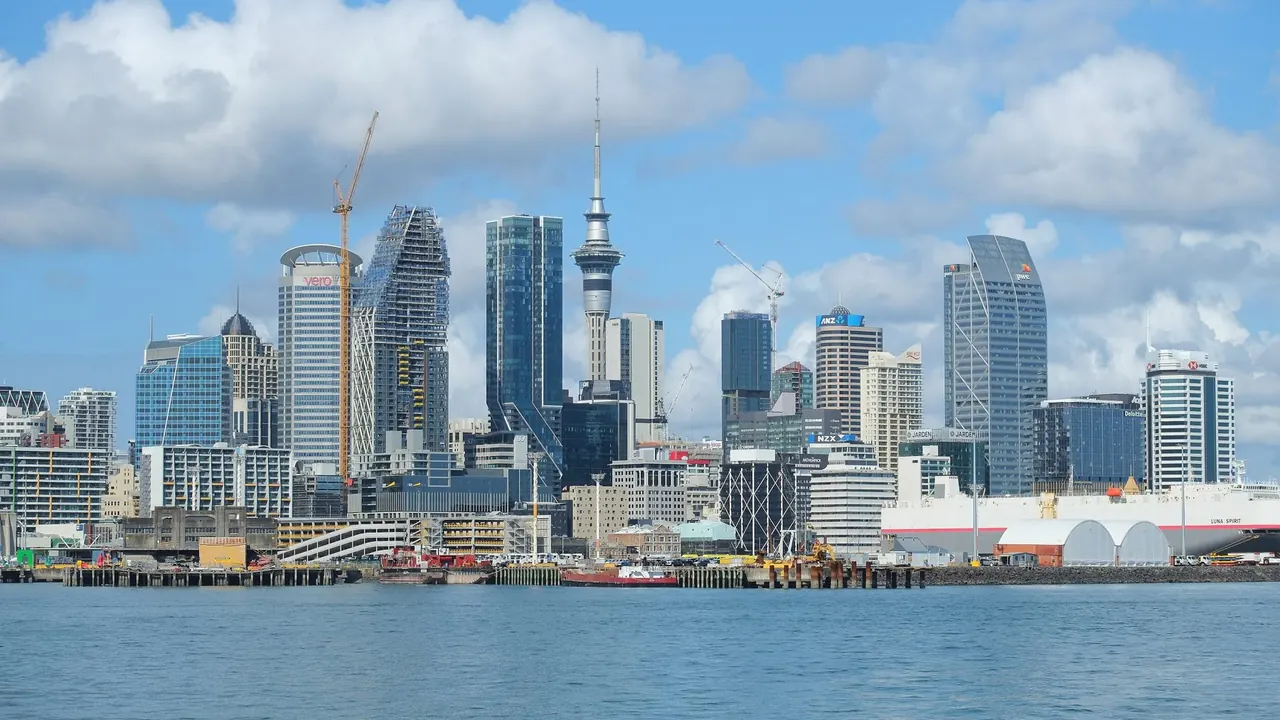
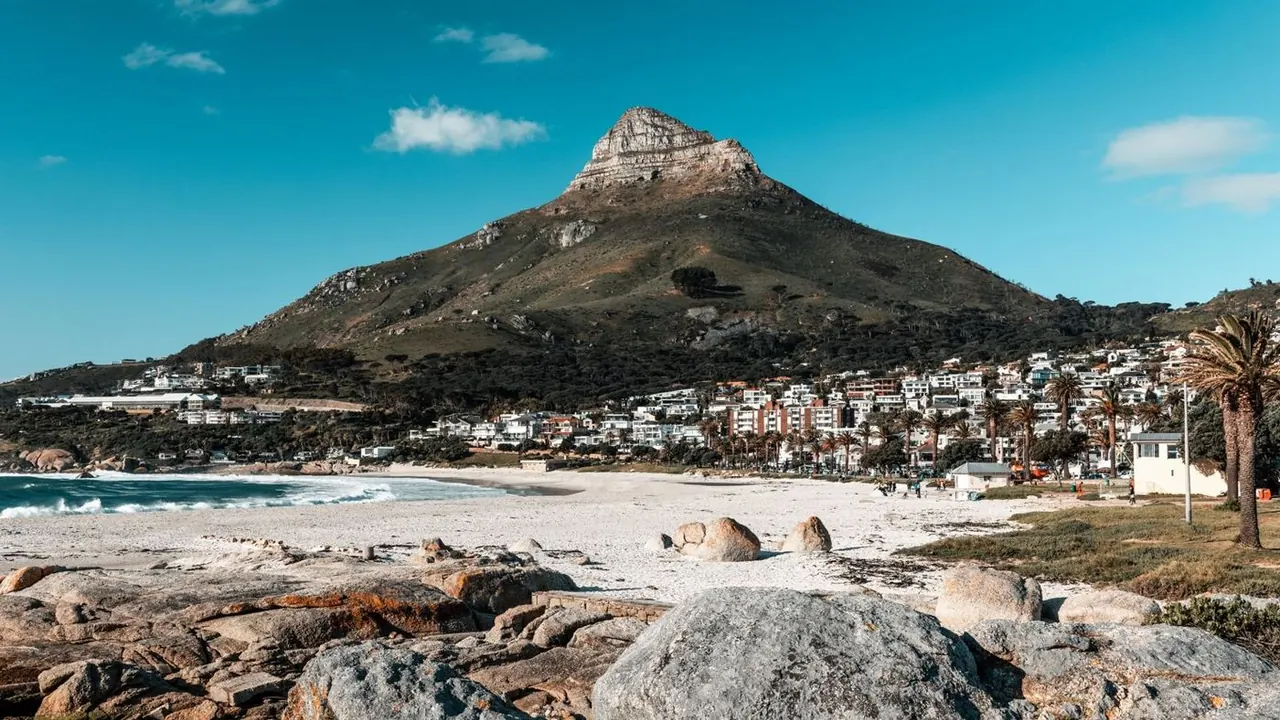
Photos: Auckland by Pseudopanax at English Wikipedia, Public domain; Cape Town by Stephan Louis, Pexels License.
Auckland or Cape Town?
Our verdict in twelve categories, each scored against the same fixed benchmark cities, and the climate month by month, so you can choose for your trip.
Choose Auckland for
- families
- beaches
- getting around
Auckland suits a gentler, family-paced trip built around the water. Its calm east-coast bays are warm enough for a proper swim in late summer, ferries carry you to Waiheke, Rangitoto and Devonport without a car, and the zoo, aquarium and transport museum keep children busy. It costs a good deal, and evenings and sightseeing are low-key, so it rewards travellers who want sea, islands and an easy rhythm more than a full programme.
Choose Cape Town for
- prices
- nightlife
- culture and sights
Choose Cape Town if you want more from every day. Table Mountain and the peninsula's national park start at the edge of the centre, Robben Island and the District Six Museum tell a history Auckland cannot match, and the Winelands lie under an hour away. Meals and wine are far cheaper, and the evenings run later. In return you need a car or ride-hailing, the Atlantic water is cold, and you have to stay more alert on the streets.
Scoreboard
Twelve categories on one fixed scale from 0 to 100. The shaded stretch is the gap between the two.
Your match
Pick a travel style or drag the sliders, and both match scores follow your weighting.
Wins on families and beaches with your weighting.
Wins on prices and nightlife with your weighting.
What matters to you?
Category by category
What the scores mean for a trip.
Beaches & swimming
For swimming, Auckland has the edge. Mission Bay, St Heliers, Takapuna and the other harbour bays are calm, sandy and close to the centre, and the water warms to about 20°C to 22°C in late summer. Waiheke adds quieter white-sand beaches a ferry ride away. Piha and Muriwai on the west coast offer black sand and serious surf.
Cape Town's Atlantic beaches at Clifton and Camps Bay are more spectacular, with granite boulders and the Twelve Apostles behind them. But the water there is cold enough that most people only take a quick dip. To actually swim, you drive about half an hour to False Bay's warmer water at Muizenberg, St James and Boulders.
Food & drink
Cape Town has a cuisine of its own, and Auckland does not. In the Bo-Kaap and the Cape Flats you find Cape Malay curries, bobotie and the gatsby. Add braai, harbourside snoek at Kalk Bay, inventive tasting menus around Bree Street and Woodstock, and wine estates less than an hour from town.
Auckland's strength lies in its communities: regional Chinese, Korean, Malaysian and Indian cooking along Dominion Road, plus Pacific Island food at the markets. Its seafood is excellent, from green-lipped mussels to fish and chips on the beach, and it takes coffee seriously. Waiheke's vineyards make good wine lunches, but there are no local dishes you need to seek out.
Culture & sights
Cape Town has more to see, and its sights carry more weight. A ferry to Robben Island, the District Six Museum and the Castle of Good Hope trace the colonial era and apartheid. The Company's Garden area holds the national museums, the Bo-Kaap adds its painted streets, and Zeitz MOCAA shows contemporary African art. That is three or four days of sightseeing.
Auckland's cultural highlight is the War Memorial Museum on the Domain, with its Māori and Pacific treasures, including a carved meeting house and a war canoe. The Art Gallery, the Maritime Museum and the pā earthworks on the volcanic cones round it out. There is little historic streetscape, and two days covers it.
Nightlife
Cape Town is the better city for a night out. Long Street has balconied bars and backpacker clubs, Bree and Kloof Streets do cocktails and late dinners, and De Waterkant is the established gay quarter. In summer the evening often starts with sundowners as the sun sets over the Atlantic and ends in clubs in the small hours, though things are much calmer outside December to March.
Auckland's evenings suit a long session of drinks rather than a big night. Ponsonby Road has the wine bars, Karangahape Road has the late bars, small clubs and queer scene, and the Viaduct draws an after-work crowd. Midweek, most of the city is quiet by midnight.
Nature & outdoors
Both cities sit in remarkable landscapes, and Cape Town's is the more dramatic. Table Mountain rises right behind the centre, and you can go up by cableway or on foot via Platteklip Gorge. The national park runs down to Cape Point through fynbos, part of the richest of the world's floral kingdoms. Penguins, seals, baboons and winter whales add wildlife, and Chapman's Peak Drive and the surf at Muizenberg add more.
Auckland's outdoors is about volcanoes, islands and sailing. You can walk up grassy cones such as Maungawhau, climb Rangitoto in a morning, or see takahē on predator-free Tiritiri Matangi. The Waitākere Ranges have kauri forest and waterfalls, and the Hauraki Gulf is excellent for sailing and kayaking.
Day trips
Cape Town has the stronger day trips, mostly thanks to the Winelands under an hour inland. Stellenbosch has oak-lined streets and Cape Dutch buildings, and Franschhoek is known for its restaurants. Add Paarl and Constantia, and you have several days of tastings and long lunches. Hermanus, with whales seen from its clifftops, and Tulbagh's Church Street extend the choice, but almost all of these need a car or a tour.
Auckland's best outing is Waiheke, forty minutes away by ferry with no car needed. Matakana's wineries and market and the Hobbiton set two hours south are the other main options. Rotorua and Waitomo are too far for a comfortable day trip.
Good for families
Auckland works better with children. Auckland Zoo has its native wildlife section, the aquarium on Tamaki Drive has shark tunnels and penguins, and MOTAT has trams and planes. Rainbow's End adds a small theme park, and the calm bays and volcanic cones fill the free days. The main drawback is driving between attractions.
Cape Town has wonderful moments for children: the penguins at Boulders, the Two Oceans Aquarium, the cableway, and the tidal pools at St James. But it needs more planning. A car is almost essential, the Atlantic beaches are too cold for long swims, parents have to keep a closer eye on the streets, and there is no large theme park.
Getting around
Neither city is easy without a car, but Auckland gives you a bit more. Its harbour ferries to Devonport, Waiheke and Rangitoto are a pleasure in themselves, and buses and suburban trains on one tap-on card reach Ponsonby, Newmarket and Mission Bay. The west coast and the northern wineries still mean hiring a car or taking a tour.
In Cape Town, the City Bowl, Bo-Kaap and Waterfront are walkable by day, and MyCiTi buses run out along the Atlantic seaboard. For the peninsula and the Winelands, most visitors drive or use cheap ride-hailing, and after dark it is best to take a car door to door.
Shopping & style
Shopping is about equal, and neither city is worth a trip just for it. Auckland's best buys are New Zealand labels on Ponsonby Road and in Newmarket, plus merino and possum-wool knitwear and pounamu carvings. The Ōtara market gives a taste of the Pacific.
Cape Town's shopping is concentrated in the V&A Waterfront mall, with local design in Woodstock's warehouses and on Bree Street. Greenmarket Square sells crafts from across Africa, but you need a good eye. Wine and rooibos are the easy things to take home.
Affordability
This is where the two cities differ most. Auckland is expensive across the board: hotels, eating out, drinks, ferries and car hire all add up. The best savings are free volcanic cones, beaches and coastal walks, cheap Asian food courts, and self-catering apartments.
For most visitors, Cape Town is good value. Tasting menus, estate wine, car hire and ride-hailing cost a fraction of what they would at home. The exceptions are rooms in Camps Bay and the Waterfront in the December to January peak, and paid sights such as Robben Island, which mount up for a family.
Live music & performing arts
Cape Town has a slight edge because it has a sound of its own. Cape jazz, carried abroad by Abdullah Ibrahim, still plays in a few venues, and there is the annual Jazz Festival and the summer sunset concerts on Kirstenbosch's lawns. Artscape and the Baxter Theatre handle opera, ballet and South African drama.
Auckland's arts scene is more conventional. The Philharmonia plays in the acoustically fine Town Hall, and touring shows come to the Civic with its starry ceiling. The Arts Festival and the Pasifika Festival, with Pacific music and dance, are its high points.
Wellness & relaxation
Neither city has a bathing tradition, and both rely on an unhurried pace rather than treatments. Auckland has the advantage of natural hot springs at Parakai, about an hour away, and retreats on slow-paced Waiheke.
Cape Town's version is more outdoor: long lunches on wine estates, spas at the grander Winelands hotels, and morning swims in the False Bay tidal pools, which locals keep up all year. For hot springs, you have to drive inland to the Overberg.
When should you go?
Pick your month. The climate figures are measured averages, not a forecast.
Auckland in July
Cape Town in July
Daytime high, °C
Rainfall in the month, mm
Where the figures come from
Auckland's station stands 189 m below the city centre, so the centre is likely a little cooler than the figures say.
Temperature and rainfall are climate normals, averaged over the years shown. Auckland: 1961-1990 normals, Auckland Aerodrome Aws (17 km from centre). Cape Town: 1991-2020 normals, Cape Town Airport (17.5 km from centre).
Both cities are at their best from December to March, but their summers differ. Auckland's is mild, with highs around 24°C and some rain in every month, and it has the warmer sea: the harbour bays reach about 21°C in February and March, so late summer is the best time to swim there. Cape Town's summer is hotter, drier and very sunny, with highs near 28°C in February and only about 10mm of rain a month. Its open water stays cool all year, though, so the beach weather is better for sunbathing and short dips than for long swims.
Winter is the wet season in both cities. Auckland is wettest in July at around 135mm, and its cool, grey days still suit walking but not the beach. Cape Town's winter is wetter and less sunny than its summer, but its days stay a little warmer than Auckland's. Winter is also when whale season begins in False Bay, and it runs on through spring. Spring and autumn are good in both cities for walking and hiking.
Which traveller are you?
On a family trip with children, Auckland is the easier choice. Its calm, sheltered bays along Tamaki Drive and the North Shore are fine for small swimmers, and the zoo, the aquarium, MOTAT and short ferry rides fill the days. You won't need the street caution that Cape Town calls for.
For a trip on a tight budget, Cape Town wins clearly. Good restaurants, wine tastings, car hire and ride-hailing all cost far less than in Auckland, where hotels, meals and drinks are expensive. Outside high summer, rooms in Cape Town get noticeably cheaper as well.
On a food and nightlife trip, Cape Town has more to offer. You get Cape Malay cooking, the chefs of Bree Street and wine estates close to the city, then sundowners at Camps Bay and clubs that run late at weekends. Auckland's evenings are mellower and mostly quiet by midnight on weeknights.
Before you go
| Measure | Auckland | Cape Town |
|---|---|---|
| Official language | English, New Zealand Sign Language, Māori | English, Zulu, Xhosa, Afrikaans, Venda, Northern Sotho, Swazi, Tswana, Tsonga, Sesotho, Southern Ndebele, South African Sign Language |
| Currency | New Zealand Dollar (NZD) | Rand (ZAR) |
| Sockets | I230 V, 50 Hz | CMN230 V, 50 Hz |
| Driving side | Left | Left |
| Time zone | UTC+12, UTC+13 in summer | UTC+2 |
| Emergency number | 111 | 112 |
| Elevation | 196 m | 5 m |
| Main airport | Auckland International Airport (AKL)18 km from centre63 non-stop destinations | Cape Town International Airport (CPT)18 km from centre45 non-stop destinations |
| Public holidays this year | 12 days | 13 days |
By the numbers
| Measure | Auckland | Cape Town |
|---|---|---|
| City population | 1,470,100 | 3,776,313 |
| People per km² | 2,630 | 1,538 |
| Museums within 10 km | 15 | 22 |
| UNESCO World Heritage sites within 50 km | 0 | 3 |
| Swim season, months above 21 °C | 1 month | None |
Where else could you go?
Every comparison below shares a destination with this one, so you can follow Auckland or Cape Town somewhere new.