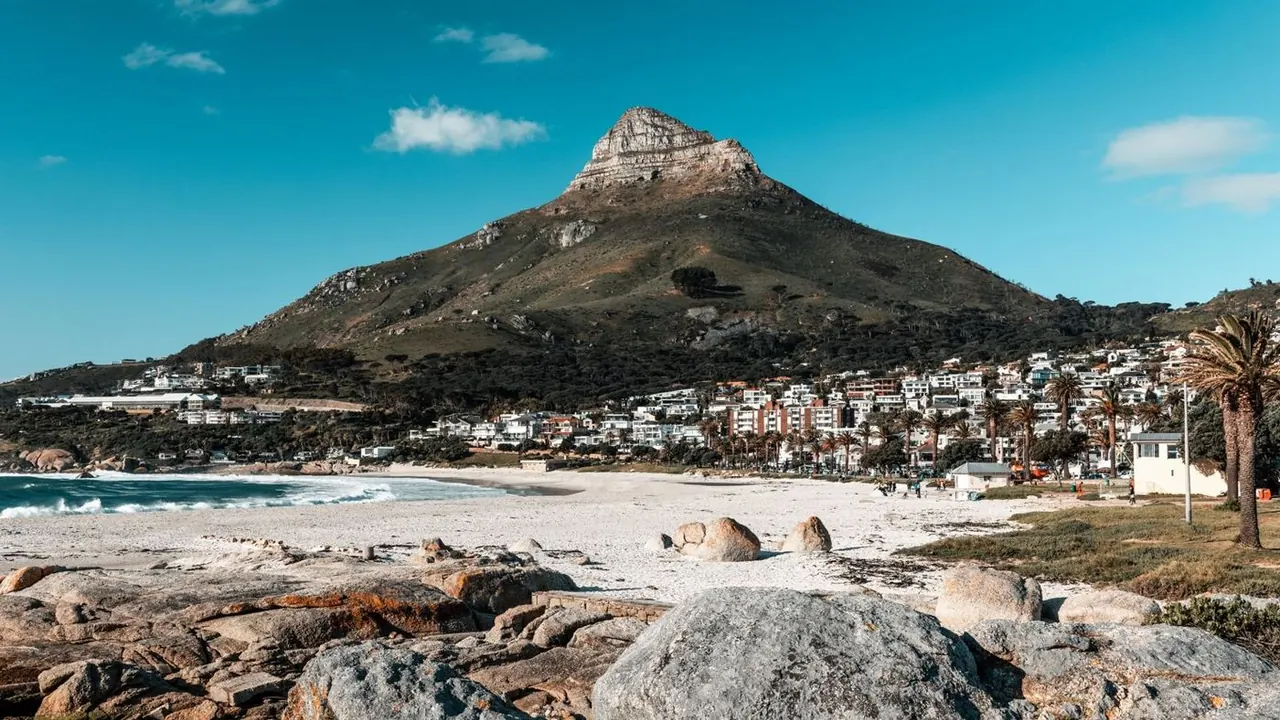
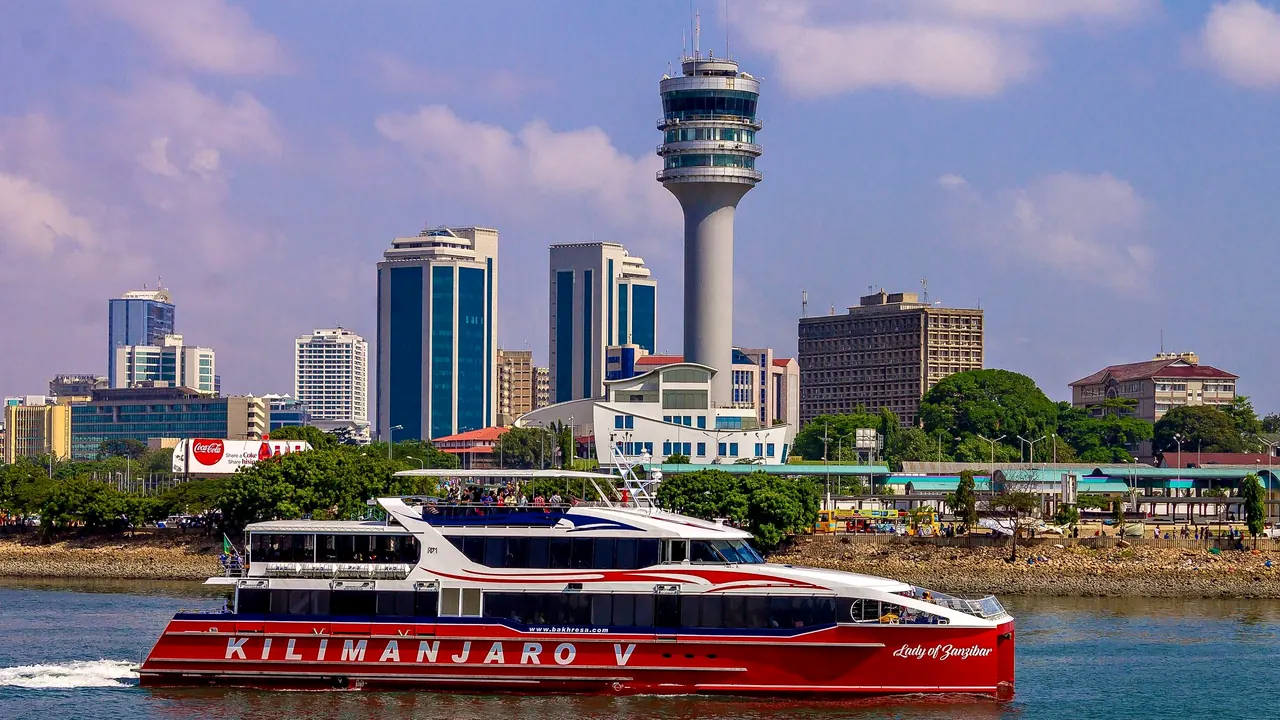
Photos: Cape Town by Stephan Louis, Pexels License; Dar es Salaam by Dicksonpicha, CC BY-SA 4.0, cropped.
Cape Town or Dar es Salaam?
Our verdict in twelve categories, each scored against the same fixed benchmark cities, and the climate month by month, so you can choose for your trip.
Choose Cape Town for
- nature and the outdoors
- culture and sights
- families
Cape Town suits a traveller who wants a city and a wild landscape in one trip: mountain hikes that start at the edge of the centre, penguins and whales on the peninsula, long lunches in the Winelands and a serious restaurant scene in the evening. It also has more history to see, from Robben Island to the District Six Museum, and it is easier with children, though you will want a car.
Choose Dar es Salaam for
- beaches
For someone heading for warm water and the wider East African coast, Dar es Salaam is the better base. Use it for boat trips to Bongoyo and Mbudya, a ferry to Stone Town or a resort stay on the Kigamboni coast. The city itself is a working port with grilled skewers at dusk and bongo flava at weekends. It rewards curiosity, but it has few sights and is hard to get around.
Scoreboard
Twelve categories on one fixed scale from 0 to 100. The shaded stretch is the gap between the two.
Your match
Pick a travel style or drag the sliders, and both match scores follow your weighting.
Wins on nature and the outdoors and culture and sights with your weighting.
Wins on beaches with your weighting.
What matters to you?
Category by category
What the scores mean for a trip.
Beaches & swimming
Both cities have beaches worth the journey, but they are opposites. Cape Town's Atlantic coves at Clifton and Camps Bay are among the most beautiful anywhere, white sand under granite boulders, yet the water is so cold that most people only take a quick dip. The real swimming is across on False Bay, at Muizenberg and St James, and only in summer.
Dar es Salaam has the reverse problem. The sea is warm all year, but the city shore at Coco Beach is no place to swim. The good beaches are a boat ride out on Bongoyo and Mbudya or along the Kigamboni coast, and big tides decide when you can get in.
Food & drink
Cape Town is the stronger food city. It has its own creole kitchen in Cape Malay bobotie and curries, ambitious tasting menus around Bree Street and in Woodstock, and wine estates less than an hour away. Dar es Salaam eats best on the street and at the grill: mishkaki at dusk, chipsi mayai, nyama choma with a cold beer, fish fried at the Kivukoni market and good biryani from its Indian community.
Dar es Salaam does have the street grazing that Cape Town lacks, but its upmarket dining in Masaki rarely stands out. Choose Cape Town for restaurants and wine, and Dar for snacks straight off a charcoal grill.
Culture & sights
Cape Town has far more to see. Robben Island, the District Six Museum, the Castle of Good Hope, the museums around the Company's Garden and Zeitz MOCAA fill three or four days with history that still shapes the country.
You can see Dar es Salaam in a day or two: the Olduvai fossils at the National Museum, the Village Museum and a short colonial walk past the Azania Front church and St Joseph's Cathedral. The coast's deeper history lies outside the city, in Stone Town and Bagamoyo.
Nightlife
Cape Town goes out more, and on more nights of the week. Long Street, Bree Street and Kloof Street give it a central core, De Waterkant is a long-established gay quarter, and summer evenings start with sundowners over the Atlantic.
Dar es Salaam comes alive mainly on Fridays and Saturdays, in the beer gardens and clubs of Sinza and Mwenge playing bongo flava and Afrobeats, or in the expat lounges of Masaki. In both cities you take a car between venues after dark, but in Dar midweek is very quiet.
Nature & outdoors
Nature is Cape Town's greatest advantage. Table Mountain, Lion's Head and the national park down to Cape Point sit right behind the centre, with fynbos, penguins, seals and whales all within reach, plus surfing and kitesurfing on the coast.
On land, Dar es Salaam's surroundings are flat and suburban, and the Pugu Hills are the nearest place to walk. Its strengths are at sea: coral for snorkelling and diving in the marine reserve, dhow trips past the mangroves and steady trade winds for kitesurfing. The famous game parks need a separate trip.
Day trips
Cape Town has the longer list of day trips, and the Winelands lead it. Stellenbosch, Franschhoek and Paarl can fill several days, with whale watching at Hermanus and the West Coast villages further out, though you will need a car or a tour.
From Dar es Salaam, two outings stand out, and both are about history: Zanzibar's Stone Town by fast ferry, and Bagamoyo with its fort and the Kaole ruins. Each takes around two hours each way, so most visitors turn Stone Town into an overnight stay.
Good for families
Cape Town is far easier with children, largely because family days happen outdoors in mild weather: picnics and the treetop walkway at Kirstenbosch, or a Winelands lunch at an estate where children can play while the adults taste. Getting around is the catch in both cities, but here it is manageable. A hire car and good roads link the scattered sights of the peninsula, ordinary big-city caution in town covers most worries, and there is no malaria to plan for. The Atlantic beaches are mainly for paddling, so swimming means False Bay.
Dar es Salaam asks much more of parents. The heat never lets up, traffic stretches short trips into long ones, and once the pavements give out beyond the old centre, children travel by taxi rather than on foot. Health also needs planning that Cape Town does not, with malaria precautions and care over what children eat and drink. Island boat trips, resort pools and a water park north of the city are the highlights, and friendly locals help, but it works better as a stopover than as the trip itself.
Getting around
Neither city is easy without a car, but Cape Town is less hard work. Its centre and the Waterfront are walkable by day, MyCiTi buses reach the airport and the Atlantic beaches, and good roads make the drive to the peninsula and the Winelands a pleasure.
In Dar es Salaam, traffic sets the pace. The rapid bus lines serve commuters rather than visitors, so most people use ride-hailing, and crossing the sprawl from Masaki to the centre takes far longer than the distance suggests.
Shopping & style
Cape Town has a little more for shoppers: the V&A Waterfront mall, local designers in Woodstock and on Bree and Kloof Street, and wine and rooibos to take home. Dar es Salaam's shopping is rougher and more local, with the huge Kariakoo market to watch, Makonde carvings at Mwenge, Tingatinga paintings and kanga cloth that is cheap to have tailored. Neither city is a place for luxury shopping.
Affordability
Both cities are good value for visitors from wealthier countries, and Cape Town comes out slightly ahead. Tasting menus, wine and car hire are cheap there, and only peak-season rooms on the Atlantic seaboard are really expensive. Dar es Salaam is very cheap if you eat street food and use local transport, but the hotels, Masaki restaurants, resorts and island boat trips most visitors use cost close to Western prices, and imported wine is expensive.
Live music & performing arts
Cape Town has the fuller stage: Artscape for opera and ballet, the Baxter for South African drama, the Cape Philharmonic, its own Cape jazz and Sunday summer concerts on the lawns at Kirstenbosch. Dar es Salaam is the home of bongo flava and taarab, which you can hear in bars and cultural centres at weekends. It has no opera, orchestra or theatre district, and the best traditional performance is in Bagamoyo or on Zanzibar.
Wellness & relaxation
Neither city has a bathing tradition, but Cape Town is the more restful place to stay. It offers long lunches on wine estates, morning yoga, early swims in False Bay's tidal pools and good-value spas in the Winelands. Dar es Salaam is hot, loud and congested, so rest there means a hotel massage or a few slow days on the Kigamboni coast, and many visitors save their downtime for Zanzibar.
When should you go?
Pick your month. The climate figures are measured averages, not a forecast.
Cape Town in July
Dar es Salaam in July
Daytime high, °C
Rainfall in the month, mm
Temperature and rainfall are climate normals, averaged over the years shown. Cape Town: 1991-2020 normals, Cape Town Airport (17.5 km from centre). Dar es Salaam: 1991-2020 normals, Dar Es Salaam Airport (10.5 km from centre).
Cape Town is at its best from December to March. Days reach about 28°C, rain almost stops and the sun stays out late into the evening. That is the beach season, though even then the sea stays cool, and False Bay is where swimming is comfortable. Winter runs from June to August, with mild days around 18°C, the wettest weather of the year at close to 97mm a month and shorter days. It is better for mountain walks between the fronts than for the beach.
Dar es Salaam is hot all year and rarely below 30°C, with the sea warm enough to swim in every month. The long rains peak in April at around 266mm, and the short rains return in November and December. The driest and sunniest stretch, slightly less sticky than the rest of the year, runs from June to September, with January and February a second good window. Cape Town is coolest and wettest at the very time Dar es Salaam is at its best, so the two cities shine in opposite halves of the year.
Which traveller are you?
For an outdoors trip, Cape Town wins easily. Table Mountain and Lion's Head rise from the edge of town, the national park runs down to Cape Point, and there is surfing at Muizenberg and whale watching too. Dar es Salaam's outdoors is mostly offshore.
On a beach and sun trip, Dar es Salaam has the warm sea, good for swimming all year, with white sand on Bongoyo and Mbudya and quiet resorts along Kigamboni. Cape Town's Atlantic beaches are more beautiful to look at but cold to swim in.
On a family trip with children, Cape Town is the easier choice, with the Two Oceans Aquarium, the penguins at Boulders, the cableway and False Bay's tidal pools. Dar es Salaam has island boat trips and resort pools, but the heat, traffic and malaria precautions wear families down.
Before you go
| Measure | Cape Town | Dar es Salaam |
|---|---|---|
| Official language | English, Zulu, Xhosa, Afrikaans, Venda, Northern Sotho, Swazi, Tswana, Tsonga, Sesotho, Southern Ndebele, South African Sign Language | English, Swahili |
| Currency | Rand (ZAR) | Tanzanian Shilling (TZS) |
| Sockets | CMN230 V, 50 Hz | G230 V, 50 Hz |
| Driving side | Left | Left |
| Time zone | UTC+2 | UTC+3 |
| Emergency number | 112 | Police 112, ambulance 115, fire 114 |
| Elevation | 5 m | 12 m |
| Main airport | Cape Town International Airport (CPT)18 km from centre45 non-stop destinations | Julius Nyerere International Airport (DAR)10 km from centre39 non-stop destinations |
| Public holidays this year | 13 days | 13 days |
By the numbers
| Measure | Cape Town | Dar es Salaam |
|---|---|---|
| City population | 3,776,313 | 4,715,000 |
| People per km² | 1,538 | 3,385 |
| Museums within 10 km | 22 | 3 |
| UNESCO World Heritage sites within 50 km | 3 | 0 |
| Swim season, months above 21 °C | None | 12 months |
Where else could you go?
Every comparison below shares a destination with this one, so you can follow Cape Town or Dar es Salaam somewhere new.
- Stellenboschvs Cape Town
- Stone Townvs Dar es Salaam
- Hermanusvs Cape Town
- Mombasavs Dar es Salaam
- Knysnavs Cape Town
- Arushavs Dar es Salaam