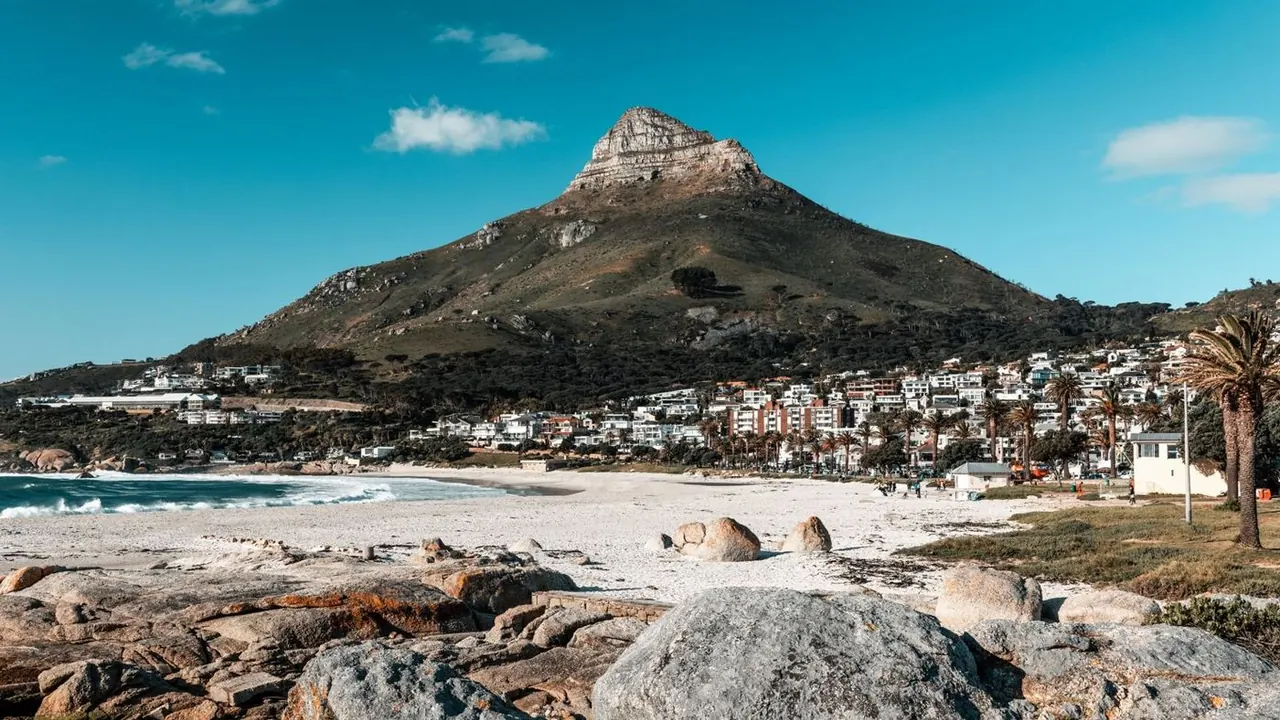
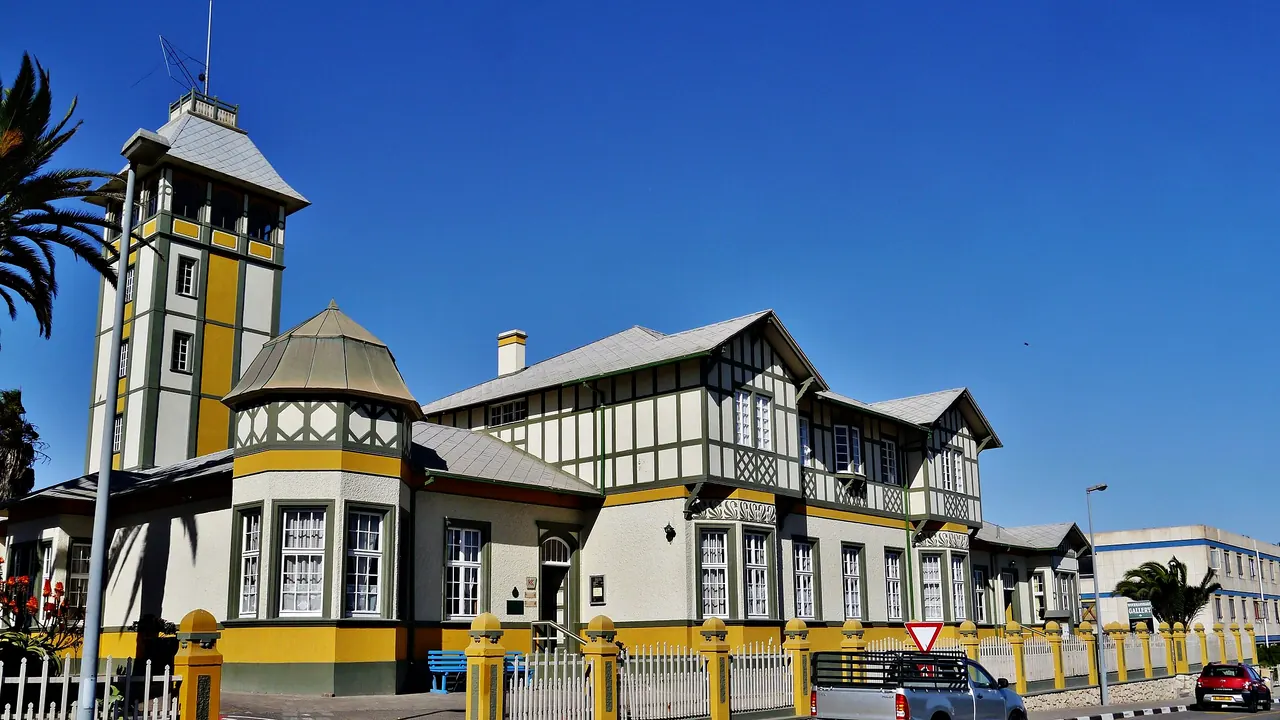
Photos: Cape Town by Stephan Louis, Pexels License; Swakopmund by Zairon, CC BY-SA 4.0, cropped.
Cape Town or Swakopmund?
Our verdict in twelve categories, each scored against the same fixed benchmark cities, and the climate month by month, so you can choose for your trip.
Choose Cape Town for
- day trips
- nightlife
- live music and the arts
Cape Town is the stronger choice for almost any trip built around a city. A mountain national park rises behind the centre, and around it you get Cape Malay cooking, wine estates under an hour away, Robben Island, and evenings that range from Long Street bars to sunset concerts at Kirstenbosch. Choose it for a first visit to southern Africa, a summer of swimming on False Bay, or a week that mixes hiking, eating and history.
Choose Swakopmund for
- getting around
Swakopmund suits a different traveller: someone driving around Namibia who wants a few calm days on the coast between long stretches of desert. The draw is the Namib, which begins at the edge of town and offers sandboarding, quad biking, scenic flights and seal trips from Walvis Bay. In the evening you come back to a small, orderly German colonial town. Don't come here for nightlife, sightseeing or swimming. The town has little of any of them and doesn't pretend otherwise.
Scoreboard
Twelve categories on one fixed scale from 0 to 100. The shaded stretch is the gap between the two.
Your match
Pick a travel style or drag the sliders, and both match scores follow your weighting.
Wins on day trips and nightlife with your weighting.
Wins on getting around with your weighting.
What matters to you?
Category by category
What the scores mean for a trip.
Beaches & swimming
Neither city is a warm-water beach destination, but Cape Town gives you a choice. On the Atlantic side, Clifton and Camps Bay are spectacular places to lie on white sand beneath granite boulders, even if a dip there is bracing. In summer, the beaches and tidal pools of False Bay at Muizenberg and St James are warm enough for real swimming.
Swakopmund has long sandy shores but nothing like False Bay. The Benguela Current keeps the water cold, morning fog is common and the surf can be rough. Here the beach is for walks, fishing and sunsets rather than sunbathing.
Food & drink
Cape Town is by far the richer place to eat. It has a cooking tradition of its own in the Cape Malay dishes of the Bo-Kaap, an ambitious chef scene around Bree Street and in Woodstock's warehouses, and wine estates within an hour. That is enough for a week of very different meals.
Swakopmund eats on a smaller scale but has a distinct character: German bakeries and coffee houses, oysters from the Walvis Bay lagoon, kingklip, and game such as oryx and kudu. A few days will cover its best tables.
Culture & sights
Cape Town's sights carry real weight. Robben Island, the District Six Museum, the Castle of Good Hope and Zeitz MOCAA together cover colonial settlement, apartheid and contemporary African art, and they fill three or four days.
In Swakopmund the town itself is the sight. A relaxed walk takes in its early 1900s German buildings, the Woermann House, the old station and the iron jetty, and the museum and a Mondesa township tour add a little more. An afternoon or two is enough.
Nightlife
Cape Town has a proper night out. Long Street has backpacker bars, Bree and Kloof Streets have cocktail and wine bars, De Waterkant is the gay quarter, and weekend clubs run into the small hours. You will move between areas by ride-hailing.
Swakopmund offers dinner, a sundowner by the jetty and a beer in a German-style pub. It has no clubs, and the town is quiet before midnight.
Nature & outdoors
Both towns sit beside remarkable landscapes, but Cape Town's are more varied and closer at hand. Table Mountain rises straight behind the centre, and trails through fynbos run down the peninsula to Cape Point. Penguins, seals, whales, surfing and kitesurfing are all within easy reach of the city.
Swakopmund's wild country is desert and cold ocean. The Namib dunes begin at the edge of town, and beyond them lie the flamingos and seals of Walvis Bay and the dunes of Sandwich Harbour falling into the sea. There are no mountain trails or green slopes to walk.
Day trips
From Cape Town, the Winelands alone can fill several days. You can walk the oak-lined streets and Cape Dutch buildings of Stellenbosch, have lunch in Franschhoek's mountain valley and visit estates around Paarl and Constantia. Further out there is clifftop whale watching at Hermanus, Tulbagh's restored Church Street and the quiet fishing villages of the West Coast, although nearly all of them need a car or a tour.
Swakopmund has far fewer towns and sights to visit. There is the working port and oyster bars of Walvis Bay, the small resort of Henties Bay, the stone cross a Portuguese navigator planted at Cape Cross in the 1480s, and the rock paintings at Spitzkoppe, about two hours inland. Most outings from here head into the desert or along the coast instead, and Sossusvlei is too far for a day trip, so plan a night away.
Good for families
Cape Town gives children more to do. There is the Two Oceans Aquarium, the penguins at Boulders, the cableway, the treetop walkway at Kirstenbosch and warm tidal pools on False Bay, although everything is spread out and you will need a car.
Swakopmund is easier from day to day because it is small, flat and calm. It has a marine aquarium with a walk-through tunnel and dunes that older children love, but the list runs out sooner, and many outings mean long drives on gravel roads.
Getting around
Neither has public transport that gets you far, but Swakopmund is simpler to manage. In its flat centre the seafront, jetty, museum and restaurants are a few minutes' walk apart, and most activity operators collect you from where you are staying.
Cape Town's walkable areas, the City Bowl, Bo-Kaap and Waterfront, cover only a small part of what you will want to see. Most days mean driving or ride-hailing around the peninsula and out to the Winelands, and after dark it is best to go door to door by car.
Shopping & style
Cape Town has much more range. There is the large V&A Waterfront mall, South African designers on Bree and Kloof Streets and in Woodstock, crafts at Greenmarket Square, and plenty of wine to carry home. Swakopmund is about souvenirs with a local character, such as Namibian gemstones, karakul rugs, kudu-hide shoes and Herero dolls from the craft markets, and it has little in fashion or design.
Affordability
Cape Town makes a budget go further, especially at the table. Tasting menus, wine and ride-hailing all cost far less than in Europe or North America. Rooms near the Atlantic beaches are the exception, as they are expensive in the December and January peak.
Swakopmund's guesthouses, meals and beer are reasonable too. But the activities you come for, such as dune tours, boat trips, scenic flights and skydives, are priced for international visitors, and most people need a hire car on top.
Live music & performing arts
Cape Town has a musical voice of its own in Cape jazz, along with a major annual jazz festival, summer Sunday concerts on the lawns at Kirstenbosch, and formal stages at Artscape and the Baxter. That is enough for a couple of good evenings. In Swakopmund there is little to plan around beyond weekend pub bands and the occasional community show.
Wellness & relaxation
Neither city has a bathing tradition, so in both the appeal is slowing down rather than treatments. Cape Town gives you more ways to do it: good-value spas in hotels and on Winelands estates, yoga in the Atlantic seaboard suburbs, and the False Bay tidal pools where locals swim all year. Swakopmund's few day spas matter less than its quiet pace, cool sea air, walks along the promenade and afternoon coffee and cake.
When should you go?
Pick your month. The climate figures are measured averages, not a forecast.
Cape Town in July
Swakopmund in July
Daytime high, °C
Rainfall in the month, mm
Where the figures come from
Swakopmund's temperatures are measured 26 km from the centre, at Walvis Bay-Pelican Point.
Swakopmund has no rain gauge within 25 km of the centre, so its rainfall comes from a gridded climate dataset read at the city rather than from a gauge further away.
Temperature and rainfall are climate normals, averaged over the years shown. Cape Town: 1991-2020 normals, Cape Town Airport (17.5 km from centre). Swakopmund: 2005-2025 (rainfall 1991-2020) normals, Walvis Bay-Pelican Point (26.2 km from centre).
Cape Town has a clear summer season. From December to March the days are warm, dry and very sunny, with highs reaching 28°C in February, and this is when False Bay is warm enough for a proper swim. April, October and November are milder in-between months that suit hiking and the Winelands. From May to August the rain sets in, peaking at around 97mm in June, and highs drop into the high teens. That is fine for walking the city or watching whales, but no good for the beach.
Swakopmund hardly changes through the year. Almost no rain falls in any month, and daytime highs stay in the low to mid-20s, dipping to about 21°C in August and September. It is never too hot or too wet to walk the town or head into the dunes. The sea is cool all year, so choosing when to go is less about the weather than about where Swakopmund falls on a wider Namibian route.
Which traveller are you?
On a food and nightlife trip, Cape Town is the clear pick. Cape Malay cooking, the restaurants on Bree Street and long Winelands lunches lead on to cocktail bars, Long Street and late clubs. In Swakopmund, evenings end with a pub beer well before midnight.
On a culture and arts trip, choose Cape Town. Robben Island, the District Six Museum and Zeitz MOCAA give days of serious sightseeing, and Cape jazz, Artscape and the Kirstenbosch concerts fill the evenings. Swakopmund's colonial streets take an afternoon at most.
For a desert adventure trip of sandboarding and quad biking, Swakopmund has something Cape Town simply lacks. The Namib dunes start where the town ends, so riding the sand, scenic flights and skydiving over the meeting of dunes and ocean are only short transfers away.
Before you go
| Measure | Cape Town | Swakopmund |
|---|---|---|
| Official language | English, Zulu, Xhosa, Afrikaans, Venda, Northern Sotho, Swazi, Tswana, Tsonga, Sesotho, Southern Ndebele, South African Sign Language | English |
| Currency | Rand (ZAR) | Namibia Dollar (NAD) |
| Sockets | CMN230 V, 50 Hz | M220 V, 50 Hz |
| Driving side | Left | Left |
| Time zone | UTC+2 | UTC+2 |
| Emergency number | 112 | 112 |
| Elevation | 5 m | 6 m |
| Main airport | Cape Town International Airport (CPT)18 km from centre45 non-stop destinations | Walvis Bay International Airport (WVB)37 km from centre2 non-stop destinations |
| Public holidays this year | 13 days | 13 days |
By the numbers
| Measure | Cape Town | Swakopmund |
|---|---|---|
| City population | 3,776,313 | 75,921 |
| People per km² | 1,538 | 419 |
| Museums within 10 km | 22 | 1 |
| UNESCO World Heritage sites within 50 km | 3 | 0 |
| Swim season, months above 21 °C | None | None |
Where else could you go?
Every comparison below shares a destination with this one, so you can follow Cape Town or Swakopmund somewhere new.
- Stellenboschvs Cape Town
- Windhoekvs Swakopmund
- Johannesburgvs Cape Town
- Windhoekvs Cape Town
- Durbanvs Cape Town
- Victoria Fallsvs Swakopmund