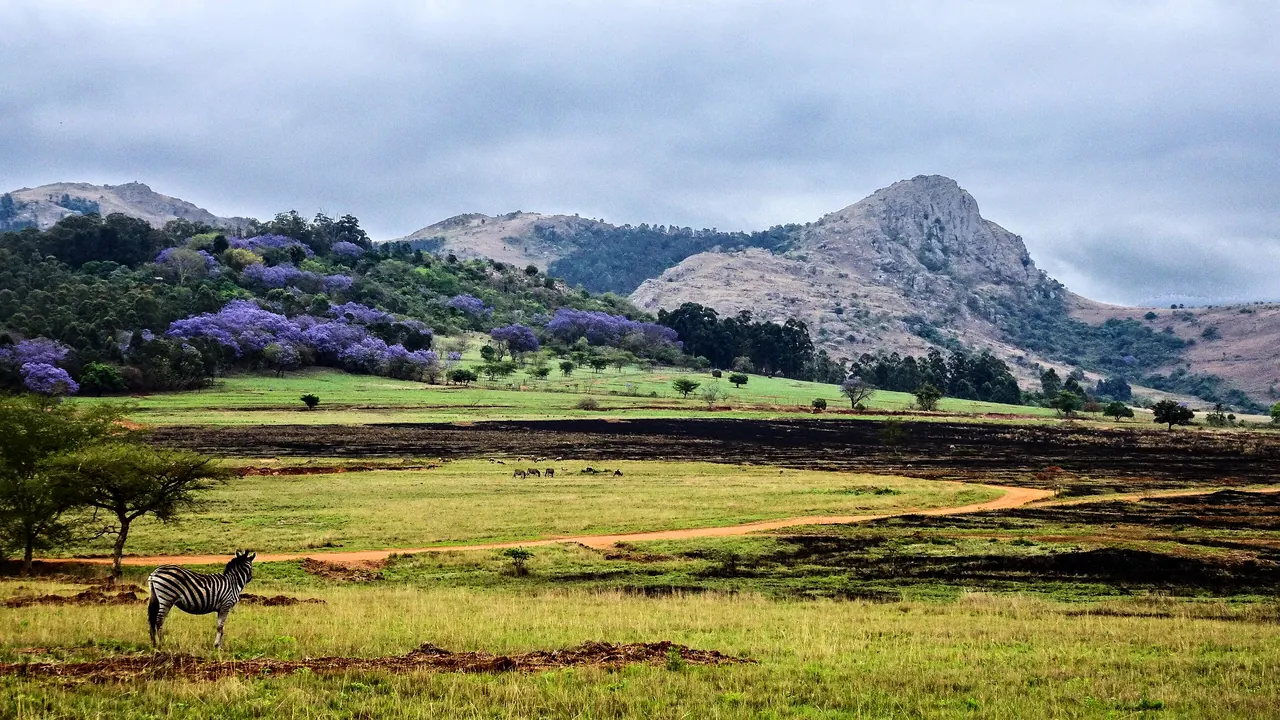
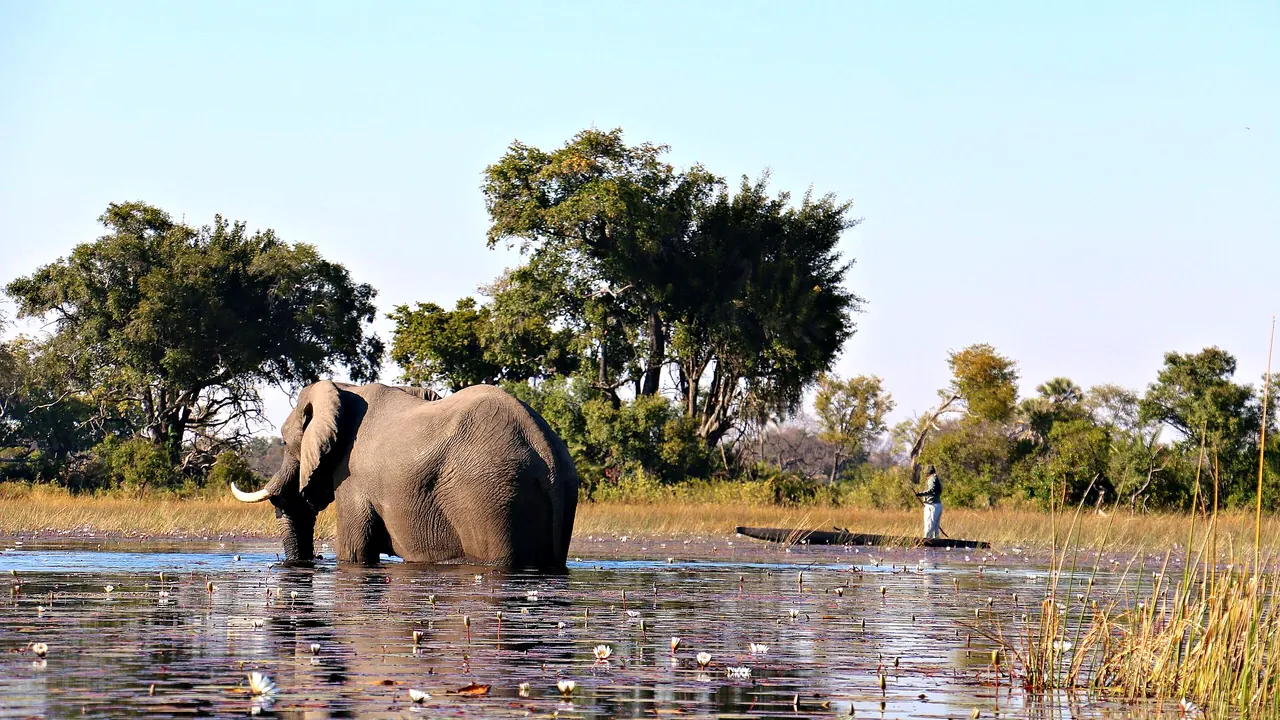
Photos: Eswatini by Jean-Marc Astesana from Voisins le Bretonneux, France, CC BY-SA 2.0, cropped; Botswana by Hp.Baumeler, CC BY-SA 4.0, cropped.
Eswatini or Botswana?
Our verdict in twelve categories, each scored against the same fixed benchmark cities, and the climate month by month, so you can choose for your trip.
Choose Eswatini for
- prices
- shopping
- live music and the arts
Eswatini suits a traveller who wants a compact, affordable first taste of the African bush with some culture alongside it. Distances are short enough to walk among zebra at Mlilwane in the morning and see rhino at Hlane the same week. You can add the royal ceremonies at Lobamba, the craft workshops of the Malkerns Valley and hiking in Malolotja, all from one base in the Ezulwini Valley. It works well for families and for self-drivers on a moderate budget.
Choose Botswana for
- nature and the outdoors
- beaches
Botswana is the choice when wildlife is the whole point and the budget can stretch. Gliding through the Okavango Delta by mokoro, watching vast elephant herds on the Chobe River at sunset and crossing the white Makgadikgadi Pans make up a safari in a different league. The price is high, the distances are long and the logistics need careful planning, and there is little to do beyond the wilderness. It rewards couples, keen wildlife watchers and families with teenagers.
Scoreboard
Twelve categories on one fixed scale from 0 to 100. The shaded stretch is the gap between the two.
Your match
Pick a travel style or drag the sliders, and both match scores follow your weighting.
Wins on prices and shopping with your weighting.
Wins on nature and the outdoors and beaches with your weighting.
What matters to you?
Category by category
What the scores mean for a trip.
Beaches & swimming
Neither country has a coast, so for both a beach has to be a separate leg of the trip. From Eswatini the Mozambican shore is the obvious add-on. Its rivers and dams are off limits for swimming because of bilharzia and crocodiles, so you swim in the lodge pool.
Botswana has far more water, in the Okavango Delta and the Chobe River, but hippos and crocodiles mean you see it from a mokoro rather than in it. A lodge plunge pool is the only place to cool off in the October heat.
Food & drink
The two are close, and neither is worth travelling to for the food. Eswatini has a slight edge thanks to the farm cafés and lodge kitchens of the Malkerns and Ezulwini valleys, which cook with local produce, and Manzini's market, where you meet everyday Swazi cooking.
In Botswana most meals are lodge set menus, often good but international in style, served at bush breakfasts and round the fire. Local flavour comes from seswaa and roadside grills, and fried mopane worms for the adventurous.
Where in Eswatini: Malkerns Valley, Ezulwini Valley, Manzini
Where in Botswana: Gaborone, Okavango Delta, Maun
Culture & sights
Eswatini offers more, because its heritage is a living monarchy you can actually witness. Lobamba has the parliament, the National Museum and the Sobhuza II memorial park. If your dates fall around the Umhlanga Reed Dance in late August or early September, or the Incwala rites around December and January, you can see ceremonies that few places in Africa can match.
Botswana's one great site is the Tsodilo Hills, with thousands of San rock paintings, but it lies far out in the northwest and takes a dedicated journey. Beyond it there are modest museums in Gaborone and Serowe in otherwise modern towns.
Where in Eswatini: Lobamba, Ezulwini Valley
Where in Botswana: Tsodilo Hills, Gaborone, Serowe
Nightlife
Both countries are quiet after dark, and most evenings in either end with a drink by the fire and an early night. What little exists differs in style. Eswatini has a casino resort strip in the Ezulwini Valley and weekend clubs in Mbabane and Manzini, while Botswana has riverside bars in Maun and Kasane where guides swap stories, and Gaborone's shisa nyama grill spots and kwaito clubs.
Where in Eswatini: Ezulwini Valley, Manzini
Where in Botswana: Gaborone, Maun
Nature & outdoors
Botswana is in another class for wildlife. The Okavango Delta's channels and palm islands, Moremi, the elephant herds of the Chobe and the remote predator country of Linyanti and Savuti make for a full safari on a grand scale. The Makgadikgadi Pans and the Central Kalahari add a stark desert contrast.
Eswatini's parks are smaller and tamer, but they offer variety within a short drive and some things Botswana lacks. Those include long hiking trails and waterfalls in Malolotja, rafting on the Great Usutu, the granite dome of Sibebe and unguided walking and cycling among zebra at Mlilwane. You can still see lion and white rhino at Hlane and black rhino at Mkhaya.
Where in Eswatini: Malolotja Nature Reserve, Hlane Royal National Park, Mkhaya Game Reserve, Mlilwane Wildlife Sanctuary
Where in Botswana: Okavango Delta, Chobe National Park, Moremi Game Reserve, Makgadikgadi Pans
Day trips
Neither country is built for town-hopping, and both are broadly level here. From an Ezulwini base in Eswatini, the Malkerns craft route, Manzini's market and Mbabane are all less than an hour away, but each fills only part of a day. The old gold-rush town of Barberton lies across the northern border.
Botswana's standout outing is from Kasane to Victoria Falls and Livingstone, about an hour and a half away including the border crossing. Around Gaborone there are half-days to the potters of Thamaga, the weavers of Oodi and the old village at Mochudi.
Where in Eswatini: Malkerns Valley, Manzini, Mbabane
Where in Botswana: Kasane, Gaborone
Good for families
Eswatini is the more manageable family trip. Drives are short and the Ezulwini Valley has family rooms, pools and self-catering cottages. At Mlilwane children can walk or cycle among zebra and warthog, and the Malolotja zipline suits older ones. Families with small children can stay in the cooler highveld, away from the lowveld's summer malaria.
Botswana can give older children an unforgettable safari, and some Chobe and delta lodges have private vehicles and junior ranger programmes. However, many camps refuse young children or keep them off mokoro trips, the north is a malaria zone and transfers mean small aircraft or long sandy drives. It suits teenagers best.
Where in Eswatini: Mlilwane, Ezulwini Valley, Hlane, Malolotja
Where in Botswana: Chobe National Park, Okavango Delta, Gaborone
Getting around
Eswatini is far easier to cover. The whole country is about two hours' drive across, and a good main road links the Ngwenya border, Mbabane, Ezulwini and Manzini, so an ordinary hire car handles most trips. Side roads are slower, with potholes and cattle.
Botswana is vast and thinly peopled, so you either fly between Maun, Kasane and bush airstrips or drive yourself in a fully equipped 4x4 through deep sand, river crossings and long stretches without fuel. Either way, the trip has to be planned well ahead.
Where in Eswatini: Ezulwini Valley, Manzini
Where in Botswana: Maun, Kasane
Shopping & style
Eswatini is the better place to shop for crafts by a distance. You can visit the candle, sisal basket, mohair and batik workshops of the Malkerns and Ezulwini valleys and the recycled-glass blowers near Ngwenya. The handicraft market and roadside stalls sell soapstone and beadwork.
Botswana's one real buy is the fine palm basketry woven around Etsha and Gumare and sold in Maun, with Thamaga pottery and Oodi tapestries near Gaborone as smaller extras. Otherwise you are left with malls and curio shops at the airports and lodges.
Where in Eswatini: Malkerns Valley, Ezulwini Valley, Ngwenya, Manzini
Where in Botswana: Maun, Gaborone, Etsha
Affordability
The gap is wide. Eswatini makes wildlife affordable, with modest park fees and simple rest camps at Mlilwane and Hlane, accommodation at every level in the Ezulwini Valley and cheap local food and fuel. Car hire is the main expense.
Botswana deliberately keeps visitor numbers low and prices high. The permanent camps of the Okavango and Linyanti are among the costliest in Africa even before the light aircraft that reach them. Self-drive camping in Chobe and Moremi costs less but still adds up once you count 4x4 hire and fuel.
Where in Eswatini: Ezulwini Valley, Malkerns Valley, Mlilwane, Hlane
Where in Botswana: Chobe National Park, Maun, Gaborone
Live music & performing arts
Eswatini offers far more to watch. The cultural village in the Ezulwini Valley holds regular song and dance shows, the Malkerns Valley hosts a long-running music and arts festival, and the royal ceremonies at Lobamba bring massed singing and dancing on an extraordinary scale.
In Botswana performance is mostly incidental. You might catch a local choir or dance group at a lodge, gospel singing in a church, or the Maitisong festival and the occasional concert in Gaborone.
Where in Eswatini: Lobamba, Ezulwini Valley, Malkerns Valley
Where in Botswana: Gaborone
Wellness & relaxation
Both countries are restful rather than true wellness destinations. The calm comes from different places. Eswatini has a natural warm mineral spring in the Ezulwini Valley, where visitors have bathed for generations, along with resort spas nearby and quiet hill lodges.
In Botswana the calm is found at upmarket delta and Chobe lodges, with massage rooms, plunge pools and long afternoons on a deck above the water. These breaks come between game drives that start before dawn.
Where in Eswatini: Ezulwini Valley
Where in Botswana: Okavango Delta, Chobe National Park
When should you go?
Pick your month, and for a country the place in it. The climate figures are measured averages, not a forecast.
Mbabane (Eswatini) in July
Okavango Delta (Botswana) in July
Daytime high, °C
Rainfall in the month, mm
Where the figures come from
Mbabane (Eswatini) has no weather station within reach, so its figures come from a gridded climate model rather than a measured record, and read a broad area rather than one spot.
Temperature and rainfall are climate normals, averaged over the years shown. Mbabane (Eswatini): 1991-2020 normals, TerraClimate 4 km grid at the town, no weather station within 90 km. Okavango Delta (Botswana): 1961-1990 (rainfall 1991-2020) normals, Maun (0.5 km from centre).
Both countries are at their best in the dry southern winter, though they feel quite different. Around Mbabane in the highveld, May to September is dry and mild, with July highs of about 20°C. That is comfortable weather for walking and the best season for game viewing in the lowveld parks. From October the rains build, and summer is wet, with January bringing around 219mm. The cooler hills stay pleasant even then, but this is also when the eastern lowveld carries its malaria risk.
The Okavango Delta is much hotter all year. June to August are its coolest months, with highs in the mid-twenties and almost no rain, and they bring the finest game viewing. From September the heat climbs to about 34°C in October and November. That is still excellent for wildlife but tiring in the middle of the day. The rains arrive in November and last until March, peaking at about 130mm in January, and bring the green season of birds and newborn animals.
Which traveller are you?
For an outdoors trip built around wildlife, Botswana is the clear pick. The Okavango Delta, Moremi and the Chobe River offer predators, enormous elephant herds and exploration by boat, on foot and by light aircraft, on a scale that Eswatini's smaller parks cannot match.
On a trip with a tight budget, Eswatini goes much further. The rest camps at Mlilwane and Hlane cost little, the Ezulwini Valley has rooms at every level and local food is cheap, while Botswana's high-cost camps and park fees make cheap safaris hard to find.
On a family trip with children, Eswatini is the easier choice. Drives are short, the Ezulwini lodges have family rooms and pools, and at Mlilwane children can cycle past zebra. In Botswana many camps turn away young children and transfers mean small aircraft.
More comparisons
Each shares a side with Eswatini or Botswana.
Where else could you go?
Set Eswatini or Botswana against any other country.