Maputo
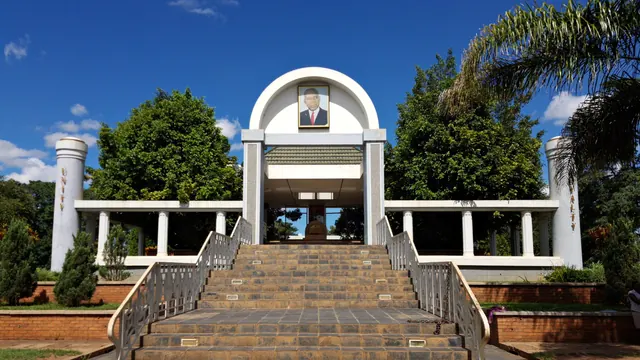
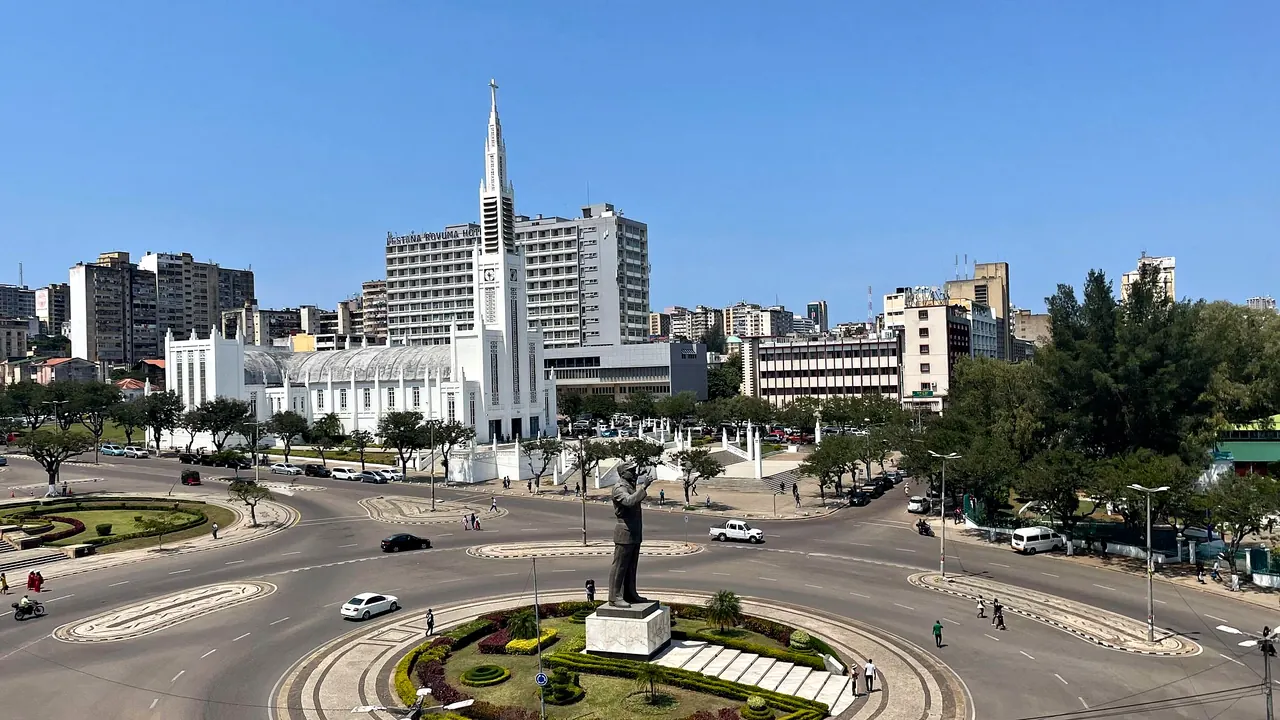
Independence Square with the Samora Machel statue and the cathedral
- Nightlife58
- Food & drink56
- Nature & outdoors54
Photo: Salazar Sérgio, CC BY-SA 4.0, cropped
Match
40
Every category weighted equally
- Beach & sun41
- Culture & arts40
- Food & nightlife44
- Family trip38
- Outdoors40
- Relax & unwind39
- Shopping & style40
- On a budget41
Maputo in twelve categories
Our verdict on each, scored 0 to 100 against the same fixed benchmark cities, so a score means the same thing on every page.
Beaches & swimming. Scores 44 out of 100.
Food & drink. Scores 56 out of 100.
Culture & sights. Scores 44 out of 100.
Nightlife. Scores 58 out of 100.
Nature & outdoors. Scores 54 out of 100.
Day trips. Scores 22 out of 100.
Good for families. Scores 22 out of 100.
Getting around. Scores 30 out of 100.
Shopping & style. Scores 36 out of 100.
Affordability. Scores 52 out of 100.
Live music & performing arts. Scores 40 out of 100.
Wellness & relaxation. Scores 24 out of 100.
Maputo category by category
Beaches & swimming
44Maputo faces a broad, shallow bay rather than the open ocean, and the city beach along the Marginal at Costa do Sol is better for a walk and a grilled fish than for a swim. At low tide the water pulls far out over mudflats, and it is often cloudy and brownish. On weekends families picnic along the shore, but beach life is not the reason to stay in the city.
The water is warm, often 26°C to 28°C in summer, so the clearer beaches further out are well worth the trip. Inhaca Island is a boat ride across the bay. Macaneta, north of the city, has wild Indian Ocean surf with strong currents. Further south, Ponta do Ouro has excellent sand and clear water, but it is a long day out, and most people who go stay the night.
Food & drink
56Seafood is the reason to eat in Maputo. Big prawns grilled with peri-peri, crab, lobster and line fish are the classics. The Mercado do Peixe on the Marginal works in the local way: you choose fish at the stalls and have it cooked in the grill houses next door. Mozambican home cooking adds matapa (cassava leaves stewed with peanut and coconut), chicken à zambeziana and xima, a maize porridge.
The Portuguese past shows in the pastelarias, the fresh bread rolls and the garlic-and-wine cooking in many restaurants. Local lager is the standard drink, and the open-air esplanadas along the avenues are pleasant places for an evening beer. The fine-dining tier is small, the international range is limited, and outside seafood the choice soon becomes repetitive.
Culture & sights
44Maputo's main sight is the city itself: wide avenues lined with jacaranda and flame trees, and a mix of Portuguese colonial, art deco and bold mid-century modernist buildings. The domed railway station in the Baixa is the landmark everyone photographs. Close by are the prefabricated Iron House, the white modernist cathedral, the old fortress and the Municipal Council building on Independence Square. The architect Pancho Guedes left a set of playful, sculptural buildings across the upper city that rewards a dedicated walk.
The museums are modest and often tired. The National Art Museum and the Núcleo de Arte show the strong Mozambican painting and sculpture tradition, including Malangatana. The Natural History Museum and the Revolution Museum fill out a short list. Two or three days covers it.
Nightlife
58Maputo goes out late, and Friday and Saturday nights carry on well past midnight. In the upper city around Polana and Sommerschield, evenings start at esplanadas and lounge bars. Later the crowd moves to dance clubs that play marrabenta, Angolan kizomba, Afro-house and amapiano until dawn. On warm weekends the open-air bars and shacks along the Marginal by the bay fill up and stay loud long into the night.
The scene is friendly and has real character, but it is compact, and much of it is spread across the city rather than packed into one walkable strip. Most visitors take a taxi between venues at night instead of walking.
Nature & outdoors
54The land around Maputo is flat coastal plain, and the city has few green spaces of note, so the outdoors means a journey. To the south, Maputo National Park is a wide stretch of coastal lakes, grassland and dunes, with elephants, hippos and many birds. It takes a 4x4 and the better part of a day. Inhaca Island has mangroves, seagrass beds and a marine reserve across the bay. Between June and November humpback whales pass along the coast.
The southern coast towards Ponta do Ouro is known for diving, snorkelling with dolphins and fishing. It is a long drive, and many people stay over rather than return the same day. Kruger in South Africa is close enough for a safari with a night or two away. The Lebombo hills at Namaacha give the only relief near the city.
Day trips
22Maputo has few easy day trips to towns or heritage sites. The boat to Inhaca Island is the classic outing: an island of a few villages, a small marine research station and quiet sand. Catembe, across the bay by the long suspension bridge or the old ferry, makes a relaxed afternoon of seafood looking back at the skyline. Marracuene, to the north, has a small historic fort site and the river crossing to Macaneta.
The hill town of Namaacha, near the Eswatini border, has faded colonial houses and a waterfall. Eswatini itself and the towns of southern Mozambique's coast are better done as trips with at least one night away.
Good for families
22Maputo was not built with children in mind. It has no zoo, aquarium or theme park worth the name, and the main draws for adults, its architecture, markets and late nights, do little for young children. Mozambicans are warm towards children, and a boat trip to Inhaca or an afternoon of grilled prawns by the bay works well with older ones.
The practical side is harder. Malaria is present all year, pavements are broken, traffic is heavy and walking after dark is not advised, so families depend on taxis or a driver. Families with small children usually go on to the southern coast or a safari lodge rather than spending long in the city.
Getting around
30The central city is a grid of long, straight avenues. The Baixa and the upper districts of Polana and Sommerschield are linked by a steep slope, and much of it can be walked in daylight, although pavements are often broken and the distances on foot are long. Public transport consists of crowded chapas, the shared minibuses, and larger buses, all of which are hard to work out without local help.
Most visitors use taxis, tuk-tuks or ride-hailing apps, and take a car after dark as a matter of course. Pickpockets work the busy markets and the Baixa. A car, ideally with a driver, is needed to go much beyond the city.
Shopping & style
36Maputo is a city for crafts and cloth rather than fashion. The open-air craft market near the Baixa sells Makonde ebony carvings, baskets, batik and paintings, and the city's art studios are worth a look for serious buyers. Capulanas, the brightly printed wraps worn across Mozambique, are a good buy, and tailors will sew them into clothes within a day or two.
The tiled Mercado Central in the Baixa sells spices, cashews and piri-piri, with everyday street trading all around it. Beyond that there are a few modern malls with South African chains, and little in the way of boutiques or luxury.
Affordability
52Maputo costs more than many visitors expect. Local food, beer, minibuses and market shopping are cheap, but the city is built around a large population of diplomats, aid workers and resource-industry staff. Comfortable hotels charge close to European rates for what they offer, and restaurants for foreigners, imported wine and groceries are priced to match.
Taxis and private drivers soon add up, since they are how most visitors get around. Seafood is good value by international standards, especially at the fish market. Overall, though, a comfortable stay costs about as much as in a mid-range Western European city.
Live music & performing arts
40Live music is the strength here. Marrabenta, the guitar-led dance music born in Maputo's suburbs, is played alongside jazz, Afro-fusion and timbila, the xylophone music of the south. You hear it in bars with house bands and at weekend concerts. The Franco-Mozambican Cultural Centre has a steady programme of concerts, dance and film, and the Teatro Avenida has long been home to Mozambique's best-known theatre company.
There is no opera, no permanent orchestra and only a small formal theatre scene, so the experience depends on asking around once you arrive.
Wellness & relaxation
24Maputo has no bathing tradition, and spa options are limited to hotel spas and a few massage studios in the upper city. The leafy avenues of Polana and an unhurried coffee or sundowner overlooking the bay help you slow down, but the traffic, noise and the need for caution in the street make the city a poor place to rest. People who want to unwind usually go on to the beach lodges of the southern coast or Inhaca.
When should you go?
Pick a month to see what it is like. The climate figures are measured averages, not a forecast.
Maputo in July
Daytime high, °C
Rainfall in the month, mm
The whole year
Shaded against this destination’s own year: the deepest cell is its best month for that figure and the palest its weakest.
Temperature and rainfall are climate normals, averaged over the years shown. Maputo: 1991-2020 (sunshine 1981-2010) normals, Maputo / Mavalane (5.8 km from centre).
Before you go
| Measure | Maputo |
|---|---|
| Official language | Portuguese |
| Currency | Mozambique Metical (MZN) |
| Sockets | CFM220 V, 50 Hz |
| Driving side | Left |
| Time zone | UTC+2 |
| Emergency number | Police 119, ambulance 198, fire 117 |
| Elevation | 31 m |
| Main airport | Maputo Airport (MPM)5 km from centre18 non-stop destinations |
| Public holidays this year | 9 days |
By the numbers
| Measure | Maputo |
|---|---|
| Population | 1,133,200 |
| People per km² | 3,268 |
| Museums within 10 km | 3 |
| UNESCO World Heritage sites within 50 km | 0 |
| Swim season, months above 21 °C | 12 months |
Compare Maputo with
Every comparison with a written verdict behind it.