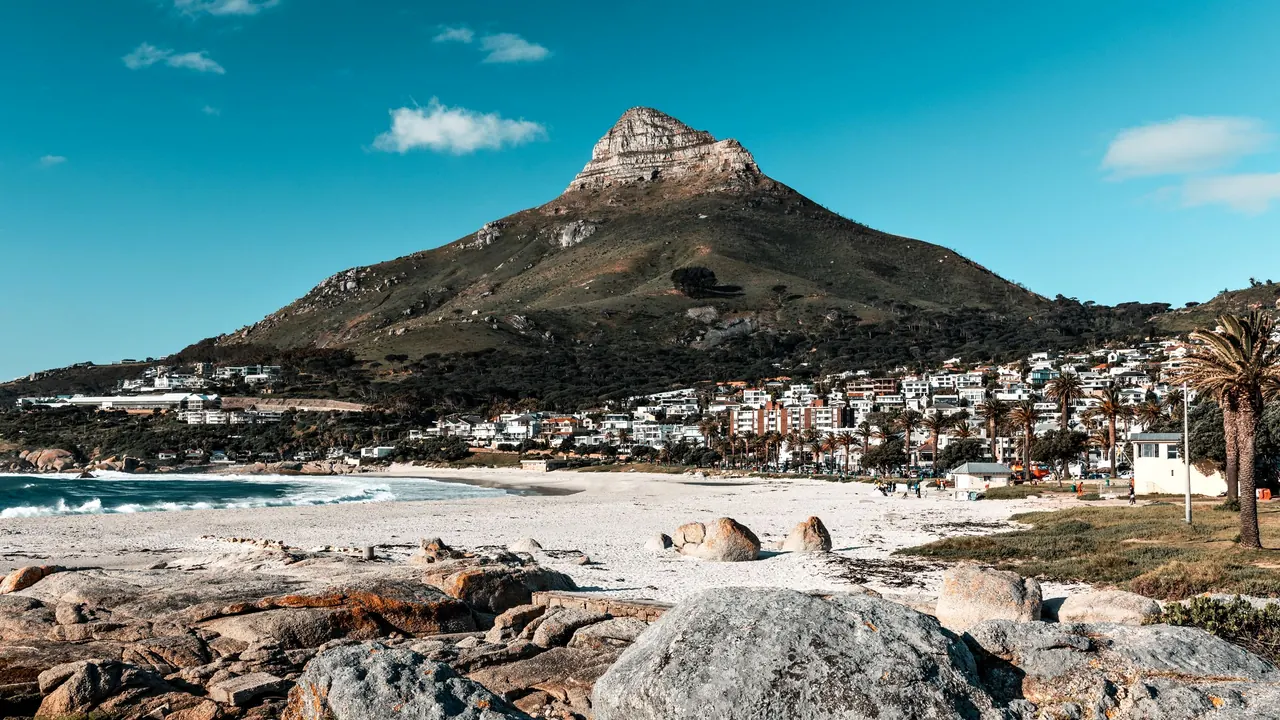
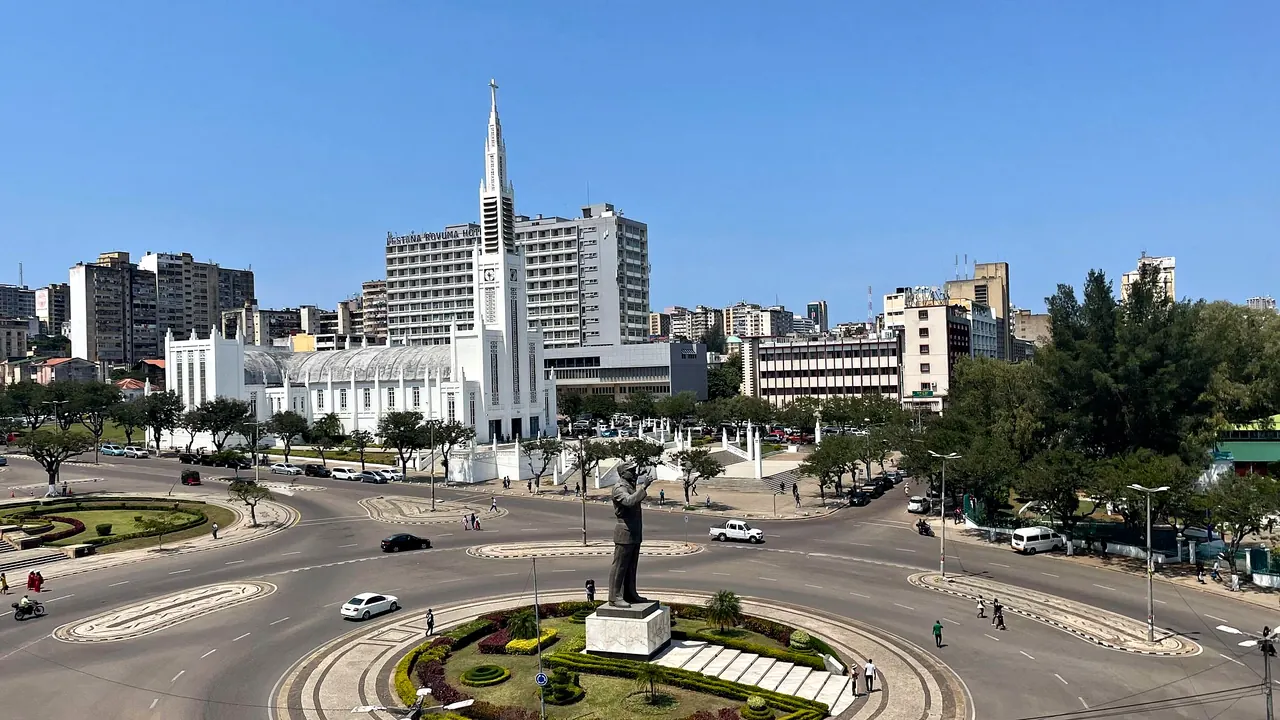
Photos: Cape Town by Stephan Louis, Pexels License; Maputo by Salazar Sérgio, CC BY-SA 4.0, cropped.
Cape Town or Maputo?
Our verdict in twelve categories, each scored against the same fixed benchmark cities, and the climate month by month, so you can choose for your trip.
Choose Cape Town for
- day trips
- nature and the outdoors
- families
Cape Town is the stronger choice for most trips. A mountain national park rises straight behind the centre, the Winelands are under an hour away, the restaurants are serious and meals cost less than at home. It suits hikers, food and wine lovers, families with a hire car, and anyone who wants the most variety from a week or two.
Choose Maputo for
Maputo does not lead in any category we score.
Maputo suits a different traveller: someone curious about a less-visited African capital who likes walking jacaranda-lined avenues of art deco and modernist buildings, eating prawns at the fish market and dancing to marrabenta late on a Saturday. It works best as a stop of a few days on the way to Inhaca, the southern coast or Kruger, not as the base for a whole trip.
Scoreboard
Twelve categories on one fixed scale from 0 to 100. The shaded stretch is the gap between the two.
Your match
Pick a travel style or drag the sliders, and both match scores follow your weighting.
Wins on day trips and nature and the outdoors with your weighting.
Has no clear advantage with the weighting you have chosen.
What matters to you?
Category by category
What the scores mean for a trip.
Beaches & swimming
Cape Town's beaches are the more beautiful and the better for a beach day. Clifton and Camps Bay have white sand framed by granite boulders, and in summer you can swim properly at Muizenberg and in the Kalk Bay tidal pools of False Bay, with penguins at Boulders. The catch is the cold Atlantic.
Maputo has the much warmer sea, but its city shore at Costa do Sol faces a shallow, murky bay that is better for a walk and grilled fish than a swim. Clear water means a boat to Inhaca or a long drive south to Ponta do Ouro, so a beach day there is an excursion rather than part of everyday life.
Food & drink
Both cities eat well from the sea, but Cape Town has far more range. Cape Malay curries and bobotie from the Bo-Kaap, tasting menus on Bree Street and in Woodstock, and wine estates on the city's edge give you a week of different meals.
Maputo's strength is narrower but very good: peri-peri prawns, crab and fish picked at the Mercado do Peixe and grilled next door, plus matapa and Portuguese-style pastelarias. Beyond seafood the choice soon runs thin, and there is little fine dining.
Culture & sights
Cape Town's sights carry more weight, and most of them tell the story of apartheid and colonial rule: Robben Island, the District Six Museum and the Castle of Good Hope. Zeitz MOCAA and the museums around the Company's Garden add art and natural history.
In Maputo the streets matter more than the collections. The draws are the domed railway station, the Iron House, Pancho Guedes' sculptural buildings and the mid-century modernism under the jacarandas. Its museums are modest, though the National Art Museum is worth a visit for Malangatana and Mozambique's strong tradition of painting.
Nightlife
The two are close for a night out but differ in sound and shape. Cape Town runs on the sundowner: drinks on the Camps Bay beachfront, cocktail and wine bars on Bree and Kloof Streets, Long Street's backpacker clubs and the gay quarter of De Waterkant. It quietens outside summer.
Maputo starts later and dances harder. Lounge bars in Polana give way to clubs playing marrabenta, kizomba and amapiano until dawn, and the bars and shacks on the Marginal stay loud on warm weekends. In both cities you take a taxi between venues.
Nature & outdoors
This is Cape Town's great advantage. Table Mountain rises over the centre, Lion's Head makes a sunrise climb, and the national park runs through fynbos all the way to Cape Point. Along the way there are penguins, seals and baboons, with surfing at Muizenberg and whales in False Bay.
Around Maputo the land is flat and the city has little green space, so every outing takes planning. The options are a 4x4 day to the elephants and lakes of Maputo National Park, the mangroves of Inhaca, or diving and dolphins far to the south at Ponta do Ouro.
Day trips
Cape Town has the Winelands within an hour. Stellenbosch's oak-lined Cape Dutch streets and the Franschhoek valley alone can fill several days, and Hermanus for whale watching and Tulbagh's Church Street lie a little further out. You'll need a car or a tour for nearly all of them.
Maputo has few easy outings: the boat to Inhaca, seafood in Catembe across the bay, the fort site at Marracuene and the faded hill town of Namaacha. Its best destinations, Eswatini, the southern coast and Kruger, need at least a night away.
Good for families
Cape Town works for children in a way Maputo does not. The Two Oceans Aquarium, the cableway, the Boulders penguins, Kirstenbosch's treetop walkway and the warm False Bay tidal pools fill days easily, though you will need a car.
Maputo has no aquarium or zoo worth the trip, and malaria, broken pavements and heavy traffic make it harder going. A boat to Inhaca suits older children, but most families move on quickly to a beach or safari lodge.
Getting around
Neither city is easy on public transport, and in both you take a car after dark. Cape Town is a little better organised. The MyCiTi buses reach the airport, the Atlantic beaches and Hout Bay, and good roads make driving yourself to the peninsula and the Winelands a pleasure.
Maputo's grid of avenues is walkable by day in the Baixa and Polana, though the distances are long and the pavements broken. The chapa minibuses are hard to use without local help, so most visitors use taxis, tuk-tuks and ride-hailing.
Shopping & style
Cape Town gives you more to browse: the V&A Waterfront mall with its hall of local makers, South African design and ceramics in Woodstock and on Kloof Street, and wine and rooibos to take home.
Maputo's shopping is narrower but more distinctive. There are Makonde carvings at the craft market, capulanas that tailors will turn into clothes within a day or two, and cashews and piri-piri from the tiled Mercado Central.
Affordability
For most visitors Cape Town is the cheaper stay, especially when it comes to eating and drinking. Tasting menus and estate wine cost far less than at home, and car hire and ride-hailing are inexpensive. The exception is rooms in Camps Bay and the Waterfront area at the height of summer.
Maputo turns out dearer than many expect. Grilled seafood and local beer are cheap, but hotels and restaurants priced for diplomats and aid workers, plus taxis every day, push a comfortable stay towards Western European levels.
Live music & performing arts
Each city has its own music, Cape jazz in one and marrabenta in the other, but Cape Town also has formal stages. You can see opera and ballet at Artscape, South African drama at the Baxter and the Cape Philharmonic in season, and in summer there are Sunday concerts on Kirstenbosch's lawns.
Maputo's evenings centre on live bands in bars playing marrabenta, timbila and Afro-fusion. The Franco-Mozambican Cultural Centre and the Teatro Avenida cover dance and drama, but there is no opera or orchestra.
Wellness & relaxation
Neither has a bathing tradition, but Cape Town is far easier to unwind in. You can take long lunches on a wine estate, join yoga classes in the Atlantic seaboard suburbs, swim in the False Bay tidal pools in the morning and book a good-value spa in the Winelands.
In Maputo, traffic, noise and the need for care on the street make it hard to rest. A coffee overlooking the bay in Polana helps, but people who want to switch off head for Inhaca or the lodges of the southern coast.
When should you go?
Pick your month. The climate figures are measured averages, not a forecast.
Cape Town in July
Maputo in July
Daytime high, °C
Rainfall in the month, mm
Temperature and rainfall are climate normals, averaged over the years shown. Cape Town: 1991-2020 normals, Cape Town Airport (17.5 km from centre). Maputo: 1991-2020 (sunshine 1981-2010) normals, Maputo / Mavalane (5.8 km from centre).
Cape Town is a summer city. From December to March, days reach about 28°C, it barely rains and the sun is out for long hours. That is the time for False Bay swims and the Atlantic beaches, though the sea stays cool all year and never quite reaches 20°C. June to August is the wettest stretch, with between 76mm and 97mm of rain a month, cool days and less sun, so it's a poor season for the beach.
Maputo's year runs the other way. Its summer, from November to March, is hot and wet. January is the rainiest month, and with daytime highs in the low thirties, long walks become tiring. May to September is the dry season, with highs in the high twenties, steady sunshine and a sea that stays at or above 22°C. That makes the southern winter the best time for both the city and the coast. Put simply, go to Cape Town in the southern summer and Maputo in the southern winter.
Which traveller are you?
On a family trip with children, Cape Town is the clear choice. The penguins at Boulders, the Two Oceans Aquarium, the cableway and calm tidal pools keep children busy. Maputo has little for them, malaria all year and streets that are hard work with a pushchair.
For an outdoors trip, Cape Town wins by a wide margin. You can hike Table Mountain from the city centre, surf at Muizenberg and drive to Cape Point in a day. From Maputo, wild country means a 4x4 day out or a night away down the coast.
On a tight budget, Cape Town makes your money go further, with cheap restaurant meals, cheap estate wine and inexpensive car hire, as long as you avoid the midsummer peak for rooms. In Maputo, cheap prawns and beer are cancelled out by hotels and taxis priced for expatriates.
Before you go
| Measure | Cape Town | Maputo |
|---|---|---|
| Official language | English, Zulu, Xhosa, Afrikaans, Venda, Northern Sotho, Swazi, Tswana, Tsonga, Sesotho, Southern Ndebele, South African Sign Language | Portuguese |
| Currency | Rand (ZAR) | Mozambique Metical (MZN) |
| Sockets | CMN230 V, 50 Hz | CFM220 V, 50 Hz |
| Driving side | Left | Left |
| Time zone | UTC+2 | UTC+2 |
| Emergency number | 112 | Police 119, ambulance 198, fire 117 |
| Elevation | 5 m | 31 m |
| Main airport | Cape Town International Airport (CPT)18 km from centre45 non-stop destinations | Maputo Airport (MPM)5 km from centre18 non-stop destinations |
| Public holidays this year | 13 days | 9 days |
By the numbers
| Measure | Cape Town | Maputo |
|---|---|---|
| Population | 3,776,313 | 1,133,200 |
| People per km² | 1,538 | 3,268 |
| Museums within 10 km | 22 | 3 |
| UNESCO World Heritage sites within 50 km | 3 | 0 |
| Swim season, months above 21 °C | None | 12 months |
Where else could you go?
Every comparison below shares a destination with this one, so you can follow Cape Town or Maputo somewhere new.
- Stellenboschvs Cape Town
- Hermanusvs Cape Town
- Krugervs Maputo
- Mbabanevs Maputo
- Knysnavs Cape Town
- Garden Routevs Cape Town