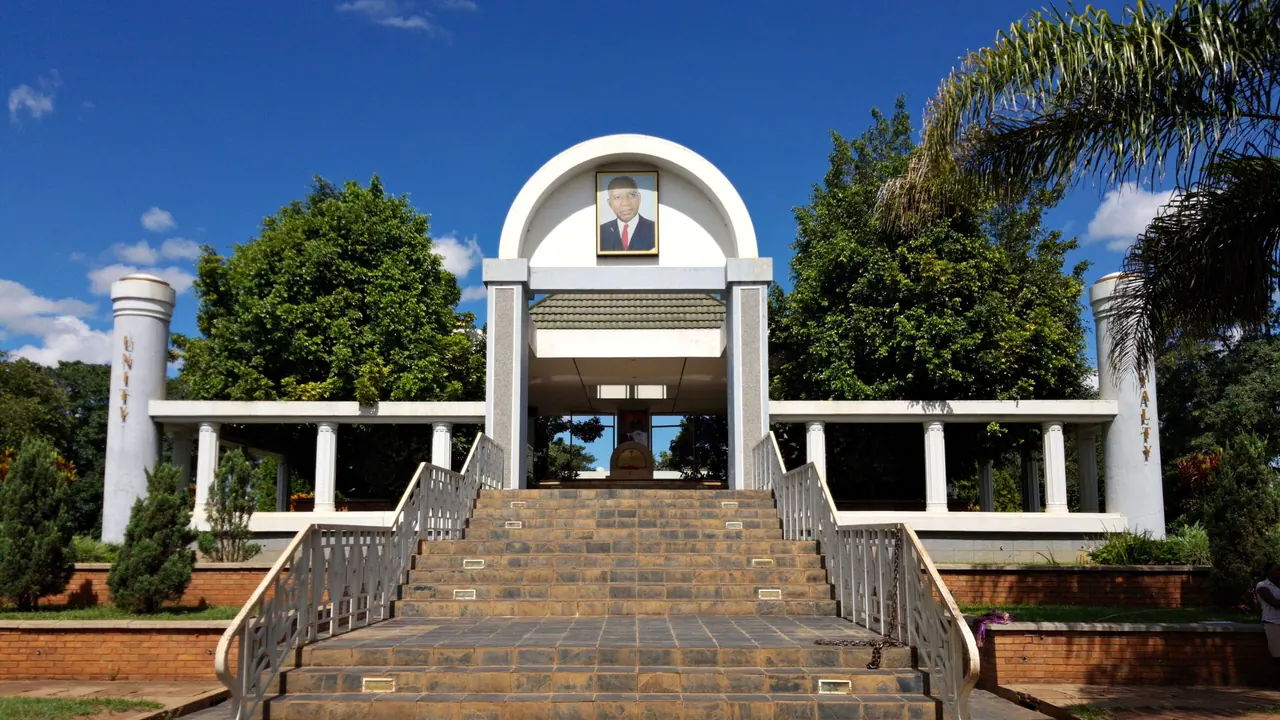
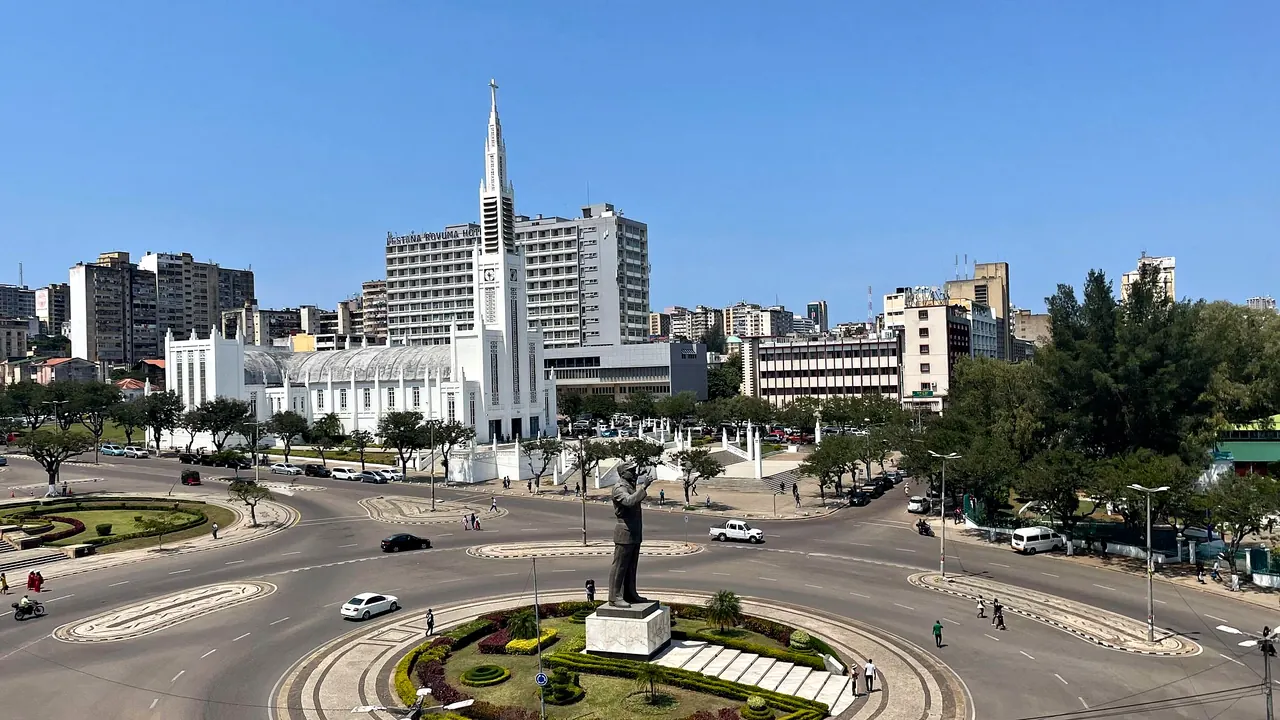
Photos: Lilongwe by ilf_, CC BY-SA 2.0, cropped; Maputo by Salazar Sérgio, CC BY-SA 4.0, cropped.
Lilongwe or Maputo?
Our verdict in twelve categories, each scored against the same fixed benchmark cities, and the climate month by month, so you can choose for your trip.
Choose Lilongwe for
- prices
- day trips
- families
Lilongwe suits a traveller who sees the capital as a base rather than the destination. Day-to-day costs are low, the leafy suburbs are quiet, and the road south leads to Dedza's hills, the Chongoni rock art and the mask collection at Mua. It works best for a night or two at the start of a trip to Lake Malawi or a safari lodge, especially for backpackers and anyone travelling on a modest budget.
Choose Maputo for
- nightlife
- culture and sights
- food and drink
Maputo is the better city to actually spend time in. Its avenues of colonial, art deco and modernist buildings reward slow walks, the seafood is the best reason to sit down to dinner in either place, and weekend nights run late to marrabenta and amapiano. It costs more, but travellers who want architecture, grilled prawns, live music and the Indian Ocean coast within reach will find far more to do here.
Scoreboard
Twelve categories on one fixed scale from 0 to 100. The shaded stretch is the gap between the two.
Your match
Pick a travel style or drag the sliders, and both match scores follow your weighting.
Wins on prices and day trips with your weighting.
Wins on nightlife and culture and sights with your weighting.
What matters to you?
Category by category
What the scores mean for a trip.
Beaches & swimming
Lilongwe has no water to swim in at all. The nearest sand is on the Lake Malawi shore at Senga Bay, two hours away by road, and the lake is fresh water, with bilharzia to check for near reeds and village shorelines. In practice, a beach day from the capital means a night away.
Maputo is on the coast, but its city beach at Costa do Sol is better for a stroll than a swim, because the shallow bay turns murky and pulls far out at low tide. Its advantage is what lies within reach: Inhaca Island is a boat ride away, Macaneta has open-ocean surf, and Ponta do Ouro's clear water rewards an overnight trip.
Food & drink
Both cities are built on maize porridge, nsima in Lilongwe and xima in Maputo, but they do very different things with what goes alongside it. In Lilongwe the dish to try is chambo, the lake tilapia grilled whole at small eateries and around the Old Town market, and the sit-down restaurants are mostly unremarkable expatriate fare.
Maputo eats far better, thanks to the sea and its Portuguese past. Peri-peri prawns, crab and lobster, matapa made with cassava leaves and coconut, garlic-and-wine cooking and fresh rolls from the pastelarias make meals one of the pleasures of a stay. Outside seafood the menus get repetitive.
Culture & sights
Lilongwe was planned as a low-density garden capital in the 1970s, so there is little old architecture to see. The Kamuzu Mausoleum, Capital Hill and Old Town's market fill a few hours. Most of Malawi's heritage lies outside the city, at Chongoni and Mua.
Maputo's sightseeing is the city itself. Around the Baixa you can walk past colonial, art deco and mid-century modernist buildings: the domed railway station, the Iron House, the white cathedral and the old fortress. Pancho Guedes's buildings in the upper city reward a dedicated walk, and although the museums are tired, Malangatana's work gives the art collections real weight.
Nightlife
Maputo goes out properly. Evenings start at the lounge bars and esplanadas of Polana and Sommerschield and carry on in clubs playing marrabenta, kizomba and Afro-house until dawn. On warm weekends the shacks along the Marginal stay loud late into the night.
Lilongwe is a place for a drink and a dance rather than a big night. The scene is hotel bars, backpacker-lodge gardens and a few lounges in Area 47 and Area 10. In both cities you take a taxi between venues, but in Maputo there are far more places worth going to.
Nature & outdoors
Lilongwe is the greener city in itself. Jacaranda-lined avenues and the Lingadzi river woodland around the Wildlife Centre bring the bush into town, and the miombo forest of Dzalanyama and the granite hills of Dedza, each within about two hours, make good walking and cycling country in the dry season.
Maputo's surroundings are flat and its parks are few, but the big wildlife is closer to hand. Maputo National Park has elephants and hippos among coastal lakes and dunes, humpback whales pass offshore from June to November, and Ponta do Ouro offers diving and dolphins. Kruger is near enough for a short safari.
Day trips
From Lilongwe, one road south links several good outings: Dedza's pottery workshops, the UNESCO-listed painted shelters of Chongoni and the KuNgoni Centre at Mua, with its Gule Wamkulu masks. A hired car with a driver can cover them in a day, which gives the city a real cultural hinterland.
Maputo's easy outings are more about the bay than heritage. There is the boat to Inhaca, a seafood afternoon at Catembe across the bridge, the fort site at Marracuene and Namaacha's waterfall. Its best excursions, to the southern beaches or Eswatini, need at least one night away.
Good for families
Neither city is easy with children, and both share the same drawbacks: malaria all year, few pavements and a car needed for every outing. The warm welcome children receive is just as true in both.
The difference is in the single outing that works. Lilongwe has the Wildlife Centre, where younger children can see rescued animals and walk woodland trails. Maputo's best bet is a boat to Inhaca or prawns by the bay, which suits older children better. Most families move on soon, to the lake or to Mozambique's southern coast.
Getting around
Maputo is the easier city to get around. Its central grid of straight avenues can be walked in daylight from the Baixa up the slope to Polana, though pavements are broken and distances long, and tuk-tuks and ride-hailing fill the gaps. After dark a car is standard, and pickpockets work the markets.
Lilongwe has no centre to walk at all. Old Town, City Centre and the numbered Areas are kilometres apart across open ground, the streets are dark at night, and the minibuses and bicycle taxis are hard for newcomers to use. Almost every journey means a booked taxi or a driver.
Shopping & style
Both cities are for crafts rather than fashion, but Maputo gives a buyer more to work with. Its open-air market near the Baixa sells Makonde ebony carvings, batik and paintings, and capulana cloth can be tailored into clothes within a day or two. The tiled Mercado Central is good for cashews, spices and piri-piri.
In Lilongwe the finds are the carved chairs, chief's stools and soapstone sold from Old Town stalls after a long haggle, plus Dedza pottery in a few lodge shops. The Old Town market is better for browsing than buying.
Affordability
Lilongwe is the cheaper of the two, and backpackers in its garden lodges can travel on very little. In both cities, though, comfort is expensive: good hotels are scarce and charge international rates, and drivers soon add up in a capital built for cars.
Maputo pushes further in that direction. Its diplomats, aid workers and resource-industry staff keep hotels, restaurants and imported wine close to mid-range Western European prices. The fish market is where it repays you, because seafood there is good value by any standard.
Live music & performing arts
Maputo has a real music culture of its own. Marrabenta was born in its suburbs, and you hear it alongside jazz and timbila xylophone music from bar house bands. The Franco-Mozambican Cultural Centre and the Teatro Avenida add concerts, dance and theatre, though you will need to ask around to find what is on.
Lilongwe has no regular stage at all. Music comes from occasional weekend shows at hotel gardens and the Bingu International Convention Centre. Gule Wamkulu dancing belongs to village ceremonies, and Malawi's best-known festivals take place on the lakeshore.
Wellness & relaxation
Neither city has a spa or bathing tradition, so pampering in both means a hotel treatment room or a small massage studio. The difference is the atmosphere. Lilongwe's quiet, leafy suburbs and shaded lodge gardens make it the more restful place to do nothing, while in Maputo a sundowner over the bay is pleasant but the traffic and street noise get in the way. For a genuinely restful stay, travellers from Lilongwe head to the lake, and those from Maputo go to Inhaca or the southern beach lodges.
When should you go?
Pick your month. The climate figures are measured averages, not a forecast.
Lilongwe in July
Maputo in July
Daytime high, °C
Rainfall in the month, mm
Where the figures come from
Lilongwe's station stands 179 m above the city centre, so the centre is likely a little warmer than the figures say.
Temperature and rainfall are climate normals, averaged over the years shown. Lilongwe: 1982-2025 (rainfall 1961-1990) normals, Lilongwe International Airport (22.6 km from centre). Maputo: 1991-2020 (sunshine 1981-2010) normals, Maputo / Mavalane (5.8 km from centre).
Lilongwe has two clear seasons. The rains run from November to April and are heaviest around January, when about 230mm falls. From May to October it is almost completely dry. June and July are the coolest months, with highs near 23°C, which makes them the most pleasant time for walking and hiking in the hills. The heat builds through October and November, just before the rains return.
Maputo is hotter all year, with summer highs around 32°C from December to February, when it is also at its wettest and the streets are tiring at midday. The southern winter, from May to August, is drier and sunnier, with milder days that suit exploring the city on foot. The sea is warmest from January to March, at about 28°C, and drops to about 22°C in the winter months. For one trip covering both cities, May to August is the best time: both are dry and comfortable then, though Maputo's sea is at its coolest.
Which traveller are you?
For a food and nightlife trip, Maputo is the clear pick. You can choose prawns and line fish at the Mercado do Peixe and have them grilled next door, then move from the esplanadas to clubs playing kizomba and amapiano until dawn, a night out Lilongwe's hotel bars cannot match.
On a trip on a tight budget, Lilongwe stretches your money further. Nsima and chambo at roadside grills, minibuses and local beer all cost very little, and the garden backpacker lodges are cheap. In Maputo, hotels and restaurants for visitors are priced closer to European levels.
For a culture and arts trip, Maputo gives you much more to see: the domed railway station, the Iron House, Pancho Guedes's sculptural buildings and the Malangatana paintings at the National Art Museum. Lilongwe's 1970s capital offers a mausoleum and a parliament building and little else.
Before you go
| Measure | Lilongwe | Maputo |
|---|---|---|
| Official language | English, Chewa, Tumbuka | Portuguese |
| Currency | Malawi Kwacha (MWK) | Mozambique Metical (MZN) |
| Sockets | G230 V, 50 Hz | CFM220 V, 50 Hz |
| Driving side | Left | Left |
| Time zone | UTC+2 | UTC+2 |
| Emergency number | Police 990/997, ambulance 998, fire 999 | Police 119, ambulance 198, fire 117 |
| Elevation | 1,050 m | 31 m |
| Main airport | Kamuzu International Airport (LLW)22 km from centre9 non-stop destinations | Maputo Airport (MPM)5 km from centre18 non-stop destinations |
| Public holidays this year | 11 days | 9 days |
By the numbers
| Measure | Lilongwe | Maputo |
|---|---|---|
| Population | 989,318 | 1,133,200 |
| People per km² | 1,359 | 3,268 |
| Museums within 10 km | 0 | 3 |
| UNESCO World Heritage sites within 50 km | 0 | 0 |
| Swim season, months above 21 °C | - | 12 months |
Where else could you go?
Every comparison below shares a destination with this one, so you can follow Lilongwe or Maputo somewhere new.
- Lake Malawivs Lilongwe
- Krugervs Maputo
- Mbabanevs Maputo
- Johannesburgvs Maputo
- Durbanvs Maputo
- Kigalivs Lilongwe