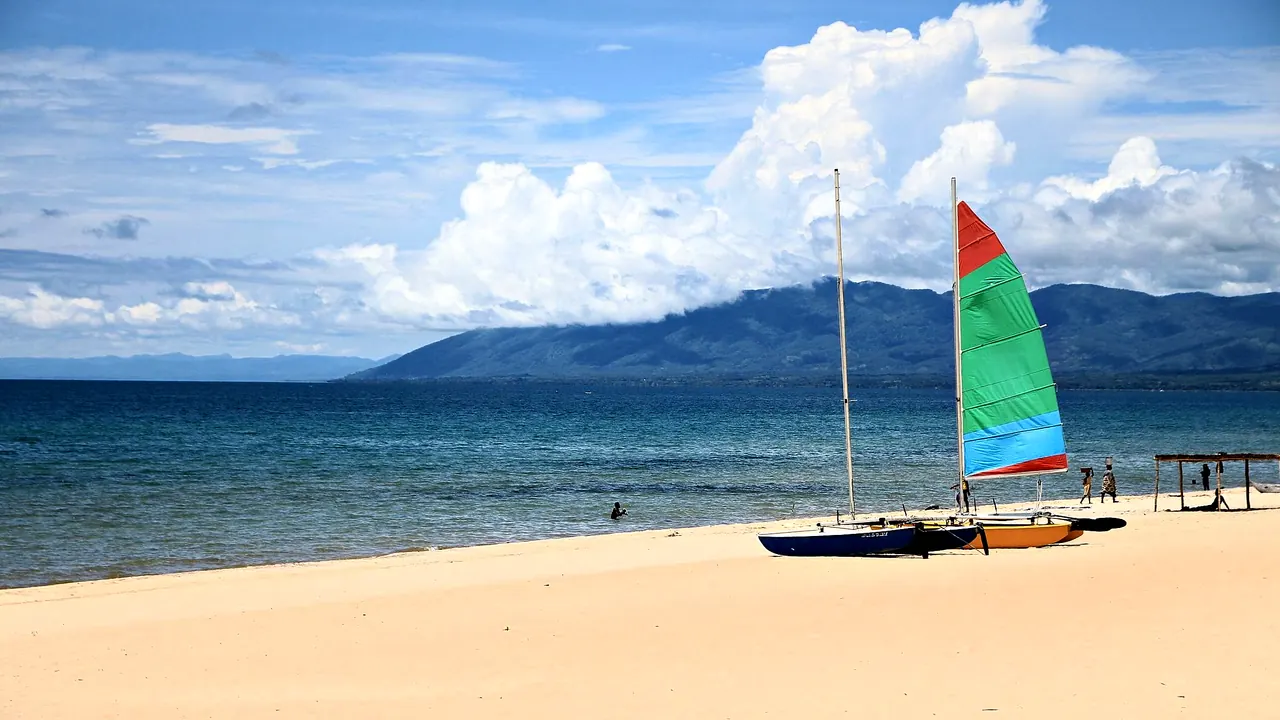
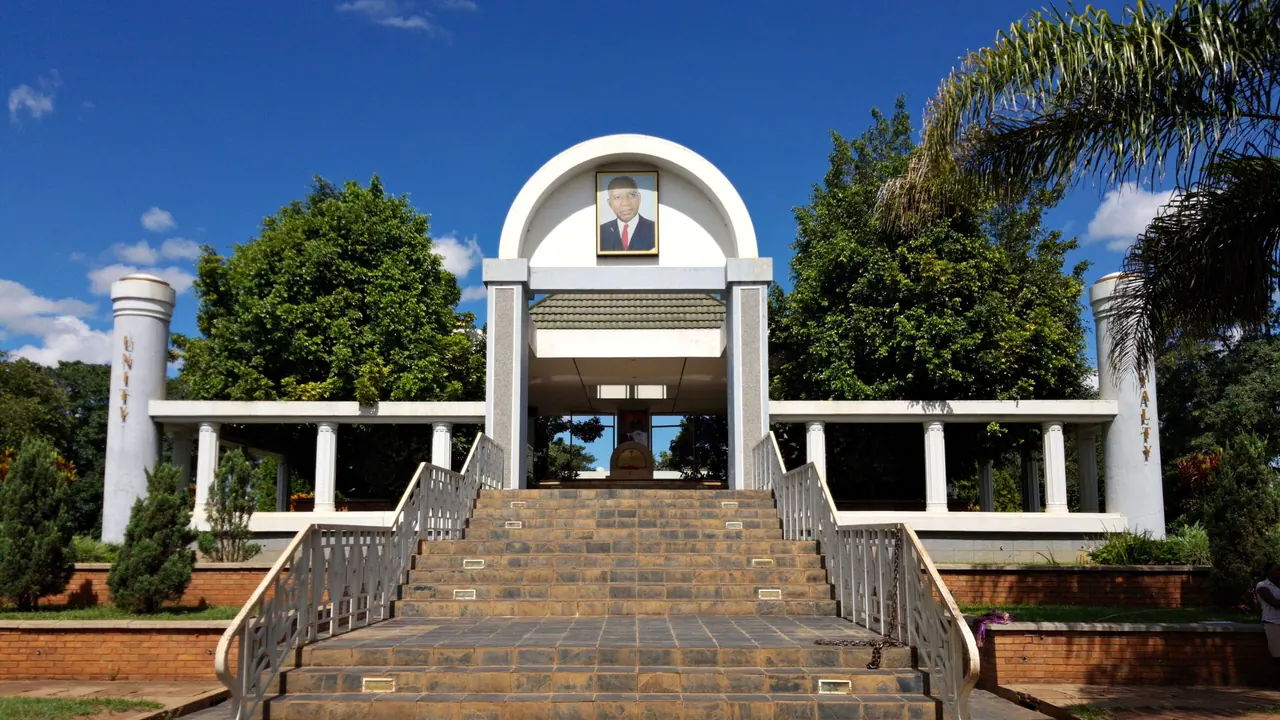
Photos: Lake Malawi by Ros NL, Pexels License; Lilongwe by ilf_, CC BY-SA 2.0, cropped.
Lake Malawi or Lilongwe?
Our verdict in twelve categories, each scored against the same fixed benchmark cities, and the climate month by month, so you can choose for your trip.
Choose Lake Malawi for
- beaches
- nature and the outdoors
- wellness
Lake Malawi suits travellers who want to stop moving and spend their days in the water. Days here are built around the lake: a swim before breakfast, snorkelling among brightly coloured cichlids around Cape Maclear, perhaps a first dive in calm fresh water. The slow pace makes for real rest, and simple lodges keep costs low. In return you accept long transfers, little to eat beyond the lodge menu, and evenings that end soon after dinner.
Choose Lilongwe for
- shopping
- nightlife
- food and drink
Choose Lilongwe if you have a day or two between the airport and the lake, or a reason to be in the capital. It has more restaurants, craft stalls in Old Town that are its real shopping strength, and a weekend club night or two. The best part is the road south to Dedza's potteries, the Chongoni rock art and the Mua mission. On its own, though, it is a spread-out city of leafy districts, not a place to spend a whole vacation.
Scoreboard
Twelve categories on one fixed scale from 0 to 100. The shaded stretch is the gap between the two.
Your match
Pick a travel style or drag the sliders, and both match scores follow your weighting.
Wins on beaches and nature and the outdoors with your weighting.
Wins on shopping and nightlife with your weighting.
What matters to you?
Category by category
What the scores mean for a trip.
Beaches & swimming
On the lake, swimming is the point of the stay rather than an outing. You wake a few steps from the water, swim before breakfast and again at sunset, and the base you pick sets the scene, from sheltered southern bays to the quiet island beaches of Likoma. It is fresh water with no waves, tides or salt, warm through the year and warmest late in the dry season, though the afternoon wind can make it choppy. The care needed is about where you go in: open beaches and rocks rather than reedy village shallows, because of bilharzia.
Lilongwe has no water of its own, so a swim there means a hotel or club pool. To reach the same lake you drive about two hours east to Senga Bay, which brings the same bilharzia caution and only makes sense with a night or two by the shore.
Food & drink
Both serve the same Malawian staples, chambo grilled or fried whole and nsima eaten by hand, and neither is a place to travel for its food. On the lake you eat mostly at your lodge, whose kitchen depends on the supply run, with roadside maize, mandazi and the silver racks of drying usipa along the shore.
Lilongwe gives you a little more choice. There are roadside grills and the Old Town market stalls for local food, Indian, Chinese and Italian dining rooms in Old Town and City Centre, and Malawian tea, highland coffee and sweet thobwa to try.
Culture & sights
Neither will fill a sightseeing itinerary, but the lake has more to show. St Peter's Cathedral looms over tiny Likoma Island, the Livingstonia mission keeps its stone church and museum high on the northern escarpment, and Mangochi has a lake museum and a colonial clock tower.
Lilongwe was planned as a garden capital in the 1970s and has little history in its streets. You can see the Kamuzu Mausoleum, Parliament on Capital Hill and the Memorial Tower, and Old Town shows everyday city life. Its real heritage lies outside the city, at Chongoni and Mua.
Nightlife
Lilongwe has somewhere to dance. On weekends, lounges and clubs in Old Town, Area 47 and Area 10 fill with expatriates and young Malawians to dancehall, Afropop and South African house, although the dark, spread-out streets mean a taxi between each stop.
At the lake the evening is a lodge bar and perhaps a bonfire on the sand. Only the backpacker bars of Nkhata Bay and Cape Maclear add reggae, pool tables and the odd beach party, and the island lodges are quiet by bedtime.
Nature & outdoors
The lake is the stronger choice by a wide margin. It runs close to 580km between the Malawi hills and the Mozambique highlands, and its rocky shores hold hundreds of cichlid species found nowhere else, best seen in Lake Malawi National Park around Cape Maclear. You can snorkel straight off the rocks, kayak to the islands, and walk from Livingstonia to the Manchewe Falls above the north basin.
Lilongwe's green space is gentler. The Wildlife Centre trails run along the Lingadzi river, the Dzalanyama forest offers miombo woodland and birding about an hour away, and Dedza's granite hills give good walking at altitude. The big landscapes, the lake included, are hours away.
Day trips
Lilongwe has the better day out, a clear route south along the Blantyre road. It passes Dedza's pottery workshops, the UNESCO-listed painted shelters of Chongoni and the KuNgoni Centre at Mua Mission, which has one of the region's best collections of Gule Wamkulu masks.
From the lake, outings depend on which base you choose. From the south you can reach Zomba's market and colonial buildings in about two hours, while the north offers Mzuzu and the climb to Livingstonia. Distances are long, and Likoma needs several days rather than one.
Good for families
Neither is easy with children, and the two differ mainly in what fills the day. At the lake it is the water itself, calm, warm and right by the room, with family rooms and shallow beach fronts at some lodges. You will need to watch where they paddle because of bilharzia and sit through long, bumpy transfers to get there, and medical care near the shore is basic, which weighs more with small children so far from a city.
Lilongwe's one real draw for children is the Wildlife Centre, with its rescued animals and woodland trails, and otherwise days revolve around hotel pools and garden restaurants, with a car for every outing. Its private clinics give parents better medical cover than anything on the lake, though care beyond them is limited. Malaria runs all year in both, and both give children a warm Malawian welcome.
Getting around
Both are hard work, in different ways. Around the lake the bases lie hundreds of kilometres apart on a slow shore road, and the lake steamer and the small Likoma flights run infrequently, though once you reach a lodge everything is on foot or by boat. Lilongwe's problem is shorter but constant. Its districts sit kilometres apart with patchy pavements, so every errand means a hotel taxi, a ride-hailing app or a hired driver.
Shopping & style
Lilongwe is the place to buy crafts. The Old Town stalls sell carved chairs, masks, chief's stools, soapstone and beadwork after a good-humoured haggle, and Dedza pottery appears in a few lodge and gallery shops. Malls cover anything practical.
On the lake, shopping comes down to beach sellers with carvings and bao boards and the chitenje cloth in village markets, which is worth packing but is the whole offer.
Affordability
The lake makes the cheap way easy. Campsites, simple lodges, nsima and minibuses cost little, and costs only climb if you add diving, private transfers, park fees or a luxury island lodge.
In Lilongwe the market food and beer are just as cheap, but comfortable hotels are few and charge international rates. The city is so spread out that the taxis and drivers you need to get around add up quickly, unless you stay in a backpacker garden lodge.
Live music & performing arts
Neither has theatres or a concert season, so the difference is in what you might stumble on. At the lake it is lodge drumming and dance evenings with nearby villages, Sunday church choirs, and the shore where the country's best-known music festivals are held. Lilongwe has weekend shows by Malawian bands in hotel gardens and at the Bingu International Convention Centre, along with occasional open-mic nights. In neither will a visitor easily see the Gule Wamkulu masked dances.
Wellness & relaxation
The lake is far better for doing nothing. You get hammocks under the trees, early swims in still water and sunsets with nothing planned afterwards, and the quieter lodges on Likoma and the islands off Cape Maclear add massage and yoga decks.
Lilongwe's offer is hotel treatments, a few day spas in the residential areas and an afternoon in a shaded lodge garden. It is calm enough, but most people looking for real rest carry on to the shore.
When should you go?
Pick your month. The climate figures are measured averages, not a forecast.
Lake Malawi in July
Lilongwe in July
Daytime high, °C
Rainfall in the month, mm
Where the figures come from
Lake Malawi has no weather station within reach, so its figures come from a gridded climate model rather than a measured record, and read a broad area rather than one spot.
Lilongwe's station stands 179 m above the city centre, so the centre is likely a little warmer than the figures say.
Temperature and rainfall are climate normals, averaged over the years shown. Lake Malawi: 2001-2020 normals, NASA POWER reanalysis grid, no weather station within 90 km. Lilongwe: 1982-2025 (rainfall 1961-1990) normals, Lilongwe International Airport (22.6 km from centre).
Both share one pattern: a long dry season from about May to October, when there is almost no rain at all, and heavy rains from December to March, peaking at 308mm in January on the lake. From May to August the lakeshore is pleasantly warm for swimming and lying on the sand, and it is the easiest time for walks and boat trips. September brings rising heat, and October and November reach 33°C on the shore, very hot away from the water.
Lilongwe stands on the plateau, so it is a few degrees cooler all year, down to 23°C in June and July. That makes the mid-year months the best for walking its avenues and hiking at Dedza. Its rains start a little earlier, in November, and are lighter than on the lake, with January at around 230mm, but the wet months still make the dirt roads out of town slow going.
Which traveller are you?
On a beach and sun trip, Lake Malawi wins outright. Lodges sit on golden sand above warm, still fresh water at Cape Maclear, Nkhata Bay and Chintheche. Lilongwe has only hotel pools and a two-hour drive to the same shore.
For an outdoors trip, head for the lake. You can snorkel off the rocks in Lake Malawi National Park, learn to dive in calm water, kayak to Thumbi and Mumbo islands, and hike to the Manchewe Falls. Lilongwe has the gentler Dzalanyama forest and the Dedza hills.
For a short city break, Lilongwe is the only real option of the two. It has Old Town's market and craft stalls, a wider choice of restaurants, the Wildlife Centre and easy day trips to Dedza and Mua. The lake is for staying put, and only once the long transfer is behind you.
Before you go
| Measure | Lake Malawi | Lilongwe |
|---|---|---|
| Official language | English, Chewa, Tumbuka | English, Chewa, Tumbuka |
| Currency | Malawi Kwacha (MWK) | Malawi Kwacha (MWK) |
| Sockets | G230 V, 50 Hz | G230 V, 50 Hz |
| Driving side | Left | Left |
| Time zone | UTC+2 | UTC+2 |
| Emergency number | Police 990/997, ambulance 998, fire 999 | Police 990/997, ambulance 998, fire 999 |
| Elevation | - | 1,050 m |
| Main airport | Kamuzu International Airport (LLW)9 non-stop destinations | Kamuzu International Airport (LLW)22 km from centre9 non-stop destinations |
| Public holidays this year | 11 days | 11 days |
By the numbers
| Measure | Lake Malawi | Lilongwe |
|---|---|---|
| Population | - | 989,318 |
| People per km² | - | 1,359 |
| Museums within 10 km | - | 0 |
| UNESCO World Heritage sites within 50 km | - | 0 |
Where else could you go?
Every comparison below shares a destination with this one, so you can follow Lake Malawi or Lilongwe somewhere new.
- Zanzibarvs Lake Malawi
- Livingstonevs Lake Malawi
- Dianivs Lake Malawi
- Maputovs Lilongwe
- Kigalivs Lilongwe
- Kampalavs Lilongwe